
Think you need five gym days to get results?
A three-day push/pull/legs split gives beginners a simple, balanced plan that actually works.
You train push, pull, and legs once a week, so each session is focused and short.
This post lays out a ready-to-use Monday/Wednesday/Friday plan, easy exercise choices, and how to add weight safely.
No guesswork, no long gym hours, just steady progress you can keep up.
Start with 45-75 minute sessions and basic compounds like bench, rows, and squats.
Overview of Push/Pull/Legs as a 3‑Day Beginner Training Structure
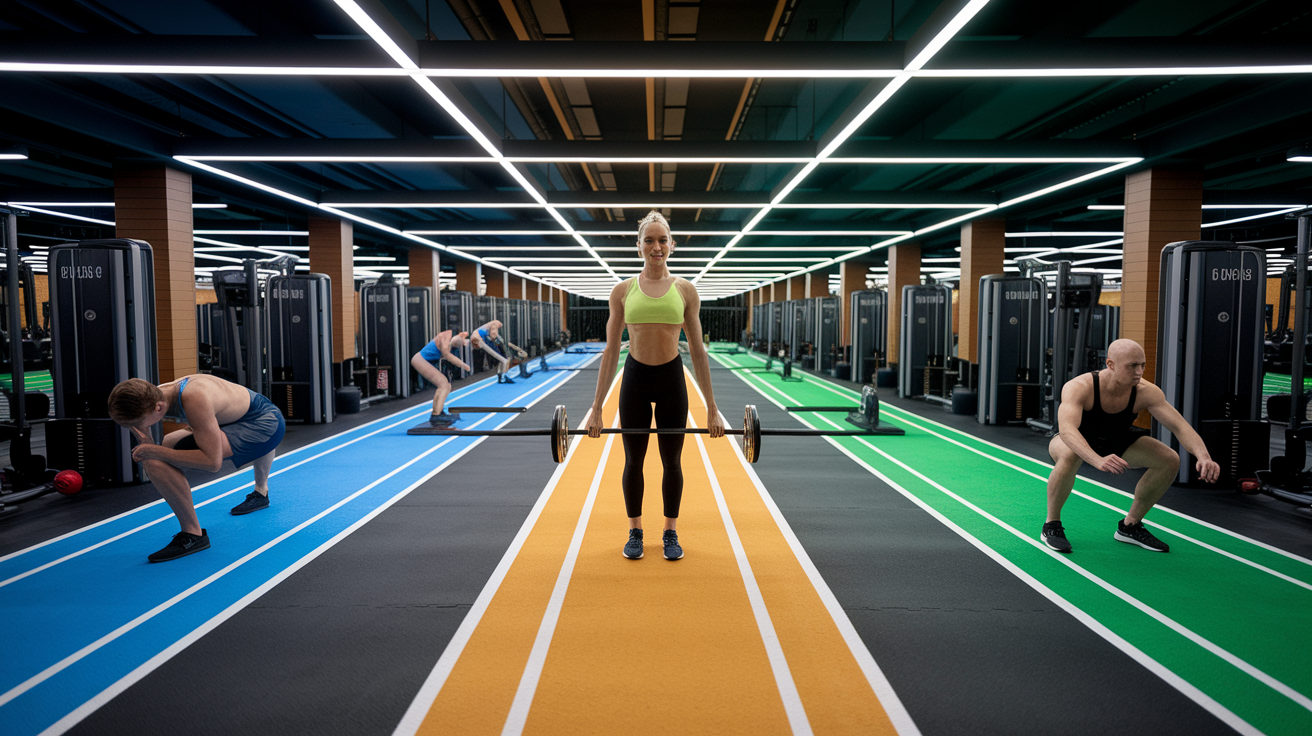
Push/Pull/Legs organizes training around movement patterns instead of isolating single muscles. Push days work the muscles that press weight away from you: chest, shoulders, triceps. Pull days hit everything that brings weight toward you: back and biceps. Legs days cover your lower body: quads, hamstrings, glutes, calves. You rotate through these three patterns once per week.
A beginner-friendly 3-day PPL means three sessions per week, usually spread out like Monday/Wednesday/Friday or Tuesday/Thursday/Saturday. Each workout runs 45 to 75 minutes with warm-up included. Push and pull days need around 4 to 6 exercises. Leg days typically run 5 to 7 exercises because you’re dealing with more large muscle groups. Weekly volume per muscle lands around 8 to 12 effective sets, which drives progress without crushing your recovery.
Here’s why beginners pick a 3-day PPL:
Structured learning. You practice the same movement patterns each week, getting better at compounds like bench press, rows, and squats.
Simple organization. No guesswork about which exercises belong together. Push movements train pushing muscles, pull movements train pulling muscles.
Balanced volume. Three days per week gives you enough work to grow without overdoing it.
Predictable recovery. Rest days between sessions let muscles repair and adapt.
Clear progression. You add small weight increments or extra reps each week. Gains are easy to track.
Low scheduling stress. Three workouts fit most schedules, even busy weeks.
Pros and Cons of Using a 3‑Day Push/Pull/Legs Plan
A 3-day PPL works well for many beginners. But it’s not perfect for everyone. Knowing the trade-offs helps you decide whether it’s the right starting point or whether a different split fits your goals and time better.
Pros:
Teaches compound lifts in a focused way. You master bench press, rows, and squats without constantly switching exercises.
Keeps per-session time manageable at 45 to 75 minutes, easier to stick with than longer workouts.
Spreads weekly volume across three days, so you’re not exhausted after every session.
Simple to understand and follow. No complex rotation or confusing exercise swaps.
Works well for beginners who want to train serious lifts but still have life outside the gym.
Cons:
Creates long gaps (5 to 6 days) between sessions for each muscle group. Smaller muscles like biceps and side delts go almost a week without stimulus.
Can push per-session sets higher than the recommended ~10 to 12 sets per muscle if you try to cram weekly volume into one session. Increases junk volume risk.
Leg days are often much harder and longer than push or pull days. This can lead to pacing issues. You might hold back on early exercises knowing heavy squats and RDLs are coming.
Doesn’t hit the twice-per-week muscle frequency that research suggests is closer to optimal for growth.
If you miss a session, you skip that entire muscle group for the week.
Choose a 3-day PPL if you can consistently train three days per week, you like the push/pull/legs structure, and you’re okay with training each muscle once per week while you build the habit. If you want to train each muscle more frequently or you find leg days overwhelming, consider a full-body routine three times per week or an upper/lower split across four days instead.
Understanding the Push Day in a Beginner PPL Routine

Push day targets your chest, shoulders, and triceps. All the muscles that press weight away from your body. The main movement patterns are horizontal presses (bench press), vertical presses (overhead press), and isolation work for shoulders and triceps. These muscles work together on most pushing exercises, so training them in one session makes sense.
Most beginners start push day with a compound press, add another compound or incline variation, then finish with lateral raises and triceps isolation. You’re learning to coordinate multiple muscles at once. That’s why form matters more than the weight on the bar for the first few weeks.
Common beginner-friendly push exercises:
Barbell or dumbbell bench press
Barbell or dumbbell overhead press
Incline dumbbell press or incline barbell press
Dumbbell lateral raises
Triceps pushdowns or overhead triceps extensions
Push-ups (as a finisher or substitute when needed)
Aim for 3 to 4 working sets of 8 to 12 reps for your main compounds. Rest 2 to 3 minutes between bench and overhead press sets so you’re recovered enough to lift with good form. For isolation moves like lateral raises and triceps work, rest 60 to 90 seconds. These exercises don’t tax your whole body the same way. Total session time usually runs 45 to 65 minutes including warm-up. Finish push day knowing your chest, shoulders, and triceps got enough stimulus to grow, then give them time to recover before the next rotation.
Understanding the Pull Day in a Beginner PPL Routine

Pull day trains your back, biceps, and rear delts. Muscles that pull weight toward your body or hinge your torso forward. You’ll do vertical pulls like pull-ups or lat pulldowns, horizontal pulls like barbell rows and cable rows, and hinge patterns like Romanian deadlifts. Pull days also include direct biceps work since your biceps assist on all pulling movements.
The key technique principle on pull day is scapular retraction. Pulling your shoulder blades back and down before you start the pull. This keeps tension on your back muscles instead of letting your arms do all the work. Control the weight on the way down (the eccentric phase) instead of letting it drop. That slow lowering builds strength and protects your shoulders.
Recommended exercises for a beginner pull session:
Assisted pull-ups, chin-ups, or lat pulldown
Barbell bent-over row or dumbbell bent-over row
Seated cable row or single-arm dumbbell row
Romanian deadlift (posterior chain and hamstrings)
Face pulls (rear delts and upper-back health)
Barbell or dumbbell biceps curls
Use 3 to 4 sets of 6 to 10 reps for pull-ups and heavy rows, 3 sets of 8 to 12 for most other exercises. Rest 2 to 3 minutes after your heaviest compounds (bent-over rows, RDLs), and 60 to 90 seconds for cable rows, face pulls, and curls. Watch for shrugging. If your traps take over, reduce the weight and focus on pulling your shoulder blades together first. Total time is usually 50 to 70 minutes. By the end of pull day, your lats, mid-back, and biceps should feel worked without being destroyed.
Understanding the Legs Day in a Beginner PPL Routine
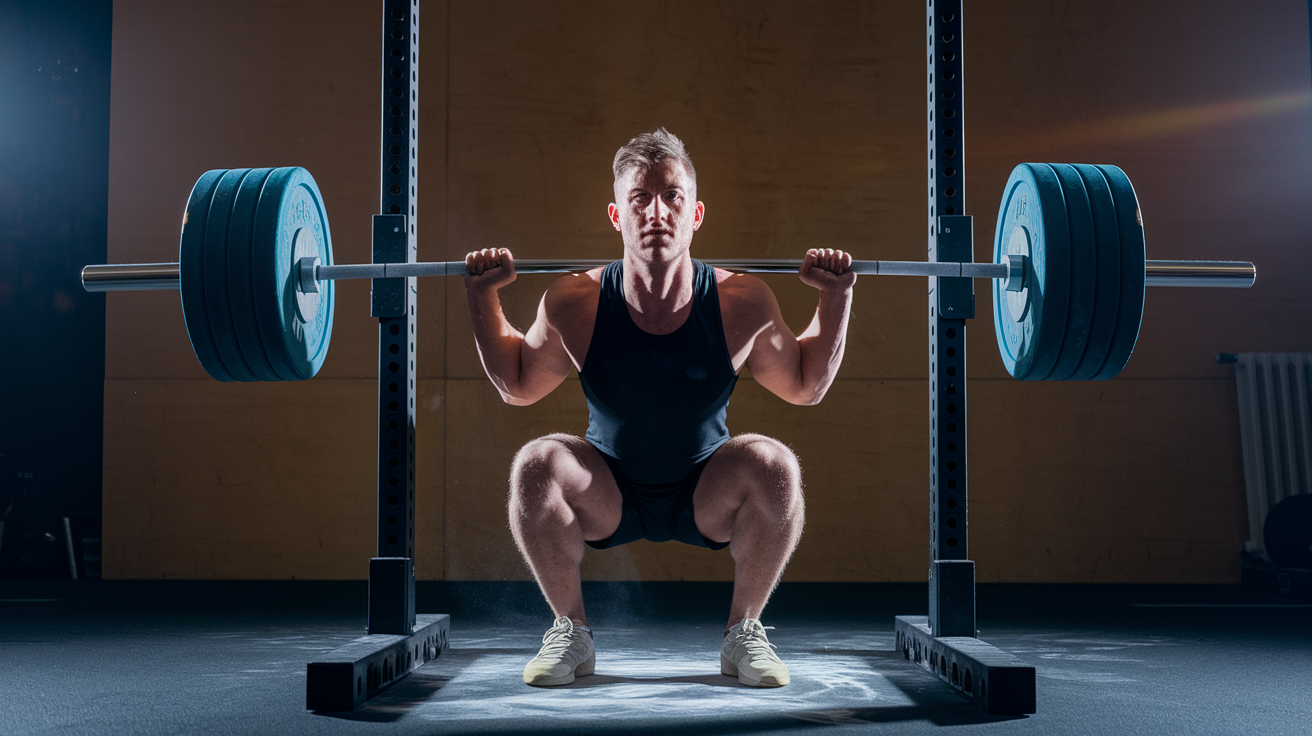
Leg day trains your quads, hamstrings, glutes, and calves. It’s usually the longest and most demanding session because lower-body muscles are large and recover more slowly than upper-body muscles. You’ll do a squat variation, a hinge movement like Romanian deadlifts, unilateral work (single-leg exercises), and direct hamstring and calf work.
Leg sessions require more energy and focus than push or pull days. Squats and deadlifts use your whole body to stabilize the load, so even your core and upper back get tired. That’s why beginners sometimes pace themselves too much early in the session, saving energy for exercises at the end. Try to give full effort to your squat and RDL, then adjust accessories if needed.
Common beginner leg exercises:
Back squat, goblet squat, or front squat
Romanian deadlift or trap-bar deadlift
Bulgarian split squat or walking lunges
Leg press or leg extension
Lying or seated hamstring curl
Standing or seated calf raise
Optional core work (planks, hanging knee raises)
Use 3 to 4 sets of 6 to 10 reps for squats (or 8 to 12 for goblet squats), 3 sets of 8 to 12 for RDLs and split squats, and 3 sets of 10 to 15 for hamstring curls, leg extensions, and calf raises. Rest 2 to 3 minutes after squats and RDLs. Your breathing and heart rate need time to settle. Rest 60 to 90 seconds for isolation moves. Keep your spine neutral on squats and deadlifts, and make sure your knees track over your toes during squats and lunges. Total session time is usually 60 to 75 minutes. By the end, your legs should feel heavy and your glutes sore, but you shouldn’t be so wrecked that you can’t walk the next day.
How to Do a Push Pull Legs 3 Day Split for Beginners
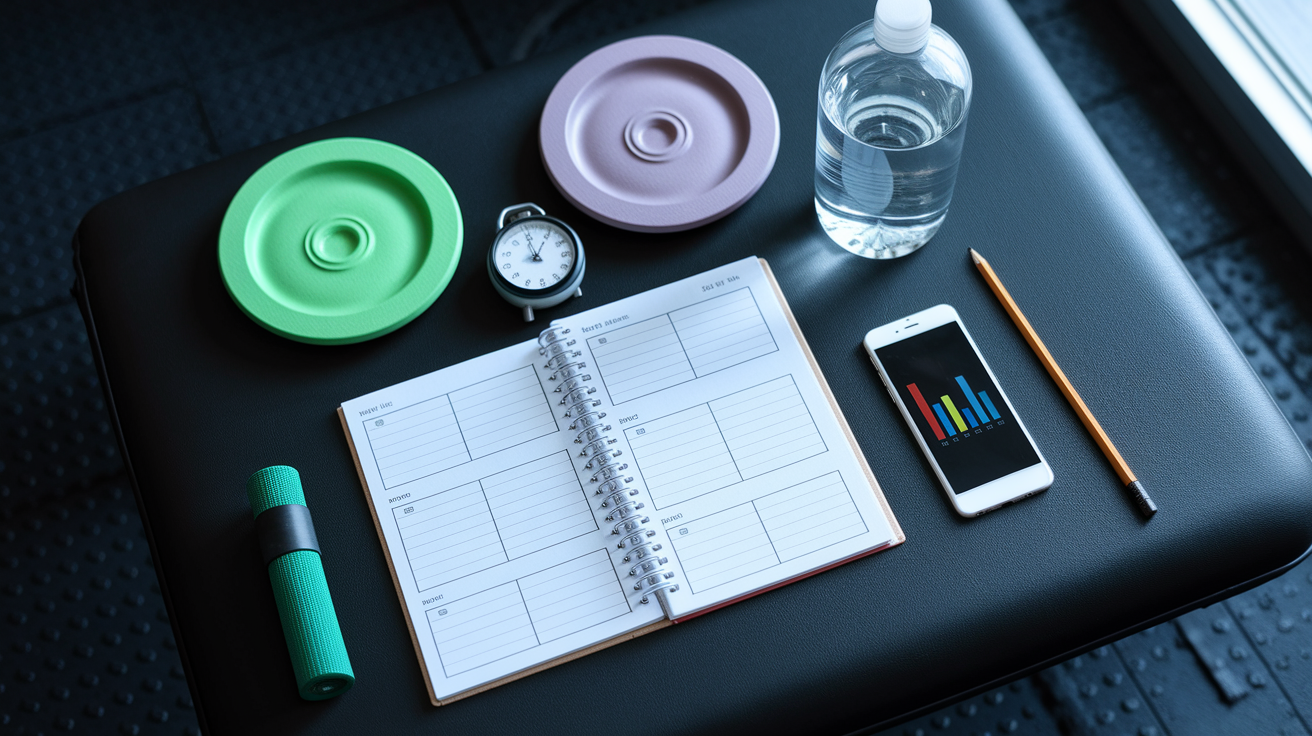
How to Do the Weekly Schedule
A 3-day PPL works best when you spread sessions across the week with at least one rest day between workouts. That spacing gives each muscle group time to recover before the next training stimulus. Most beginners use Monday/Wednesday/Friday or Tuesday/Thursday/Saturday, but you can adjust based on your work or family schedule.
Pick three non-consecutive days each week (example: Monday, Wednesday, Friday).
Assign one session per day in order: push on day one, pull on day two, legs on day three.
Take at least one full rest day between each workout. Never train three days in a row on this program.
If you miss a session, slide the rotation forward instead of skipping it. Missing Wednesday’s pull day? Do it Thursday and shift legs to Saturday.
Keep the same days each week so training becomes a habit. Your body adapts better when the schedule is consistent.
How to Structure Each Session
Every workout follows the same structure: warm up, do your heavy compounds first, add accessories, finish with core if needed, then cool down. This order keeps you fresh for the lifts that matter most and reduces injury risk.
Start with a 5 to 10 minute general warm-up: light cardio (treadmill walk, bike, jumping jacks) plus dynamic mobility (arm circles, leg swings, bodyweight squats).
Do 1 to 3 ramp warm-up sets for your first compound lift. Example for bench press: empty bar ×10 reps, then 95 lb ×6, then 115 lb ×3, then start your working weight at 135 lb.
Complete 3 to 4 working sets of your main compound lift at 8 to 12 reps, resting 2 to 3 minutes between sets.
Move to your second compound or heavy accessory (overhead press, rows, RDLs). Use the same 3 to 4 sets and 2 to 3 minutes rest.
Finish with 2 to 3 isolation or accessory exercises at 3 sets of 10 to 15 reps, resting 60 to 90 seconds (or 30 to 60 seconds for small muscles like lateral delts and biceps).
Add 1 to 2 core exercises if you have energy (planks for 2×30 to 60 seconds, or hanging knee raises for 2×10 to 15 reps). Cool down with 3 to 5 minutes of light stretching or walking.
How to Progress the Program
Progressive overload means making workouts slightly harder over time. For beginners, the simplest method is adding reps first, then adding weight when you hit the top of your rep range.
Log every workout: write down the exercise, weight, sets, and reps (example: “Bench press: 135 lb, 3×10, 10, 9”).
Aim to complete all your reps at RPE 7 to 8 (you could do 2 to 3 more reps if forced, but you stop with good form).
When you hit the top of your rep range for all sets (example: 3×12), add weight the next session. Add 2.5 to 5 lb for upper-body lifts (bench, overhead press, rows, curls). Add 5 to 10 lb for lower-body lifts (squat, RDL, leg press).
If you can’t find small plates, add one extra rep to each set every week until you reach 15 reps, then jump the weight and drop back to 8 to 10 reps.
Track your lifts for 4 to 8 weeks, then take a deload week: reduce weight by 40 to 60% or cut one set from each exercise. This helps your body recover and adapt.
After the deload, return to training with adjusted loads based on your new strength levels. Repeat the cycle.
Comparison of the 3‑Day PPL Split with Other Beginner Routines
A 3-day PPL trains each muscle group once per week. A full-body routine three times per week trains each muscle two or three times per week. Research suggests twice-per-week frequency for each muscle produces better growth than once per week, especially for beginners. Full-body splits also keep per-session sets lower, around 3 to 5 sets per muscle per session, so you don’t exceed the ~10 to 12 set-per-muscle-per-session threshold where extra sets become junk volume.
If you want to train each muscle more often without adding gym days, full-body is usually a better pick than 3-day PPL. You’ll do squats, a press, a pull, and maybe a hinge every session, rotating exercise variations to avoid boredom. The downside is less focus per muscle group in each workout, and some beginners find it harder to push intensity on squats when they know they’re squatting again in two days.
An upper/lower split is another alternative. You train upper body twice per week and lower body twice per week, usually across four gym days. That gives you twice-weekly frequency without cramming all lower-body work into one exhausting leg day. Each session stays around 10 to 12 sets per muscle, well within the safe range, and you can hit higher weekly volume (12 to 18 sets per muscle) without overloading any single workout. The trade-off is an extra gym day per week, which might not fit everyone’s schedule.
| Split Type | Frequency per Muscle | Weekly Volume Range | Ideal For |
|---|---|---|---|
| 3-Day PPL | 1× per week | 8 to 12 sets per muscle | Beginners with 3 available gym days who want simple, focused sessions |
| Full-Body 3×/week | 2 to 3× per week | 9 to 15 sets per muscle (3 to 5 per session) | Beginners who want frequent practice and balanced volume without extra gym days |
| Upper/Lower 4×/week | 2× per week | 12 to 18 sets per muscle (6 to 9 per session) | Beginners who can train 4 days and want higher weekly volume with manageable per-session loads |
How to Use a 3‑Day PPL Program for Maximum Beginner Results
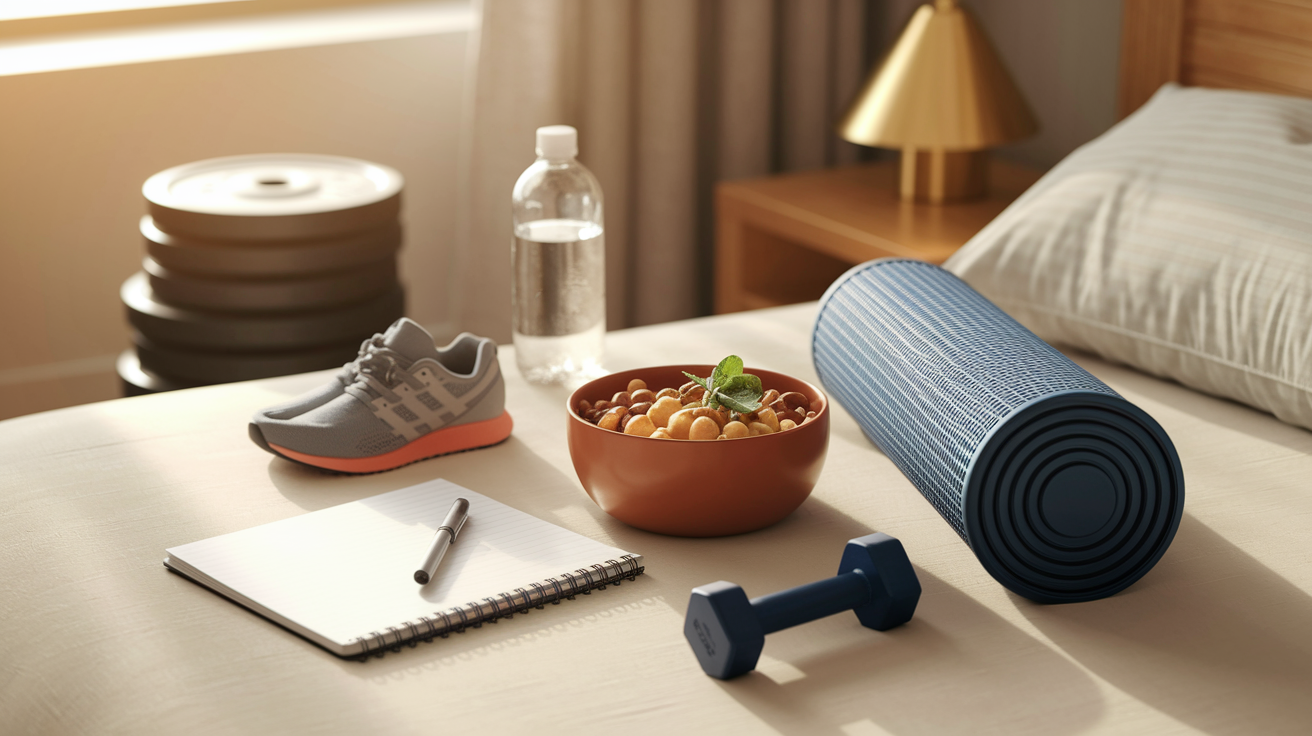
Consistency beats perfection. Show up three days every week, follow your program, and add small weight increments when you hit your rep targets. That habit (training the same days, logging your lifts, and trusting the process) produces more results than chasing the perfect exercise or worrying about advanced techniques you don’t need yet.
Track your workouts in a notebook or app. Write the date, exercise name, weight, and reps for every set. Example: “Mon 4/10, Bench Press, 135×10, 135×10, 135×9.” Next week, aim for 135×10, 10, 10, then move to 140 the week after. Seeing your numbers climb keeps you motivated and shows whether you’re actually progressing or spinning your wheels. If your lifts stall for two weeks in a row, check your recovery before adding more sets.
Recovery determines whether your training turns into muscle or just fatigue.
Sleep 7 to 9 hours per night. Muscle repair happens while you sleep. Shortchanging sleep kills progress.
Eat 0.7 to 1 gram of protein per pound of bodyweight daily. Protein provides the building blocks for new muscle tissue.
Drink enough water. Dehydration reduces strength and makes you feel worse during workouts.
Rest 2 to 3 minutes between heavy compound sets. Your muscles and nervous system need time to recover for the next set.
Move lightly on rest days. A 20-minute walk or easy bike ride helps blood flow without adding fatigue.
Cool down and stretch after workouts. Spend 3 to 5 minutes on static stretches or foam rolling to reduce next-day stiffness.
Watch your soreness and mood. Feeling sore for a day or two after leg day is normal. Feeling beat up, irritable, and weaker every session means you’re overdoing it. Take an extra rest day or cut one set from each exercise until you feel better. Deload every 4 to 8 weeks even if you feel fine. One lighter week now prevents a forced break later. If you’re new to lifting, expect the first two weeks to be the sorest, then your body adapts and soreness drops. That’s progress, not a sign you’re doing less work.
Final Words
Schedule your three workouts and stick to the push, pull, legs order. Treat each session like a skill practice. Warm up, hit compounds, finish with accessories.
We broke down what to do on each day, the pros and cons, sample exercises, and how to progress week to week. We also compared PPL to full-body and upper/lower so you can pick what fits your week.
Start light, log your sets, deload when needed, and expect steady gains with a push pull legs 3 day split for beginners. You’ve got this.
FAQ
Q: What is a 3-day push/pull/legs split for beginners?
A: The 3-day push/pull/legs split for beginners is a simple weekly plan that groups workouts into pushing, pulling, and leg days, with three 45–75 minute sessions and balanced weekly volume per muscle.
Q: How many exercises, sets, and reps should a beginner do per session?
A: A beginner should do 4–6 exercises on push and pull days, 5–7 on leg day, 3–4 sets of 8–12 reps per exercise, and target about 8–12 effective weekly sets per muscle.
Q: What are good scheduling options for a 3-day PPL week?
A: Good scheduling options for a 3-day PPL week are Mon/Wed/Fri or Tue/Thu/Sat, spacing full rest days between sessions and placing heavier compound days earlier in the week.
Q: How should each session be structured?
A: Each session should follow warm-up, 1–3 ramp sets, main compounds, accessory work, core, and cooldown — 5–10 minute warm-up, 3–4 sets on main lifts, short rests for isolation.
Q: How do I progress on a 3-day PPL program?
A: To progress on a 3-day PPL program, add 2.5–5 lb to upper-body lifts and 5–10 lb to lower-body lifts when you hit reps, aim RPE 7–8, log workouts, and deload every 4–8 weeks.
Q: What are the pros and cons of a 3-day PPL split for beginners?
A: The pros of a 3-day PPL split include clear structure, focused practice of compounds, and low scheduling stress; the cons include possible long gaps for smaller muscles and risk of too much volume per session.
Q: How does a 3-day PPL compare to full-body or upper/lower routines?
A: A 3-day PPL gives focused daily work but lower muscle frequency than full-body; compared to upper/lower, it can concentrate lifts but may push session volume higher—pick by time, recovery, and skill goals.
Q: What should I do to warm up before PPL sessions?
A: A proper warm-up before PPL sessions is 5–10 minutes light cardio, dynamic mobility, and 1–3 ramp sets for your main compound to raise heart rate and groove the movement.
Q: How much recovery and nutrition do I need for best results?
A: Recovery and nutrition for best results mean 7–9 hours sleep, 0.7–1 gram protein per pound bodyweight, stay hydrated, use 2–3 minute rests for compounds, and manage soreness with light movement.
Q: When should I deload or reduce intensity?
A: You should deload every 4–8 weeks or sooner if progress stalls, you’re chronically sore, or RPE drifts up; deload by cutting load or volume about 30–50% for one week.
Q: What are safe technique cues for push, pull, and legs days?
A: Safe technique cues are: for push keep a tight core and controlled elbows; for pull focus on scapular retraction and slow eccentrics; for legs use neutral spine, knees tracking over toes, and controlled depth.

