
Think training six days a week will fry your recovery? Think again.
The Push Pull Legs 6 day program for muscle gain hits every major muscle twice, pairs heavy compound lifts with higher-rep accessory work, and keeps sessions to 45 to 75 minutes so you actually get stronger and bigger without living in the gym.
If you’ve trained consistently for six months or more, can recover between sessions, and eat a small calorie surplus with about 1.6 grams of protein per kilogram, this split is a simple, repeatable way to build size without wasting time.
Complete 6‑Day Push Pull Legs Program Overview
This 6 day push pull legs routine splits your training by movement pattern. Push days target chest, shoulders, and triceps. Pull days hit back, rear delts, and biceps. Leg days train quads, hamstrings, glutes, and calves. You’ll train six days per week, working each major muscle group twice through an A/B split. The A sessions use heavier compound lifts with lower reps to build strength. The B sessions emphasize moderate loads, higher reps, and more isolation work to maximize hypertrophy. This structure delivers roughly 12 to 18 working sets per muscle per week, matching the volume guidelines shown to drive muscle gain in most intermediate and advanced lifters.
Each session runs 45 to 75 minutes including warm up. You’ll rest one full day per week, typically Sunday. The program pairs well with a small caloric surplus and at least 1.6 g of protein per kilogram of bodyweight daily. If you’ve been training consistently for six months or more and can handle multiple sessions per week without excessive soreness, this split will work.
Here’s the weekly breakdown with sets and reps for each session:
Monday, Push A: Flat Barbell Bench Press 4×5 to 8, Overhead Press 3×6 to 8, Incline Dumbbell Press 3×8 to 10, Cable Lateral Raise 3×12 to 15, Tricep Pushdown 3×10 to 12
Tuesday, Pull A: Barbell Row 4×5 to 8, Lat Pulldown 3×8 to 10, Seated Cable Row 3×8 to 10, Face Pulls 3×15, Barbell Curl 3×8 to 10
Wednesday, Legs A: Barbell Squat 4×5 to 8, Romanian Deadlift 3×8 to 10, Leg Press 3×8 to 10, Leg Curl 3×10 to 12, Calf Raises 4×10 to 15
Thursday, Push B: Incline Dumbbell Press 3×8 to 12, Dumbbell Shoulder Press 3×8 to 12, Cable Fly 3×10 to 15, Lateral Raise 3×12 to 15, Overhead Tricep Extension 3×10 to 12
Friday, Pull B: Dumbbell Row 3×8 to 12, Cable Pulldown 3×10 to 12, Reverse Fly 3×12 to 15, Incline Dumbbell Curl 3×10 to 12, Hammer Curl 3×10 to 12
Saturday, Legs B: Bulgarian Split Squat 3×8 to 12, Hip Thrust 3×10 to 12, Leg Extension 3×10 to 15, Leg Curl 3×10 to 15, Calf Raises 4×10 to 15
Push Day A: Chest, Shoulders, Triceps
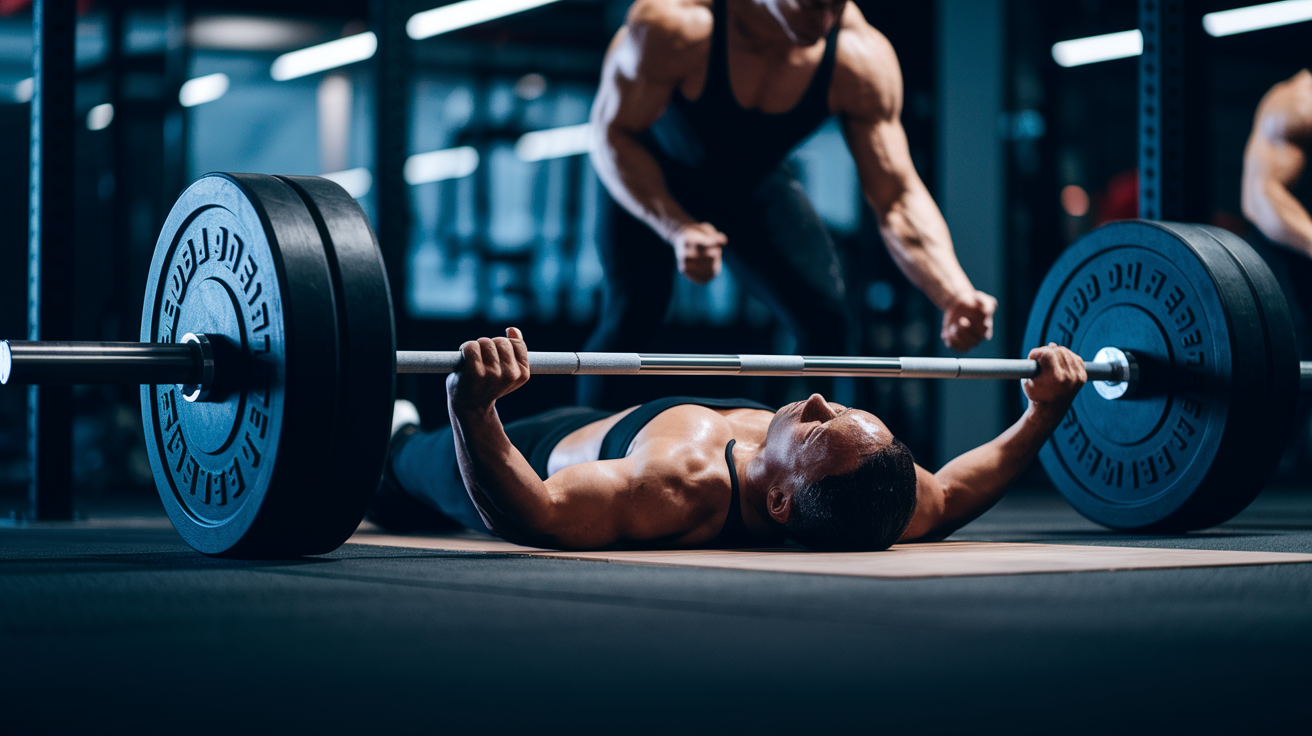
Push A anchors your weekly chest and shoulder volume with heavy pressing movements. You’ll start with flat barbell bench press for four working sets of 5 to 8 reps, taking 2 to 3 minutes of rest to allow full recovery between sets. That heavier load builds pressing strength and recruits the most muscle fibers in your pecs and front delts.
From there, you’ll add an overhead press for shoulders and an incline dumbbell press to hit the upper chest. Both in the 6 to 10 rep range. These compound lifts make up the bulk of your pressing volume for the week.
After the main presses, you’ll move to lateral raises and tricep pushdowns to isolate the side delts and triceps. These higher rep sets (10 to 15 reps) create metabolic stress and pump the smaller muscles without requiring long rest periods. Keep rest to 60 to 90 seconds on isolation work so you finish the session in under an hour.
- Flat Barbell Bench Press, 4 sets × 5 to 8 reps, 2 to 3 min rest
- Overhead Press, 3 sets × 6 to 8 reps, 90 sec rest
- Incline Dumbbell Press, 3 sets × 8 to 10 reps, 60 to 90 sec rest
- Cable Lateral Raise, 3 sets × 12 to 15 reps, 60 sec rest
- Tricep Pushdown, 3 sets × 10 to 12 reps, 60 sec rest
Progress Push A by adding 2.5 to 5 pounds to your bench and overhead press whenever you complete all sets at the top of the rep range with clean form. For example, if you hit 8 reps on all four sets of bench, add 5 pounds next session. On incline press and accessory lifts, aim to add one or two reps per set before increasing weight. This steady load progression is the simplest way to ensure you’re overloading the target muscles week to week.
Pull Day A: Back, Lats, Rear Delts, Biceps

Pull A builds back thickness and width through a mix of horizontal rows and vertical pulls. You’ll open with barbell rows for four sets of 5 to 8 reps, using a controlled tempo and 2 to 3 minutes of rest. That heavy rowing stimulus hits your mid back, lats, and spinal erectors.
Next, lat pulldowns and seated cable rows add volume in the 8 to 10 rep range. They target the lats from a vertical angle and the rhomboids from a horizontal pull. These movements form the foundation of your weekly back training.
Face pulls and barbell curls finish the session. Face pulls train the rear delts and upper back stabilizers with high reps (around 15) and short rest, helping balance all the pressing volume from push days. Barbell curls load the biceps with moderate weight for 8 to 10 reps, giving you roughly six total sets of direct bicep work per week when combined with Pull B.
Barbell Row, 4 sets × 5 to 8 reps, 90 sec rest
Lat Pulldown, 3 sets × 8 to 10 reps, 60 to 90 sec rest
Seated Cable Row, 3 sets × 8 to 10 reps, 60 to 90 sec rest
Face Pulls, 3 sets × 15 reps, 60 sec rest
Barbell Curl, 3 sets × 8 to 10 reps, 60 sec rest
For hypertrophy on pull days, focus on a two second lowering phase (eccentric) and a one second squeeze at peak contraction. Don’t yank the weight with momentum. If you can’t control the descent for two full seconds, the load is too heavy. Stop each set one to two reps short of total failure so you maintain good form across all working sets and recover quickly for the next exercise.
Legs Day A: Quads, Glutes, Hamstrings, Calves
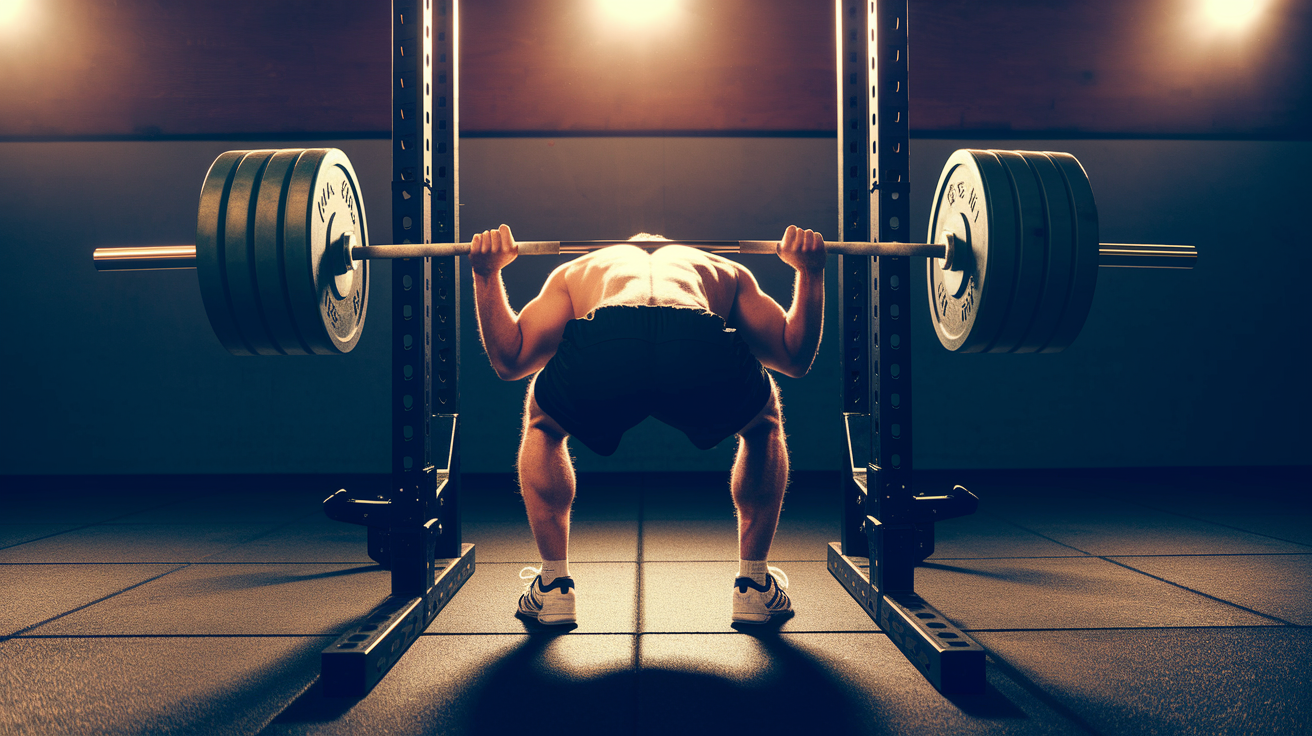
Legs A starts with barbell back squats for four sets of 5 to 8 reps, the cornerstone movement for quad and glute development. Take 2 to 3 minutes between sets to let your central nervous system recover and maintain proper depth and bar speed.
After squats, Romanian deadlifts hit the hamstrings and glutes through a hip hinge pattern, using 3 sets of 8 to 10 reps with 90 seconds of rest. That combination of squat and hinge covers both knee dominant and hip dominant movements.
Leg press adds extra quad volume without the spinal load of another barbell lift. Leg curls isolate the hamstrings. Calf raises finish the session with four sets of 10 to 15 reps. These higher rep sets work well for calves because the muscle responds to both heavy loads and time under tension.
- Barbell Squat, 4 sets × 5 to 8 reps, 2 to 3 min rest
- Romanian Deadlift, 3 sets × 8 to 10 reps, 90 sec rest
- Leg Press, 3 sets × 8 to 10 reps, 60 to 90 sec rest
- Leg Curl, 3 sets × 10 to 12 reps, 60 sec rest
- Calf Raises, 4 sets × 10 to 15 reps, 60 sec rest
Intensity techniques like pause squats (holding the bottom position for two seconds) or one and a half reps can boost hypertrophy on leg day. Use these sparingly, maybe once every few weeks on your final set of squats or leg press, because they increase fatigue quickly. Most weeks, straight sets with steady load progression will deliver better results than constant high intensity methods.
Push Day B: Alternate Chest, Shoulder, Triceps Stimulation

Push B shifts the pressing angles and rep ranges to complement Push A. You’ll start with incline dumbbell press for 3 sets of 8 to 12 reps, which hits the upper chest with a moderate load and slightly higher reps than Monday’s flat bench.
Dumbbell shoulder press follows with the same rep range, training the delts through a full range of motion without the fixed bar path of a barbell. Cable flyes isolate the pecs with 10 to 15 reps, creating a strong stretch and contraction that barbell presses can’t match.
Lateral raises and overhead tricep extensions round out the session. This second push day adds roughly six more sets to your weekly chest volume and another six sets for shoulders and triceps. That brings your total weekly pressing volume to around 12 sets per muscle group, the lower end of the hypertrophy range. If you recover well and want more growth, you can add one set to each exercise on Push B to reach about 18 sets per week.
Incline Dumbbell Press, 3 sets × 8 to 12 reps, 60 to 90 sec rest
Dumbbell Shoulder Press, 3 sets × 8 to 12 reps, 60 to 90 sec rest
Cable Fly, 3 sets × 10 to 15 reps, 60 sec rest
Lateral Raise, 3 sets × 12 to 15 reps, 60 sec rest
Overhead Tricep Extension, 3 sets × 10 to 12 reps, 60 sec rest
Your combined chest volume from Push A and Push B sits at 12 to 15 weekly sets (four sets of bench, three sets of incline press, three sets of cable flyes, plus any overlap from shoulder presses). Shoulders get similar volume from overhead presses and lateral raises. Triceps accumulate about six direct sets plus the indirect work from all pressing movements. If your chest or shoulders stall, bump one exercise up by a single set before adding a third push day or changing the program.
Pull Day B: Alternate Back, Lats, Rear Delts, Biceps Emphasis

Pull B uses dumbbell and cable variations to hit the back from different angles than Pull A. You’ll open with single arm dumbbell rows for 3 sets of 8 to 12 reps per arm, which let you focus on one side at a time and pull through a longer range of motion than barbell rows.
Cable pulldowns follow with a neutral or wide grip for 10 to 12 reps, targeting the lats with constant tension. Reverse flyes train the rear delts and upper back stabilizers with high reps and lighter weight.
Incline dumbbell curls and hammer curls finish the bicep work. The incline position stretches the long head of the biceps, and hammer curls shift some load to the brachialis. Between Pull A and Pull B, you’ll perform roughly 12 sets of direct back work and 6 to 9 sets of bicep isolation per week.
- Dumbbell Row, 3 sets × 8 to 12 reps per arm, 60 to 90 sec rest
- Cable Pulldown, 3 sets × 10 to 12 reps, 60 sec rest
- Reverse Fly, 3 sets × 12 to 15 reps, 60 sec rest
- Incline Dumbbell Curl, 3 sets × 10 to 12 reps, 60 sec rest
- Hammer Curl, 3 sets × 10 to 12 reps, 60 sec rest
Pull A covers barbell rows, lat pulldowns, and seated cable rows, building thickness through heavy horizontal pulls and width through vertical pulls. Pull B adds unilateral rowing, more lat volume with cables, and rear delt isolation. Together, these two sessions train every region of your back. Upper traps and rhomboids from rows. Lats from pulldowns. Rear delts from face pulls and reverse flyes. And spinal erectors from the heavy barbell rows on day A. This split ensures balanced development without overloading any single session.
Legs Day B: Alternate Quad, Hamstring & Glute Focus

Legs B swaps the barbell squat for Bulgarian split squats and replaces the Romanian deadlift with hip thrusts, shifting emphasis to single leg stability and glute activation. Bulgarian split squats challenge each leg individually, improving balance and ensuring that your stronger leg doesn’t compensate for the weaker one.
Hip thrusts isolate the glutes with a shorter range of motion and allow you to load heavier than most hinge movements. Both exercises use 3 sets of 8 to 12 reps with 60 to 90 seconds of rest.
Leg extensions and leg curls add isolation volume for quads and hamstrings. Calf raises match the volume from Legs A. This second leg session keeps total weekly quad and hamstring sets around 12 to 15, depending on whether you count leg press and Bulgarian split squats as full quad volume.
Bulgarian Split Squat, 3 sets × 8 to 12 reps per leg, 60 to 90 sec rest
Hip Thrust, 3 sets × 10 to 12 reps, 60 to 90 sec rest
Leg Extension, 3 sets × 10 to 15 reps, 60 sec rest
Leg Curl, 3 sets × 10 to 15 reps, 60 sec rest
Calf Raises, 4 sets × 10 to 15 reps, 60 sec rest
Training legs twice per week on a 6 day split can leave you sore, especially in the first few weeks. Manage fatigue by keeping the first leg day heavier and lower rep (Legs A with squats and RDLs) and the second day moderate load with more isolation (Legs B with split squats and extensions). If soreness is interfering with performance, reduce one set from each exercise on Legs B or swap the heavy squat on Wednesday for a lighter variation like goblet squats until your work capacity improves.
Progression, Weekly Volume & Overload Strategy
Progressive overload drives hypertrophy. On this 6 day program, you’ll increase training stress by adding weight, reps, or sets over time. The simplest method is to add 2.5 to 5 pounds to a compound lift once you hit the top of the prescribed rep range for all working sets.
For example, if your barbell row calls for 4 sets of 5 to 8 reps and you complete 4 sets of 8 with 135 pounds, load 140 pounds the following week. If you only manage 6 reps per set with the new weight, that’s fine. Work back up to 8 reps before adding another 5 pounds.
On accessory and isolation movements, rep progression often works better than load jumps. If cable lateral raises are programmed for 3 sets of 12 to 15 reps, aim to hit 15 reps on all three sets before increasing the weight stack by the smallest increment your gym allows. For dumbbell exercises, the jumps are usually 5 pounds per hand, which can feel large on smaller muscles. In those cases, add an extra rep or two per set for a few weeks before making the weight jump.
Weekly volume sits around 12 sets per major muscle group at baseline, which is the middle of the effective hypertrophy range for most lifters. If you plateau after eight weeks, you can add one set to a few exercises to reach 15 to 18 sets per week. For example, bump incline dumbbell press from 3 sets to 4 sets, or add a fourth set of leg curls. Track your performance in a notebook or app so you know exactly when and where to add volume.
Load Progression: add 2.5 to 5 pounds when you complete all sets at the top of the rep range
Rep Progression: add 1 to 2 reps per set on accessory lifts before increasing weight
Volume Progression: add one set per exercise every 4 to 8 weeks if recovery allows and progress stalls
Deload Weeks: reduce volume by 40 to 60% or load by 10 to 20% every 6 to 8 weeks to manage fatigue
Proximity to Failure: stop most sets 1 to 2 reps short of failure. Push closer (0 to 1 RIR) only on final sets of isolation exercises
Recovery, Rest, and Common Mistakes

Training six days per week leaves little margin for poor recovery. Sleep at least seven hours per night, aiming for eight or nine if possible. Muscle protein synthesis stays elevated for 24 to 48 hours after a session, and inadequate sleep blunts that response. If you’re consistently tired or your performance drops for two weeks in a row, add an extra rest day or scale back one set per exercise before changing the entire program.
Hydration and daily protein distribution matter. Spread your protein across three to five meals, aiming for 20 to 40 grams per meal. Drink enough water that your urine stays pale yellow. On heavy squat or deadlift days, consider adding extra carbohydrates around your workout to fuel performance and speed recovery.
Common mistakes include adding too much volume too soon, skipping warm up sets on heavy compounds, and training to failure on every set. Beginners sometimes run this program while cutting aggressively, which leads to poor recovery and strength loss. If you’re in a calorie deficit larger than 500 calories per day, drop to a 4 or 5 day split until you’re eating closer to maintenance.
Other frequent errors:
Skipping the rest day. Your muscles grow during recovery, not during the workout. Rest Sunday or swap it to mid week if your schedule demands.
Ignoring load progression. If you lift the same weights for months, you won’t grow. Log every session and aim to beat last week’s numbers.
Excessive cardio. High volume cardio can interfere with leg day recovery and eat into your calorie surplus. Limit steady state cardio to 20 to 30 minutes a few times per week or use low impact options like cycling.
Poor exercise form. Chasing load increases with sloppy reps raises injury risk and reduces time under tension on the target muscle. Film your lifts or ask a coach if you’re unsure.
No deload weeks. Training hard for months without a deload accumulates fatigue. Plan a deload every 6 to 8 weeks by cutting volume in half or dropping weight by 10%.
Inconsistent nutrition. Muscle gain requires a calorie surplus of 200 to 400 calories per day and at least 1.6 g protein per kilogram. Track your intake for a few weeks to ensure you’re hitting those targets.
Final Words
Hit the week with a clear plan: six focused sessions—Push A/B, Pull A/B, Legs A/B—that use compound lifts and the 10–20 weekly sets most muscles need. Follow the sample days, use 6–15 reps, and rest 1–3 minutes between heavy sets.
Progress slowly: add 2–5% weight or a rep when you’re at the top of a range. Track volume, vary angles across A/B days, and prioritize sleep and deloads when needed.
This push pull legs 6 day program for muscle gain is simple to follow and built to last. Stick with it and you’ll get stronger.
FAQ
Q: What is a 6-day Push Pull Legs program?
A: A 6-day Push Pull Legs program is a weekly split that trains push, pull, and leg movements twice each week to maximize hypertrophy with focused volume, core lifts, and built-in variation between A and B days.
Q: Who is the 6-day PPL routine best for?
A: The 6-day PPL routine is best for intermediate lifters with gym access who can recover well and want high weekly volume to build muscle while using consistent progression and movement variation.
Q: How is weekly volume structured for hypertrophy in this program?
A: Weekly volume in this program is structured to give most muscles 10–20 sets per week, with big lifts driving density and accessory work filling the remaining sets for balanced growth across muscle groups.
Q: What rep ranges and rest periods should I use?
A: Rep ranges in the program target 6–15 reps for hypertrophy, with rest periods of about 1–3 minutes depending on load and exercise to support volume, recovery, and progressive overload.
Q: How do Push A and Push B differ?
A: Push A and Push B differ by exercise selection and angles—one emphasizes flat heavy presses and triceps volume, the other uses inclines, different shoulder mechanics, and accessory changes to spread stimulus and fatigue.
Q: How do Pull A and Pull B differ?
A: Pull A and Pull B differ by movement emphasis—one focuses on vertical pulls and heavy rows, the other targets horizontal width, different grip variations, and extra hamstring or rear delt work for full back development.
Q: How should Legs A and Legs B be structured?
A: Legs A and Legs B are structured to alternate quad-dominant and hinge-dominant sessions, using squats, presses, Romanian deadlifts, lunges, and calf work across both days to cover quads, glutes, hamstrings, and calves.
Q: How should I progress and apply overload each week?
A: Progress by adding 2–5% load when you hit top reps, increasing reps within range, or adding a set. Keep 1–4 reps in reserve (don’t go to failure every set) and track lifts weekly.
Q: How much recovery and rest do I need between workouts?
A: Recovery between workouts requires quality sleep, good nutrition, and at least one full rest day per week; monitor soreness and energy, reducing volume if persistent fatigue or performance drops appear.
Q: What common mistakes should I avoid on this 6-day split?
A: Avoid excessive volume without recovery, always chasing heavier weight with poor form, skipping progressive overload tracking, and neglecting mobility or sleep; balance hard sessions with lighter days and deload weeks.
Q: How can I modify the program for beginners or limited gym time?
A: Modify by training 3–4 days (full-body or upper/lower), cutting accessory sets, prioritizing compound lifts, using lighter frequencies, and increasing rest days until consistent recovery and technique are solid.
Q: How should I track progress and know when to adjust the plan?
A: Track progress with weekly weights, reps, and performance trends; adjust if reps stall for two+ weeks, soreness prevents quality sessions, or life stress increases—then reduce volume or add a planned deload.

