
What if a five-minute drink could give your muscles 25 to 45 grams of protein and stop you from raiding the pantry an hour later?
High-protein smoothies do exactly that: they deliver amino acids for recovery, keep you full, and fit into busy days.
This post lays out why they work, how to hit 20 to 45 grams per serving, and easy recipes and swaps for dairy, vegan, or lower-carb plans.
Real food swaps, not coffee-shop sugar, turn a dessert shake into a meal that helps you build muscle and stay satisfied.
Why High-Protein Smoothies Work for Muscle, Recovery, and Daily Energy
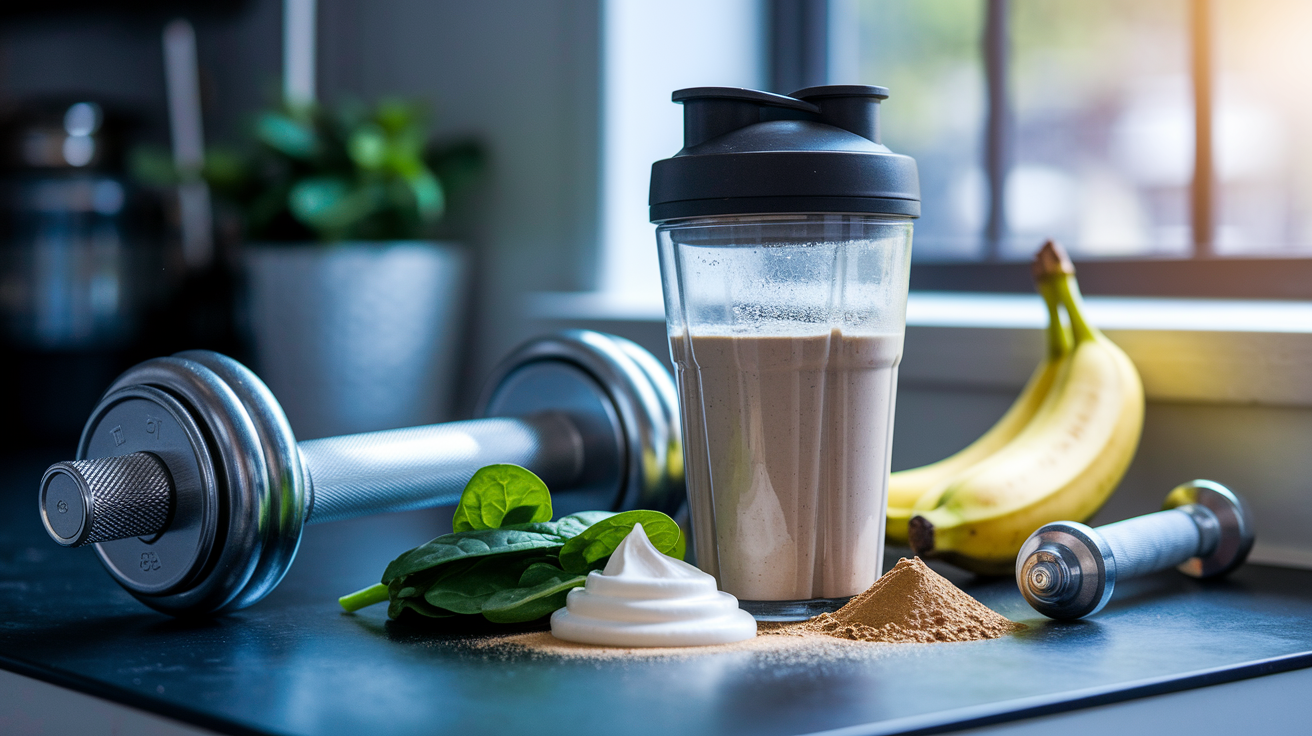
If you’ve dragged yourself home after leg day and stared at your fridge wondering what to eat, a high-protein smoothie might be the simplest answer. Not magic. Just 25 to 45 grams of protein in a drink you can make in under five minutes and sip while you shower.
Protein smoothies do three practical things: they give your muscles amino acids to repair after training, they keep you full for hours (so you’re not raiding the pantry 90 minutes later), and they’re flexible enough to fit whatever eating pattern you follow. Dairy-based, vegan, keto, or just “I need breakfast in a cup.”
The research-backed target for muscle building is roughly 1 gram of protein per pound of target body weight. If you weigh 185 pounds or want to, that’s 185 grams spread across the day. A single high-protein smoothie can deliver 20 to 45 grams in one serving, making it a legitimate meal replacement or post-workout refuel. Not just a snack.
The difference between a high-protein smoothie and a sugar-heavy coffee-shop blend comes down to what you put in the blender. Whole fruit instead of juice. Protein powder, Greek yogurt, or tofu instead of sorbet. A handful of spinach and a tablespoon of nut butter instead of flavored syrups. Those swaps turn a 60-gram-carb dessert into a balanced shake that actually supports your training.
How to Calculate Protein Per Serving (and What Counts as “High Protein”)
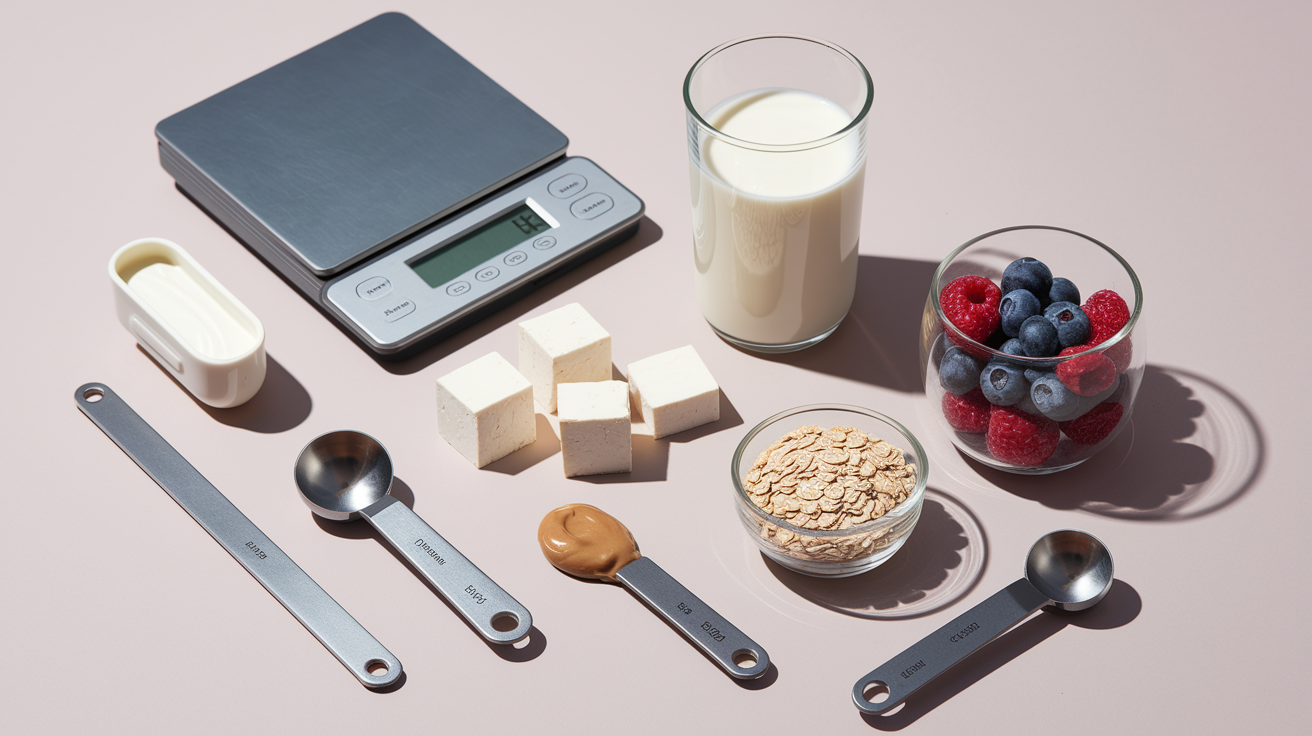
A smoothie earns the label “high protein” when it delivers at least 20 grams per serving. That’s roughly what you’d get from three eggs or a small chicken breast. Anything above 30 grams moves into meal-replacement territory. Above 40 grams, you’re building a serious recovery shake.
Here’s how the math works using common protein sources and standard measures:
| Ingredient | Typical Measure | Protein (grams) |
|---|---|---|
| Whey protein concentrate or isolate | 1 scoop (30 g) | 22–25 g |
| Pea or plant protein powder | 1 scoop (30 g) | 20–25 g |
| Greek yogurt, nonfat | 1 cup (245 g) | 18–22 g |
| Silken tofu | ½ cup (120 g) | 8–11 g |
| Collagen peptides | 1 scoop (20 g) | 16–18 g |
| Cow’s milk | 1 cup (240 mL) | 8 g |
| Soy milk | 1 cup (240 mL) | 7 g |
| Cottage cheese, low-fat | ¼ cup | 7 g |
| Natural peanut butter | 2 tablespoons | 7–8 g |
| Almond or oat milk (unsweetened) | 1 cup | 1–3 g (unless fortified) |
To hit 30 grams of protein in a single smoothie, you might combine one scoop of whey (25 g) with half a cup of Greek yogurt (11 g). For a vegan version, use one scoop of pea protein (22 g) plus half a cup of silken tofu (9 g). The liquid base adds a little more or none at all, depending on what you choose.
Keep in mind that collagen peptides don’t contain the full amino acid profile you get from whey or soy (they’re low in tryptophan), so they work best as a protein boost alongside other complete sources. Not as the only protein in your shake.
If you’re tracking macros or trying to stay under a calorie budget, remember that protein powder is the most concentrated source. One scoop gives you 20+ grams of protein for about 100 to 120 calories. Compare that to two tablespoons of peanut butter, which delivers 8 grams of protein but also 16 grams of fat and 190 calories. Both are useful. Just pick based on whether you need more protein or more calories.
Whey and Dairy-Based High-Protein Smoothies
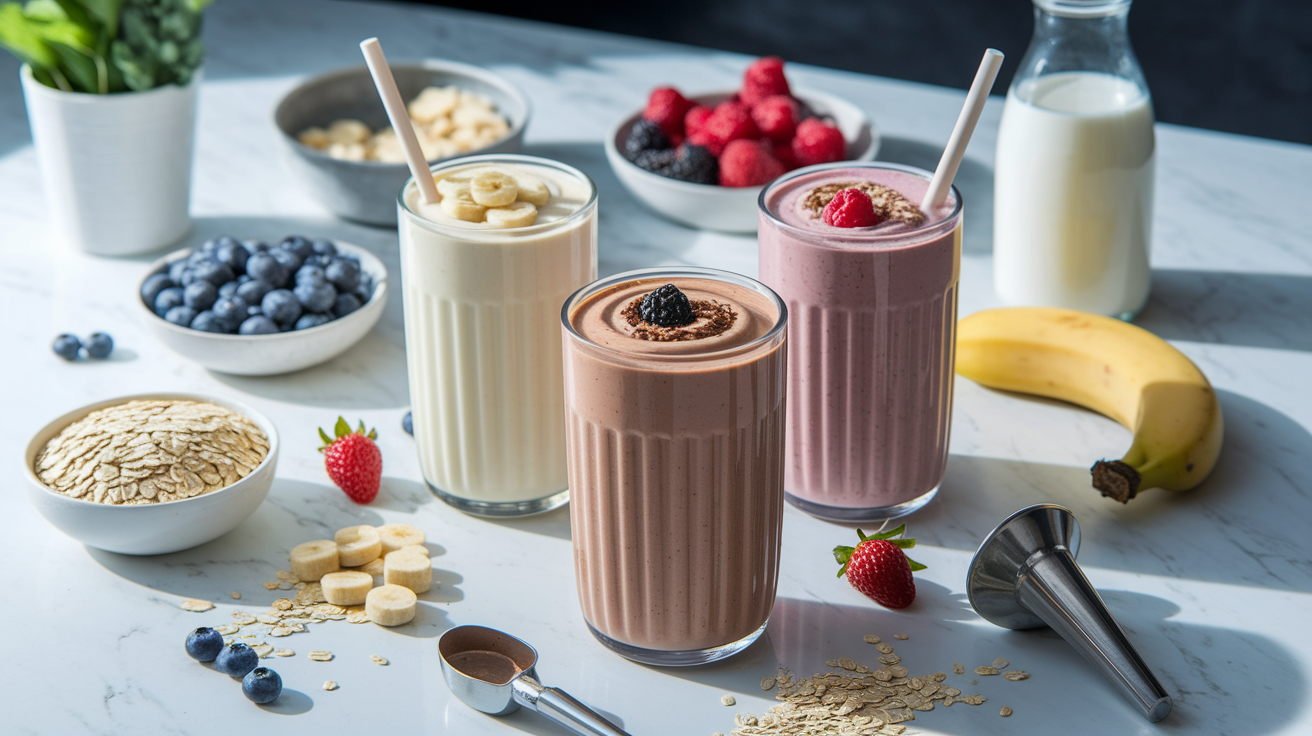
These recipes use whey protein, Greek yogurt, and milk as the backbone. They’re fast, they taste good, and they deliver 40+ grams of protein per serving without requiring exotic ingredients.
Vanilla Whey Power Smoothie
Yield: 1 serving (12–16 oz)
Prep time: 5 minutes
Protein: 44 g | Calories: 430 | Macros: 44 g protein / 52 g carbs / 6 g fat
Ingredients:
- 1 scoop vanilla whey protein (30 g)
- 1 cup skim milk (240 mL)
- ½ cup plain nonfat Greek yogurt
- 1 cup frozen banana slices (about 1 medium banana)
- Ice cubes (optional, for thickness)
Instructions:
- Pour the milk into the blender first.
- Add the protein powder and Greek yogurt.
- Add the frozen banana and ice.
- Blend on high for 30 to 60 seconds until smooth.
Substitutions: Swap skim milk for whole milk to add 5 grams of fat and about 30 calories. Use frozen mango or berries instead of banana if you want less sweetness. Replace whey with pea protein for a dairy-free version, but add a tablespoon of almond butter to improve texture.
Storage: Drink within 30 minutes for best texture. Refrigerate in an airtight container for up to 24 hours. Shake well before drinking.
Estimated cost per serving: $1.80–$3.00 depending on protein powder brand and yogurt.
Chocolate Peanut Butter Banana Smoothie
Yield: 1 serving
Prep time: 5 minutes
Protein: 41 g | Calories: 535 | Macros: 41 g protein / 55 g carbs / 20 g fat
Ingredients:
- 1 scoop chocolate whey protein (30 g)
- 2 tablespoons natural peanut butter
- 1 medium banana (fresh or frozen)
- 1 cup 2% milk (240 mL)
- 1 cup fresh spinach (optional, won’t taste it)
Instructions:
- Add milk to the blender.
- Add protein powder, peanut butter, and banana.
- Add spinach if using.
- Blend until smooth, about 45 seconds.
Substitutions: Use almond butter or cashew butter instead of peanut butter (same calories, slightly different protein). Swap 2% milk for almond milk plus ¼ cup Greek yogurt to lower fat and boost protein. Use cocoa powder (1 tablespoon) plus vanilla protein if you don’t have chocolate whey.
Storage: Best fresh. Refrigerate up to 24 hours. Stir or re-blend before drinking.
Estimated cost per serving: $2.25–$3.50
Berry Oatmeal Meal Replacement Smoothie
Yield: 1 serving
Prep time: 5 minutes
Protein: 41 g | Calories: 440 | Macros: 41 g protein / 50 g carbs / 8 g fat
Ingredients:
- 1 scoop vanilla whey protein (30 g)
- ½ cup plain nonfat Greek yogurt
- ¼ cup uncooked rolled oats
- 1 cup frozen mixed berries (strawberries, blueberries, raspberries)
- 1 tablespoon ground flaxseed
- 1 cup water or skim milk
Instructions:
- Add liquid to blender.
- Add protein powder, yogurt, oats, and flaxseed.
- Add frozen berries.
- Blend on high until smooth and thick, about 60 seconds.
Substitutions: Replace oats with ¼ cup cooked quinoa (same carbs, more complete protein). Use chia seeds instead of flaxseed. Swap frozen berries for frozen cherries or peaches.
Storage: Drink fresh or refrigerate up to 24 hours. The oats will thicken as they sit, so add a splash of milk when reheating.
Estimated cost per serving: $2.00–$3.00
High-Protein Mango Lassi
Yield: 1 serving
Prep time: 5 minutes
Protein: 20 g (without added protein) or 44 g (with 1 scoop whey)
Calories: 180 (plain) or 320 (with protein)
Macros (with protein): 44 g protein / 35 g carbs / 2 g fat
Ingredients:
- 1 cup plain nonfat Greek yogurt
- ½ cup frozen mango chunks
- ½ cup water or skim milk
- Pinch of ground cardamom (optional)
- 1 scoop vanilla whey protein (optional, for higher protein)
Instructions:
- Combine yogurt, mango, and liquid in blender.
- Add cardamom and protein powder if using.
- Blend until smooth, about 30 seconds.
Substitutions: Use coconut yogurt and pea protein for a vegan version. Replace mango with frozen peach or pineapple. Add a teaspoon of honey if you prefer it sweeter (adds about 20 calories).
Storage: Best fresh. Refrigerate up to 24 hours.
Estimated cost per serving: $1.50–$2.50
Plant-Based and Vegan High-Protein Smoothies
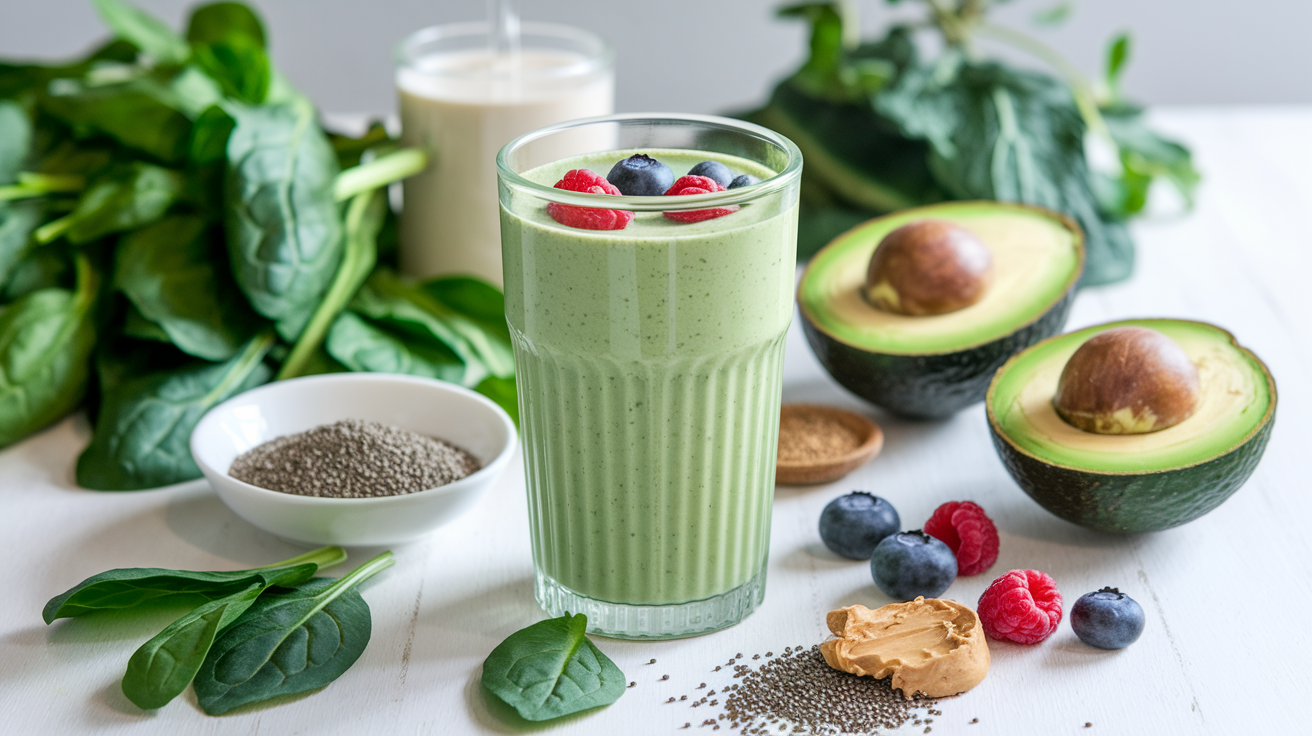
These recipes swap whey for pea, soy, or hemp protein and use tofu, soy milk, or fortified plant yogurt as the protein base. They still deliver 25 to 36 grams of protein per serving.
Green Pea Protein and Tofu Smoothie
Yield: 1 serving
Prep time: 5 minutes
Protein: 36 g | Calories: 385 | Macros: 36 g protein / 22 g carbs / 18 g fat
Ingredients:
- 1 scoop pea protein powder (30 g)
- ½ cup silken tofu (120 g)
- 1 cup fresh spinach
- 1 cup unsweetened almond milk (240 mL)
- ½ avocado (about 50 g)
- Ice cubes (optional)
Instructions:
- Add almond milk to blender.
- Add protein powder, tofu, spinach, and avocado.
- Add ice if you want it colder.
- Blend on high until smooth, about 45 seconds.
Substitutions: Replace almond milk with soy milk to add 7 grams of protein. Swap avocado for 1 tablespoon of hemp seeds (similar fat, slightly less creamy). Use frozen kale instead of spinach.
Storage: Drink fresh. The avocado may brown slightly if refrigerated. Add a squeeze of lemon juice to slow oxidation.
Estimated cost per serving: $2.00–$3.00
Vegan Peanut Butter and Tofu Smoothie
Yield: 1 serving
Prep time: 5 minutes
Protein: 31 g | Calories: 430 | Macros: 31 g protein / 28 g carbs / 22 g fat
Ingredients:
- ½ block silken tofu (about 200 g)
- 2 tablespoons natural peanut butter
- 1 cup unsweetened soy milk (240 mL)
- 1 frozen banana
- 1 teaspoon vanilla extract (optional)
Instructions:
- Add soy milk to blender.
- Add tofu, peanut butter, and banana.
- Add vanilla if using.
- Blend until smooth, about 45 seconds.
Substitutions: Use almond butter or tahini instead of peanut butter. Replace banana with ½ cup frozen mango or berries. Add 1 scoop of pea protein if you want to push protein closer to 50 grams.
Storage: Refrigerate up to 24 hours in an airtight container. Shake before drinking.
Estimated cost per serving: $2.00–$2.75
Pea Protein Berry Smoothie with Oat Milk
Yield: 1 serving
Prep time: 5 minutes
Protein: 25–30 g (depending on oat milk fortification)
Calories: 350 | Macros: 28 g protein / 42 g carbs / 8 g fat
Ingredients:
- 1 scoop pea protein powder (30 g)
- 1 cup fortified oat milk (240 mL)
- 1 cup frozen mixed berries
- 1 tablespoon chia seeds
- 1 tablespoon almond butter
Instructions:
- Add oat milk to blender.
- Add protein powder, berries, chia seeds, and almond butter.
- Blend until smooth, about 45 seconds.
Substitutions: Use soy milk instead of oat milk for slightly more protein. Replace almond butter with sunflower seed butter for nut-free. Swap frozen berries for frozen cherries or peaches.
Storage: Best fresh. Refrigerate up to 24 hours. Chia seeds will thicken the smoothie, so add a splash of milk before drinking.
Estimated cost per serving: $2.25–$3.25
Keto and Low-Carb High-Protein Smoothies
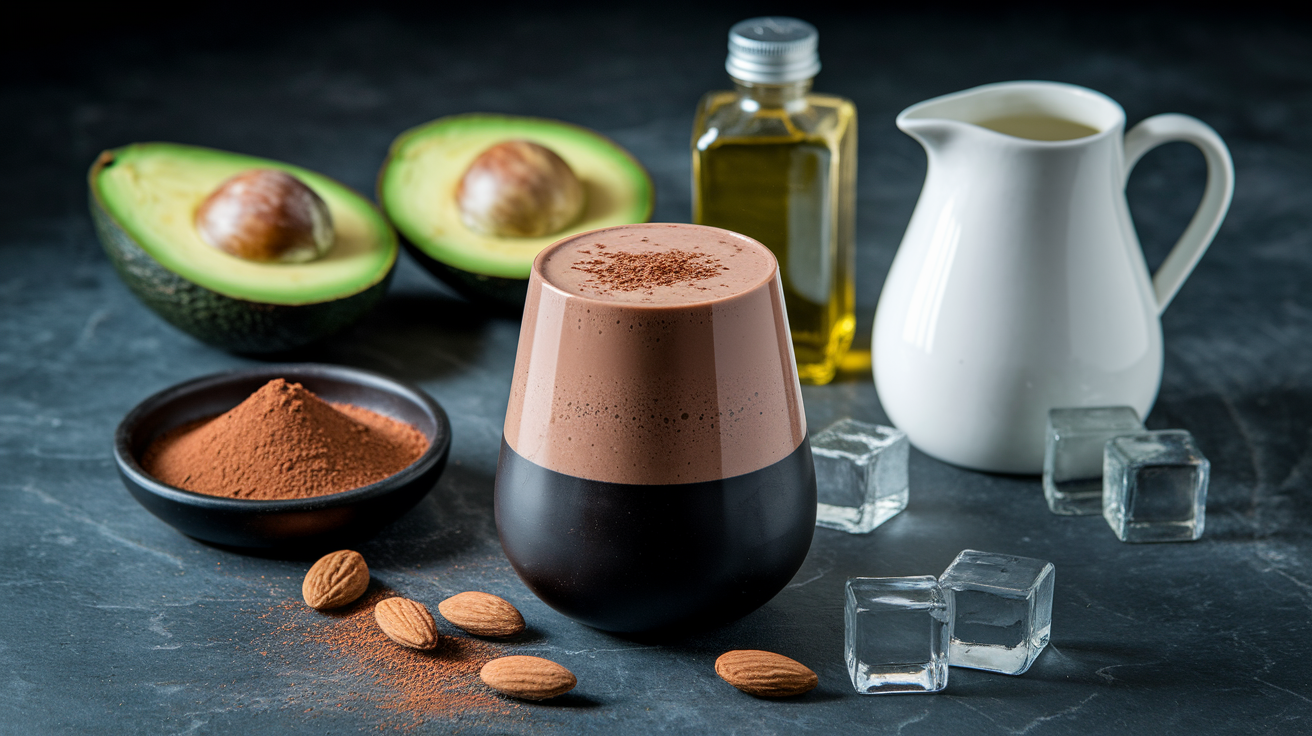
These recipes keep net carbs under 10 grams per serving by skipping fruit and relying on avocado, MCT oil, heavy cream, and low-carb protein powder for calories and fat.
Keto Collagen Coffee Smoothie
Yield: 1 serving
Prep time: 3 minutes
Protein: 22–24 g | Calories: 340 | Net carbs: <6 g | Macros: 24 g protein / 5 g net carbs / 28 g fat
Ingredients:
- 1 scoop collagen peptides (20 g)
- 1 tablespoon MCT oil
- 1 tablespoon almond butter
- ½ cup brewed coffee (cooled or room temperature)
- ½ cup unsweetened almond milk (240 mL total liquid)
- Ice cubes
Instructions:
- Brew coffee and let it cool for a few minutes.
- Add coffee and almond milk to blender.
- Add collagen, MCT oil, and almond butter.
- Add ice.
- Blend on high until frothy, about 30 seconds.
Substitutions: Replace collagen with whey or egg-white protein powder (adds 2–3 grams of protein). Use coconut oil instead of MCT oil (same fat, slower digestion). Replace almond butter with cashew or macadamia butter.
Storage: Drink immediately. The MCT oil separates if refrigerated.
Estimated cost per serving: $2.50–$3.50
Chocolate Avocado Fat-Bomb Smoothie
Yield: 1 serving
Prep time: 4 minutes
Protein: 28–30 g | Calories: 420 | Net carbs: about 10 g | Macros: 30 g protein / 10 g net carbs / 30 g fat
Ingredients:
- 1 scoop chocolate whey or plant protein (30 g)
- ½ medium avocado (about 50 g)
- 2 tablespoons heavy cream or coconut cream
- 1 cup unsweetened almond milk (240 mL)
- 1 tablespoon cocoa powder (unsweetened)
- 1 teaspoon vanilla extract
- Ice cubes
- Optional: 5–10 drops liquid stevia
Instructions:
- Add almond milk to blender.
- Add protein powder, avocado, cream, cocoa powder, and vanilla.
- Add ice and stevia if using.
- Blend until smooth and thick, about 45 seconds.
Substitutions: Use full-fat coconut milk instead of almond milk for more fat and creaminess. Replace heavy cream with 1 tablespoon of MCT oil. Add 1 tablespoon of chia seeds for extra fiber and thickness.
Storage: Drink fresh. Avocado may oxidize if stored. Add lemon juice to slow browning.
Estimated cost per serving: $2.75–$4.00
Post-Workout Recovery and Meal-Replacement Smoothies
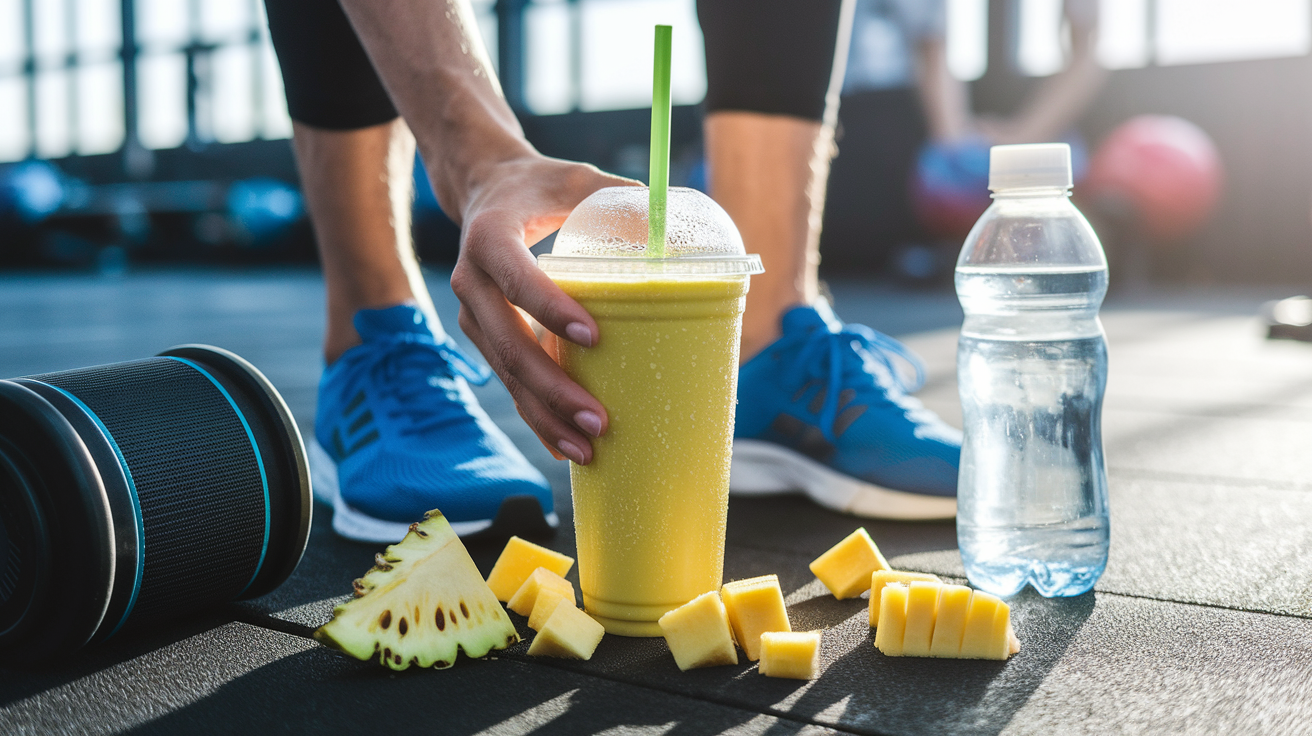
These recipes are built for timing: drink them within 30 to 60 minutes after training to support muscle repair, or use them as a full breakfast or lunch when you’re short on time.
Tropical Post-Workout Recovery Smoothie
Yield: 1 serving
Prep time: 5 minutes
Protein: 26 g | Calories: 350 | Macros: 26 g protein / 48 g carbs / 6 g fat
Ingredients:
- 1 scoop vanilla whey or pea protein (30 g)
- 1 cup frozen pineapple chunks
- ½ cup frozen mango chunks
- 1 cup coconut water (240 mL)
- 1 tablespoon ground flaxseed
- Ice cubes (optional)
Instructions:
- Add coconut water to blender.
- Add protein powder and flaxseed.
- Add frozen pineapple and mango.
- Blend until smooth, about 45 seconds.
Substitutions: Replace coconut water with regular water or soy milk (coconut water adds electrolytes but isn’t required). Swap pineapple for frozen peaches or papaya. Add ½ cup plain Greek yogurt for extra protein and creaminess (adds 11 g protein, 60 calories).
Storage: Best fresh. Refrigerate up to 24 hours.
Estimated cost per serving: $2.00–$3.00
Vanilla Pumpkin Pie Meal-Replacement Smoothie
Yield: 1 serving
Prep time: 5 minutes
Protein: 60 g | Calories: 535 | Macros: 60 g protein / 56 g carbs / 12 g fat
Ingredients:
- 2 scoops vanilla whey protein (60 g)
- ¾ cup pure pumpkin puree (not pie filling)
- ½ cup uncooked rolled oats
- 1 tablespoon ground flaxseed
- 1 tablespoon chopped walnuts
- 12 oz water, milk, or Greek yogurt (360 mL or 1½ cups)
- ½ teaspoon pumpkin pie spice (cinnamon, nutmeg, ginger)
- Ice cubes (optional)
Instructions:
- Add liquid to blender.
- Add protein powder, pumpkin puree, oats, flax, walnuts, and spice.
- Add ice if using.
- Blend on high until smooth and thick, about 60 seconds.
Substitutions: Replace pumpkin with cooked sweet potato (similar carbs and texture). Use ¼ cup cooked quinoa instead of oats for more complete protein. Swap walnuts for pecans or almonds. Use almond milk plus ½ cup Greek yogurt instead of water for more creaminess.
Storage: Refrigerate up to 24 hours. The oats will thicken it. Add a splash of milk before drinking.
Estimated cost per serving: $2.50–$3.75
Kid-Friendly Strawberry Banana Smoothie
Yield: 1 serving
Prep time: 5 minutes
Protein: 19 g (without added protein) or 32 g (with 1 scoop protein powder)
Calories: 295 (with protein) | Macros: 32 g protein / 38 g carbs / 4 g fat
Ingredients:
- 1 cup frozen strawberries
- 1 medium banana (fresh or frozen)
- ½ cup plain nonfat Greek yogurt
- 1 cup skim milk (240 mL)
- Optional: 1 scoop vanilla protein powder (30 g)
Instructions:
- Add milk to blender.
- Add yogurt and protein powder if using.
- Add strawberries and banana.
- Blend until smooth, about 45 seconds.
Substitutions: Use any frozen berry blend instead of strawberries. Replace Greek yogurt with regular yogurt or vanilla yogurt (adds sugar but kids may prefer it). Use whole milk for more calories and fat if your child needs the energy.
Storage: Best fresh. Refrigerate up to 24 hours in a covered cup or bottle.
Estimated cost per serving: $1.50–$2.50
Blending, Texture, and Prep Tips That Actually Matter
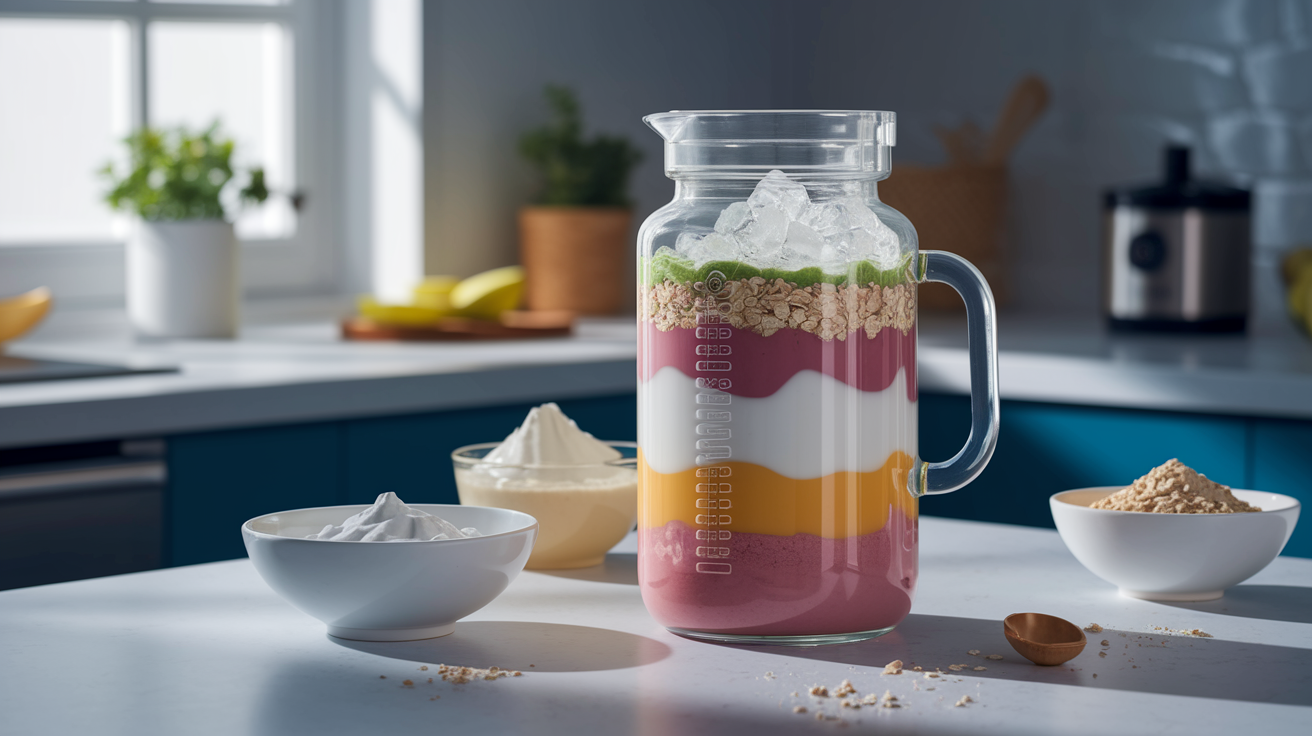
The order you add ingredients changes how fast your smoothie blends and how smooth the final texture is. Always start with liquids (water, milk, or yogurt) so the blender blades can spin freely. Add powders and soft ingredients next (protein powder, nut butter, yogurt), then frozen fruit or ice last. This order prevents clumping and keeps the motor from straining.
Use 1 to 1½ cups of frozen fruit instead of ice to avoid watering down the flavor. Frozen banana, berries, mango, and pineapple all work. If you only have fresh fruit, add a handful of ice cubes to get the thick, cold texture.
If your smoothie turns out too thick, add liquid in small amounts (2 tablespoons at a time) and blend again. If it’s too thin, add a few ice cubes, a tablespoon of oats, or a spoonful of Greek yogurt.
To avoid graininess from protein powder, let the powder sit in the liquid for 10 to 15 seconds before blending, or blend on low for 10 seconds first, then ramp up to high. Some plant-based proteins (especially rice or hemp) stay grainy no matter what. Adding nut butter or avocado helps mask the texture.
If you’re using oats, grind them into a fine powder in the blender before adding the rest of the ingredients. This makes the final smoothie smoother and easier to drink.
Blending time matters. Most smoothies need 30 to 60 seconds on high. If you blend for too long, the friction heats the mixture and you lose that cold, thick texture. If you under-blend, you get chunks.
Smart Ingredient Swaps for Allergies, Budget, and Dietary Preferences
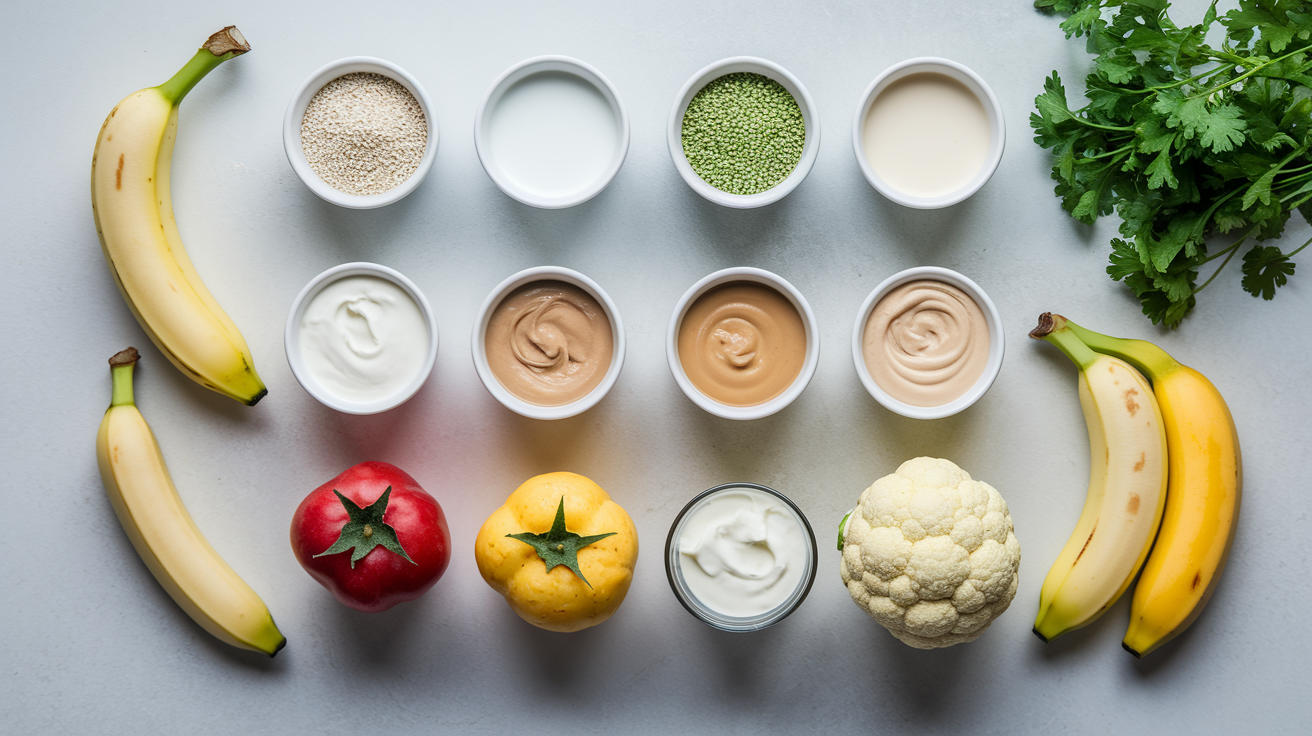
Swapping ingredients without losing protein or texture is simpler than it sounds. Here’s what works.
Whey protein to pea protein or soy protein
Use the same scoop size (30 g). Pea and soy both deliver 20 to 25 grams of protein per scoop. Pea protein can taste earthy. Add a tablespoon of cocoa powder or vanilla extract to cover it. Soy protein blends smoother and has a more neutral flavor.
Cow’s milk to soy milk or fortified oat milk
Soy milk matches cow’s milk for protein (7–8 grams per cup). Oat milk and almond milk have less protein (1–3 grams per cup) unless fortified, so if you use them, add ¼ cup Greek yogurt or an extra scoop of protein powder.
Greek yogurt to cottage cheese or silken tofu
Half a cup of cottage cheese gives you about 14 grams of protein and blends smooth if you use low-fat or nonfat versions. Silken tofu (½ cup) adds 8 to 11 grams of protein and makes the smoothie creamy without any dairy. It has almost no flavor, so it works in any recipe.
Peanut butter to almond butter, cashew butter, or sunflower seed butter
These swap 1:1 in any recipe. Protein stays around 7 to 8 grams per 2 tablespoons. Sunflower seed butter is nut-free and school-safe. Tahini (sesame seed butter) also works and adds a subtle nutty flavor.
Banana to frozen cauliflower, frozen zucchini, or cooked white sweet potato
If you want to cut sugar or carbs, use ½ cup of frozen cauliflower or zucchini. They add creaminess without flavor. Cooked sweet potato (½ cup) is higher in carbs but adds fiber and makes the smoothie thicker.
Heavy cream (keto recipes) to full-fat coconut milk or coconut cream
Coconut cream delivers the same fat and thickness without dairy. Use 2 tablespoons to replace 2 tablespoons of heavy cream. It adds a mild coconut flavor, which works well with chocolate or tropical recipes.
Collagen peptides to egg-white protein powder
If you want a complete amino acid profile instead of collagen’s limited range, use egg-white protein powder. One scoop (about 25 g) gives you 20 to 22 grams of complete protein with almost no carbs or fat.
How to Store, Freeze, and Batch-Prep High-Protein Smoothies
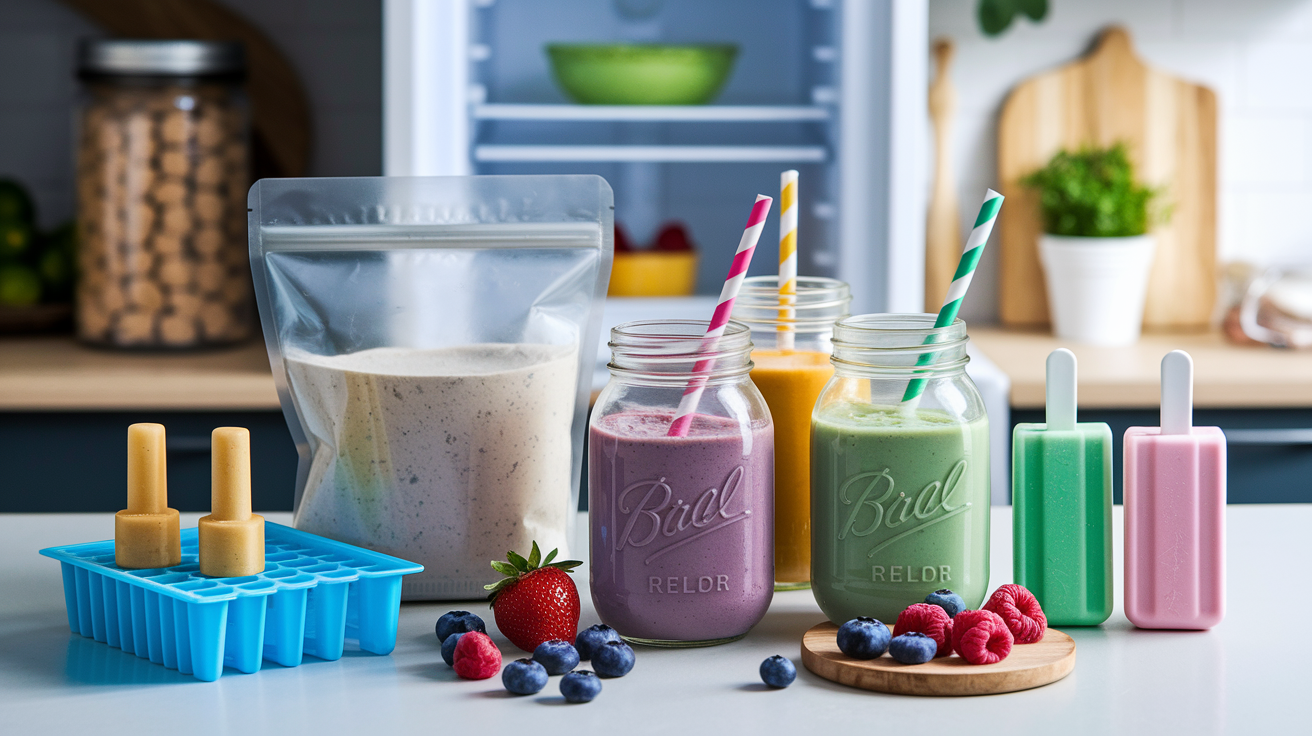
Fresh smoothies taste best within 30 minutes, but you can store them if you need to prep ahead. Pour the smoothie into an airtight container or mason jar, fill it all the way to the top (less air means less oxidation), and refrigerate for up to 24 to 48 hours. Shake or stir before drinking. Ingredients separate as they sit.
Smoothies with avocado, banana, or greens may brown slightly after a few hours. Add a squeeze of lemon or lime juice before blending to slow oxidation. The flavor stays fine even if the color shifts.
To freeze smoothies, pour them into ice cube trays, silicone muffin cups, or small freezer-safe containers. Freeze for 1 to 3 months. When you’re ready to drink, dump the frozen cubes into a blender with ¼ cup of milk or water and blend until smooth. You can also thaw them overnight in the fridge and shake before drinking, though the texture won’t be as thick.
For true batch prep, measure out dry ingredients (protein powder, oats, flax, chia) and store them in small zip-top bags or jars. Label each bag with the recipe name and the liquid/frozen fruit you’ll need. In the morning, dump the dry mix into the blender, add liquid and frozen fruit, and blend. This cuts prep time to under two minutes.
Don’t freeze smoothies with whole Greek yogurt or cottage cheese. They separate and turn grainy when thawed. If you want to freeze a yogurt-based smoothie, use the ice-cube method and re-blend with fresh yogurt when you’re ready to drink.
Smoothie popsicles work well for kids or post-workout treats. Pour any leftover smoothie into popsicle molds and freeze. They keep for up to 3 months and deliver the same protein and macros as the original shake.
Nutrition Labels, Rounding Rules, and How These Values Were Calculated
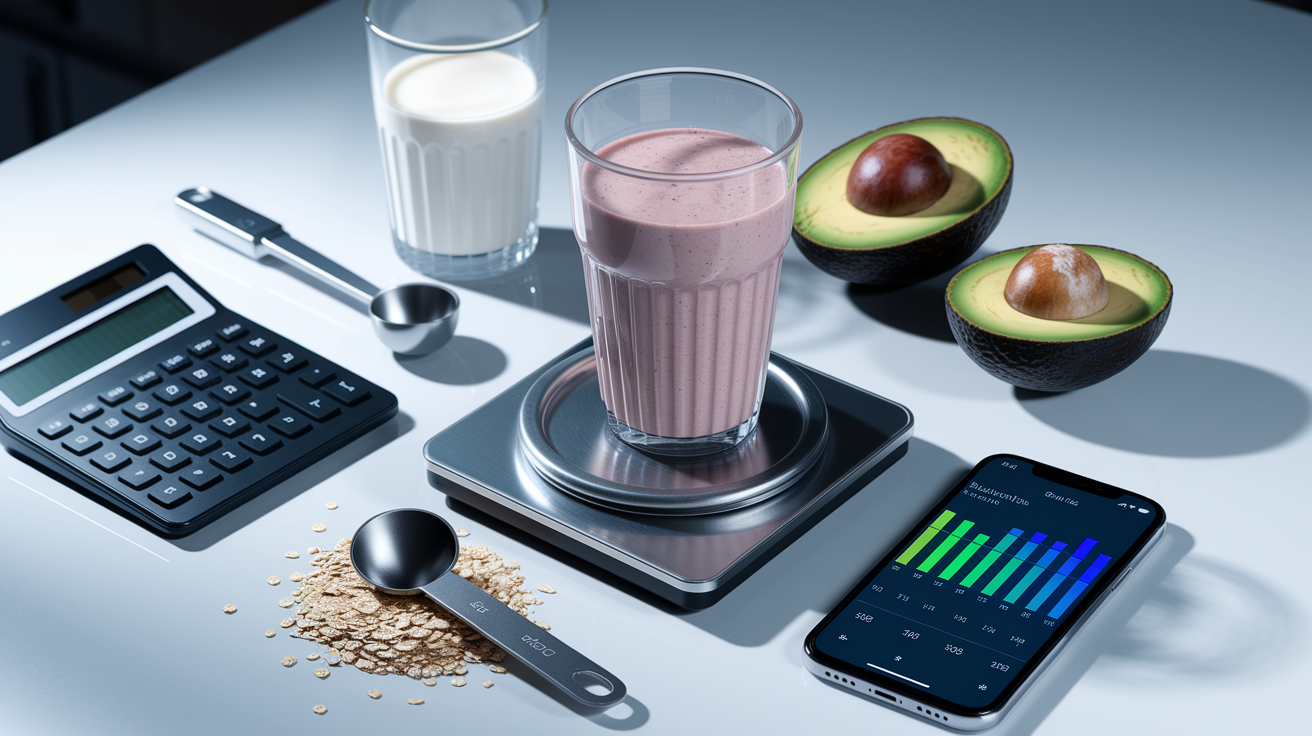
All nutrition values in this article were calculated using standard USDA food composition databases and product labels for common retail protein powders, dairy, and plant-based ingredients. Values are rounded to the nearest whole number for protein, carbs, and fat. Calories are rounded to the nearest 5 or 10.
Protein powder scoops vary by brand. Most whey and pea proteins use a 30-gram scoop that delivers 22 to 25 grams of protein. If your powder lists a different scoop size on the label, adjust the recipe amount to match the protein target.
Greek yogurt protein content depends on fat level. Nonfat Greek yogurt delivers about 18 to 22 grams of protein per cup. Low-fat or full-fat versions have slightly less protein (15 to 18 grams per cup) because the fat displaces some of the protein. For the highest protein per calorie, use nonfat.
Milk protein is consistent: 1 cup of cow’s milk has 8 grams of protein regardless of fat percentage. Skim, 1%, 2%, and whole milk differ only in fat and calories, not protein.
Plant milks vary widely. Soy milk is the only plant milk that naturally matches dairy milk for protein (7 grams per cup). Almond, oat, and coconut milks range from 1 to 3 grams per cup unless fortified with pea protein or other additives. Always check the label.
Collagen peptides are often marketed as high-protein, but they lack tryptophan and aren’t a complete protein source. They work well as a protein boost alongside whey, pea, or soy, but shouldn’t be your only protein in a meal-replacement smoothie.
Calories from added fats (nut butters, avocado, MCT oil, cream) are calculated at 9 calories per gram of fat. Protein and carbs are 4 calories per gram. Fiber is subtracted from total carbs to calculate net carbs in keto recipes.
These values are estimates. Ingredient brands, ripeness of fruit, and blender efficiency all create small variations. If you’re tracking macros closely, weigh ingredients on a food scale and log them in your own tracking app.
Final Words
Jump straight into action: decide if you’ll add links, then follow the simple outline, explain why protein matters, list key ingredients, share easy recipes, and cover timing and troubleshooting.
We also included a grocery-ready shopping list and a quick FAQ so you can actually make smoothies this week.
Try one recipe, tweak it, and keep it practical—aim for balanced ingredients and consistent protein. Enjoy making high protein smoothies that fit your routine and boost your day.
FAQ
Q: Which protein shake is best for tirzepatide?
A: The best protein shake for tirzepatide users is low-sugar, moderate-carb, high-protein (20–30 g) with added fiber or healthy fat to boost satiety and steady blood glucose; avoid high-calorie, sugary mixes.
Q: What’s the best smoothie for diabetics?
A: The best smoothie for diabetics is low in added sugar, built on unsweetened milk or water, with protein (Greek yogurt or protein powder), fiber (berries, greens), and healthy fat to blunt glucose spikes.
Q: Can chemo patients drink smoothies?
A: Chemo patients can drink smoothies, but they should check with their oncology team; use pasteurized dairy or shelf-stable alternatives, avoid raw produce if neutropenic, limit sugar, and choose gentle, nutrient-dense ingredients.
Q: What protein drink is good for diabetics?
A: A good protein drink for diabetics is low-sugar, with 15–30 g protein, minimal added carbs (<10 g), and added fiber or healthy fat to slow absorption; whey or plant proteins both work if unsweetened.

