
Think you need a gym and a barbell to get really strong? Think again.
A push-pull-legs split with only adjustable dumbbells and a mat can build serious strength at home.
You’ll use floor presses, single-arm rows, goblet squats and smart progression – add reps, then weight, or tweak tempo.
No bench, no pull-up bar, no drama.
This post gives a clear 3- or 6-day weekly plan, exact sets and reps, and easy cues to keep progressing.
If you want strength that lasts without cluttering your living room, start here.
Foundations of a Home Push Pull Legs Routine With Dumbbells
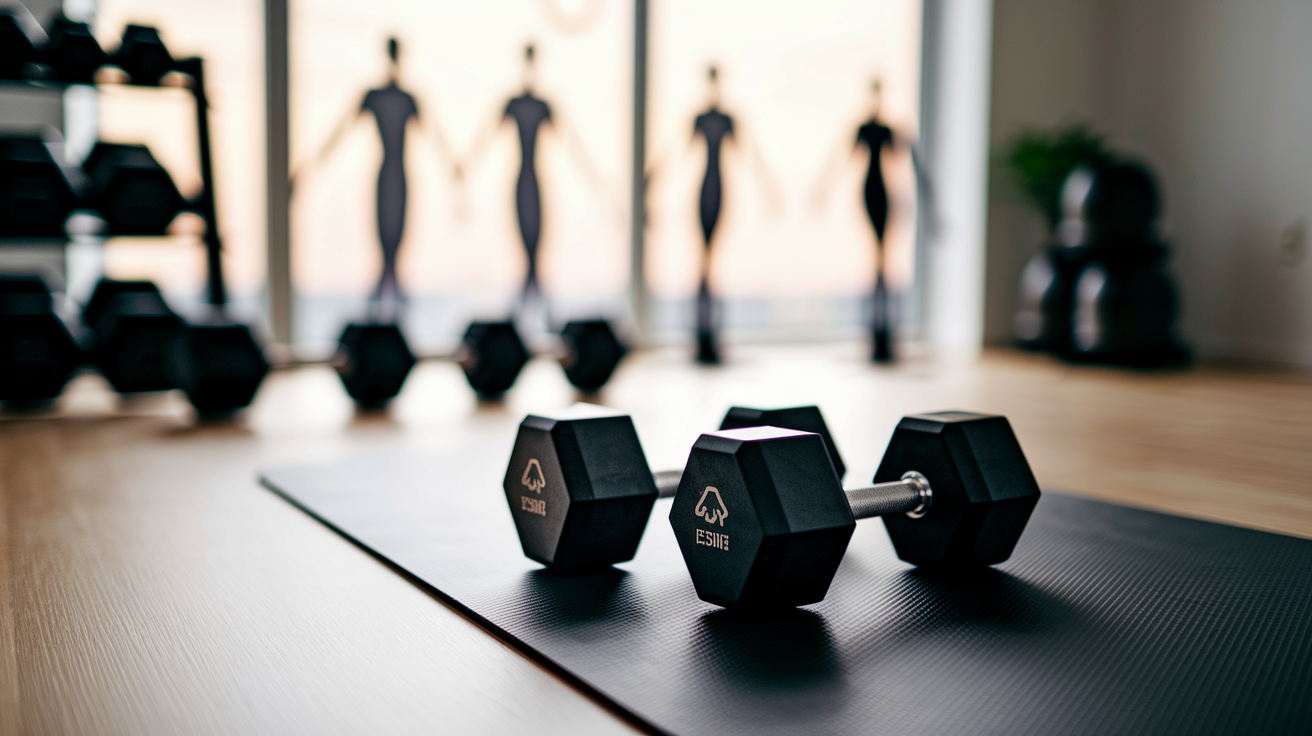
Push pull legs splits organize training by movement pattern. Not individual muscles. Push day covers anything that moves weight away from your torso. Pull day handles what pulls weight toward you. Leg day hits your lower body and core.
The whole thing works at home with adjustable dumbbells and a mat. You don’t need a bench for most movements. Floor press replaces traditional bench press, single-arm rows swap in for cable rows, goblet squats substitute back squats. Tension and progressive overload stay intact.
| Day | Exercises | Sets & Reps |
|---|---|---|
| Push | Floor Press, Standing Overhead Press, Floor Flys, Lateral Raises, Overhead Triceps Extensions | 3–4 sets of 8–15 reps per exercise |
| Pull | Single-Arm Rows, Dumbbell Pullovers, Bent-Over Rear Delt Raises, Standing Shrugs, Dumbbell Curls | 3–4 sets of 8–15 reps per exercise |
| Legs | Goblet Squat, Romanian Deadlift, Bulgarian Split Squat, Single-Leg Floor Bridge, Walking Lunges | 3–4 sets of 8–15 reps per exercise |
Weekly structure options:
3-day plan: Train each pattern once per week. Monday Push, Wednesday Pull, Friday Legs. Rest or light activity Tuesday, Thursday, Saturday, Sunday.
6-day plan: Repeat the Push-Pull-Legs sequence twice. Monday Push, Tuesday Pull, Wednesday Legs, Thursday Push, Friday Pull, Saturday Legs, Sunday rest.
Adjust frequency: Beginners do well with 3 days per week. Intermediate and advanced trainees often benefit from 6 days because weekly volume per muscle climbs.
Alternate templates: Rotate workouts A and B for each day to vary exercises every other session.
Rest days: Two full rest days per week on a 5-day schedule. One full rest day on a 6-day schedule.
Session length: Expect 55–65 minutes per session if you rest 60–90 seconds between accessory sets and 90–180 seconds after heavy compounds.
Pros & Cons of a Dumbbell-Only Push Pull Legs Routine at Home
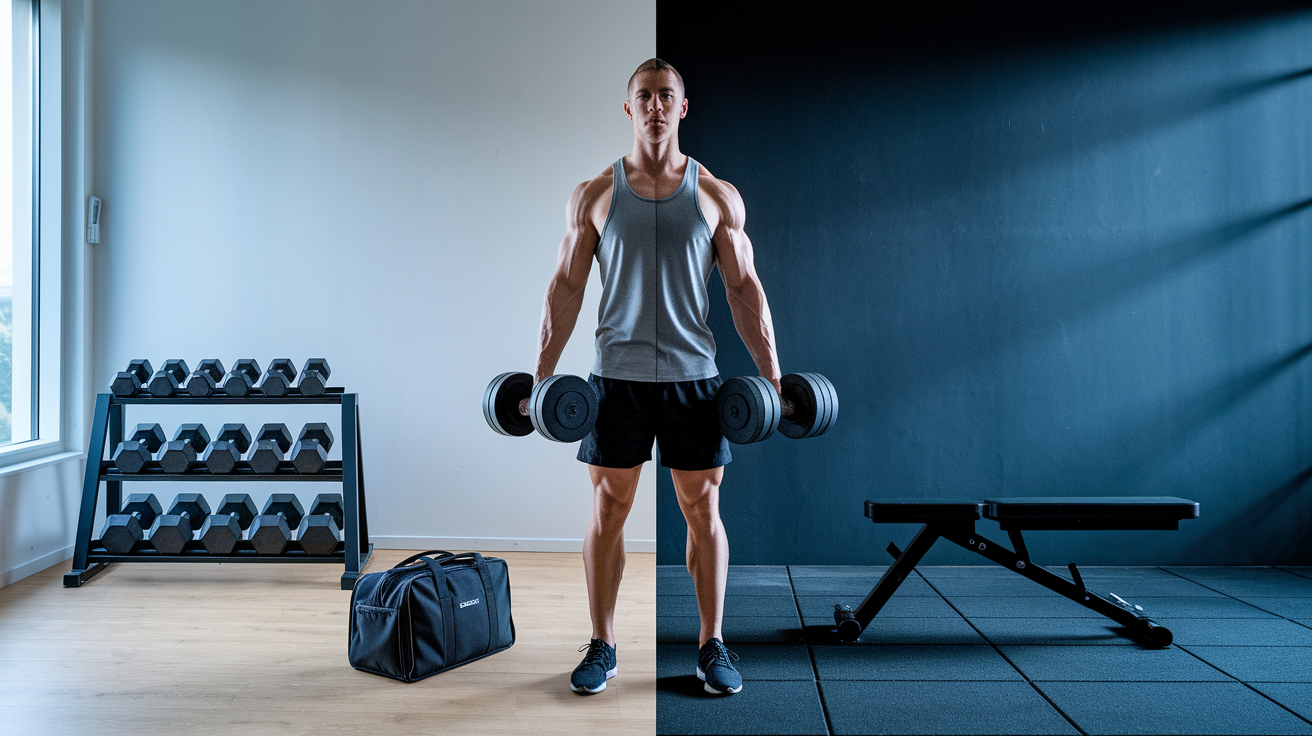
A dumbbell-only setup removes barriers and offers flexibility. But it introduces a few practical trade-offs worth knowing before you commit.
Pros:
Cost and space efficient compared to a full rack and barbell setup. Adjustable dumbbells from 5 to 80 pounds with 16 weight settings cover most home exercises without cluttering your floor.
Joint-friendly grip options. Neutral hand positions reduce shoulder and elbow strain during presses and rows.
Unilateral movements like single-arm rows and Bulgarian split squats correct left-right strength imbalances naturally.
Easier to bail safely when training alone. You can drop dumbbells without risk of barbell-related injury.
Portable for travel. You can maintain your routine in hotel gyms or limited spaces.
Cons:
Lower absolute load ceiling. Once you outgrow 80-pound dumbbells for goblet squats or Romanian deadlifts, progression slows unless you add tempo or volume.
Slower weight increments on small adjustable sets. Sometimes the jump from one setting to the next feels too large for accessory moves like lateral raises.
No stable horizontal pressing angle without a bench. Floor press works but limits range of motion slightly.
Pull-up alternatives like pullovers or inverted rows under a table require creativity and may not fully replicate vertical pull stimulus.
Longer rest intervals needed for heavy compound sets to maintain quality. Can extend session time.
Tracking micro-progressions becomes critical because you can’t rely on small barbell plate increases.
Most trainees still see steady hypertrophy and strength gains on this setup. Tension, volume, and progressive overload drive results more than equipment variety. Committing to structured progression methods matters. Use tempo, rest-pause, and rep increases when you can’t add more weight immediately.
Push Day: Definition, Movement Pattern, and Full At-Home Dumbbell Routine
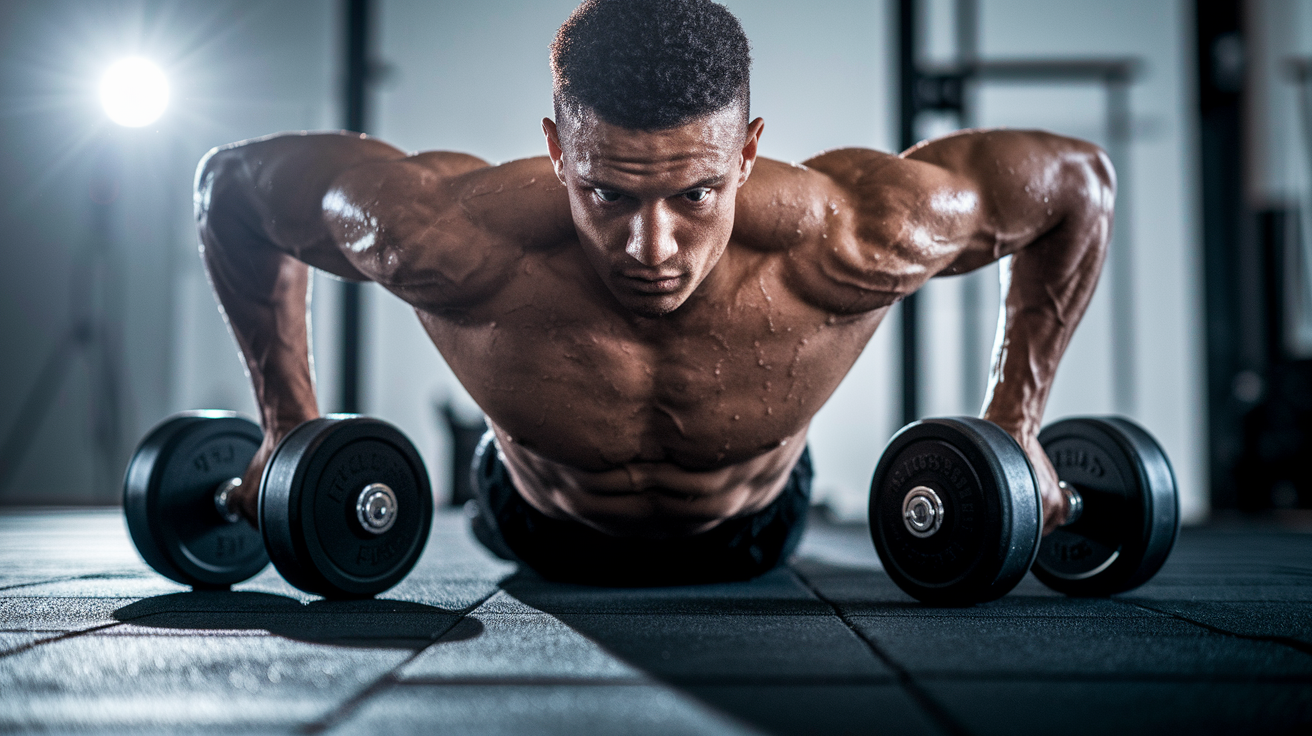
Push day targets every muscle that extends your elbow or pushes weight away from your torso. Primarily your chest, shoulders, and triceps. These movements share a common mechanical pattern: a concentric phase that involves pressing or raising weight against gravity and an eccentric phase that controls the descent.
You can build significant chest and shoulder mass with floor-based dumbbell presses and raises. The limiting factor in hypertrophy is mechanical tension under load, not whether you’re lying on a bench or a mat. Floor press simply limits the stretch phase to the point where your upper arms touch the ground. Protects your shoulders and still generates high pec activation.
Primary muscles and rep range logic:
Chest (pectoralis major): Responds well to horizontal pressing and fly movements in the 8–15 rep range.
Shoulders (anterior and lateral deltoids): Front delts get indirect volume from presses. Lateral delts require dedicated raises in the 12–15 rep range.
Triceps (all three heads): Overhead extensions target the long head. Close-grip presses and kickbacks emphasize lateral and medial heads. Program 12–15 reps for isolation work.
Compound lifts first: Start with floor press and standing overhead press while you’re fresh to maximize load.
Isolation moves second: Flys, raises, and extensions come after compounds to pre-exhaust smaller muscles without compromising pressing strength.
Rest intervals: 90–120 seconds after heavy presses, 60–90 seconds after accessory moves.
Frequency: Train push movements 1–2 times per week depending on your overall split structure.
Progression triggers: Add weight when you can complete 15+ controlled reps on compound movements. Increase sets or reduce rest for accessories.
| Exercise | Sets | Reps |
|---|---|---|
| Floor Press | 3–4 | 8–12 |
| Standing Overhead Press | 3 | 8–12 |
| Floor Dumbbell Flys | 3 | 10–15 |
| Lateral Raises | 3 | 12–15 |
| Overhead Triceps Extensions | 3 | 12–15 |
Pull Day: Definition, Movement Pattern, and Full At-Home Dumbbell Routine
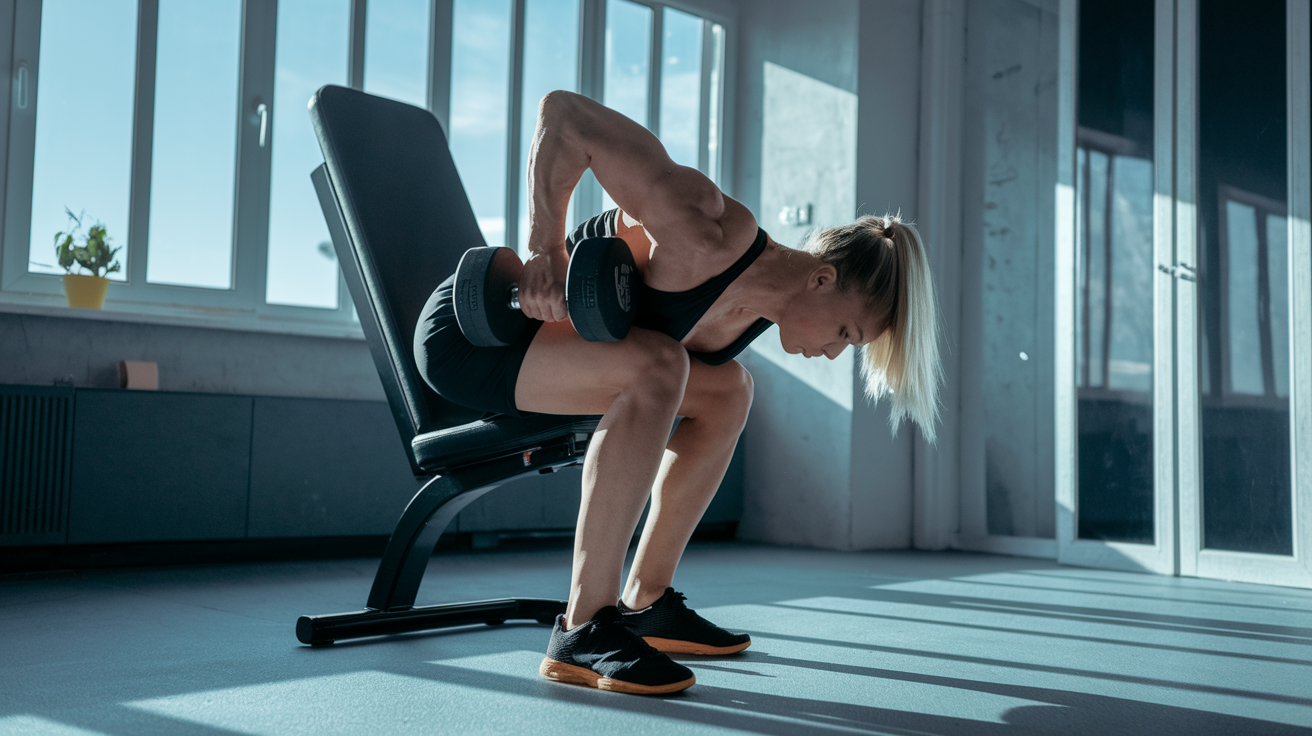
Pull day trains muscles that flex your elbow or pull weight toward your body. Your back, rear delts, and biceps. These movements emphasize scapular retraction, elbow flexion, and hip hinge mechanics. They balance the anterior-dominant work you do on push day.
You can build a thick back and strong grip at home by prioritizing single-arm rows, pullovers, and rear delt raises. Single-arm rows let you brace your opposite knee or hand on a sturdy chair or table, creating a stable base that mimics a bench-supported row without needing dedicated equipment.
Movement patterns and muscle roles:
Lats (latissimus dorsi): Primary movers in rows and pullovers. Respond to 8–12 rep ranges with controlled eccentrics.
Rhomboids and mid-traps: Engaged heavily during scapular retraction in bent-over rows and rear delt raises. Benefit from 12–15 rep accessory work.
Rear delts (posterior deltoids): Often undertrained. Require dedicated isolation like bent-over raises in the 12–15 rep range.
Biceps (brachii and brachialis): Direct arm flexion work. Program curls for 10–12 reps after compound pulling.
Grip and forearms: Challenged isometrically during shrugs and farmer carries. Shrugs work well at 12–15 reps.
Pull-up alternatives: If you don’t have a bar, use dumbbell pullovers to simulate vertical pull stimulus or perform inverted rows under a sturdy table.
Form priority: Drive your elbow toward your hip on rows, not your hand toward your chest, to maximize lat engagement.
| Exercise | Sets | Reps |
|---|---|---|
| Single-Arm Rows | 3–4 | 8–12 per arm |
| Dumbbell Pullovers | 3 | 10–12 |
| Bent-Over Rear Delt Raises | 3 | 12–15 |
| Standing Shrugs | 3 | 12–15 |
| Dumbbell Curls | 3 | 10–12 |
Leg Day: Definition, Movement Pattern, and Full At-Home Dumbbell Routine
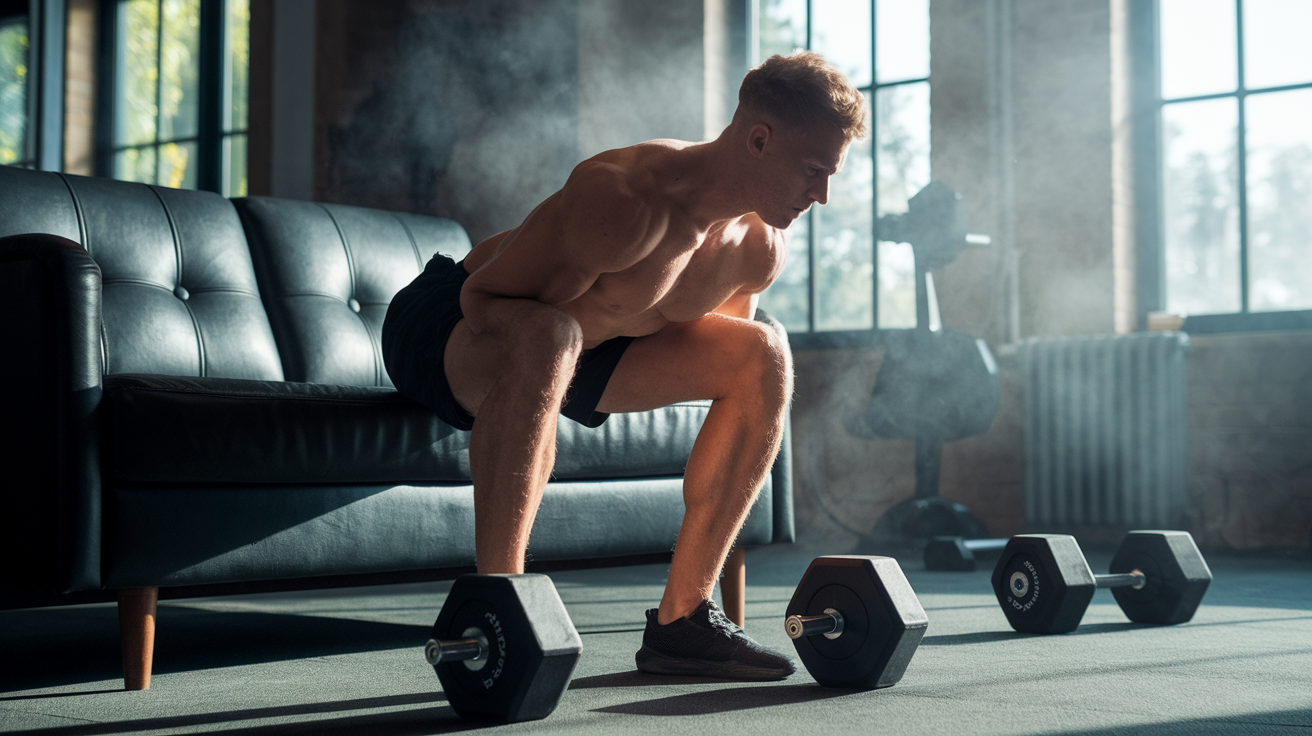
Leg day addresses your quads, hamstrings, glutes, and calves through squat, hinge, and lunge patterns. These movements require the highest relative loads in your program. They challenge your cardiovascular system more than upper-body work because they recruit large muscle groups simultaneously.
Dumbbell-only leg training relies heavily on unilateral movements like Bulgarian split squats and single-leg bridges to generate sufficient tension when your dumbbells cap out at moderate weights. Unilateral work also forces each leg to carry the load independently, which exposes and corrects left-right imbalances that bilateral squats sometimes mask.
Leg training fundamentals:
Quads (quadriceps): Emphasized in goblet squats, Bulgarian split squats, and walking lunges. Respond to 8–15 reps depending on load.
Hamstrings: Targeted with Romanian deadlifts and single-leg floor bridges. 10–12 reps for RDLs, 12–15 for bridges with a 2–3 second hold at the top.
Glutes (gluteus maximus and medius): Heavily recruited in hip hinge patterns, split squats, and single-leg work. Benefit from both compound and isolation volume.
Calves: Trained with single-leg calf raises. High reps (15–20) work well because calves are slow-twitch dominant.
Unilateral priority: At least two exercises per leg day should be single-leg or split-stance to ensure balanced development and challenge stability.
Rest intervals: 90–180 seconds after heavy goblet squats and RDLs. 60–90 seconds after accessory moves like lunges and bridges.
| Exercise | Sets | Reps |
|---|---|---|
| Goblet Squat | 3–4 | 10–15 |
| Romanian Deadlift | 3–4 | 10–12 |
| Bulgarian Split Squat | 3 | 8–12 per leg |
| Single-Leg Floor Bridge | 3 | 12–15 per leg (hold top 2–3 seconds) |
| Walking Lunges | 2–3 | 10–12 per leg |
Comparison Between Push, Pull, and Legs Workloads Inside the Plan
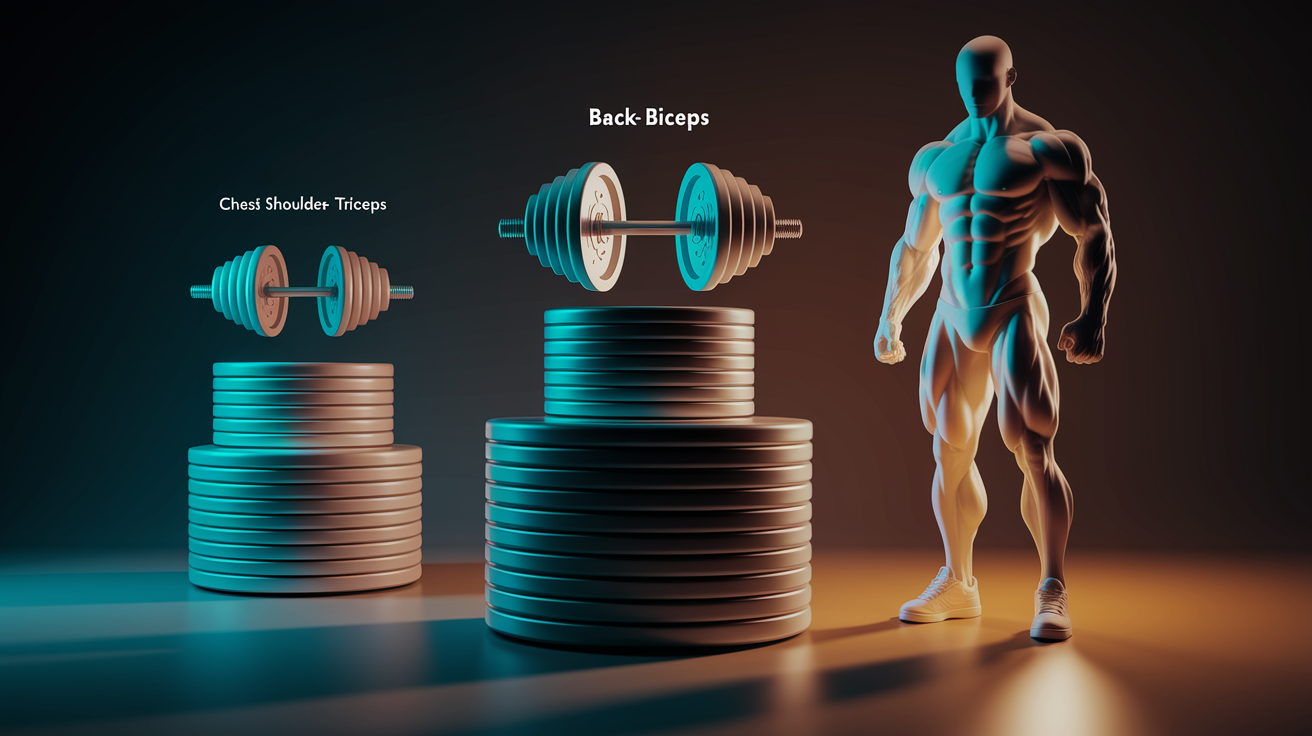
Each training day carries a different volume and intensity signature. Push and pull days typically include five exercises each with moderate to high rep ranges. Leg day uses slightly fewer exercises but higher overall systemic fatigue because lower-body movements recruit more total muscle mass.
Hypertrophy-focused programming clusters most work in the 5–20 rep range. Compound lifts toward the lower end and isolation moves toward the higher end. Accessories like lateral raises and curls respond well to 12–15 reps because they involve smaller muscles with lower absolute strength ceilings.
| Day Type | Target Muscles | Recommended Sets/Reps |
|---|---|---|
| Push | Chest, Shoulders, Triceps | 15–18 total sets; compounds 8–12 reps, accessories 12–15 reps |
| Pull | Back, Rear Delts, Biceps | 15–18 total sets; compounds 8–12 reps, accessories 12–15 reps |
| Legs | Quads, Hamstrings, Glutes | 14–17 total sets; compounds 8–15 reps, unilateral 8–12 reps per leg |
| Weekly Totals | Entire Body | 10–20 sets per muscle group per week (3-day plan = lower end; 6-day plan = higher end) |
Push and pull days generate less cardiovascular demand than leg day. You can often manage shorter rest intervals on upper-body accessories without sacrificing rep quality. Leg day requires longer recovery between heavy goblet squats and Romanian deadlifts because your central nervous system and cardiovascular system both need time to reset.
If you run a 6-day split, you’ll double your weekly sets per muscle group. Pushes you toward the upper end of the 10–20 set recommendation and accelerates hypertrophy as long as you manage fatigue with proper nutrition and sleep.
How to Benefit Most From a Push Pull Legs Workout Plan at Home With Dumbbells
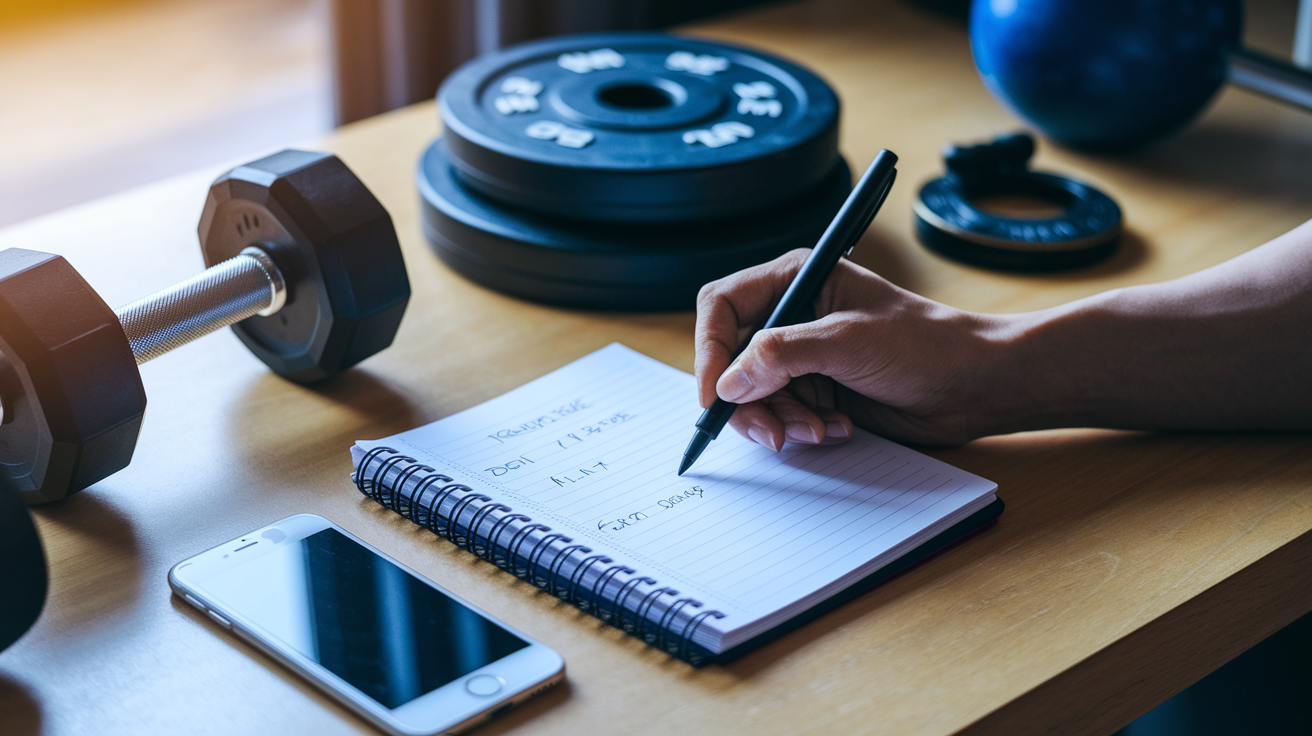
Progressive overload drives long-term muscle growth. When your dumbbell weight ceiling is fixed, you need alternative tactics to keep tension increasing week over week. Tempo manipulation, rest-pause sets, and volume progression all let you challenge your muscles more without adding external load.
Start by tracking every session in a notebook or app. Write down the exercise, weight, sets, reps, and any notes about form or fatigue. Compare performance across weeks and spot stalls early.
Overload strategies when weight is limited:
Tempo manipulation: Use a 4-1-2 tempo (4 seconds lowering, 1 second pause, 2 seconds lifting) to extend time under tension. Makes lighter weights feel significantly harder.
Rest-pause method: Perform reps to near-failure, rest 15–20 seconds while holding the dumbbells, then continue for 3–5 additional reps. Turns a 10-rep set into a 15-rep set with the same load.
Volume progression: Increase total sets or reps gradually. For example 3 sets of 10 reps one week, then 4 sets of 10 the next, then 4 sets of 12, before returning to 3 sets with heavier weight.
Increase weight when hitting 15+ controlled reps: On compound movements like floor press or goblet squat, if you complete 15 or more reps with strict form across all sets, add 5 pounds next session.
Reduce rest intervals: Shortening rest from 90 seconds to 60 seconds between sets increases metabolic stress and challenges muscular endurance.
Add pauses or isometric holds: Hold the bottom of a goblet squat for 3 seconds or pause at the top of a single-leg bridge for 2–3 seconds to amplify tension.
Unilateral progressions: Shift from bilateral to single-leg or single-arm variations to double the relative load each limb handles without needing heavier dumbbells.
Deload every 4–6 weeks: Reduce volume or intensity by 30–50% for one week to allow accumulated fatigue to dissipate and avoid overtraining.
Tracking methods:
Session logs: Record exercise, weight, sets, reps, and rest intervals. Review weekly to ensure you’re adding reps or load consistently.
Rep-range targets: Use ranges like 8–12 or 10–15 and aim to hit the top end before increasing weight. This double-progression approach keeps increments manageable.
Video form checks: Film one set of your heaviest compound lift each week to verify technique stays clean as load increases.
Bodyweight and measurements: Weigh yourself weekly and measure waist, chest, arms, and thighs monthly to confirm you’re gaining muscle without excess fat.
Perceived exertion: Note how hard the final rep of each set feels on a 1–10 scale. If you’re consistently below 7, you have room to push harder or add weight.
If your schedule tightens, you can condense the routine by super-setting push and pull exercises. Pair floor press with single-arm rows or overhead press with pullovers to cut session time without sacrificing volume. Works well on a 3-day plan when you need each session under 45 minutes.
Final Words
A ready-to-use three-day push/pull/legs schedule, benchless exercise swaps, and clear sets and reps landed in this post.
You also got practical progression tips, tempo tricks, when to add weight, and simple tracking ideas, plus options for a 3- or 6-day week.
Pick one 3-day split this week, log your weights, and aim to add reps or a little more load when you can.
Use the push pull legs workout plan at home with dumbbells this week, take small consistent steps, and you’ll see steady progress.
FAQ
Q: What is a push pull legs routine and why does it work at home?
A: The push pull legs routine organizes workouts by movement: push (chest/shoulders/triceps), pull (back/biceps), legs (quads/hamstrings/glutes). It works at home with dumbbells by using compound and benchless variations for full strength and size.
Q: What is a ready-to-use 3-day dumbbell PPL plan?
A: The ready-to-use 3-day dumbbell PPL plan is: Push — floor press, overhead press, floor flys, lateral raises, triceps (3–4×8–15). Pull — single‑arm rows, pullovers, rear delt raises, shrugs, curls (3–4×8–15). Legs — goblet squat, RDL, Bulgarian split, single‑leg bridge, lunges (3×8–15).
Q: Do I need a bench for a dumbbell PPL at home and what are alternatives?
A: You don’t need a bench; benchless alternatives include floor press instead of bench press, table-anchored hip thrusts, supported single‑arm rows, and inverted rows under a sturdy table for back work.
Q: How do I progress with limited dumbbell weight?
A: To progress with limited weight, use tempo (slow eccentrics), rest‑pause sets, add reps or sets, shorten rests, and increase weight only when you can do 15+ controlled reps.
Q: Should I follow a 3-day or 6-day PPL schedule?
A: The choice between 3-day and 6-day comes down to recovery: 3-day (one session each week) suits busy people; 6-day (repeat twice weekly) boosts volume if you recover well and want faster gains.
Q: What dumbbell weight range is best for a home PPL setup?
A: A good starter range is adjustable pairs: men often start with 15–20 lb plus 30–40 lb pairs; women often start with 5–10 lb plus 15–25 lb pairs. Adjustable 5–80 lb sets cover most needs.
Q: What rest intervals and rep ranges should I use for compounds versus accessories?
A: For heavy compounds use 90–180 seconds rest and 6–12 reps for strength/hypertrophy; for accessories use 60–90 seconds and 10–15+ reps. Aim for controlled tempo and muscle fatigue.
Q: How do I replace pull-ups in a dumbbell-only pull day?
A: To replace pull-ups, use pullovers, single‑arm rows, and inverted rows under a sturdy table. These movements train the same pulling pattern and build back and lat strength with dumbbells.
Q: How many sets per muscle group per week should I target?
A: Target roughly 10–20 total sets per muscle group per week. Adjust toward the lower end if recovering slowly, and increase sets gradually if you can recover and progress.
Q: How can I fit a dumbbell PPL into a busy week?
A: To fit PPL into a busy week, pick the 3-day split, prioritize compound lifts first, shorten accessory work, and use 30–45 minute sessions. Swap in single-session full-body options when needed.

