
You don’t need a room-sized gym to get real strength work.
If you live in an apartment, a compact system can give full-body training without taking over your living space.
This post reviews the top space-saving home gym systems, with clear specs, pros and cons, and who each model actually fits.
You’ll learn which options work for tiny closets, which bring heavy leg work, and which fit a tight budget.
By the end you’ll know what to buy and where to save.
Top Compact Home Gym Systems With Key Specs
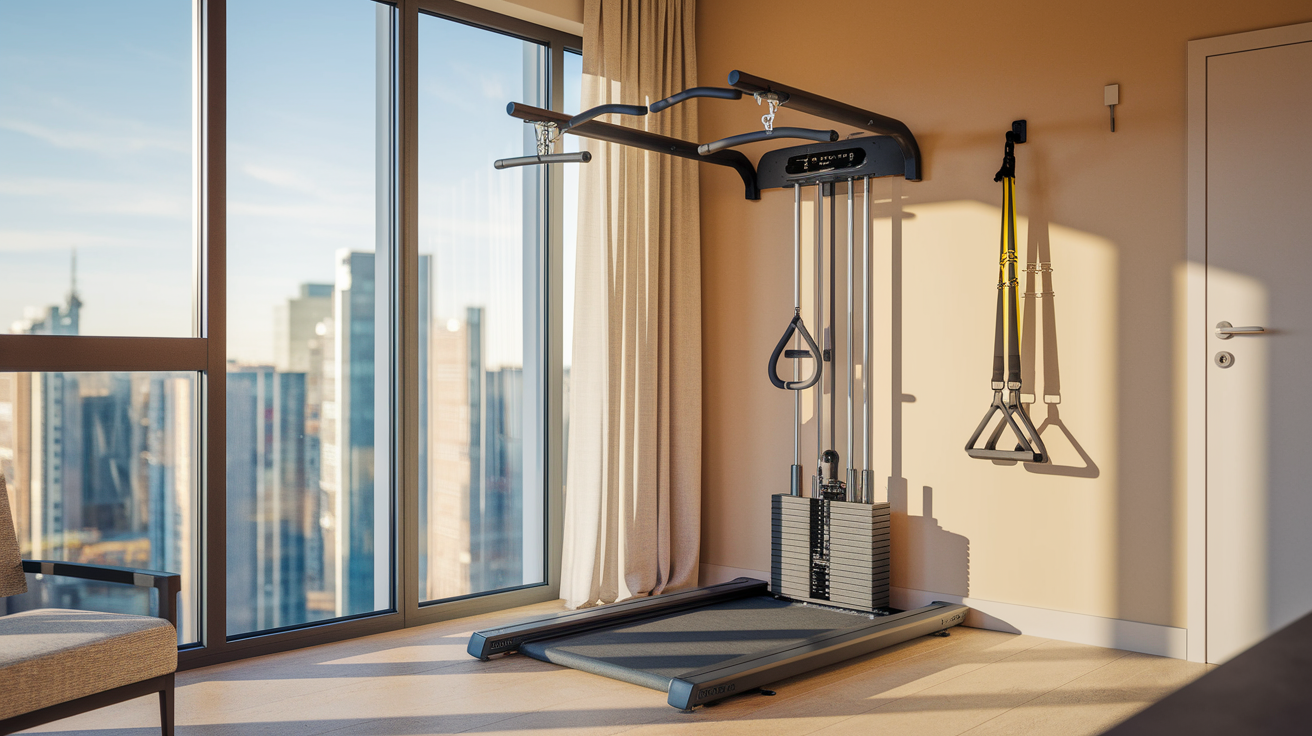
This list covers the best compact systems you can actually fit in an apartment corner. Every model here delivers full-body training without taking over a whole room.
| Model | Dimensions (L×W×H) | Price Range | Space Needed | Key Functions |
|---|---|---|---|---|
| Bowflex Xtreme 2 SE | 52″×38″×83″ | $800–$1,200 | ~7 ft × 4 ft | Lat pull, quad ext., chest press, leg curl |
| Tonal (wall-mounted) | 24″×7″×52″ mounted | ~$4,800 upfront + $50/month | Wall space, 3 ft clearance forward | Digital resistance, barbell-style lifts, AI feedback |
| BodyBoss Home Gym 2.0 | 41″×22″×3″ folded | Under $100 | Yoga-mat footprint | Resistance-band squats, presses, rows |
| TRX Home2 System | Straps fold to 10″×6″×4″ | $200–$300 | Door anchor, no floor space | Bodyweight suspension, upper body, core |
If you’re working with a tight budget and need something you can move around, BodyBoss and TRX both fit in a gym bag and stow in under two minutes. Got wall space and want heavy leg work? Tonal gives you the most advanced digital resistance and barbell-style movements, but you’ll pay monthly for it. Bowflex Xtreme 2 SE sits in the middle. It’s bulkier, but there’s no subscription fee, it’s got nearly 2,000 reviews averaging 4.6 stars, and it handles classic moves like lat pulls and leg extensions in one frame.
How Compact Home Gym Systems Work
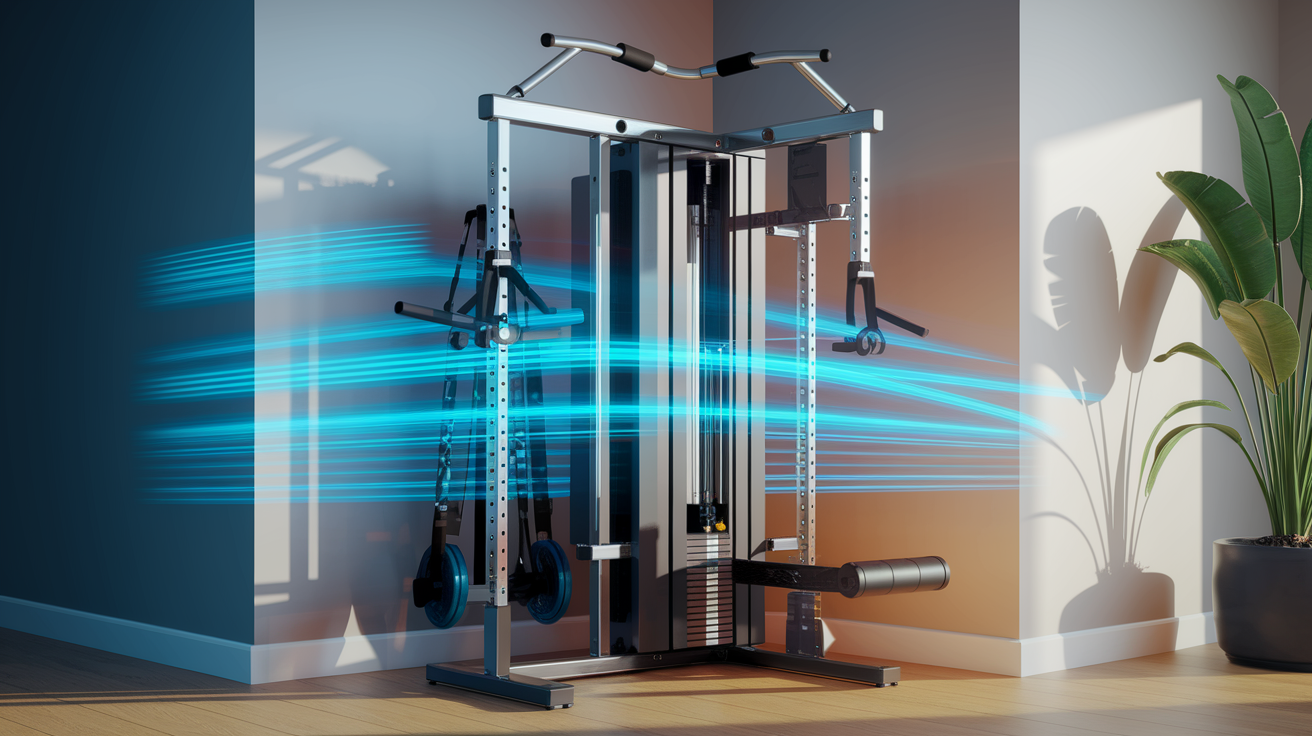
Most compact gyms rely on pulley cables attached to weight stacks, digital resistance motors, or reinforced resistance bands to create load. The resistance source stays small (a stack of plates, an electromagnetic motor, or a few strong bands), so the whole setup fits in a corner or hangs on a door. The pulley or cable system redirects that resistance into dozens of angles and movements, basically mimicking exercises you’d normally do on separate machines.
Compact frames save space by combining stations. Instead of a separate chest press rack, leg extension bench, and pull-down tower, one frame routes cables or bands to multiple attachment points. A lot of systems fold or tuck upright when you’re done, shrinking the footprint to as little as 12 inches deep. That’s how you get a full-body workout beside your bed or in an entryway.
Typical stations on a multi-gym include high and low cable points, a seat or bench, and attachment handles for rows, presses, curls, and leg work. Some digital systems skip stacks entirely and use electromagnets that dial resistance up or down in real time. Whether you’re pulling 50 pounds on a lat bar or pressing bands for shoulders, the mechanics stay simple. Anchor, cable or strap, and a way to adjust load.
Comparison: Compact Home Gyms vs Traditional Home Gyms
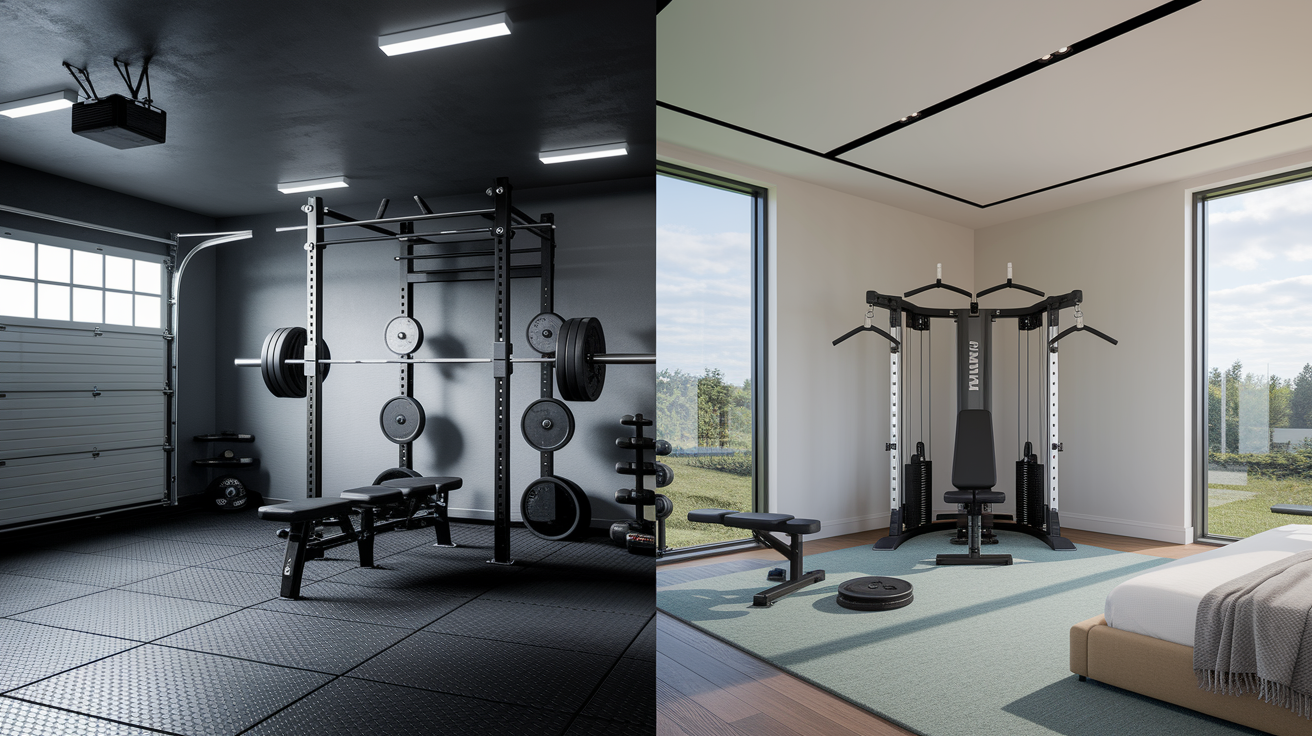
Traditional home gyms usually mean separate benches, squat racks, cable towers, and plate-loaded bars spread across 10 to 15 feet of floor space. Compact systems bundle multiple functions into a single footprint that saves 40 to 70 percent of the room. You do lose some absolute load capacity. Large power racks can handle 400-plus pounds, while most compact weight stacks top out around 200 to 210 pounds. But you gain the ability to keep your living room or bedroom functional for other things.
Setup and storage look different too. A full-size gym often takes two people and a few hours to assemble, then it stays put. Compact models might still need 45 to 120 minutes of setup, but many fold or roll away. Some (like suspension kits or resistance-band boards) pack into a closet in under a minute. If you need serious leg strength or plan to progressively load squats and deadlifts past 300 pounds, a traditional setup with a barbell is the better long-term choice.
Compact systems work best if you prioritize convenience, live in an apartment, or want full-body variety without dedicating an entire room. Traditional gyms suit dedicated spaces and people who need heavy, progressive barbell work or prefer the feel of free weights and separate stations.
Buyer’s Guide: Choosing the Right Compact Home Gym
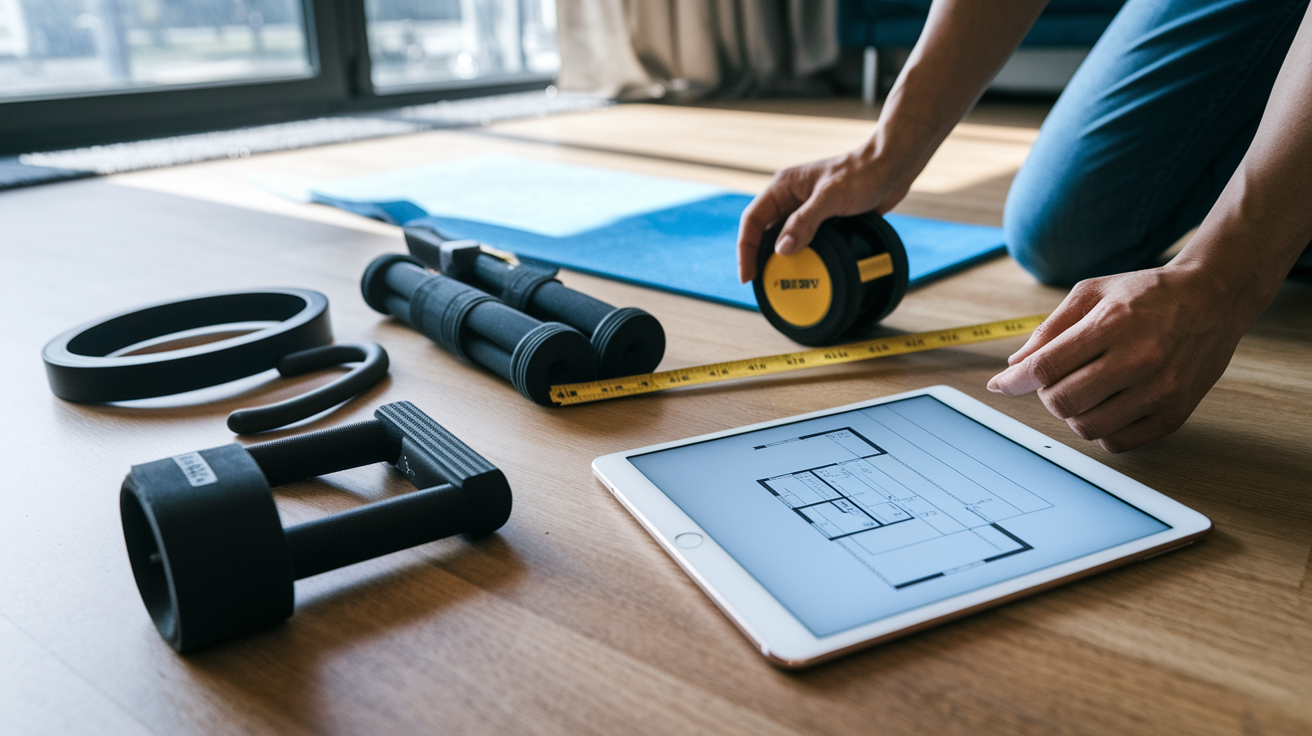
Start by measuring the corner, wall, or closet where the gym will live. Add at least 2 feet on every side for safe movement, and check your ceiling height. Some cable systems need 8 feet of clearance when the bar is fully extended overhead. If your space is truly tiny, go with foldable or wall-mounted designs that disappear when you’re done.
Next, figure out which type of resistance matches your goals. Weight stacks deliver consistent load and smooth pulley motion, which makes them great for controlled strength work and progressive overload. Digital resistance systems adjust instantly and track every rep, but they require subscriptions and reliable power. Resistance bands and suspension straps cost less and store anywhere, but they plateau faster for advanced lifters and don’t replicate the exact feel of heavy barbell work.
Match the system to your training style. If you want to build leg strength with squats and leg presses, choose a gym that supports lower-body exercises with real resistance (like Tonal’s digital arms for squats or Bowflex’s leg extension and leg curl attachments). If your focus is upper body and core, a suspension kit or band system will cover most needs. If you want guided programming and AI feedback, look for smart systems with screens and app integration. Factor monthly subscription costs into your total budget.
Five things people commonly overlook:
Portability. Can you move it to clean under it, or does it bolt to the floor?
Ceiling height clearance. Overhead presses and lat pulls need at least 7 to 8 feet of open space above the station.
Weight stack noise. Cheaper stacks clang. Better systems use rubber bumpers or magnetic dampening.
Cable smoothness. Test or read reviews about pulley friction. Rough cables wear out faster and feel jerky mid-rep.
Stability on carpets. Some compact frames wobble on soft floors unless you add a solid platform or mat.
Assembly, Maintenance, and Storage Considerations
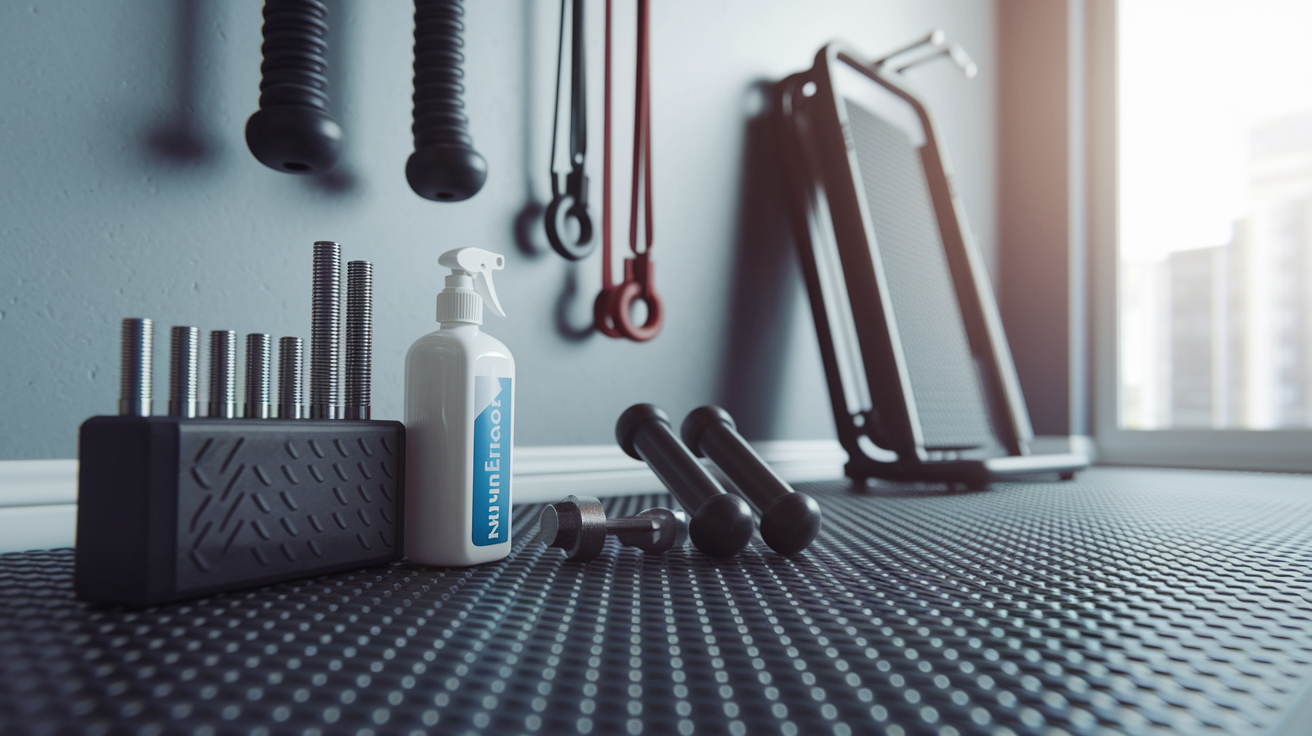
Most compact multi-gyms arrive in large boxes with 30 to 80 parts and take 45 to 120 minutes to assemble. Bring a second person if the frame is over 100 pounds, and keep the hex keys or wrenches organized. Instructions vary. Some brands include clear step-by-step guides, while others (like certain Bowflex models) draw complaints for confusing diagrams. If you’re not confident with tools, check whether the retailer offers assembly service, or plan to watch a setup video before you start.
Cables and pulleys need light lubrication every 3 to 6 months to stay smooth. Use a silicone-based spray on the cable guides and pivot points, and wipe off excess to avoid dust buildup. Check bolts and pin clips every few weeks, especially after the first month of use when parts settle. Weight stacks should glide without sticking. If you hear grinding or feel uneven resistance, inspect for bent guide rods or misaligned plates.
Foldable systems can shrink to under 12 inches in depth, giving you back floor space in minutes. Store them upright against a wall or tuck them into a closet, and use wall hooks for cables, handles, and resistance bands. If your system doesn’t fold, keep it in a dedicated corner and use a simple mat underneath to protect floors and define the workout zone. Regular quick cleanups (wiping down grips, checking cables, and keeping the area clear) make it easy to stay consistent without the gym feeling like clutter.
Final Words
Pick the model that fits your corner and your goals. This post listed the top compact systems by size, price, and function, explained how pulley and resistance options work, and compared compact vs full gyms so you know the tradeoffs.
The buyer’s guide showed how to measure space, choose resistance, and avoid common misses. Assembly, maintenance, and storage tips make long-term use easy.
Choose a compact home gym system that matches your routine, start small, and build consistency—you’re set to make steady gains.
FAQ
Q: What are the best compact home gym systems for apartments?
A: The best compact home gym systems for apartments are all-in-one units under about 6 ft × 3 ft that fold, include pulley stations or weight stacks, and cost $300–$2,000.
Q: How do compact home gym systems provide resistance?
A: Compact home gym systems provide resistance through cable-and-pulley setups, integrated weight stacks, or resistance bands—each lets you adjust load for 20–50 exercises and keeps workouts smooth and progressive.
Q: How much space do compact home gyms need?
A: Compact home gyms typically need as little as a 6 ft × 3 ft footprint; folded designs can shrink to under 12 inches deep, saving roughly 40–70% of the space full setups require.
Q: Are compact home gyms as versatile as traditional home gyms?
A: Compact home gyms are nearly as versatile for most users but usually handle lower maximum loads than traditional gyms; pick compact if space matters, choose full-size for heavy strength training.
Q: What should I consider when choosing a compact home gym?
A: When choosing a compact home gym, compare dimensions, resistance type, assembly time, max user height, and whether it folds; these decide fit, workout variety, and long-term convenience.
Q: How long does assembly take and what maintenance is needed?
A: Assembly usually takes 45–120 minutes; maintenance includes lubricating cables every 3–6 months, checking fasteners, and storing folded or upright to protect parts and save room.
Q: Which compact models fit tight budgets versus full-body versatility?
A: Budget compact home gyms cost about $300–$600 and cover basic strength moves; midrange $600–$1,200 adds smoother cables and more stations; $1,200–$2,000 models give fuller body versatility.
Q: What exercises can I do on a compact home gym?
A: Compact home gyms let you do 20–50 exercises, including seated rows, chest presses, lat pulldowns, cable flyes, leg extensions, squats, curls, and triceps pushdowns—covering most full-body needs.

