
Think tiny home gyms can’t build real strength?
They can—if you choose smart, compact equipment that fits your floor plan and your goals.
This guide picks the best compact home gym equipment that saves space and delivers results.
You’ll find options for strength, cardio, and multi-function systems—from adjustable dumbbells and foldable treadmills to smart, space-saving trainers.
Read on if you live in an apartment, share a room, or just want gear that tucks away but still helps you get stronger.
Top Picks That Deliver the Best Compact Home Gym Equipment for Small Spaces
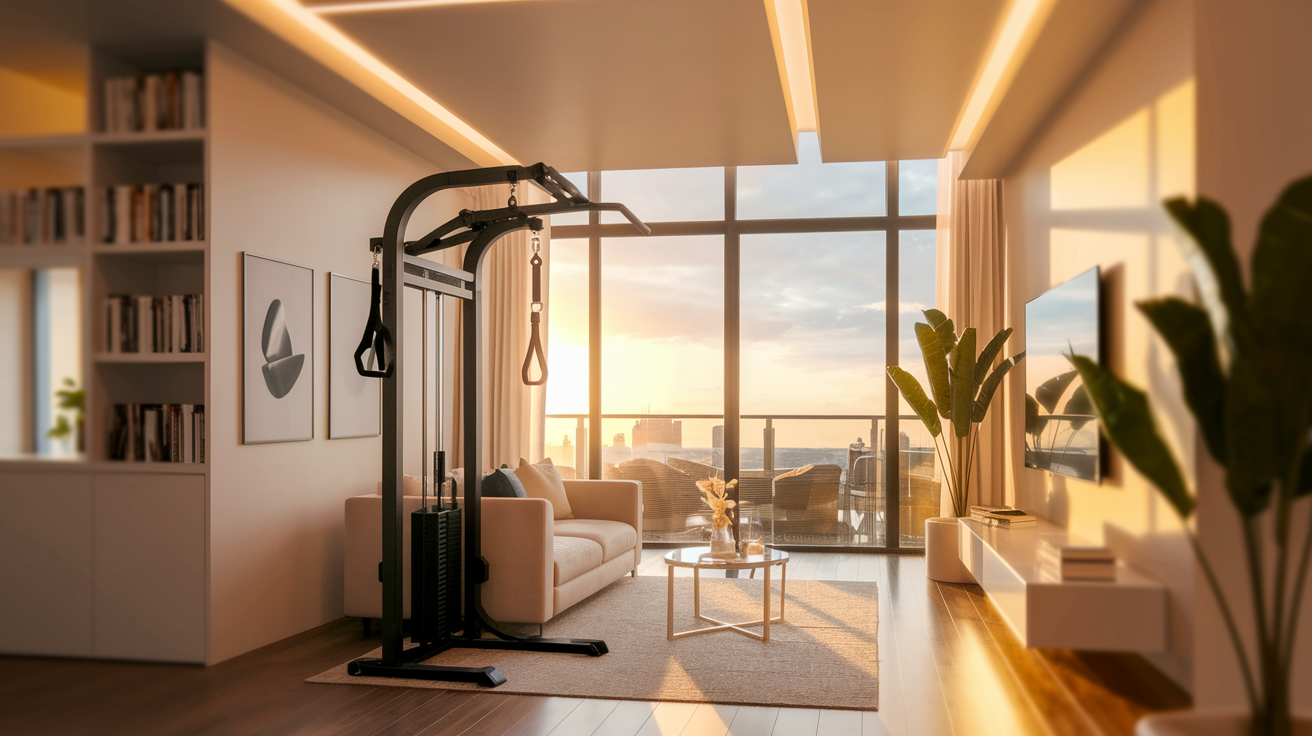
When you’re working with limited square footage, the best compact home gym equipment gives you full training capability without eating up your entire living space. These six systems offer real solutions for apartment dwellers and anyone who needs results without the footprint.
Tempo Move takes the top spot because it supports up to 150 pounds on an actual barbell while looking like a piece of furniture when you close it up. The AI form feedback watches your reps and adjusts your progressive overload automatically. The daily readiness score checks your sleep, heart rate, and workout history to tell you when to push or back off. Multiple user profiles load without extra fees, and the cabinet design sits naturally next to a TV stand or bookshelf. “Before my first set, I honestly forgot I was working out in my living room instead of a real gym.”
For pure stealth, lululemon MIRROR works as an actual full-length mirror when it’s off. It disappears into your decor completely. The system focuses on cardio, mobility, HIIT, and yoga rather than heavy barbell lifts, so it’s best if you’re chasing conditioning and movement quality over max strength. Just make sure your Wi‑Fi router sits nearby, because streaming quality drops fast when the signal weakens.
TRX Home2 hangs from any solid door and packs into a bag the size of a sneaker. The suspension straps scale brilliantly for upper body and core training, from beginner to advanced, but leg work stays limited compared to weighted systems.
Tonal delivers barbell-style training through digital resistance arms that adjust instantly. It handles virtually every lift from squats to overhead presses. The built-in screen offers trainer-like guidance and biometric feedback, but the $50 monthly subscription and upfront cost roughly equal paying $100 per month for a gym membership for almost four years.
Bowflex Xtreme 2 SE is the traditional multi-station choice, with nearly 2,000 user reviews averaging 4.6 stars. It handles lat pulldowns, leg extensions, and isolated muscle work reliably, but the bulk makes it better suited for a garage corner than a living room.
BodyBoss Home Gym 2.0 fits the tightest budgets at under a hundred bucks. It combines a portable board, steel anchor loops, and heavy resistance bands. It covers resisted squats and upper-body moves effectively as a supplement but needs pairing with bodyweight cardio for a complete program.
Compact Strength Training Gear for Tight Spaces
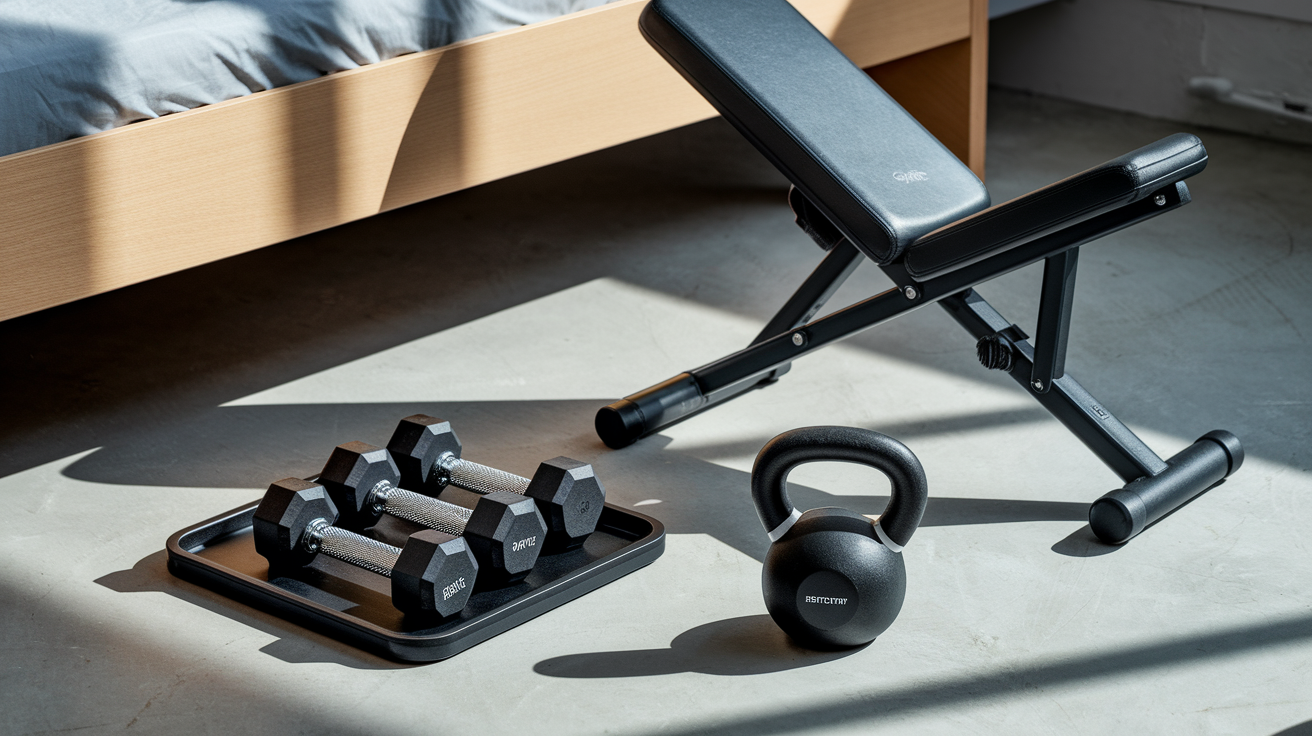
Adjustable systems are the foundation of space-saving strength training because one set replaces an entire rack. Select-A-Weight adjustable dumbbells replace 10 to 15 pairs of fixed weights with a single tray that fits under a bed or in a closet corner. Turn a dial, lift the handle, and you’ve got the exact load you need. No swapping plates. No stacking iron across your floor.
The same principle applies to adjustable kettlebells, which let you scale from light swings to heavy goblet squats using one compact unit instead of four or five cast-iron bells.
Resistance bands deliver scalable tension in a package that stores in a shoebox. They cover everything from banded squats to rows and chest presses. Collapsible benches fold flat or stack vertically, giving you incline and flat pressing angles when you need them and disappearing when you don’t. Compact barbell alternatives include short 5-foot bars or loadable dumbbell handles that let you program barbell movements without committing floor space to a full 7-foot Olympic bar and plate tree.
- Adjustable dumbbells replaces 8+ fixed pairs with one dial-adjustable set that includes storage tray
- Adjustable kettlebells scale from 10 to 40+ pounds for swings, goblet squats, and carries in a single unit
- Resistance bands in loop, tube, and flat styles store in a drawer and provide progressive tension for all major lifts
- Collapsible benches fold to 6 inches thick or stack upright while offering flat, incline, and decline positions
- Compact barbell alternatives like short bars (4 to 5 feet) or loadable dumbbell handles for pressing and rowing patterns
Compact Cardio Machines That Fit Anywhere
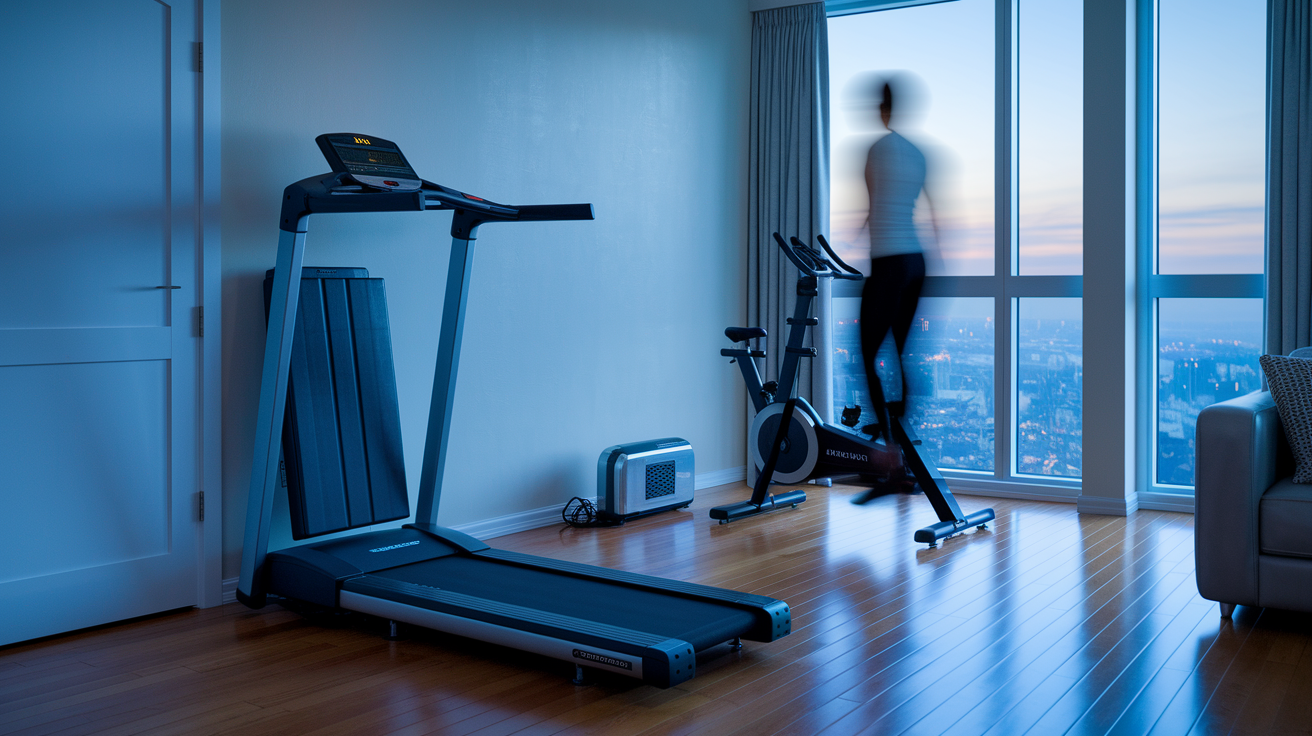
Foldable treadmills and small-footprint cardio machines let you chase conditioning without sacrificing your living room. A foldable treadmill stands upright after your session, reclaiming the floor space in seconds and tucking neatly behind a door or against a wall. Look for incline ranges starting around 0 to 12 percent to add hill-training variety without needing a second machine.
Mini rowing machines and compact recumbent bikes bring low-impact cardio to apartments with noise restrictions. Magnetic resistance runs silently, so your downstairs neighbors hear nothing. Step-through frames make it easy to hop on for a quick interval session between work calls.
| Machine Type | Footprint Advantage | Key Specs |
|---|---|---|
| Foldable Treadmill | Folds vertically to ~2 ft × 3 ft floor space | 0–12% incline, walking to jogging speeds, quiet belt |
| Compact Rower | Folds in half; stores upright or under bed | Magnetic resistance, ergonomic seat, whisper track |
| Recumbent Bike | Step-thru frame; narrow footprint (~2 ft × 4 ft) | Silent magnetic resistance, lumbar support, integrated screen |
Multi-Functional Compact Home Gym Systems
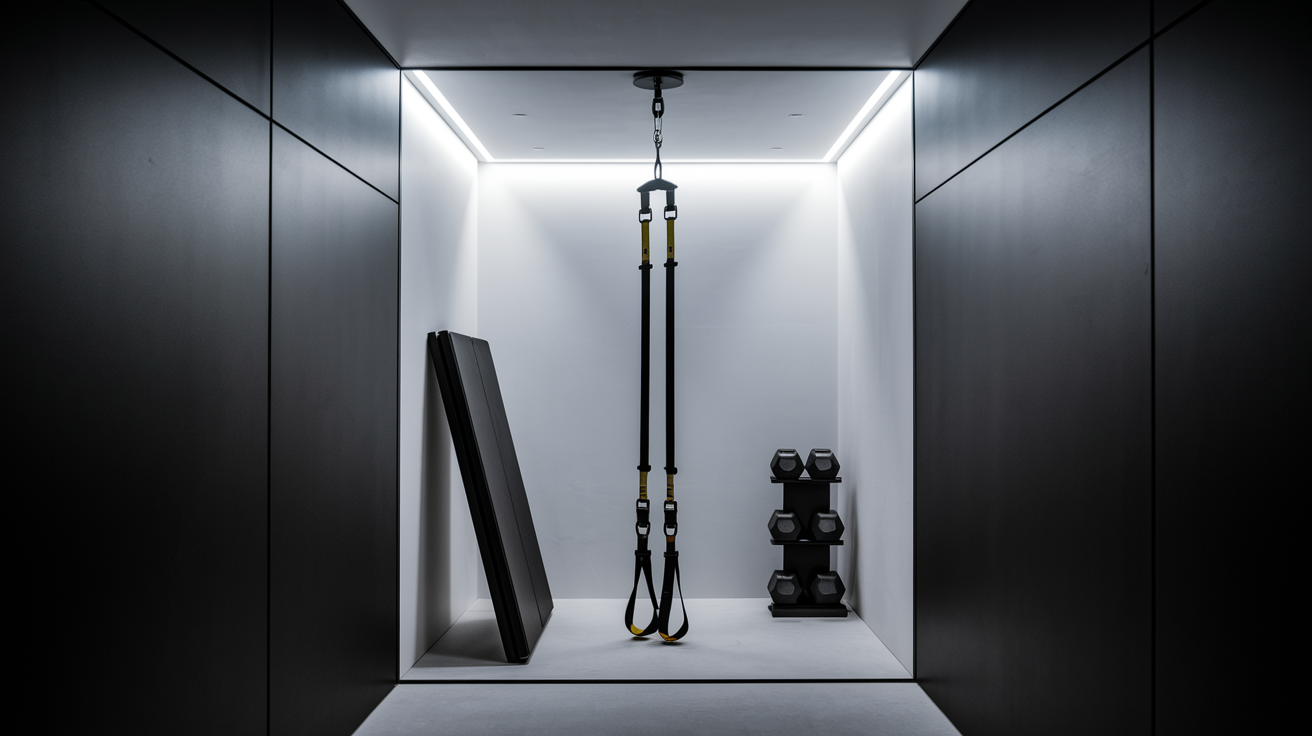
Multi-functional systems pack several training modes into one frame. Cable-based functional trainers use adjustable pulleys to replicate dozens of movements, from chest flies to wood chops, in a single vertical tower. These systems usually stand 6 to 7 feet tall and occupy roughly 4 square feet of floor space. But the pulley versatility covers upper body, core, and some leg work without separate machines.
Suspension trainers anchor to doors, beams, or wall mounts and use your body weight as resistance, scaling difficulty by changing your angle. They excel at core stability, upper-body pushing and pulling, and single-leg balance drills. Though they offer limited resistance for heavy bilateral leg lifts like back squats.
Foldable all-in-one stations combine a weight stack, bench, and attachment points in a frame that collapses or folds when not in use. This bridges the gap between portability and traditional multi-station capability.
Modular setups let you add or remove components as your training evolves. Start with a foldable bench and resistance bands, then layer in a suspension trainer or compact cable tower later. This approach spreads the initial cost and keeps your footprint minimal until you’re confident you need more capacity.
Smart Compact Home Gym Equipment and Tech Integration
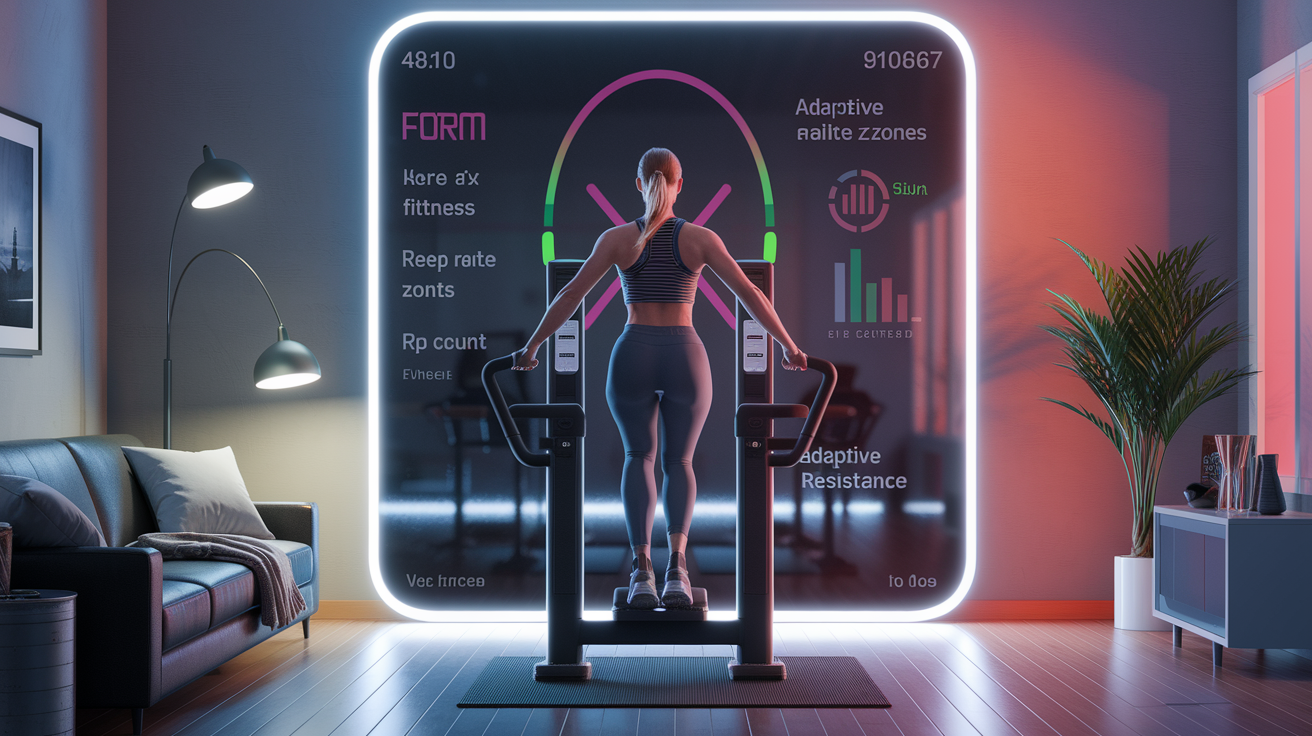
Tech-enabled systems use sensors, screens, and algorithms to guide your training without requiring a human coach in the room. These features make compact setups more effective by automating decisions that used to require experience or guesswork. “The screen told me to add five pounds before I even thought about it.”
-
Auto-adjusting resistance senses your effort and increases or decreases load mid-set to keep you in the target intensity zone. It removes the need to manually change weights between exercises.
-
Heart-rate-guided training zones sync wearable sensors or built-in monitors with the equipment to shift workout intensity in real time. This ensures you stay in fat-burning, aerobic, or anaerobic zones as programmed.
-
Personalized adaptive programs track your performance across weeks and build next week’s plan based on your readiness, recovery metrics, and progress trends. Every session pushes you appropriately without overreaching.
-
Space-efficient screens and AR interfaces provide live classes, form overlays, and rep counting without requiring a separate TV or tablet stand. Augmented reality features project your movement path to correct technique instantly.
Space Planning for the Best Compact Home Gym Equipment
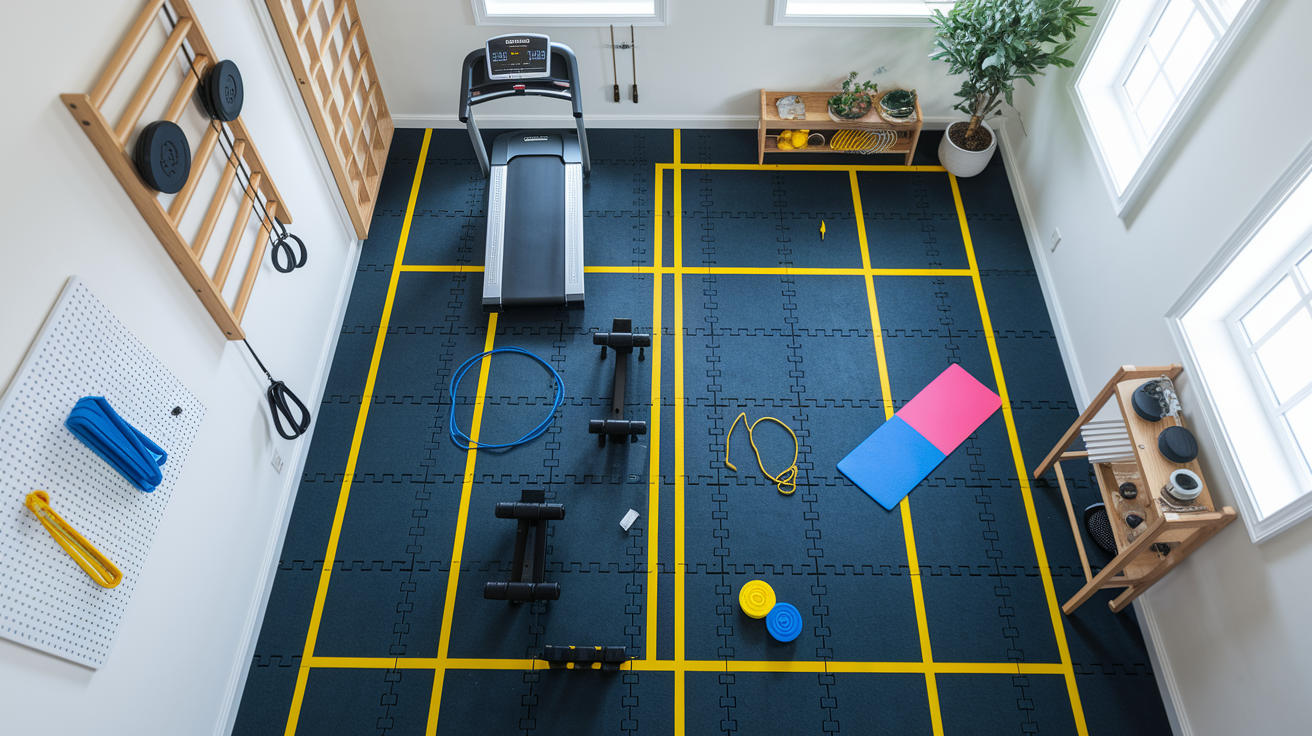
Measure your available floor area before buying anything. Always add clearance for safe movement. Treadmills need at least 2 feet on each side and 6 feet behind the deck for safe entry, exit, and ventilation. Mark those zones with painter’s tape on the floor to visualize the real footprint, including the space you’ll occupy while exercising.
Vertical storage reclaims floor space by moving gear onto walls. Wall-mounted plate racks, pegboards for resistance bands, and ceiling hooks for suspension trainers keep equipment accessible without cluttering walkways. Modular rubber flooring defines your workout zone visually and protects the subfloor. You can lift and rearrange tiles in minutes if you need the space back for other uses.
| Storage Method | Best For | Space Saved Estimate |
|---|---|---|
| Wall-Mounted Racks | Weight plates, barbells, resistance bands | ~6–10 sq ft floor space reclaimed |
| Vertical Hooks & Pegboards | Jump ropes, bands, yoga mats, foam rollers | ~3–5 sq ft floor space reclaimed |
| Foldable Equipment Storage | Benches, treadmills, rowers folded upright | 50–70% footprint reduction when stowed |
| Under-Bed or Closet Bins | Small accessories (sliders, mini bands, massage tools) | Keeps surfaces clear; minimal visual clutter |
Noise, Durability, and Safety Considerations for Compact Gym Gear
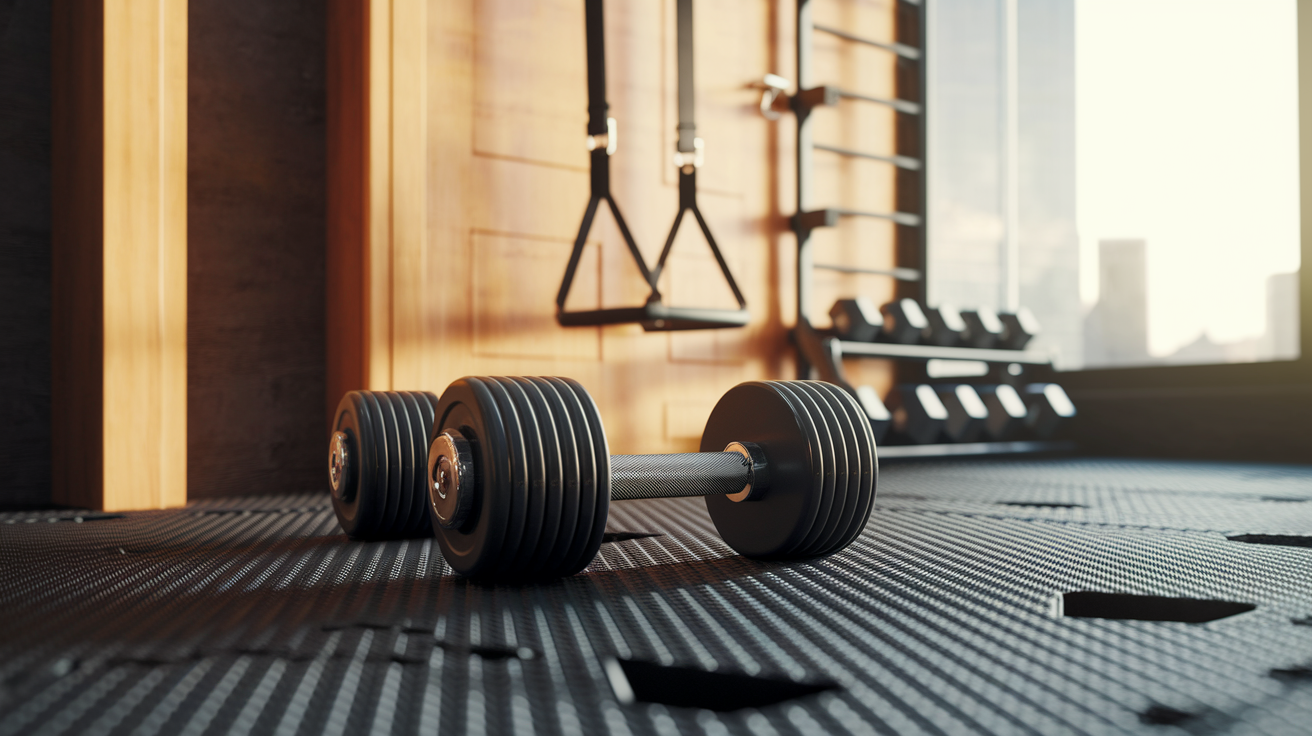
Magnetic resistance systems run almost silently. They’re apartment-friendly for early morning or late evening sessions when neighbors are home. Rubber-coated weight plates and bumper-style dumbbells eliminate the metallic clang of iron-on-iron contact. Thick rubber mats or interlocking foam tiles absorb impact from dropped weights or jump landings.
Durability starts with material quality and build precision. Look for steel frames with powder-coat or corrosion-resistant finishes. Reinforced stitching on straps and bands. Sealed bearings in pulleys or resistance mechanisms. Products with user review volumes in the hundreds or thousands and average ratings above 4.5 stars typically survive years of regular use. Low-review-count items carry more risk of early failure or poor customer support.
Safety in small spaces means maintaining clear pathways and secure anchoring. Anchor suspension trainers to studs or solid door frames rated for dynamic loads, never to hollow drywall alone. Store loose weights on racks or in bins immediately after use to prevent tripping hazards. Position mirrors where you can check form without walking backward into furniture.
Foam rolling for 5 to 10 minutes after each session reduces delayed-onset soreness and keeps you moving safely into the next workout.
Budget vs Premium: Best Value in Compact Home Gym Equipment
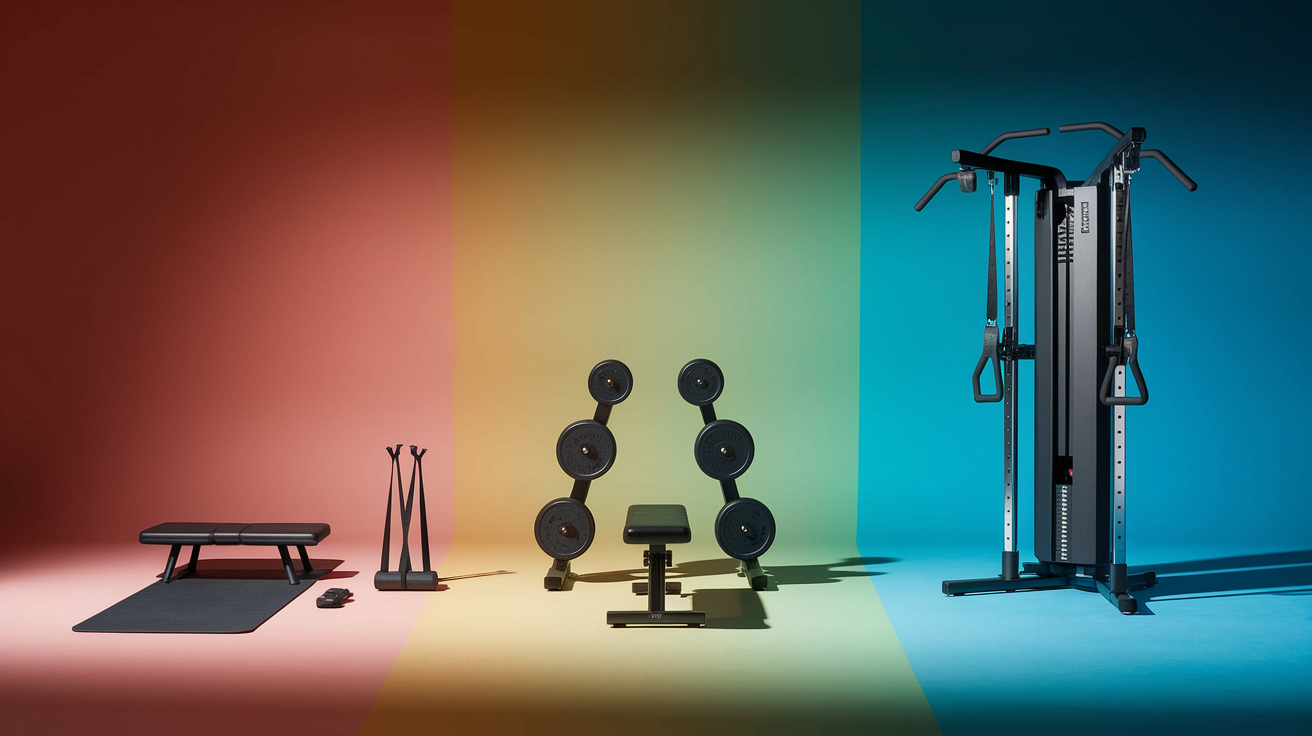
Budget-tier compact home gym equipment under $100 covers essentials like resistance band sets, basic adjustable dumbbells, yoga mats, and portable board-and-band systems. These items deliver real training stimulus and pack away easily. But you’ll typically sacrifice automatic adjustments, digital tracking, and premium materials. If your goal is to start training consistently without a big upfront cost, budget gear gets you moving today.
Mid-range options between $200 and $800 include quality adjustable dumbbell sets with smooth selector mechanisms, foldable benches with multiple angles, and compact cardio machines like folding rowers or under-desk bikes. At this price point, you’ll find better build quality, quieter operation, and features like adjustable resistance or incline that expand exercise variety without buying a second piece of equipment.
- Budget picks cover resistance bands, basic adjustable dumbbells, foldable mats, and simple suspension straps for fundamental movements with minimal investment and maximum portability.
- Mid-range value includes smooth-adjusting dumbbell systems, sturdy collapsible benches, compact magnetic rowers, and quiet resistance bikes that balance quality, features, and footprint without ongoing fees.
- Premium systems pack all-in-one digital platforms with adaptive programming, biometric feedback, and interactive coaching into one compact unit. Factor in monthly subscription costs and multi-year ownership when comparing total expense.
- Cost versus space trade-offs show premium systems often deliver the smallest footprint and highest training density per square foot, while budget and mid-range options may require combining several individual pieces to match the same exercise variety.
Sample Compact Workouts Using Small-Space Equipment
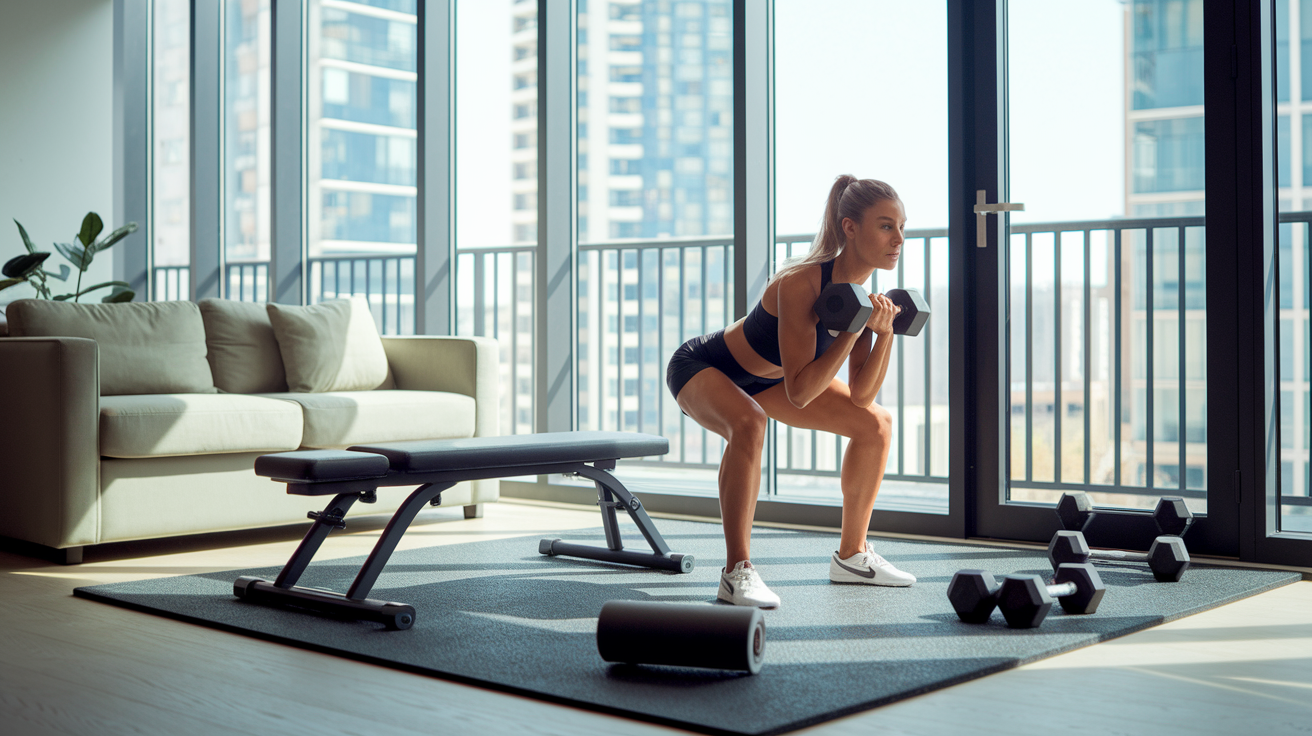
You can run a complete full-body strength session in a 6-by-6-foot area using just adjustable dumbbells, a resistance band, and a foldable bench. This sample circuit hits all major movement patterns in under 30 minutes. It leaves time for a short foam-rolling cooldown to aid recovery and flexibility.
-
Goblet Squat involves holding one dumbbell at chest height, feet shoulder-width. Squat until thighs parallel, stand. 3 sets of 10 to 12 reps. Targets quads, glutes, core.
-
Dumbbell Chest Press on Bench means lying flat and pressing dumbbells from chest to lockout. 3 sets of 8 to 10 reps. Targets chest, shoulders, triceps.
-
Resistance Band Row requires anchoring the band at waist height. Pull handles to ribcage, squeeze shoulder blades. 3 sets of 12 to 15 reps. Targets upper back, biceps.
-
Dumbbell Romanian Deadlift starts with hinging at hips and lowering dumbbells along shins before returning to standing. 3 sets of 10 reps. Targets hamstrings, glutes, lower back.
-
Foam Roll and Stretch by spending 5 to 10 minutes rolling quads, hamstrings, upper back, and calves to reduce delayed-onset soreness and maintain mobility between sessions.
Final Words
You now have a compact roadmap: top picks that fit tight spaces, strength gear that replaces bulky sets, and cardio machines that tuck away when you’re done.
We also covered multi‑function options, smart tech, space planning, noise and safety tips, budget tiers, and quick sample workouts you can start this week. If you’ve ever felt overwhelmed by choices, this breaks it down.
Pick one piece, measure your space, and try a two‑week routine. Small steps with the best compact home gym equipment add up to steady progress.
FAQ
Q: What is the best compact home gym equipment for small spaces?
A: The best compact home gym equipment for small spaces is a set of adjustable dumbbells, resistance bands, a foldable bench, and a compact cardio machine—these replace multiple items and fit tight layouts.
Q: What compact strength training gear is most space-efficient?
A: Compact strength training gear that saves space includes adjustable dumbbells, adjustable kettlebells, resistance bands, collapsible benches, and compact barbell alternatives—each replaces several fixed weights and reduces storage needs.
Q: Which compact cardio machines fit apartments?
A: Compact cardio machines that fit apartments are foldable treadmills, mini rowing machines with a short footprint, and under-desk bikes—pick based on clearance, storage, and noise levels.
Q: Are multi-functional compact gym systems worth it?
A: Multi-functional compact gym systems are worth it when you need many exercise options in one footprint; choose cable trainers for strength or suspension/modular setups for portability.
Q: Should I buy smart compact gym equipment?
A: Smart compact gym equipment is worth buying if you want guided workouts, adaptive programs, and biometric tracking; prioritize devices with useful features and simple interfaces for small spaces.
Q: How should I plan space for a compact home gym?
A: To plan space for a compact home gym, measure your available floor and ceiling clearance, map equipment footprints, use vertical storage, and leave 2–3 feet for movement and safety.
Q: How can I reduce noise and improve durability in a small home gym?
A: To reduce noise and boost durability in small home gyms, use magnetic-resistance machines, rubber mats, rubber-coated weights, and place crash pads under heavy gear to protect floors and neighbors.
Q: What’s the difference between budget and premium compact equipment?
A: The difference between budget and premium compact equipment is feature set and build quality: budget items save money and space, mid-range balances durability, premium adds digital coaching and finer adjustability.
Q: What are simple compact workouts I can do at home?
A: Simple compact workouts you can do at home include a five-move full-body circuit: push, hinge, squat, row, and core—use bands or adjustable weights, rest 60 seconds, repeat 3 rounds.

