
Think vegan food can’t build muscle fast? That’s a myth.
With the right post-workout meals you can recover and grow just as well as anyone.
Aim for 20 to 40 grams of protein within 30 minutes, add carbs to refill your glycogen, and pick high-protein plants like tempeh, tofu, seitan, lentils, or pea protein.
This guide shows quick, real recipes, easy swaps for busy days, and simple timing tips so you hit your targets without stress.
Try one of these meals tonight and see how your recovery improves.
Your Complete Guide to Vegan High‑Protein Post‑Workout Meals for Fast Recovery
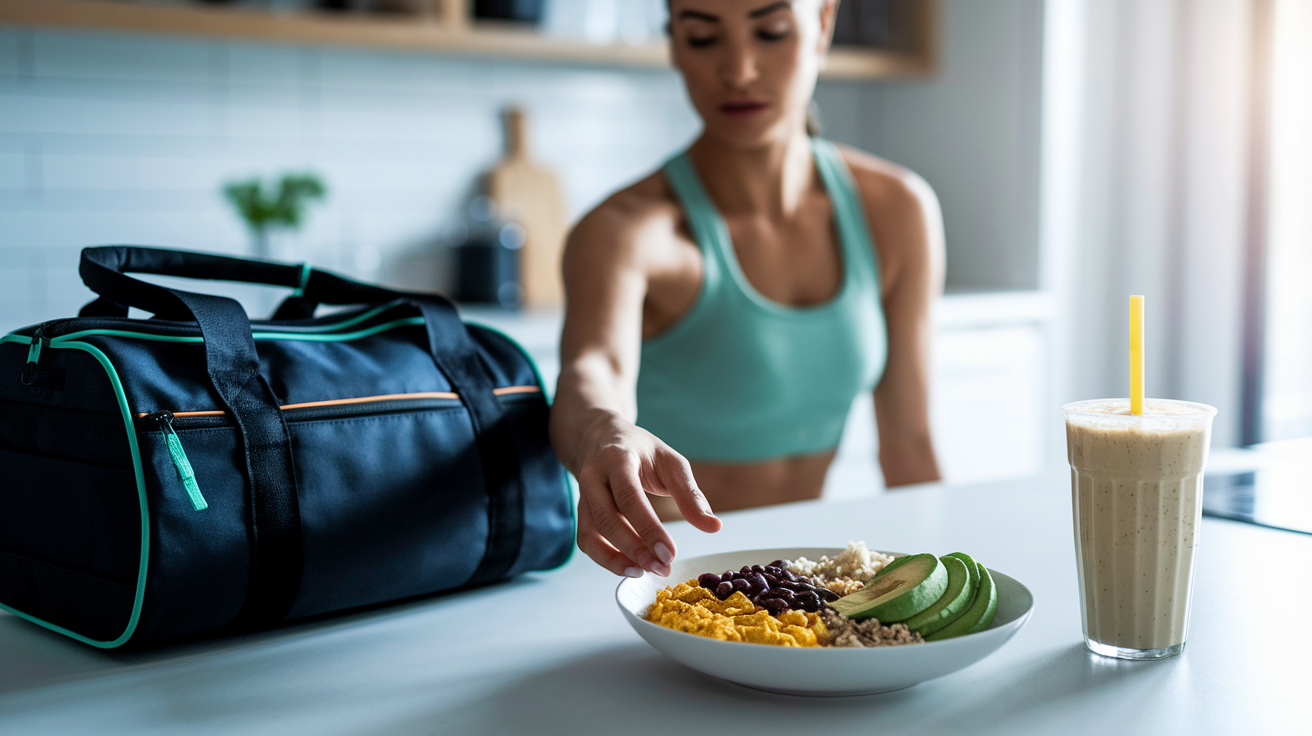
When you finish a workout, your muscles are ready to absorb nutrients and start rebuilding. Eating protein and carbs right after training makes a real difference. Try to eat within 30 minutes, and if you’ve just done a long or intense session, follow up with high‑protein meals every 4 to 6 hours. This restores glycogen (your muscle fuel) and gives your body the amino acids it needs to repair and grow. For vegan athletes, daily protein targets sit between 1.2 and 2.0 grams per kilogram of bodyweight. Each post‑workout meal should deliver roughly 20 to 40 grams of protein (or 0.25 to 0.4 grams per kilogram) to trigger muscle protein synthesis.
Combining protein with carbs matters because carbs refill your glycogen stores while protein rebuilds damaged muscle fibres. Skip one or the other and you’ll recover more slowly. The 20 to 40 gram range isn’t arbitrary. It’s the threshold where your muscles get enough leucine (around 2.5 to 3.0 grams per meal) to kick‑start the rebuilding process. On a plant‑based diet, you can hit these numbers easily. Pair legumes, tofu, tempeh, seitan, or a scoop of plant protein powder with whole grains or starchy vegetables.
Building a balanced post‑workout meal comes down to three simple parts: a quality protein source, a serving of carbohydrate‑rich food, and a small amount of healthy fat if your stomach tolerates it. Here are six quick examples that deliver 20 to 40 grams of protein:
- Tofu scramble bowl with 200 grams firm tofu, black beans, brown rice, and avocado (around 30 grams protein).
- Lentil bolognese over whole‑wheat pasta, adding up to roughly 25 to 30 grams protein per serving.
- Plant protein shake made with one scoop pea protein, soy milk, and a banana (about 33 grams protein).
- Chickpea wrap with hummus, roasted vegetables, and a whole‑grain tortilla (approximately 23 grams protein).
- Edamame bowl with quinoa, avocado, and sesame dressing (around 24 grams protein).
- Tempeh stir‑fry with jasmine rice and mixed vegetables (approximately 32 grams protein).
High-Protein Vegan Ingredients for Post‑Workout Recovery
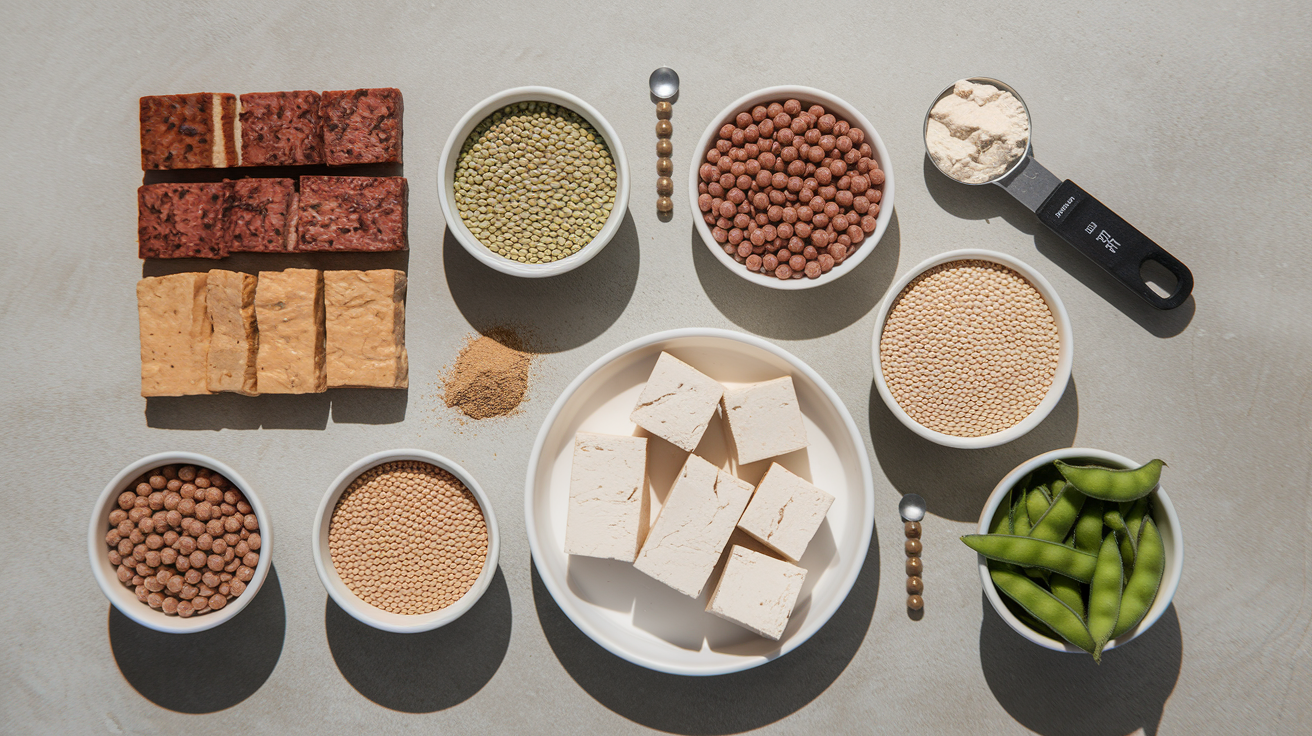
Not all plant foods carry the same amount of protein. Knowing which ingredients deliver the most per serving helps you build meals that hit your targets without endless measuring. Tempeh, seitan, tofu, lentils, chickpeas, edamame, quinoa, and pea protein powder are your go‑to options because they pack solid protein and, when combined correctly, supply all the essential amino acids your muscles need.
The leucine target of 2.5 to 3.0 grams per meal is especially important. You’ll reach it when you consume 20 to 40 grams of total protein from high‑quality sources like soy or seitan. Or when you combine legumes with grains.
Complementary protein combinations work well. Beans with rice or lentils with quinoa give you a complete amino acid profile. You don’t need to eat them in the same bite, but having both at the same meal ensures your body gets everything it needs to rebuild muscle tissue. The table below shows how much protein you can expect from standard servings of common vegan ingredients.
| Food | Protein per Standard Serving |
|---|---|
| Tempeh (100 g cooked) | 19 g |
| Seitan (100 g cooked) | 25 g |
| Firm tofu (200 g) | 16 g |
| Cooked lentils (1 cup / 198 g) | 18 g |
| Cooked chickpeas (1 cup / 164 g) | 15 g |
| Edamame, shelled (1 cup / 155 g) | 17 g |
| Cooked quinoa (1 cup / 185 g) | 8 g |
| Pea protein powder (1 scoop / 30 g) | 20–25 g |
Protein-Packed Vegan Smoothies & Shakes for Rapid Refuelling
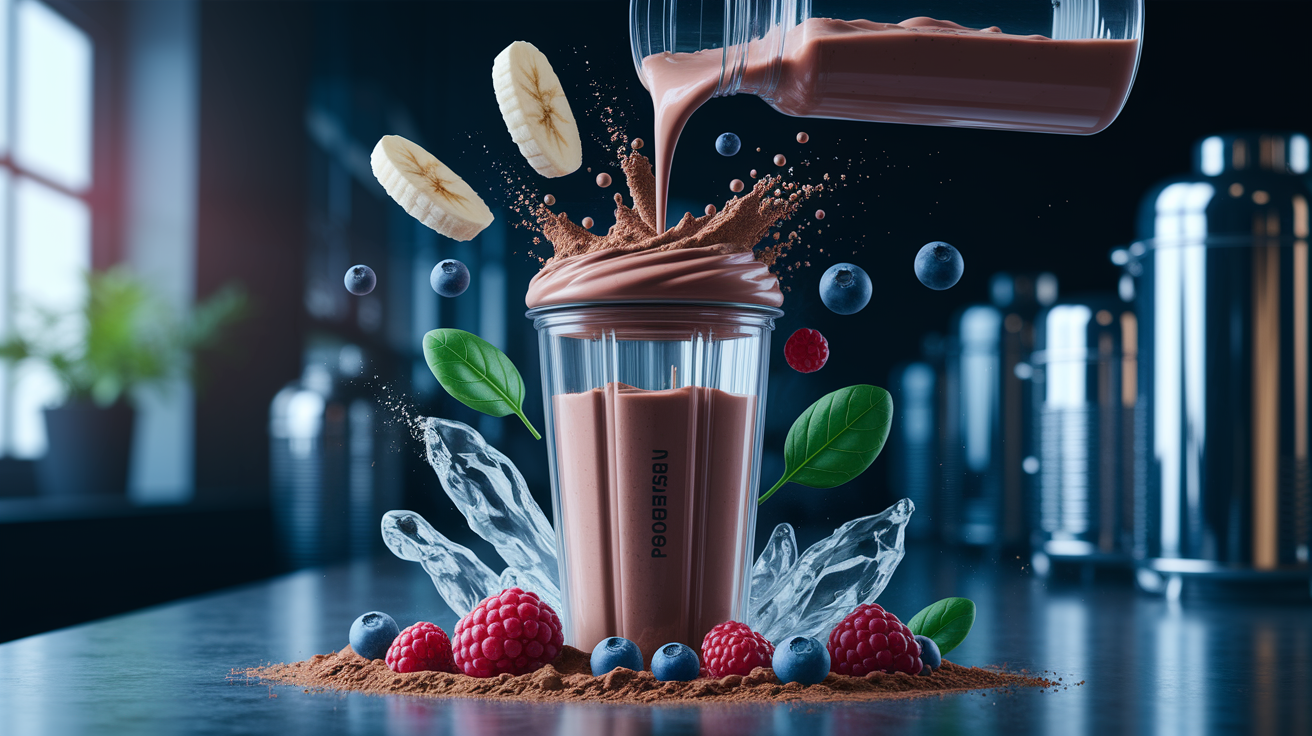
Smoothies and shakes are perfect when you need protein fast and don’t have the energy to cook. Blending everything together takes under two minutes, and liquid meals digest quickly so the nutrients reach your muscles sooner. A simple formula is one scoop of pea protein (around 24 grams), 300 millilitres of soy milk (8 grams), and a small banana (1 gram). That gives you roughly 33 grams of protein in a single glass. You can drink it straight from the blender bottle on your way home from the gym.
Natural flavour strategies keep your shakes interesting without adding sugar or artificial ingredients. Frozen berries add sweetness and antioxidants, a teaspoon of cocoa powder gives you a chocolatey hit, and a pinch of cinnamon warms up the flavour profile. If you want a thicker texture, throw in a tablespoon of rolled oats or a handful of spinach. That won’t change the taste but will bump up the fibre and micronutrients.
Here are five shake formulas that each deliver 20 to 35 grams of protein:
- Pea protein berry blend: 1 scoop pea protein (24 g), 1 cup soy milk (7 g), 1/2 cup frozen strawberries (1 g) = 32 g protein.
- Coffee energy shake: 1 scoop vanilla protein (24 g), 1 shot espresso, 1 cup soy milk (7 g), ice = 31 g protein.
- Chocolate peanut butter shake: 1 scoop chocolate protein (24 g), 1 tablespoon peanut butter (4 g), 1 cup soy milk (7 g) = 35 g protein.
- Green recovery smoothie: 1 scoop protein (24 g), 1 cup soy milk (7 g), 1 handful spinach (1 g), 1/2 banana (1 g) = 33 g protein.
- Tropical protein smoothie: 1 scoop vanilla protein (24 g), 1 cup soy milk (7 g), 1/2 cup frozen mango, squeeze of lime = 31 g protein.
Tofu, Tempeh, and Seitan Vegan High-Protein Post‑Workout Meals
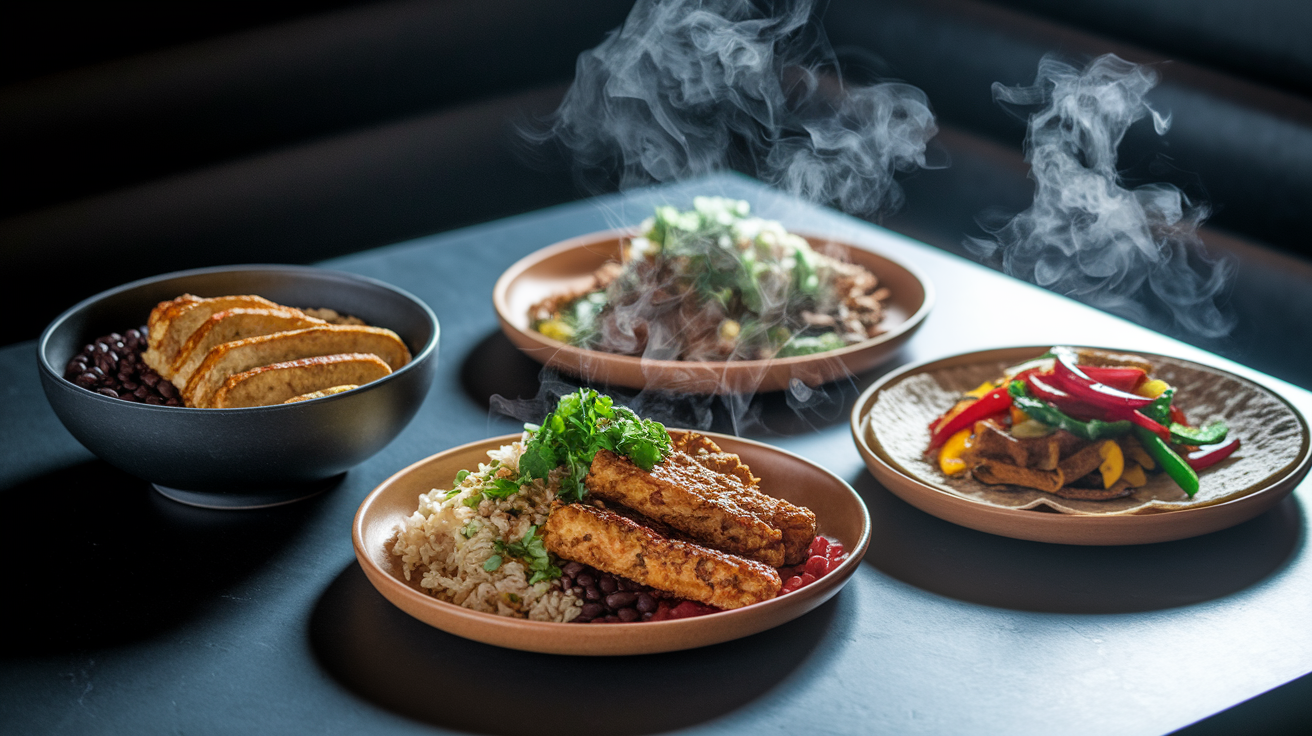
Tofu Meals
Tofu works best when you press out the excess water before cooking. Wrap a block of firm tofu in a clean kitchen towel, place something heavy on top (like a cast‑iron pan), and leave it for 15 minutes. This makes the tofu firm enough to hold its shape in a stir‑fry or scramble and helps it absorb marinades. Once pressed, you can cube it and pan‑fry until golden. Or crumble it for a scramble.
A straightforward post‑workout meal is a tofu and black bean burrito. Use 200 grams of firm tofu (16 grams protein), 100 grams of cooked black beans (9 grams), and 70 grams of cooked brown rice (3.5 grams) wrapped in a whole‑grain tortilla with half an avocado. That brings you to roughly 30 grams of protein and gives you the carbs you need to refill glycogen.
Tempeh Meals
Tempeh has a denser texture than tofu and a slightly nutty, fermented taste. Some people love it straight away. Others need to warm up to it. Marinating it for 15 to 30 minutes before cooking softens any bitterness and adds flavour. A simple marinade is soy sauce, lime juice, garlic, and a touch of maple syrup. After marinating, slice the tempeh into strips and pan‑fry or bake until the edges crisp up.
A 150‑gram serving of tempeh delivers around 28.5 grams of protein. A tempeh stir‑fry with two cups of mixed vegetables and one cup of cooked jasmine rice (4 grams protein) puts you at 32 to 34 grams total. It’s a fast meal, ready in 15 to 20 minutes. The combination of protein and carbs handles recovery well.
Seitan Meals
Seitan is almost pure wheat gluten. That means it has the highest protein concentration of any whole‑food vegan source, roughly 25 grams per 100 grams. The texture is chewy and meat‑like, so it holds up well in fajitas, stir‑fries, and sandwiches. If you’re making seitan fajitas, slice 150 grams of seitan into strips, sauté with peppers and onions, and serve in a whole‑grain tortilla. That single serving gives you around 37.5 grams of protein from the seitan alone, plus another 4 grams from the tortilla. You’ll comfortably pass 40 grams.
The downside is that seitan contains gluten. It’s off the table if you’re coeliac or gluten‑sensitive. But for everyone else, it’s one of the fastest ways to hit a high protein target in a single meal.
Legume-Based Vegan High-Protein Post‑Workout Bowls
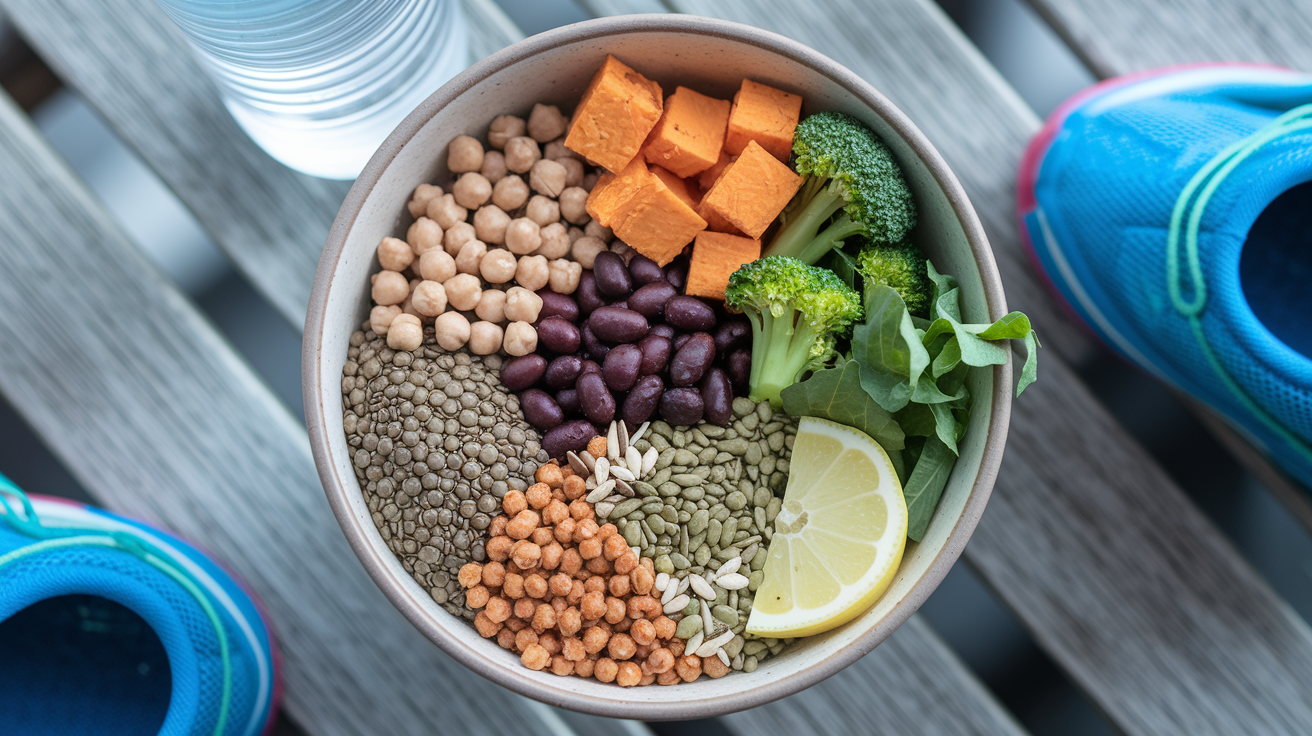
Legumes are the backbone of vegan high‑protein eating. They’re cheap, shelf‑stable, and packed with both protein and complex carbohydrates. Lentils, chickpeas, black beans, and kidney beans all deliver 15 to 18 grams of protein per cooked cup. When you pair them with a grain like quinoa or brown rice, you get a complete amino acid profile.
A lentil and quinoa power bowl is one of the simplest options. One cup of cooked lentils (18 grams), three‑quarters of a cup of cooked quinoa (6 grams), steamed broccoli (3 grams), and a tablespoon of tahini (3 grams) for flavour. That’s 30 grams of protein in a bowl that takes 20 to 30 minutes to assemble if you batch‑cook the lentils and quinoa at the start of the week.
Chickpeas work well in cold salads when you need something you can prep ahead and eat straight from the fridge. Mash one cup of cooked chickpeas with a tablespoon of vegan mayo, diced celery, and a squeeze of lemon. Pile it onto two slices of whole‑grain bread (8 grams protein). That gives you a 23‑gram sandwich that’s filling and portable.
Here are four bowl concepts that hit 20 to 30 grams of protein per serving:
- Lentil quinoa bowl: lentils 18 g, quinoa 6 g, veggies, tahini = 30 g protein.
- Chickpea salad bowl: chickpeas 15 g, mixed greens, seeds, whole‑grain crackers 8 g = 23 g protein.
- Black bean burger bowl: black bean patty 15 g, sweet potato, greens, avocado = 21 g protein (add a scoop of protein powder on the side to reach 35+ g if needed).
- Bean stew with pasta: mixed beans 15 g, whole‑wheat pasta 8 g, tomatoes, herbs = 23 g protein.
High-Protein Vegan Breakfasts for Post-Morning Workouts
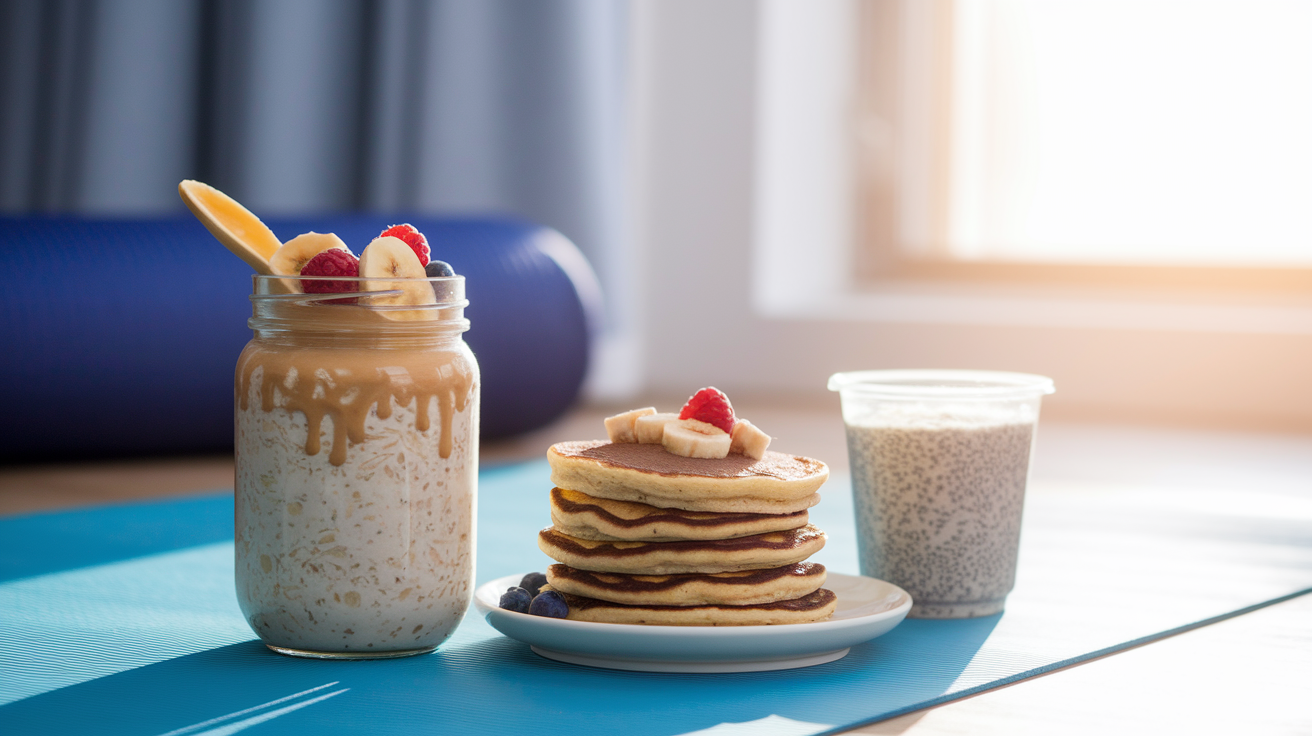
Overnight oats are the ultimate set‑and‑forget breakfast. They’re easy to boost with protein powder. Mix half a cup of rolled oats (5 grams protein) with one scoop of pea protein (24 grams), one tablespoon of peanut butter (4 grams), and 240 millilitres of soy milk (7 grams) in a jar or container. Stir it together, leave it in the fridge overnight, and by morning you have a ready‑to‑eat meal with around 40 grams of protein.
You can top it with banana slices, berries, or a sprinkle of cinnamon. The oats soak up the liquid and turn soft, so there’s no cooking required. The protein powder blends in without leaving a chalky taste if you use a good‑quality brand.
Vegan protein pancakes are another solid option if you prefer something warm. Blend one cup of oats, one scoop of vanilla protein powder, one mashed banana, and enough plant milk to make a pourable batter. Cook the pancakes on a non‑stick pan over medium heat, flipping once bubbles form on the surface. Two or three pancakes give you roughly 25 to 30 grams of protein depending on the size. You can make a big batch and freeze the extras for later in the week.
High‑protein chia puddings work well if you want a lighter texture. Mix three tablespoons of chia seeds with one cup of soy milk and one scoop of protein powder, then refrigerate for at least two hours or overnight. The chia seeds absorb the liquid and form a thick, pudding‑like consistency. Each serving delivers around 20 to 25 grams of protein and a good dose of omega‑3 fatty acids. Top it with fresh fruit or a drizzle of almond butter to add a bit more flavour and healthy fat.
Quick 10 to 15 Minute Vegan High-Protein Post‑Workout Snacks
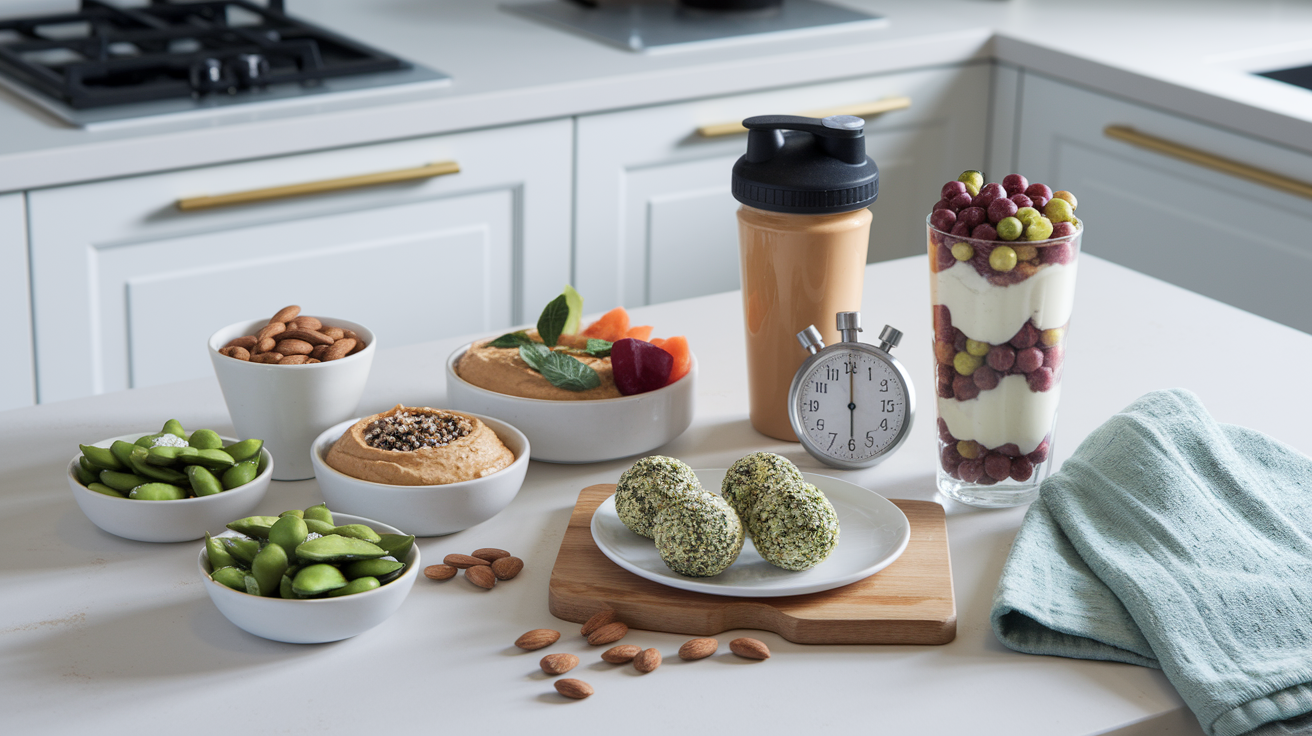
Sometimes you need something faster than a full meal. That’s where quick snacks come in. These options take 10 to 15 minutes at most and still deliver enough protein to support recovery. Each one is simple, portable, and built around a single high‑protein ingredient.
-
Edamame with almonds (10 minutes): Steam one cup of shelled edamame (17 grams protein), sprinkle with sea salt, and pair with one ounce of raw almonds (6 grams protein). Total: 23 grams protein. Ready in the time it takes to boil water.
-
Hummus with quinoa and veggies (15 minutes): Scoop half a cup of hummus (10 grams protein) into a bowl, add one cup of cooked quinoa (8 grams), and serve with sliced cucumber and bell pepper. Total: 18 grams protein. Add a scoop of protein powder in a shake on the side to reach 35+ grams if needed.
-
Peanut butter protein shake (5 minutes): Blend one scoop of pea protein (24 grams), 300 millilitres of soy milk (8 grams), and one tablespoon of peanut butter (4 grams). Total: 36 grams protein. Drink it straight from the blender bottle.
-
Energy balls (prep ahead, grab in 2 minutes): Roll dates, almonds, walnuts, and a scoop of protein powder into balls and store in the fridge. Each ball has around 5 grams protein. Eat three or four with a glass of soy milk (7 grams) to reach 20 to 25 grams total.
-
Vegan yoghurt parfait (10 minutes): Layer one cup of high‑protein vegan yoghurt (8 to 12 grams, depending on brand) with two tablespoons of almond butter (6 grams) and a quarter cup of granola. Total: 20 to 25 grams protein. Choose a soy‑based yoghurt for the highest protein content.
Macro-Balanced Vegan Meal Planning for Recovery
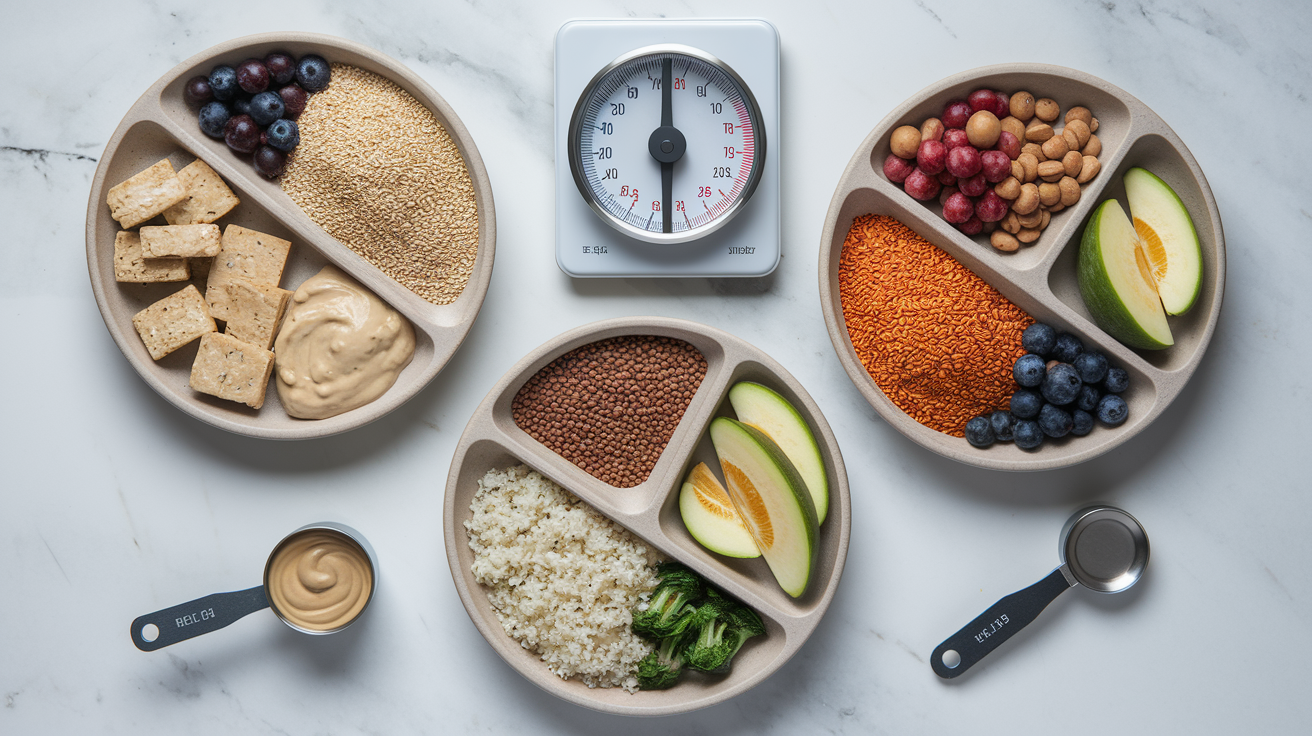
Balancing your macros means matching your protein, carbohydrate, and fat intake to what your body needs after training. For protein, target 0.25 to 0.4 grams per kilogram of bodyweight per meal. That translates to 20 to 40 grams for most people. Carbohydrates should sit between 0.5 and 1.2 grams per kilogram, with the lower end for shorter, less intense sessions and the higher end after long endurance workouts or heavy lifting.
Fat should stay moderate, around 8 to 20 grams per meal. Too much fat can slow digestion and delay nutrient absorption if you need quick recovery.
A 70‑kilogram athlete would target roughly 20 to 28 grams of protein per post‑workout meal (0.25 to 0.4 grams per kilogram), plus 35 to 85 grams of carbohydrate depending on workout intensity. The table below shows three sample meals for a 70‑kilogram athlete, with macros broken down per meal.
| Meal | Protein (g) | Carbs (g) | Fat (g) |
|---|---|---|---|
| Tempeh stir‑fry with jasmine rice and vegetables | 32 | 70 | 14 |
| Chickpea salad sandwich with fruit | 23 | 50 | 10 |
| Lentil quinoa bowl with tahini dressing | 30 | 65 | 16 |
Vegan Athlete Meal Prep: High-Protein Batch Cooking Strategies
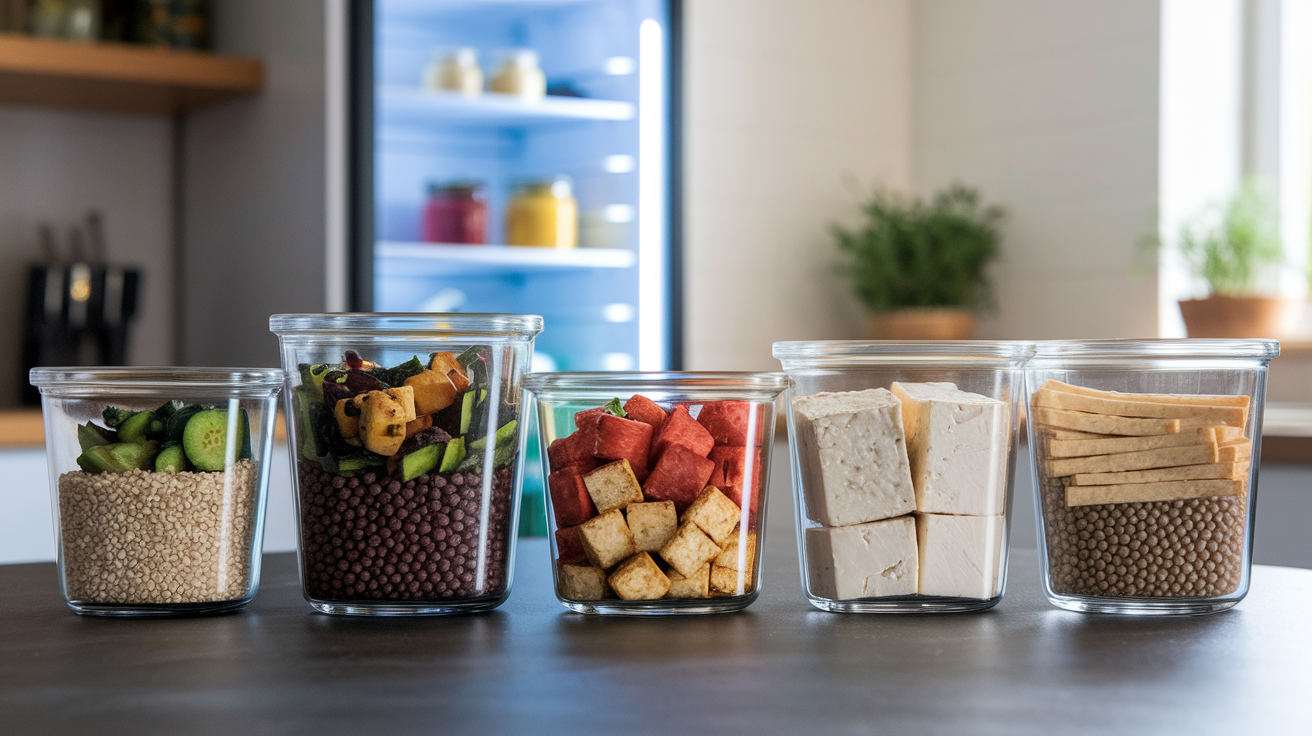
Batch cooking saves time and guarantees you always have high‑protein meals ready when you need them. On a Sunday afternoon, cook three to four cups of dry lentils or beans and six to eight cups of grains like quinoa, brown rice, or pasta. Divide everything into single‑meal portions and store them in the fridge for three to four days. Or freeze them for up to two or three months. Cooked legumes and grains reheat well in the microwave or on the stovetop. You can mix and match them with fresh vegetables and sauces throughout the week.
Tofu, tempeh, and seitan all keep for three to four days in the fridge once cooked. If you marinate and bake a few blocks of tempeh at the start of the week, you can add 150 to 300 grams to any meal and instantly boost the protein by 19 to 57 grams. Slice or cube the cooked tempeh, store it in an airtight container, and reheat it quickly in a pan or microwave when you’re ready to eat. This works well for stir‑fries, bowls, and wraps.
Protein shakes are best made fresh because the texture changes after a few hours in the fridge. But if you need to prep one in advance, store it in a sealed bottle and drink it within 24 hours. For solid meals, portion your batch‑cooked ingredients into glass or BPA‑free plastic containers. Label them with the date and stack them neatly in the fridge so you can grab one on your way out the door. Always reheat food thoroughly to an internal temperature of at least 75 degrees Celsius to keep it safe. If anything smells off or looks slimy, throw it out.
Supplements & Micronutrients for Vegan Recovery Support
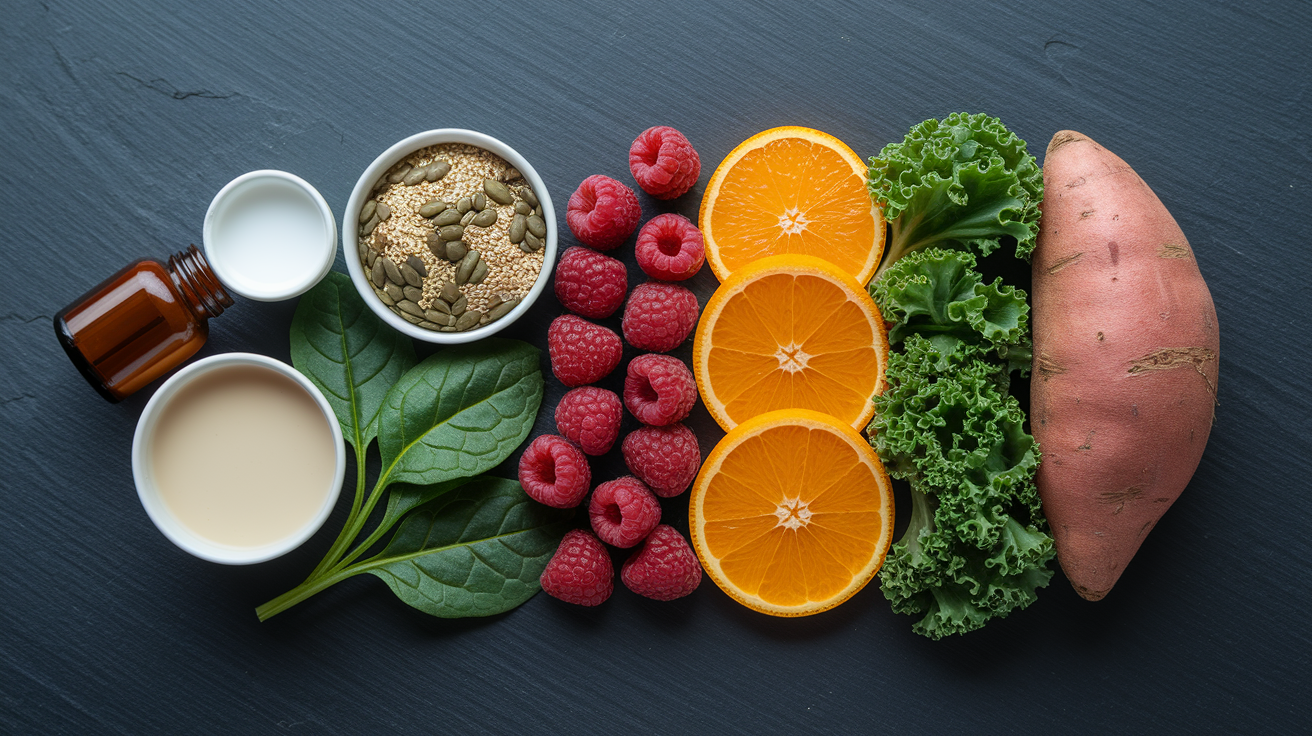
Plant‑based athletes need to pay extra attention to a few micronutrients that can be harder to get from vegan foods alone. Vitamin B12 doesn’t exist naturally in plants. You’ll need to take a supplement or eat fortified foods like plant milk, nutritional yeast, or breakfast cereals. Zinc and iron are present in legumes, seeds, and whole grains, but plant sources aren’t absorbed as efficiently as animal sources. It helps to pair them with vitamin C‑rich foods like bell peppers or citrus to boost uptake.
Antioxidants are especially important because exercise increases oxidative stress. Athletes are advised to consume more antioxidant‑rich fruits and vegetables than the general population, with a target of 7 to 13 cups per day.
Red berries like raspberries and strawberries, dark leafy greens like kale and spinach, and orange vegetables like sweet potatoes are all packed with antioxidants that help reduce inflammation and speed up recovery. Eating a wide variety of coloured produce throughout the week ensures you’re covering your bases.
Here are four micronutrients essential for recovery:
- Vitamin B12: supports energy production and red blood cell formation; take 25 to 100 micrograms daily or eat fortified foods.
- Zinc: involved in protein synthesis and immune function; target 8 to 11 milligrams daily from pumpkin seeds, chickpeas, and fortified cereals.
- Iron: carries oxygen to muscles; aim for 14 to 18 milligrams daily from lentils, tofu, and spinach, paired with vitamin C.
- Antioxidants: reduce oxidative damage from training; eat 7 to 13 cups of produce daily, focusing on berries, greens, and sweet potatoes.
Avoiding Common Mistakes in Vegan High-Protein Post‑Workout Nutrition
One of the most common mistakes is waiting too long to eat after training. If you let more than an hour pass before refuelling, you miss the window when your muscles are most responsive to protein and carbohydrates. Even a quick shake or snack within 30 minutes makes a difference. You can follow it up with a full meal later.
Another error is eating enough protein but skipping carbs. That leaves your glycogen stores depleted and slows down recovery. Protein and carbs work together, so always include both.
Some people also underestimate how much protein they actually need per meal. If you’re only getting 10 to 15 grams, you won’t hit the leucine threshold that triggers muscle protein synthesis. Target at least 20 grams per post‑workout meal. If you’re larger or doing very intense training, push closer to 40 grams.
Poor digestibility can also be an issue if you eat too much fat or fibre right after a workout. Both slow down gastric emptying. Keep fat under 10 to 15 grams in your immediate post‑workout meal. Save the big salad or fatty avocado toast for later in the day.
Sprouting and fermenting improve nutrient uptake and make plant proteins easier to digest. Tempeh is already fermented, which is one reason it’s so well tolerated. Sprouted lentils or chickpeas have higher bioavailability of vitamins and minerals. If you have the time, rinse dried legumes and let them sit in water for 12 to 24 hours. Drain and leave them in a jar for another day or two until tiny sprouts appear. Sprouted legumes cook faster and are gentler on your stomach, which matters when you’re trying to get protein in quickly after training.
Final Words
Act now: eat protein and carbs within 30 minutes after training, and aim for about 20–40 g of protein (0.25–0.4 g/kg). That combo helps rebuild muscle and refill glycogen.
Use high-protein options like tofu, tempeh, seitan, lentils, edamame, or a pea-protein shake, and build simple bowls, shakes, or quick snacks. Batch-cook staples and watch timing and portions.
Pick two go-to vegan high-protein post-workout meals, prep them this week, and you’ll support faster recovery and steady progress.
FAQ
Q: What should I eat right after a workout as a vegan?
A: Right after a workout vegans should eat a mix of protein and carbs within 30 minutes to rebuild muscle and refill glycogen, aiming for a quick shake or a tofu/legume meal with a fruit or grains.
Q: How much protein should vegans aim for in a post-workout meal?
A: Vegans should aim for about 20–40 g protein per post-workout meal, roughly 0.25–0.4 g/kg, which also hits the leucine threshold of about 2.5–3.0 g for muscle rebuilding.
Q: What are quick vegan meals that deliver 20–40 g protein?
A: Quick vegan meals that hit 20–40 g include a tofu scramble bowl; lentil pasta with tomato; pea-protein shake with soy milk (~33 g); chickpea wrap with quinoa; edamame bowl; tempeh stir-fry.
Q: Which vegan ingredients are highest in protein?
A: Highest-protein vegan ingredients include seitan (25 g/100 g), tempeh (19 g/100 g), pea protein powder (20–25 g/scoop), lentils (18 g/cup), edamame (17 g/cup), chickpeas (15 g/cup), tofu and quinoa lower but useful.
Q: How do I build a balanced post-workout meal?
A: Build a post-workout plate with protein first (20–40 g), carbs next (0.5–1.2 g/kg), and a small amount of healthy fat plus veggies for recovery and satiety—combine beans + grains or protein powder + fruit.
Q: What protein target should a 70-kg athlete aim for after exercise?
A: A 70-kg athlete should aim for about 0.25–0.4 g/kg per post-workout meal, which equals roughly 18–28 g protein, fitting a 20–40 g practical target for muscle repair.
Q: Are vegan protein shakes effective for post-workout refuelling?
A: Vegan protein shakes are effective post-workout; for example one scoop pea protein (24 g) plus soy milk (8 g) and a banana gives about 33 g protein and quick absorption.
Q: How soon and how often should vegans eat after training?
A: Vegans should eat within 30 minutes after most workouts; after long or intense sessions aim for high-protein meals every 4–6 hours to keep rebuilding and refueling consistent.
Q: How should I press, marinate, and cook tofu, tempeh, and seitan for recovery meals?
A: For recovery meals press tofu to remove water then pan-sear; marinate tempeh 15–30 minutes before cooking; use seitan plain or sliced—150 g tempeh gives ~28 g, 150 g seitan about ~38 g protein.
Q: What are fast 10–15 minute vegan snacks with protein and prep time?
A: Fast snacks: steamed edamame (5 min, ~17 g); hummus + whole-grain pita (5 min, ~10–15 g); almond + edamame combo (5 min, ~23 g); protein energy balls (10 min, ~5–10 g); soy yogurt + pea protein (5 min, ~20–30 g).
Q: What micronutrients or supplements should vegan athletes consider for recovery?
A: Vegan athletes should consider B12, iron, zinc, and antioxidants for recovery; creatine is an optional performance supplement; eat varied produce and consider tested supplements where needed.
Q: What common mistakes do vegans make after workouts and how to fix them?
A: Common mistakes: waiting too long to eat, not enough protein, skipping carbs, or high-fat timing. Fixes: eat within 30 minutes, target 20–40 g protein, include carbs, and use fermenting or sprouting to boost digestibility.

