
Trying to improve your hamstring flexibility with only your hands is like chopping wood with a spoon.
The right tools let you hold cleaner positions, ease tension, and actually lengthen the muscle without straining your lower back.
This guide cuts through the gimmicks and shows the gear that actually works, including multi-loop straps, bands, foam rollers, slant boards, and a few upgrade options.
You’ll get simple rules for picking gear based on how tight you are, your budget, and whether you need something portable or stay-at-home.
Start with the tool that matches your current tightness, and the rest becomes easy.
Best Tools for Hamstring Stretching (Top Picks)
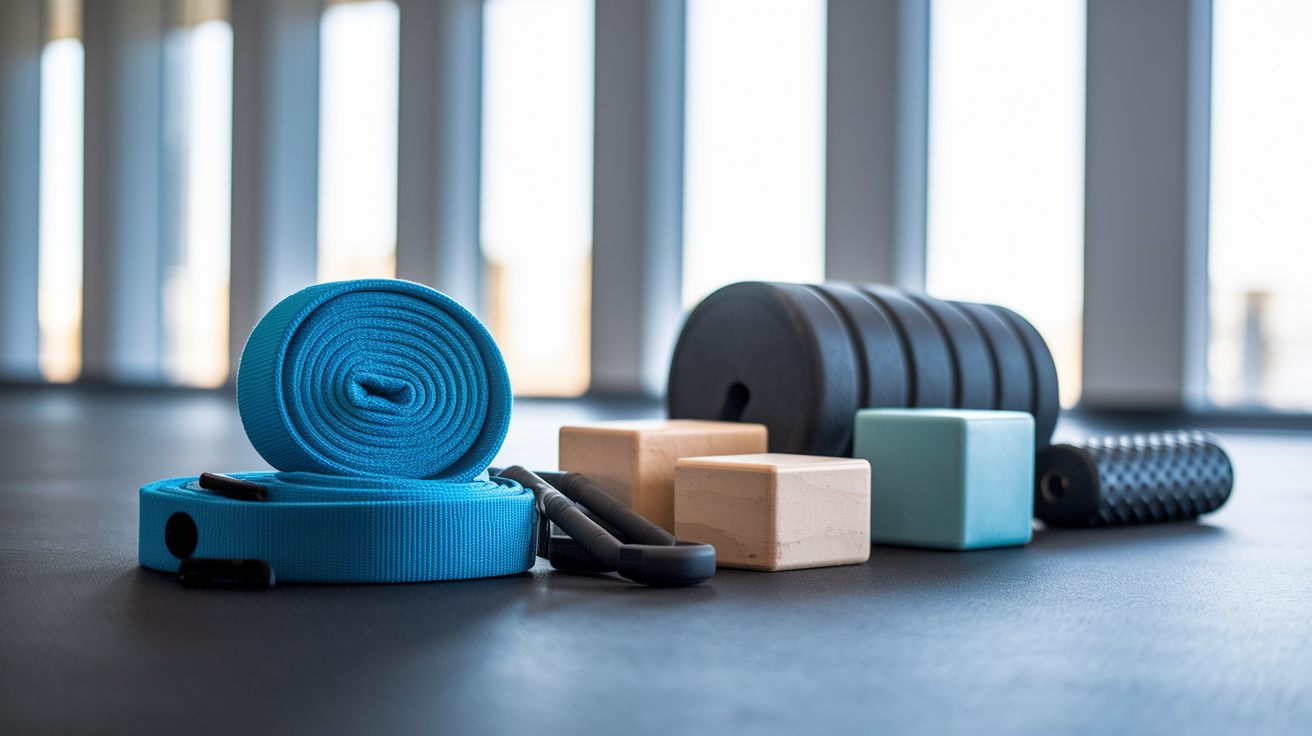
Hamstring flexibility work gets easier when you have the right tools. Trying to stretch tight hamstrings with just your hands usually leaves you frustrated, uncomfortable, or stuck in poor alignment. The right equipment gives you control and consistency so you can actually make progress. Whether you’re dealing with chronic tightness, trying to improve athletic performance, or just want to bend forward without pulling, the tools below all do the same basic job: they let you hold better positions longer, with less strain on your lower back.
Not every tool works the same way. Some are built for static holds, others for rolling out tension before you even start stretching. Some are cheap and simple, others adjustable and precise. Picking the right one depends on how tight your hamstrings are right now, how much space you have, and whether you want a tool you can take with you or something that stays at home.
Multi-loop stretch strap (effectiveness: 9/10, $8–$25). The most effective tool for isolated passive hamstring lengthening. Eight-loop design lets you place your foot exactly where you need it and hold clean 30–60 second stretches without slipping.
Flat resistance band or TheraBand (8/10, $10–$35 per set). Best for active-assisted straight leg raises and dynamic hamstring mobility. Comes in light, medium, and heavy resistance so you can scale up.
Foam roller (standard: 7/10, $15–$40; vibrating: 8/10, $120–$250). Breaks up fascial adhesions and reduces guarding before stretching. Roll for 1–2 minutes before static work.
Slant board (8/10, $60–$150). Useful for standing hamstring stretches under bodyweight load. Adjustable angles let you increase difficulty week by week.
Massage or percussion gun (7/10, $100–$400). Reduces tension and pain at trigger points in 30–60 second bursts. Follow immediately with static stretching.
Yoga blocks (pair) (6/10, $8–$25). Help you maintain form in forward folds and seated stretches when your hands can’t reach the floor yet. Lets you hold longer without compensating.
Choose based on your tightness level and budget. If you’re starting from scratch and your hamstrings are really locked up, get a multi-loop strap first. It’s cheap, portable, and lets you stretch safely without help. If you’re already flexible but want more range, add a resistance band for active work. If you feel “thick” or knotted rather than just tight, start with a foam roller before you do any stretching. Slant boards and percussion guns are upgrades once you’ve built a baseline routine and know what your body responds to.
In‑Depth Review: Hamstring Stretch Straps
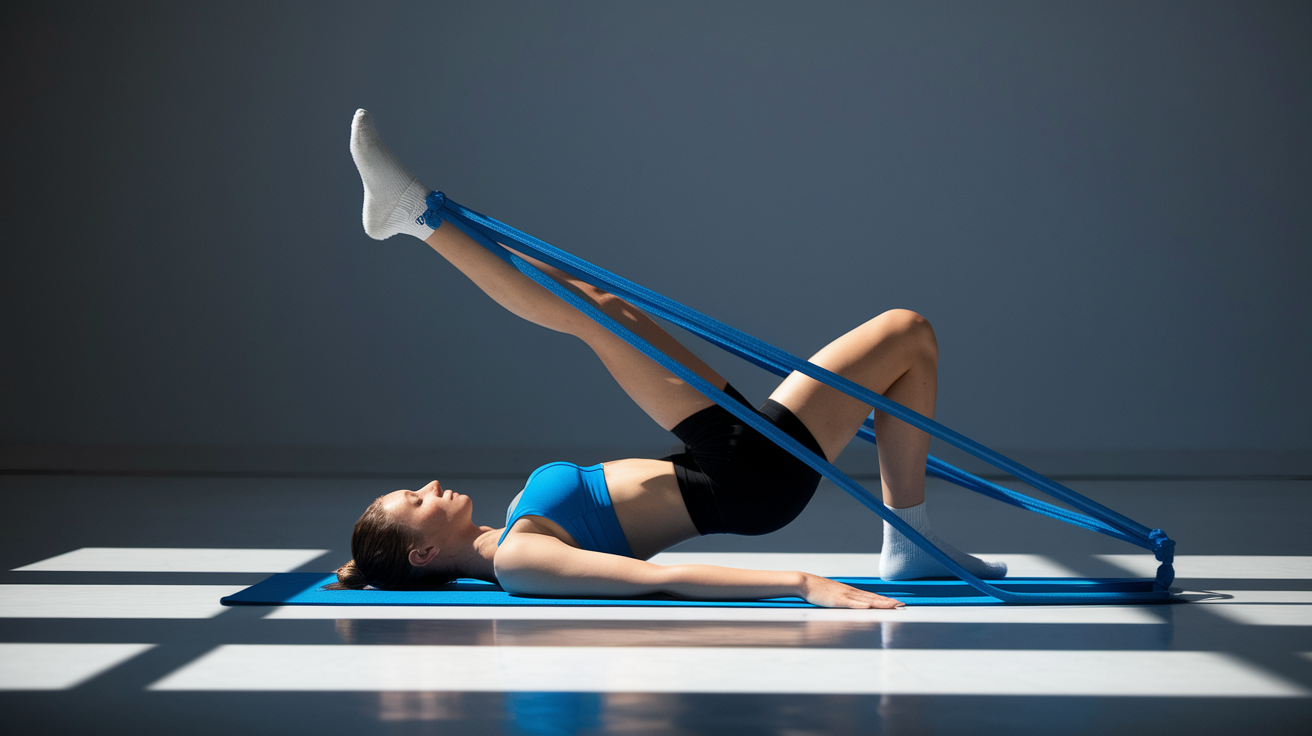
A good stretch strap is the simplest, most effective way to isolate your hamstrings without compensating through your lower back or rounding your spine. The best ones have multiple loops (usually eight or more) spaced evenly along a 6–8 foot length. You loop one end around your foot, lie on your back, and use the strap to pull your leg up while keeping your knee straight or slightly bent if irritation is high. Because the strap is non-elastic, you control the tension without bouncing or jerking, and you can hold each stretch for the full 30–60 seconds it takes to get actual tissue lengthening.
Straps work because they let you stay relaxed everywhere except the muscle you’re targeting. When you try to grab your leg with your hands, your shoulders, neck, and hip flexors all tense up to hold the position. A strap fixes that. You just lie flat, breathe, and let the strap do the work. You can also use them for PNF (contract-relax) stretching: push your foot into the strap at about 60–70% effort for 5–6 seconds, relax for 2–3 seconds, then pull a little deeper and hold for another 20–30 seconds. Repeat that sequence 2–4 times per leg, and you’ll feel a measurable difference in how far your leg goes.
The main downside is they don’t do anything for releasing tension. You need soft tissue work before stretching if your hamstrings feel thick or knotted. Straps are also passive tools, so they won’t build any strength. If your hamstrings are tight because they’re weak, you’ll need to add some active work with bands or machines.
Pros:
Inexpensive and portable
Best tool for isolated static holds and PNF
Cons:
No myofascial or strength benefit
Requires floor space and time
In‑Depth Review: Foam Rollers for Hamstring Mobility
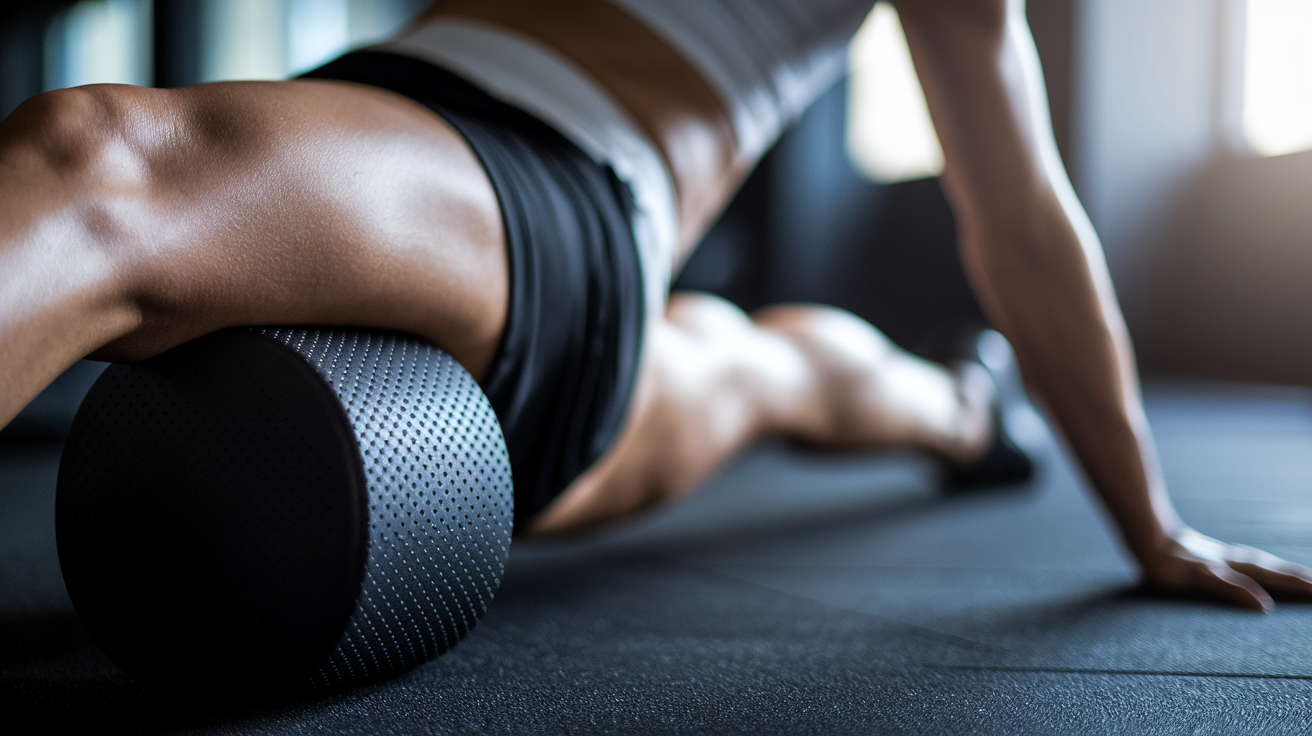
Foam rollers don’t stretch your hamstrings. They prep them. Rolling out your hamstrings for 1–2 minutes per side before you stretch reduces the neurological “guard” that keeps tight muscles locked short. That guard is your nervous system’s way of protecting tissue it thinks is vulnerable, and rolling temporarily calms it down by flooding the area with sensory input. The result: you can stretch deeper and hold longer without feeling like you’re going to snap something.
Standard foam rollers are firm cylinders, usually 12–18 inches long and about 6 inches in diameter. High density foam (around 2.2 lb/cubic foot) lasts longer and gives you more targeted pressure than cheap soft rollers that flatten out after a few weeks. Sit on the floor, place the roller under one thigh, and slowly roll from just above your knee to just below your glute. When you hit a tender spot, pause there for 20–30 seconds and breathe. Don’t bounce or roll fast. Vibrating foam rollers add a mechanical oscillation (usually around 30–50 Hz) that can increase the release effect, but they cost $120–$250 versus $15–$40 for a basic roller.
Foam rolling is most useful if your hamstrings feel “thick” or you get a dull ache when you sit for long periods. It’s also helpful the day after a heavy leg workout when soreness is limiting your range. Rolling won’t fix chronic tightness on its own. You still need to stretch afterward. But it makes the stretch more effective. The main limitation is that it’s hard to generate enough pressure on your own body weight if you’re very tight or very muscular. In that case, a lacrosse ball or massage gun will hit trigger points more precisely.
Resistance Bands for Dynamic Hamstring Stretching
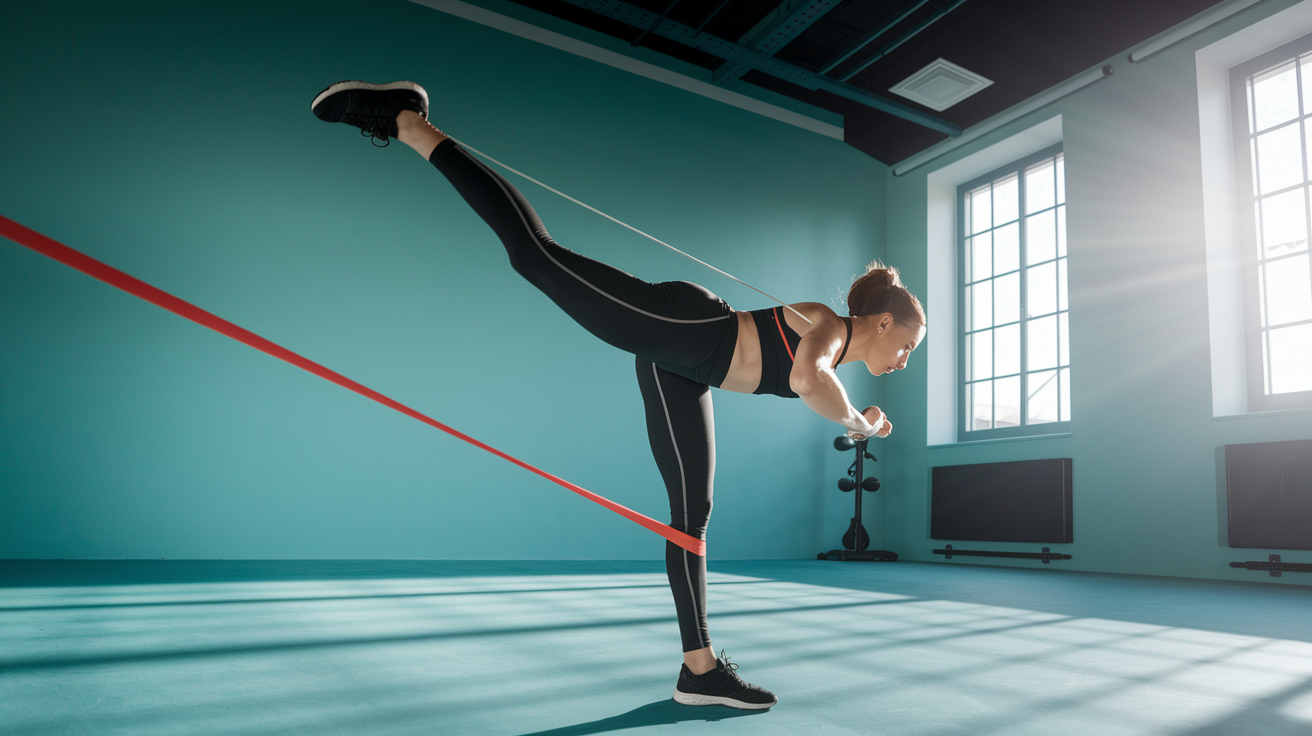
Resistance bands give you something straps and rollers can’t: active tension. When you use a band to assist a straight leg raise or a standing reach, your hamstrings have to work to control the movement on the way down (the eccentric phase), and that combination of lengthening under load builds flexibility and strength at the same time. Most people who only do static stretching stay tight because their hamstrings are weak in the lengthened range. Bands fix that.
Flat resistance bands (the kind you see in physical therapy) come in light, medium, and heavy tensions, usually sold in sets for $10–$35. Light bands work well for beginner active stretches and older adults. Medium bands are the sweet spot for most people. Heavy bands are for athletes or advanced lifters who need more load to feel anything. Loop one end around your foot, lie on your back, and lift your leg straight up while the band provides assistance. Lower slowly over 3–4 seconds. That’s where the flexibility gain happens. Do 8–15 reps per leg, 2–4 sets, and rest 1–2 minutes between sets.
Simple band-assisted hamstring routine:
Supine straight leg raise with band: 12 reps per leg, hold the top position for 2 seconds, lower slowly.
Standing banded forward reach: loop band around a low anchor, hold the other end, hinge at the hips and reach forward while the band pulls you back. 10 reps, controlled.
Kneeling single leg stretch with band: kneel on one knee, loop band around the other foot, gently pull your leg straight and hold 20–30 seconds. 3 sets per side.
Stretching Machines and Slant Boards: Advanced Equipment
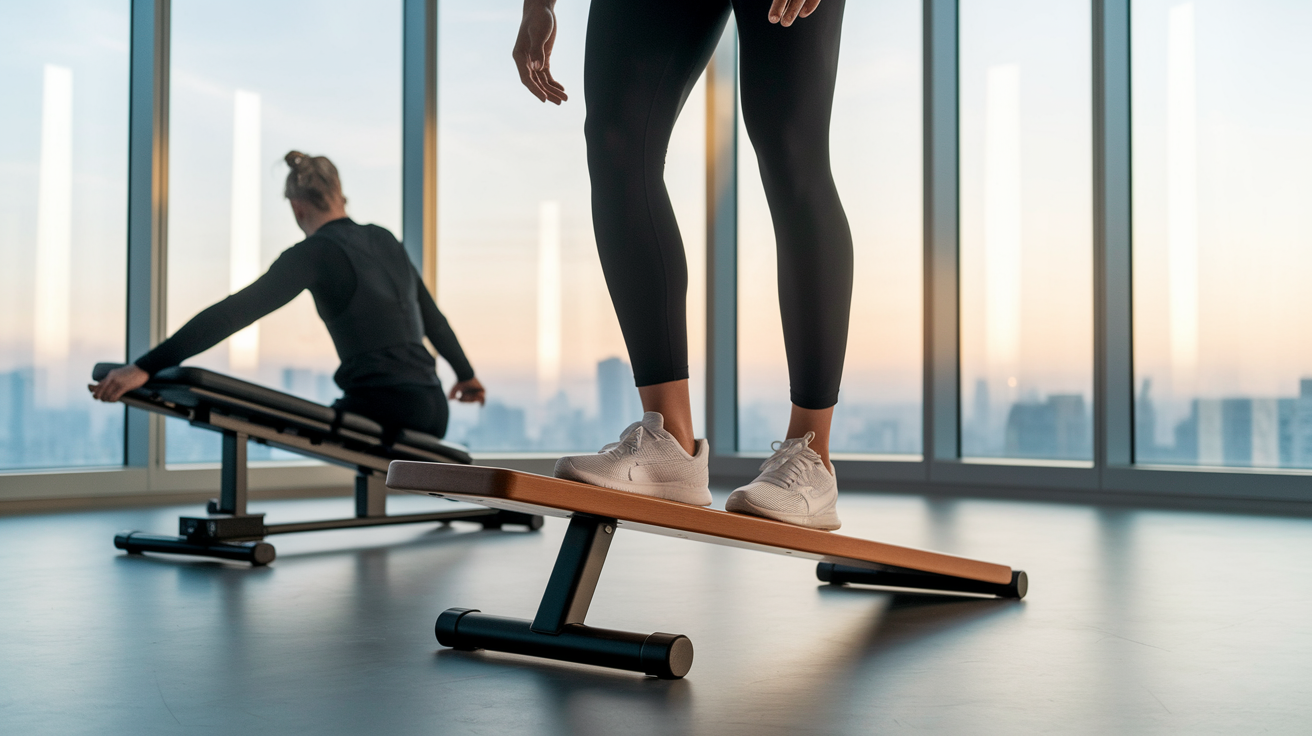
If you want measurable, repeatable progress and you’re willing to spend more money or dedicate more space, stretching machines and slant boards are the next step up. Stretching machines (like leg stretchers or seated stretch trainers) use mechanical leverage to apply controlled, gradual tension. You sit or lie in the machine, adjust a lever or crank, and let the device push your legs into a deeper stretch over several minutes. Most machines let you track your range of motion session to session, which is useful if you’re rehabbing an injury or preparing for a sport that requires extreme hamstring flexibility (like martial arts or dance). Prices range from about $150 for basic home units to $300–$1,500+ for clinic-grade machines with digital readouts and variable resistance.
Slant boards are simpler and cheaper, usually $60–$150, but still effective for progressive hamstring work. A slant board is just an angled platform, adjustable between 10° and 30°, that you stand on to increase the stretch on your calves and hamstrings. Stand with your toes elevated and your heels on the ground, then hinge forward at the hips. The angle loads your posterior chain under bodyweight, and you can increase the difficulty by raising the board angle or holding a light weight. It’s a functional, weight-bearing stretch that translates well to real movement.
The downside of machines is cost and portability. Most are bulky and stay in one spot. Slant boards are easier to store but less adjustable than machines. Both are best for people who’ve already built a baseline flexibility routine and need a tool that can scale with them over months, not weeks.
| Tool | Notes |
|---|---|
| Stretching Machine | Best for measurable ROM tracking; high cost ($150–$1,500+); clinic or serious home use |
| Slant Board | Adjustable angles (10°–30°); functional weight-bearing stretch; portable; $60–$150 |
| Basic Strap | Cheapest option for isolated passive work; no load progression; under $25 |
Price and Performance Comparison of Popular Hamstring Tools
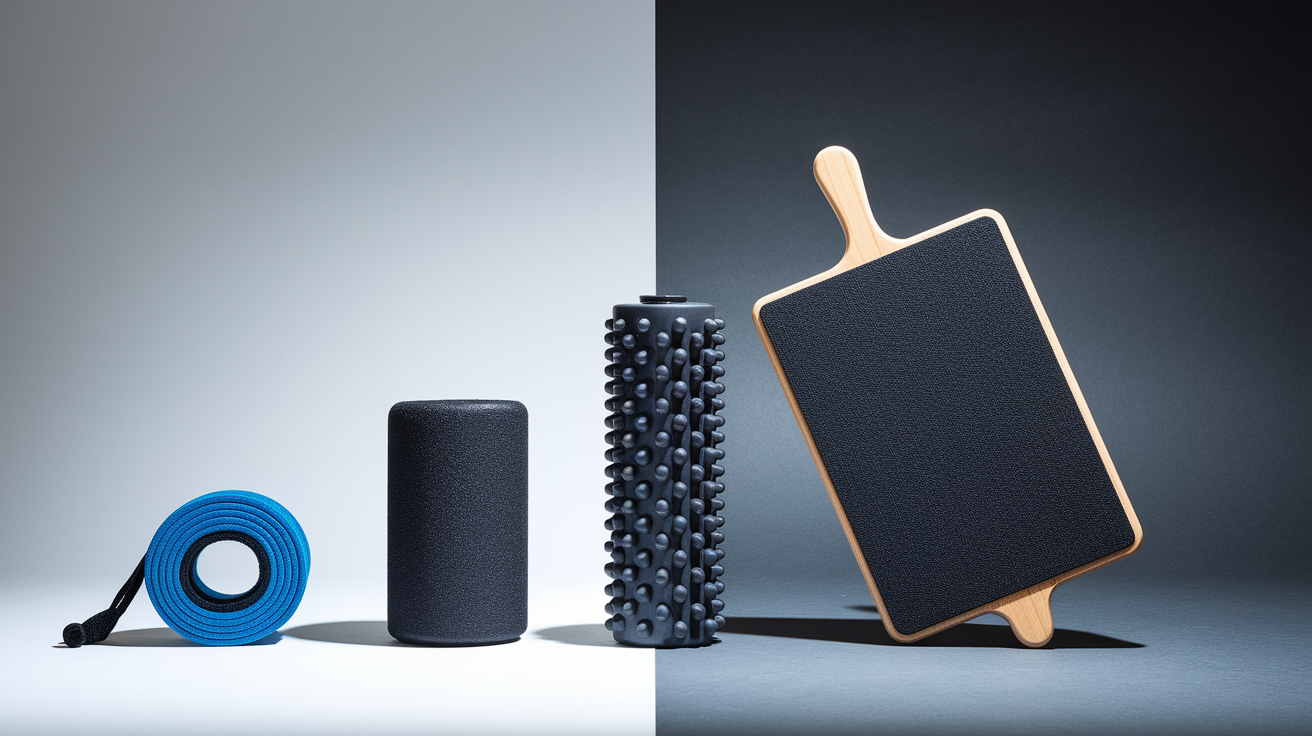
Budget matters, but so does whether the tool actually works for the tightness you’re dealing with. A $12 strap will outperform a $200 percussion gun if all you need is a clean static stretch. Here’s how the most common tools stack up when you compare price, effectiveness, durability, and who they work best for.
| Tool | Price Range | Effectiveness (1–10) | Durability | Best For |
|---|---|---|---|---|
| Multi-loop stretch strap | $8–$25 | 9 | High (lasts years) | Isolated passive stretching, PNF, beginners to advanced |
| Flat resistance band set | $10–$35 | 8 | Medium (latex wears over time) | Active-assisted stretches, dynamic mobility, strength-flexibility balance |
| Standard foam roller | $15–$40 | 7 | High if high-density | Myofascial release, pre-stretch tension reduction |
| Slant board | $60–$150 | 8 | Very high (wood/plastic) | Progressive loaded stretches, functional hamstring-calf work |
| Percussion/massage gun | $100–$400 | 7 | Medium (battery degrades) | Trigger-point release, pre-stretch tension, travel |
If you have under $50 to spend, buy a foam roller ($20), a multi-loop strap ($12), and a basic loop band ($10). That’s $42 and covers myofascial release, passive stretching, and active mobility. If you have $50–$200, upgrade to a higher density roller ($40), add a slant board ($90), and get a quality band set ($30), total around $160. At $300+, you’re looking at a vibrating roller ($150) plus a mid-range percussion gun ($200) or a clinic level stretching machine if you have the space and commitment.
Proper Technique for Using Each Tool Safely
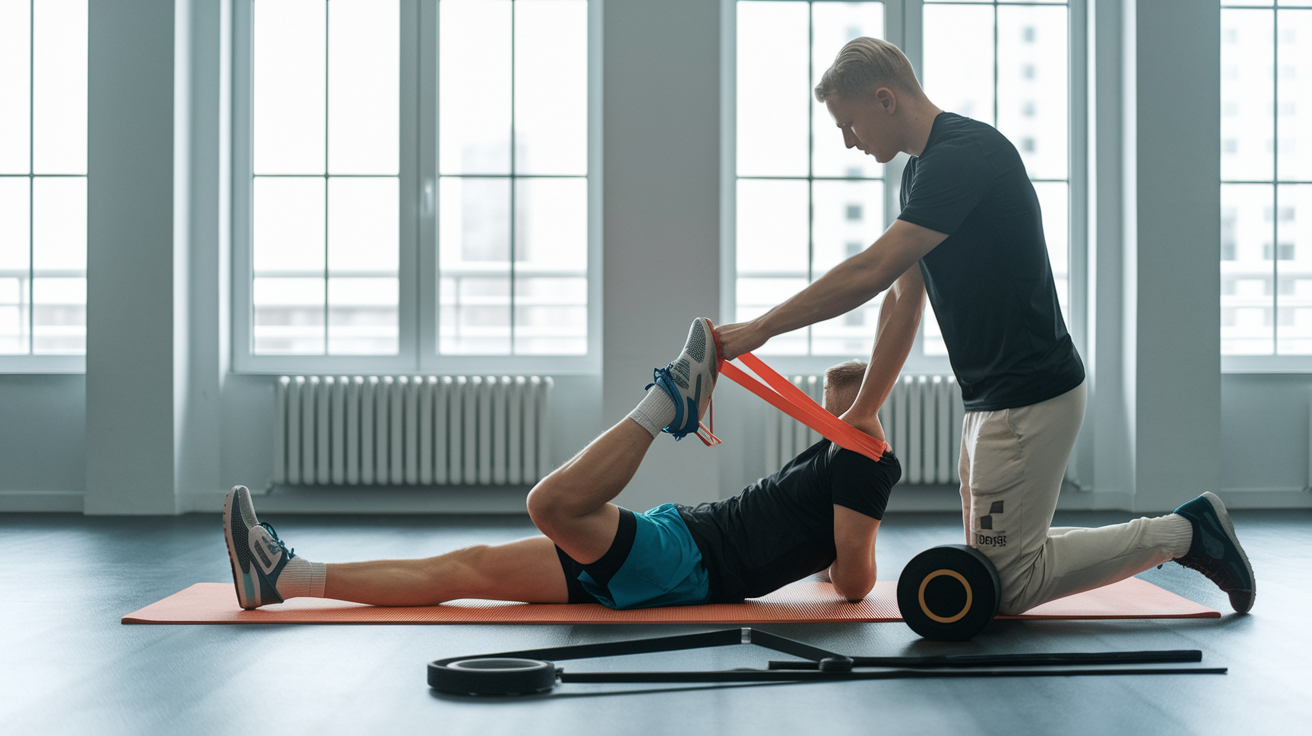
Using the right tool the wrong way won’t help and might make things worse. Hamstring work is safe when you respect tissue limits, keep your lower back neutral, and progress gradually. Here’s how to use each tool without overdoing it.
Stretch Strap Technique
Lie on your back with both legs straight. Loop the strap around the ball of one foot, holding the strap with both hands. Keep your other leg flat on the floor. Don’t let your lower back arch. Pull your leg up until you feel a stretch along the back of your thigh, not sharp pain. Your knee can stay very slightly bent if a straight leg causes shooting pain down your leg or into your lower back. Hold the stretch for 30–60 seconds, breathing slowly. Rest 1–2 minutes, then repeat for a total of 3 sets per leg. If you’re doing PNF, push your foot into the strap at about 60–70% effort for 5–6 seconds, relax for 2–3 seconds, then pull a little deeper and hold 20–30 seconds. Do 2–4 PNF cycles per side.
Foam Roller Technique
Sit on the floor with the roller under one thigh. Place your hands behind you for support and lift your hips slightly off the ground. Roll slowly from just above your knee to just below your glute, about 1 inch per second. When you hit a tender spot, pause there for 20–30 seconds without rolling. Don’t bounce or roll fast back and forth. Keep your neck relaxed and your breathing steady. Roll each hamstring for 1–2 minutes total. If the pressure is too intense, keep your other foot on the floor for support instead of crossing your legs. Foam roll before you stretch, not after. You want the tissue prepped, not irritated.
Resistance Band Technique
For supine straight leg raises, lie flat with a band looped around one foot. Hold the other end of the band in both hands. Lift your leg straight up (knee can have a tiny bend) until you feel tension in your hamstring, then lower it slowly over 3–4 seconds. That’s the part that builds flexibility. Don’t let your leg drop fast. Do 8–15 reps per leg, 2–4 sets, with 1–2 minutes of rest between sets. For standing banded reaches, anchor the band low, hold the free end, and hinge at your hips to reach forward while the band pulls you back. Control the return. Don’t let the band snap you upright. The goal is controlled eccentric loading, not speed.
Stretching Machine Technique
Start at the machine’s lowest resistance or smallest range setting. Sit or lie in the correct position (follow the manufacturer’s instructions), and adjust the lever or crank slowly until you feel a moderate stretch, about a 5 or 6 out of 10 in intensity. Hold that position for 1–3 minutes, breathing normally. If the stretch feels sharp or shooting, back off immediately. Increase the range by small increments each week. Don’t jump ahead. Most machines let you track your progress in degrees or inches, so write it down. Use machines 2–3 times per week, not daily, because the mechanical load is higher than manual stretching. Always warm up with 5 minutes of light movement (walking, cycling) before using the machine.
Final Words
You’re sitting on the mat, strap in hand, feeling that first steady pull in the back of your leg. This post walked through the top tools—stretch straps, foam rollers, resistance bands, slant boards, and stretching machines—plus how to use them, what they cost, and safety tips.
Pick the tool that fits your budget and goals, start slow, and add tension or time gradually. Use the plan and technique notes here, and you’ll find the best equipment for improving hamstring flexibility for your body. Keep at it—small, steady work pays off.
FAQ
Q: How do I get my hamstrings more flexible?
A: To get your hamstrings more flexible, do consistent stretching and strengthening 3–5 times weekly: combine static holds (30–60 seconds), dynamic band stretches, foam rolling, and eccentric hamstring exercises.
Q: What machines strengthen hamstrings?
A: Machines that strengthen hamstrings include seated and lying leg curl machines, glute-ham developers, cable stations for Romanian deadlifts and pull-throughs, and hip-extension or hip-thrust machines.
Q: Can overpronation cause tight hamstrings? Can a herniated disc cause tight hamstrings?
A: Both overpronation and a herniated disc can cause tight hamstrings: overpronation alters gait and stresses the posterior chain, while a herniated disc can irritate nerves and produce protective hamstring tightness.

