
Most stress advice makes you more stressed.
Instead of long lectures, try things that stop a panic fast and build steady calm over time.
This post lays out seven simple, no-equipment tools: breathing, grounding, short movement, sensory resets, visualization, quick breaks, and tiny lifestyle changes.
They give instant calm and real long-term peace, and you can use them at your desk, in the car, or before bed without apps or gear.
Overview of Common Stress Relievers and How They Work
Stress relievers are actions that interrupt your fight-or-flight response and shift you into a calmer state. When stress hits, your nervous system dumps adrenaline and cortisol into your body. These techniques flip the switch on your parasympathetic nervous system (the part that handles “rest and digest”). Your heart rate drops. Your breathing slows. Muscle tension softens. Your mind clears enough to think straight again.
These tools break down into a few categories. Quick fixes work in under two minutes (breathing, grounding, sensory resets). Physical practices release tension in 5 to 15 minutes (walks, stretching, shaking it out). Mindful techniques reset your attention (visualization, counting, gratitude). Creative outlets interrupt mental loops (singing, doodling). Social comfort actions give you connection (texting a friend, asking for a hug). Lifestyle habits build resilience over time (sleep boundaries, hydration, screen breaks). Most work by signaling your nervous system to stand down or pulling your attention away from the stress spiral.
Here are seven you can start using today:
Deep breathing – Inhale for 4 seconds, exhale for 6. Repeat a few times to calm your system fast.
Grounding (5-4-3-2-1) – Name 5 things you see, 4 you hear, 3 you feel, 2 you smell, 1 you taste. Anchors you in the present.
Quick stretch – Three slow stretches (neck, shoulders, back) to release muscle tension in under two minutes.
Short movement – A 5-minute walk or dancing to one song discharges physical stress.
Sensory shift – Splash cold water on your face for 10 to 30 seconds. Triggers a parasympathetic response.
Visualization – Picture a safe, calm place in detail for 1 to 3 minutes. Gives your mind a mental break.
Micro-break – Step outside for one minute. Do nothing. Breathe. Interrupts the stress cycle.
What’s great about these is accessibility. Most are free, need no equipment, and can be done almost anywhere. At your desk, in your car, in a bathroom, at home. You don’t need a gym membership or a subscription. Pick one or two, practice when tension builds, and you’ll have a toolkit ready whenever stress shows up.
Pros and Cons of Popular Stress Relievers
Different methods have different trade-offs. Some work instantly but don’t build long-term resilience. Others take weeks to show benefits but create lasting change. Understanding what each category offers helps you pick the right tool for the moment you’re in.
Most techniques are low-risk and free, but impact varies. Breathing exercises and grounding work fast for acute stress but won’t solve chronic overwhelm on their own. Movement practices like yoga or Tai Chi offer deeper benefits over time, but they need proper form to avoid injury. Creative outlets are great for distraction but won’t help if you need immediate physical relief. Social support is powerful but depends on having someone available when you need them.
| Technique | Benefits | Limitations | Best For |
|---|---|---|---|
| Breathing exercises | Fast relief (1 to 5 min), free, works anywhere, calms autonomic nervous system | Doesn’t address underlying causes, needs repetition to learn deeply | Acute stress, panic, pre-meeting nerves |
| Mindfulness/meditation | Lowers baseline stress over weeks, improves focus, builds emotional regulation | Requires 10 to 20 min daily, hard for beginners, slow to show results | Chronic stress, rumination, long-term resilience |
| Physical activity | Discharges stored tension, boosts mood, builds strength and sleep quality | Needs 30+ min sessions, risk of injury if form is poor, not always accessible | Physical tension, low energy, mood swings |
| Creative outlets | Interrupts rumination, low pressure, enjoyable, boosts sense of control | Doesn’t offer immediate physical relief, needs time and interest | Mental loops, boredom, need for distraction |
| Social support | Reduces loneliness, offers perspective, easy to do (text, call, hug) | Requires access to trusted people, timing may not align with need | Isolation, needing perspective, emotional overwhelm |
| Lifestyle changes | Builds long-term resilience, improves sleep, hydration, boundaries | Slow to show impact, requires consistent daily effort, hard to start | Chronic stress, burnout prevention, overall health |
Best approach? Build a toolkit with a mix. Fast tools (breathing, grounding, movement) for immediate relief. Longer-term practices (exercise, sleep habits, meditation) for sustained resilience. The most effective strategy is the one you’ll actually do, so start with what feels doable and build from there.
What Is Deep Breathing as a Stress Reliever?
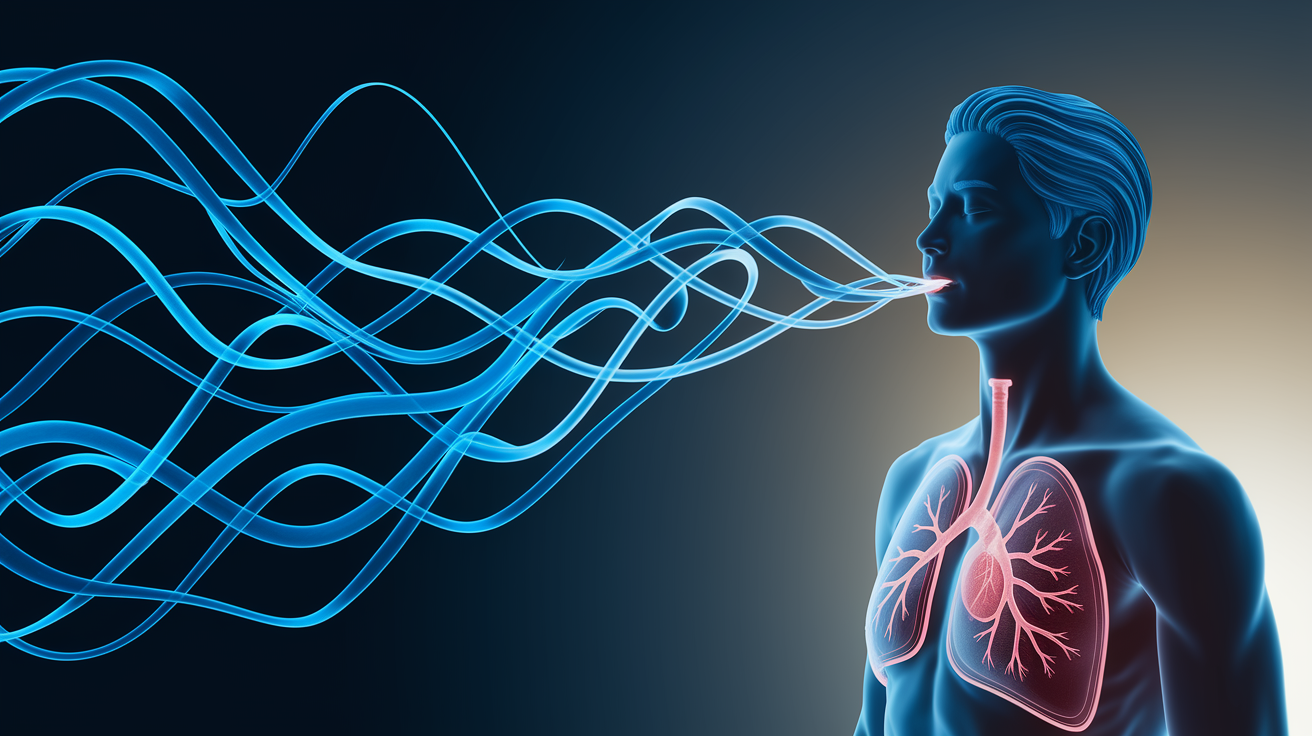
Deep breathing is a set of simple, timed breathing patterns that calm your body by activating your parasympathetic nervous system. When you breathe slowly and deeply (especially when your exhale is longer than your inhale), your heart rate slows, your blood pressure drops, and your brain gets a signal that the threat has passed. It’s one of the fastest ways to interrupt acute stress. Works in as little as 1 to 5 minutes.
The most effective forms use your diaphragm (the muscle below your lungs) instead of shallow chest breathing. When you breathe deeply, your abdomen rises and your chest stays relatively still. This kind of breathing is powerful for beginners because it requires no equipment, no app, and no special setting. You can do it at your desk, in the car, or lying in bed. If you’ve ever felt your heart racing before a meeting or woken up anxious, deep breathing is the go-to reset.
Here are five common breathing techniques you can try:
Diaphragmatic breathing – Place one hand on your chest and one on your stomach. Breathe in slowly through your nose so your stomach rises, then exhale through pursed lips. Repeat 3 to 10 times.
Box breathing (4-4-4-4) – Inhale for 4 seconds, hold for 4 seconds, exhale for 4 seconds, hold empty for 4 seconds. Repeat 3 to 5 cycles.
4-7-8 breathing – Inhale through your nose for 4 seconds, hold for 7 seconds, exhale through your mouth for 8 seconds. Repeat 3 to 4 times.
Paced breathing (4-6 pattern) – Inhale for 4 seconds, exhale for 6 seconds. The longer exhale activates calm faster. Repeat for 1 to 5 minutes.
Sigh breathing – Take a deep breath in through your nose, then let out an audible sigh as you exhale. Repeat 2 to 3 times to release immediate tension.
What Is Mindfulness Meditation for Stress Relief?
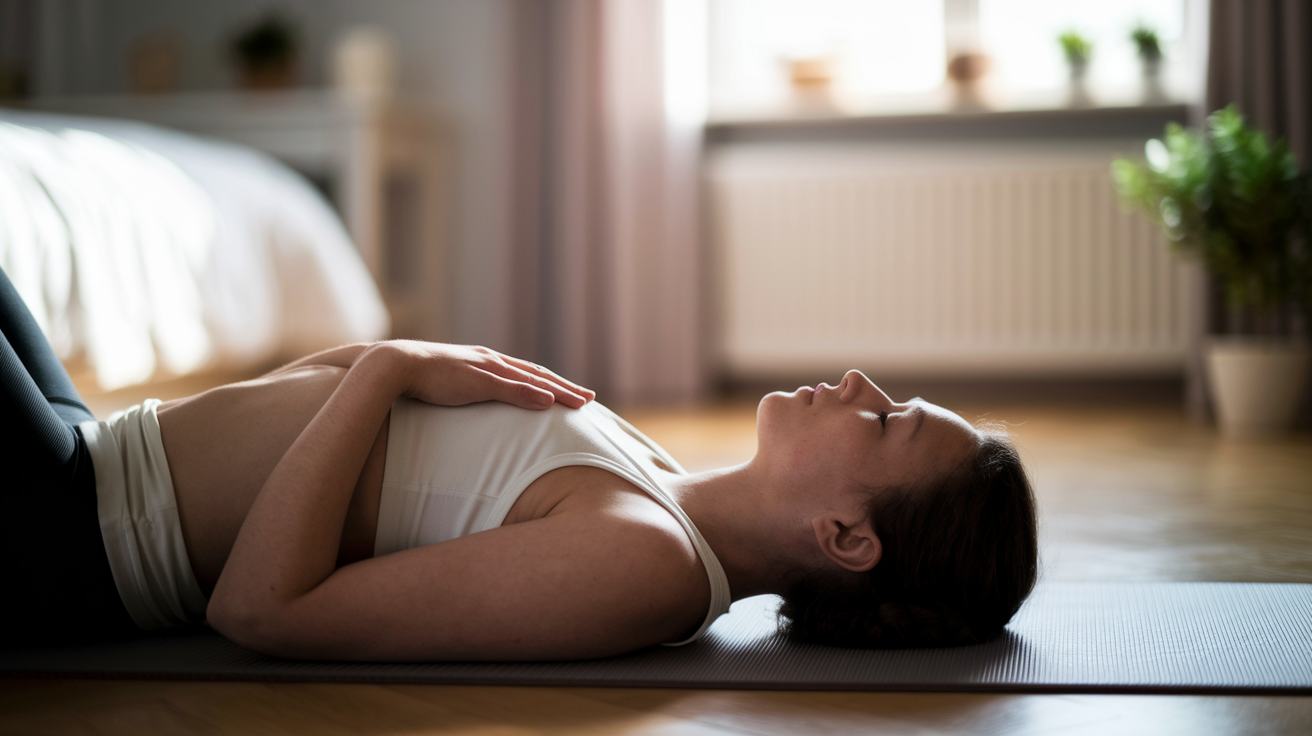
Mindfulness meditation is paying attention to the present moment without judgment. Instead of trying to fix or escape your stress, you notice it. Your thoughts. Your breath. Your body sensations. You let it be. Over time, this trains your brain to respond to stress with curiosity instead of panic. It also interrupts rumination, the mental loop where you replay the same worry over and over.
Research shows that practicing mindfulness meditation for 10 to 20 minutes once or twice a day lowers blood pressure, reduces resting heart rate, and decreases stress hormones like cortisol. It also increases alpha brain wave activity, which is associated with relaxation and mental clarity. The practice doesn’t eliminate stress, but it changes how you relate to it. Instead of being swept away by a stressful thought, you notice it, name it, and let it pass like a cloud.
Here are five forms of mindfulness meditation you can try:
Body scan – Lie down or sit comfortably. Slowly move your attention from your forehead down to your toes, noticing tension and softening what you can. Takes about 10 to 15 minutes.
Guided imagery – Close your eyes and imagine a safe, calm place in vivid sensory detail (what you see, hear, smell, feel). Hold the image for 3 to 5 minutes.
Mindful counting – Count each inhale and exhale from 1 to 10, then start over. If your mind wanders, gently bring it back. Practice for 5 to 10 minutes.
Thought observation – Imagine your thoughts on a movie screen or passing by on a conveyor belt. Watch them without engaging. Practice for 10 minutes.
Gratitude countdown – Count down from 10 to 1, naming one thing you’re grateful for at each number. Takes about 2 to 3 minutes and shifts your mental state quickly.
What Is Physical Activity as a Stress Reliever?
Physical activity discharges the tension and stored energy that builds up when you’re stressed. When your body goes into fight-or-flight mode, it’s preparing to run or fight. If you don’t move, all that adrenaline and cortisol just sit in your system. Exercise gives your body a way to complete the stress cycle. Your heart rate goes up, you breathe hard, you sweat, and then your nervous system can relax.
Common physical stress-relief activities include:
Brisk walking – 10 to 15 minutes daily, ideally outside. Try for at least one week to notice mood and energy shifts.
Short, vigorous bursts – 5 minutes of jumping jacks, running in place, or stair climbing to burn off acute tension fast.
Yoga – 15 to 30 minutes of poses combined with controlled breathing. Builds flexibility, strength, and calm. Try poses like Easy Pose (Sukhasana) with a forward bend, Standing Forward Fold (Uttanasana), or Wide-Legged Forward Fold (Prasarita Padottanasana).
Tai Chi – Low-impact, meditative movement that improves flexibility, sleep, immunity, and emotional balance over time.
Strength training – Twice per week for mood benefits. Even bodyweight exercises (squats, push-ups) count.
Dancing – Put on one song and move however feels good. Works as a 3 to 5 minute reset.
Research-backed guidelines suggest aiming for 150 minutes per week of moderate aerobic activity (like brisk walking) or 75 minutes per week of vigorous activity (like running), plus strength training twice a week. If that feels overwhelming, start with 10 to 20 minute sessions and build up. Even short bursts (like 50 jumping jacks or a 5-minute walk around the block) reduce stress in the moment.
The difference between short-term and long-term effects matters. A quick 5-minute movement break gives you immediate relief by releasing tension and clearing your head. Consistent weekly exercise (30 minutes, 5 days a week) lowers your baseline stress over weeks and months by improving sleep, regulating mood, and building physical resilience. Both are useful. Pick what fits the moment you’re in.
How to Do Stress Relievers: Step-by-Step Methods
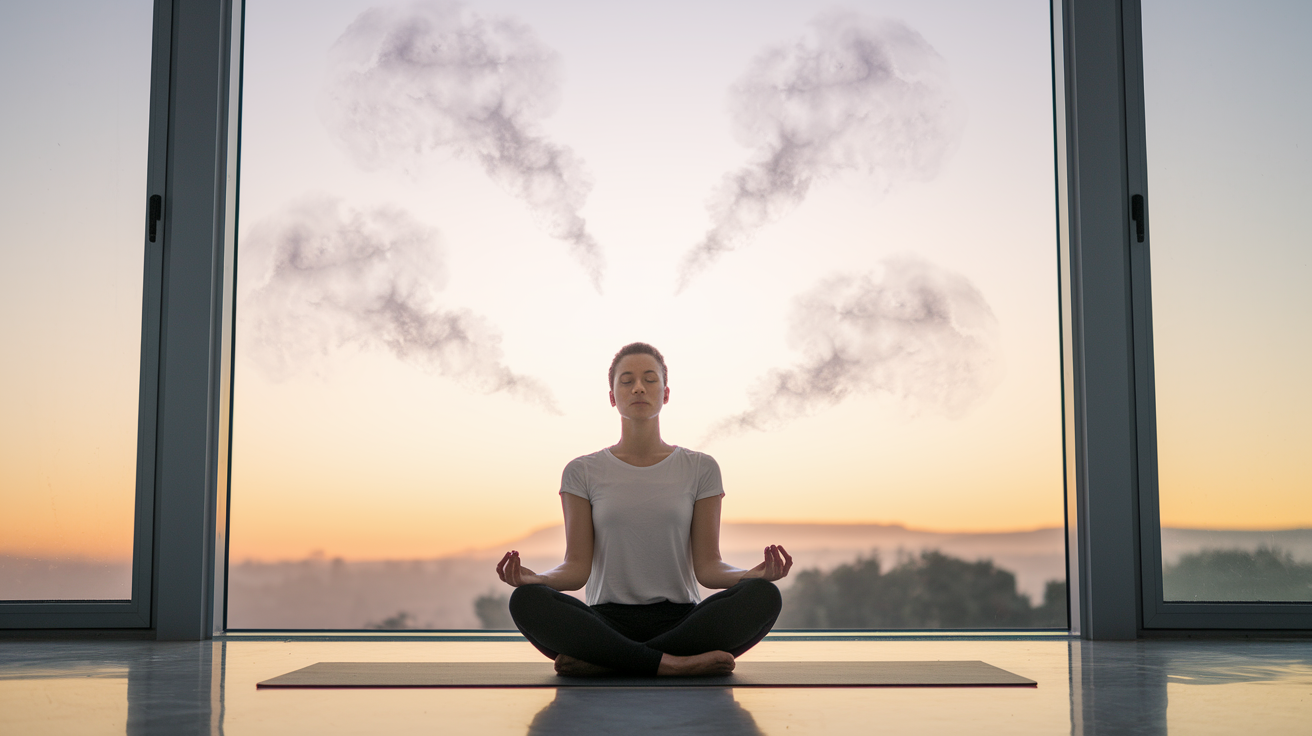
How to Do Deep Breathing
- Sit or lie down in a comfortable position. Place your right hand on your chest and your left hand on your stomach.
- Inhale slowly through your nose for 4 seconds, letting your abdomen rise while your chest stays mostly still.
- Exhale slowly through pursed lips (like you’re blowing out a candle) for 6 seconds, feeling your abdomen fall.
- Repeat this cycle 5 to 10 times, or until you notice your heart rate slowing and your shoulders softening.
- Practice once or twice a day, or whenever you feel tension building.
How to Do Progressive Muscle Relaxation
- Sit or lie down in a quiet space. Loosen any tight clothing.
- Start at your forehead. Tense the muscles in your forehead and scalp as hard as you can for 10 seconds, then release and notice the relaxation for 10 to 15 seconds.
- Move down your body in this order: face and jaw, neck and shoulders, arms and hands, chest and back, stomach, hips and glutes, thighs, calves, feet and toes.
- For each muscle group, tense maximally for 10 seconds, then release and observe the difference.
- The full head-to-toe sequence takes about 10 to 15 minutes. Over time, you’ll learn to recognize and release tension faster.
How to Do Grounding Techniques
- Sit or stand comfortably. Take a slow breath in and out.
- Name 5 things you can see right now (e.g., “I see a chair, a lamp, a coffee mug, a plant, a book”).
- Name 4 things you can hear (e.g., “I hear traffic outside, the hum of the fridge, my own breathing, a bird”).
- Name 3 things you can physically feel (e.g., “I feel my feet on the floor, the fabric of my shirt, the temperature of the air”).
- Name 2 things you can smell (e.g., “I smell coffee, soap”). If you can’t smell anything, name 2 things you like the smell of.
- Name 1 thing you can taste, or 1 thing you’re grateful for right now.
- This exercise takes 2 to 5 minutes and interrupts panic or rumination by anchoring your attention in the present.
How to Do a 5-Minute Reset Walk
- Step outside or walk to a different room. Leave your phone behind if possible.
- Walk at a comfortable pace. Not slow, not rushed. Focus on feeling your feet hit the ground with each step.
- Breathe in through your nose for 4 steps, out through your mouth for 4 steps. Let your arms swing naturally.
- Notice what’s around you (trees, buildings, sounds, temperature) without judging or analyzing.
- After 5 minutes, pause for a moment before returning. Notice if your shoulders feel lower or your mind feels clearer.
How to Do Guided Visualization
- Sit or lie down in a quiet space. Close your eyes and take 3 slow breaths.
- Picture a place where you feel completely safe and calm. It can be real (a beach you visited) or imagined (a forest clearing, a cozy room).
- Build the scene with sensory details. What do you see? (colors, light, objects). What do you hear? (waves, wind, silence). What do you feel? (warmth, a soft surface, a breeze). What do you smell? (salt air, pine, fresh laundry).
- Spend 3 to 5 minutes in this mental space, breathing slowly and noticing the details.
- When you’re ready, take a deep breath and slowly open your eyes. You can return to this place anytime you need a mental reset.
Comparison Between Stress Relievers (Fast vs. Long-Term Strategies)
Some stress relievers work in seconds or minutes and offer immediate relief. Others take weeks or months of consistent practice to reduce your baseline stress level. Both types are useful, and the best toolkit includes a mix of fast tools for acute moments and long-term practices that build resilience over time.
Here are six key differences to keep in mind:
Immediate tools (breathing, grounding, cold water, short movement) work within 1 to 10 minutes and calm your nervous system fast.
Long-term tools (regular exercise, meditation, sleep hygiene, therapy) reduce chronic stress over weeks and months.
Free options (breathing, walking, journaling, stretching) are accessible to almost everyone and require no equipment.
Low-cost tools (stress balls, journals, yoga props) range from $3 to $30 and support daily practice.
Paid services (therapy, massage, premium apps) typically cost $40 to $250+ per session or subscription but offer structured, expert-guided support.
Hybrid approaches (combining breathing with a 5-minute walk, or yoga with mindfulness) often produce the best results.
| Method | Immediate Relief | Long-Term Benefit | Cost |
|---|---|---|---|
| Deep breathing (4-6 pattern) | 1 to 5 minutes; calms heart rate and nervous system | Builds stress tolerance over weeks if practiced daily | Free |
| Grounding (5-4-3-2-1) | 2 to 5 minutes; interrupts panic and rumination | Trains attention control with repeated use | Free |
| 5-minute walk or movement | 5 to 10 minutes; discharges physical tension | Consistent daily walking lowers baseline stress in 1 to 2 weeks | Free |
| Mindfulness meditation (10 to 20 min) | Mild calm during session; effects build slowly | Reduces blood pressure, cortisol, and rumination over 4 to 8 weeks | Free (or $40 to $80/year for apps) |
| Yoga or Tai Chi (15 to 30 min sessions) | Moderate relief during practice; stretching feels good | Improves flexibility, sleep, mood, and resilience over months | Free (YouTube) or $5 to $25 per class |
| Therapy or counseling | Minimal immediate relief; works through deeper patterns | Significant reduction in chronic stress and anxiety over 4 to 12 sessions | $75 to $250+ per session |
How to Use Stress Relievers for Daily Benefit
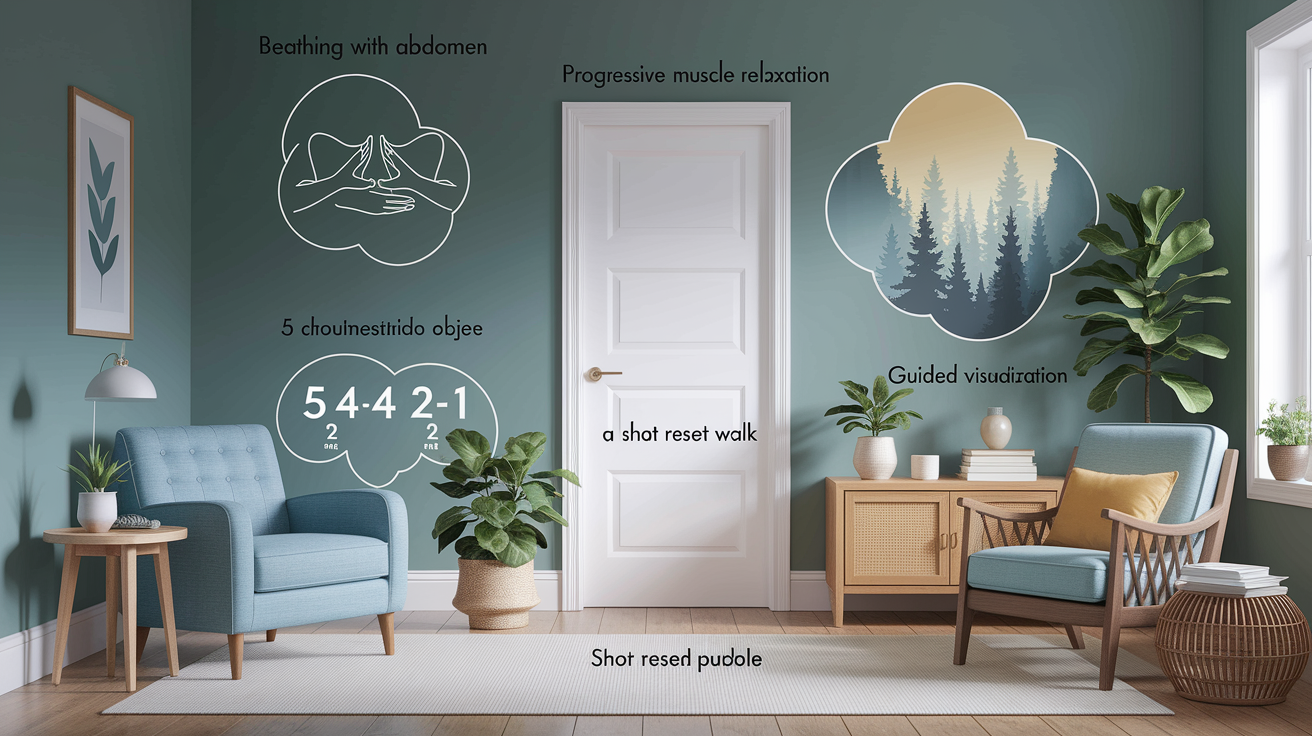
Stress relief works best when it’s consistent, not just something you grab for in a crisis. The goal is to build small, repeatable rituals into your day so that your baseline stress stays lower and you recover faster when something hard happens. Consistency matters more than intensity. Five minutes of breathing every morning is more helpful over time than one 30-minute meditation session every two weeks.
The easiest way to make stress relievers stick is to attach them to habits you already do. This is called habit stacking. For example, do 5 minutes of deep breathing right after you wake up, before you check your phone. Take a 5-minute walk after lunch. Spend 10 minutes journaling before bed. When you link a new practice to an existing routine, you’re much more likely to remember it and follow through.
Here are five daily integration methods you can try:
Morning breathing routine – 5 minutes of diaphragmatic or 4-6 paced breathing right after you wake up, before looking at your phone or calendar.
Midday movement break – 5 to 10 minute walk, stretch, or stair climb after lunch to reset energy and release tension before the afternoon.
Evening journaling – 10 minutes of writing down what went well, what stressed you, or three things you’re grateful for. Helps process the day and clear your mind for sleep.
Pre-sleep wind-down – 15 to 20 minutes of low light, no screens, gentle stretching, or reading to signal your body it’s time to rest. Aim for bed 15 minutes earlier than usual.
Microbreaks during work – Set a timer for every 60 to 90 minutes. Take 5 minutes to stand, stretch, breathe, or rest your eyes. Small resets prevent cumulative tension.
Tracking your results helps you see what’s working. Keep a simple note in your phone or a small journal. After one week, ask yourself: Did I feel calmer? Did I sleep better? Did I notice tension building less often? If something isn’t helping, swap it out. If something feels good, keep it and add one more small practice. The goal is to build a personalized toolkit that fits your schedule, your preferences, and your stress patterns. Over time, these tiny daily actions add up to real, sustained relief.
Final Words
Try one of the quick tools now: a 4s inhale/6s exhale cycle, a 5-4-3-2-1 grounding, or a 5-minute reset walk. The post showed how breathing, mindfulness, movement, and small lifestyle shifts work and why they help.
Use the step-by-step methods and the fast-vs-long-term comparison to pick what fits your day. Track what helps, stack small habits, and tweak as you go.
These stress relievers are practical, mostly free, and ready to use, so pick one and give it five minutes today.
FAQ
Q: What are the best stress relievers? / What helps reduce stress?
A: The best stress relievers are simple, quick tools like deep breathing, brief walks, grounding, and talking with someone, plus regular habits—exercise, sleep, and journaling—for longer-term stress reduction.
Q: How to relax in stressful situations?
A: To relax in stressful situations use quick breathing (inhale 4s, exhale 6s for five cycles), grounding (5-4-3-2-1), or step outside for a one-minute walk to reset your body and focus.
Q: What is the best medication for stress relief?
A: The best medication for stress relief depends on the cause; doctors may use short-term anti-anxiety medicines or antidepressants for ongoing stress—consult a healthcare provider for a safe, personalized plan.

