
Strength programs built for 20-year-olds can do more harm than good after 50.
After 50 your muscles, bones, and joints change, and so should your workouts.
This post shows practical ways to scale exercises, load, tempo, and recovery so you get stronger without pain or setbacks.
You’ll find safe swaps, small progression rules, and clear recovery cues that help preserve bone, cut fall risk, and keep daily tasks easy.
Start small, track what hurts, and build from there.
Understanding the Need for Scaled Strength Programs After 50

Scaling strength programs after 50 means adjusting exercises, load, volume, tempo, and recovery to match what’s actually happening in your body. Muscle tissue, bones, connective stuff, and nervous system function all change. Most adults can safely get stronger with the right tweaks, ones that reduce joint stress, give you longer recovery windows, and keep the focus on controlled movement instead of maximal force. The goal? Maintain or rebuild strength, keep bone density up, reduce fall risk, and support independent living without triggering injury or chronic pain.
After 50, muscle and bone loss speed up. That demands program changes. Muscle mass drops about 1% per year from your mid-30s, and the slide gets steeper past 50. Bone density falls roughly 0.5 to 1% per year starting in the mid-30s. Post-menopausal women can see bone loss jump to 3 or 4% annually. Strength training at the right intensity (typically 50 to 80% of your 1‑RM, depending on your goal) can slow or even reverse these declines. Beginners over 50 usually start with 1 or 2 sets of 8 to 12 reps twice a week, focusing on full-body movements that build foundational strength and movement confidence.
Scaled programming directly addresses:
- Joint comfort: Lower loads, controlled tempo, and joint-friendly exercise variations cut down on compressive and shear forces hitting your knees, hips, shoulders, and spine.
- Recovery limits: Longer rest intervals between sets (90 to 180 seconds) and 48 to 72 hours between sessions for the same muscle group give your tissues time to repair and adapt.
- Lower power output: Fast-twitch muscle fibers and motor unit firing rates drop with age. That means you may need lighter loads (30 to 60% 1‑RM) and fewer reps (3 to 6) for power work.
- Mobility limitations: Restricted range of motion from stiffness or past injury requires exercise modifications like box squats, assisted movements, or machine-based alternatives.
- Form confidence: Starting with bodyweight, bands, or light dumbbells before moving to heavier free weights helps you nail correct movement patterns and reduces fear of injury.
- Lower loading tolerance: Tendons, ligaments, and cartilage adapt more slowly than muscle. Small incremental increases (2.5 to 5% for upper-body lifts, 5 to 10% for lower-body lifts) prevent overuse injuries.
When adults 50+ follow scaled strength programs that account for these realities, they can see measurable gains in strength, function, and quality of life within 8 to 12 weeks while keeping setback risk low.
Deeper Physiological Mechanisms Influencing Training After 50

Neuromuscular changes after 50 include motor neuron loss, slower nerve conduction, and remodeling of neuromuscular junctions. These changes cut the speed at which muscles contract and the total number of muscle fibers a single motor neuron can activate. You generate less peak force and power, especially during explosive movements. Training programs need to prioritize controlled tempo. Concentric lifts in 1 to 2 seconds, eccentric lowering in 2 to 4 seconds. That ensures safe neuromuscular control and minimizes injury risk from compensatory movement patterns.
Chronic low-grade inflammation, marked by elevated TNF-α, CRP, IL-6, and IL-1, contributes to muscle protein breakdown and slows recovery from training stress. Hormonal declines in testosterone, growth hormone, and IGF-1 reduce anabolic signaling. It’s harder to build new muscle and easier to lose existing tissue. Insulin resistance and sarcopenic obesity (the combo of muscle loss and fat gain) further impair muscle protein synthesis and ramp up systemic inflammation. All of this means you need longer recovery windows (typically 48 to 72 hours between sessions targeting the same muscle group). You can’t tolerate the same training volume or frequency as younger lifters without risking overtraining or chronic fatigue.
After 65, muscle loss accelerates sharply, hitting 3 to 5% per year by the 70s. Bone loss speeds up too, especially in post-menopausal women, who may lose 3 to 4% of bone density annually. These structural changes reduce load tolerance and increase fracture risk, particularly during high-impact or ballistic movements.
The most influential physiological causes that shape program scaling are:
- Motor unit remodeling: Fewer, slower motor units reduce peak force and power output.
- Chronic inflammation: Elevated cytokines slow recovery and increase muscle breakdown.
- Hormonal decline: Lower anabolic hormones limit muscle protein synthesis and repair capacity.
- Insulin resistance: Impairs nutrient delivery and muscle growth signaling, especially when combined with increased body fat.
Practical Scaling Strategies for Strength Programs Over 50
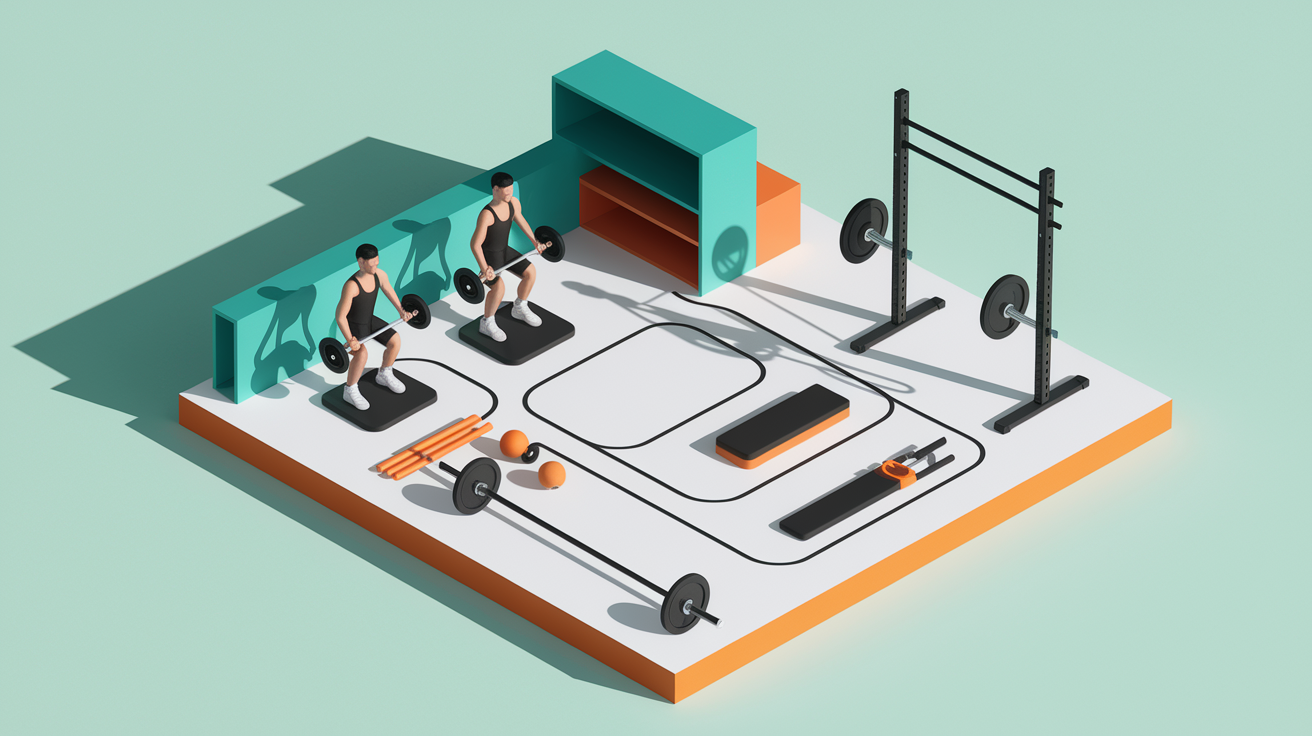
Scaling strength training for adults over 50 involves modifying exercise selection, range of motion, equipment, and tempo to match individual joint health, mobility, and training experience. Start by identifying exercises that cause sharp pain, excessive joint stress, or loss of form. Then substitute safer alternatives that still train the same movement pattern. For example, if barbell back squats irritate your knees or lower back, switch to a box squat with a higher target to limit depth. Or use a goblet squat with a kettlebell to keep the load closer to your center of mass and reduce spinal compression.
Use machines, resistance bands, and assisted movements to reduce the stability demands and learning curve of free weights. Cable machines and seated equipment provide guided movement paths that help you maintain correct form without recruiting excessive stabilizer muscles. Resistance bands offer variable tension and lower joint loading, making them ideal for warm-ups, rehab, or if you’re dealing with arthritis. Wall push-ups, incline push-ups, and knee push-ups allow safe progression toward full floor push-ups by reducing the percentage of body weight lifted. Tempo adjustments, especially slower eccentric phases (2 to 4 seconds), improve eccentric strength and tendon resilience while reducing injury risk during the lowering portion of a lift.
Pain should guide all progression decisions. Sharp, localized joint pain or noticeable swelling after a session signals excessive load, poor form, or an incompatible exercise selection. Mild muscle soreness is normal and expected, but persistent joint discomfort lasting more than 48 hours requires immediate modification. Reduce range of motion by using blocks, benches, or safety pins to limit depth. Lower the load by 10 to 20%. Or switch to a different exercise that trains the same muscle group without aggravating the painful joint.
Five common regressions for scaling down difficulty:
- Barbell squat to box squat: Sit to a bench or box to limit depth and reduce knee and hip flexion demands.
- Conventional deadlift to trap-bar deadlift or kettlebell deadlift: More upright torso position reduces lower-back stress.
- Floor push-up to incline push-up or wall push-up: Decreases load by shifting body angle.
- Standing overhead press to seated dumbbell press: Removes balance demands and reduces lower-back involvement.
- Barbell row to cable row or resistance band row: Provides guided path and lighter, adjustable resistance.
Five common progressions for scaling up difficulty:
- Bodyweight squat to goblet squat to barbell front squat: Adds external load while maintaining upright torso.
- Assisted pull-up (band or machine) to negative pull-up to full pull-up: Builds eccentric and concentric pulling strength progressively.
- Single-leg step-up (low step) to single-leg step-up (higher step) to Bulgarian split squat: Increases range of motion and stability challenge.
- Plank on knees to full plank to plank with leg lift: Adds anti-extension core demand incrementally.
- Dumbbell chest press (light) to dumbbell chest press (moderate) to barbell bench press: Progresses load and coordination demands.
Adjusting Load, Volume, and Frequency for Adults Over 50
Load selection for adults 50+ should match your training goal and your recovery capacity. For pure strength development, use 70 to 85% of 1‑RM for 4 to 6 reps per set, performing 2 to 4 sets per exercise. This intensity builds maximal force production and supports bone density by providing a high mechanical load stimulus. For muscle hypertrophy and functional mass, aim for 60 to 75% of 1‑RM with 8 to 15 reps per set and 2 to 4 sets. That balances mechanical tension and metabolic stress. Endurance or rehab work calls for 40 to 60% of 1‑RM with 12 to 20+ reps, using 1 to 3 sets to improve muscular stamina and movement confidence without excessive fatigue.
Weekly training volume should respect slower tissue adaptation rates in older adults. For muscle growth, target 10 to 20 total working sets per muscle group per week, spread across 2 to 3 sessions. For maintenance of existing strength and mass, 6 to 12 sets per week is sufficient. Beginners over 50 often start at the lower end (6 to 10 sets per week) and add volume only after 4 to 6 weeks of consistent training with no excessive soreness or joint pain. Frequency recommendations typically fall between 2 and 3 full-body sessions per week, allowing at least 48 hours of recovery between workouts targeting the same muscles. Advanced trainees who tolerate higher volumes may train 3 to 4 times per week using upper/lower splits or block periodization, but only after establishing a solid base and monitoring recovery closely.
Progression rules for older adults prioritize small, consistent increases over aggressive jumps. When you complete the target number of reps with good form for two consecutive sessions, increase the load by 2.5 to 5% for upper-body exercises (chest press, row, overhead press) and 5 to 10% for lower-body movements (squat, deadlift, leg press). Or add 1 to 2 reps per set until reaching the upper limit of the rep range, then increase the load and drop back to the lower rep range. This approach minimizes joint stress and allows connective tissue time to adapt alongside muscle.
| Goal | Load (% 1RM) | Reps per Set |
|---|---|---|
| Strength | 70–85% | 4–6 |
| Hypertrophy | 60–75% | 8–15 |
| Endurance / Rehab | 40–60% | 12–20+ |
Periodization Models That Work Best for Adults Over 50

Short training blocks of 4 to 6 weeks allow older adults to focus on a single training adaptation (strength, hypertrophy, or power) before introducing a planned deload or switching emphasis. This approach prevents accumulated fatigue and gives connective tissue time to recover. A typical block periodization sequence might include 4 weeks of hypertrophy work at 60 to 75% 1‑RM for 8 to 15 reps, followed by 1 week of deload (reducing volume by 30 to 50% or intensity by 10 to 20%). Then 4 weeks of strength work at 70 to 85% 1‑RM for 4 to 6 reps. After another deload, a power phase at 30 to 60% 1‑RM for 3 to 6 explosive reps can improve rate of force development and functional speed. Each block builds on the previous one, but the scheduled deloads ensure recovery systems stay ahead of fatigue accumulation.
Undulating periodization spreads different intensities across the same week. It can be easier to recover from than prolonged high-intensity blocks. For example, Monday might be a heavy day at 70 to 85% 1‑RM for strength, Wednesday a moderate day at 60 to 70% 1‑RM for hypertrophy, and Friday a light or power-focused day at 30 to 50% 1‑RM. This model allows older adults to train more frequently without overloading any single quality, and it provides natural variation that keeps sessions engaging. The key is to adjust session intensity based on readiness. If soreness or fatigue is high, the planned heavy day can shift to moderate load or become an extra recovery day.
Program every 3 to 6 weeks with a deload week. During a deload, reduce total sets by 30 to 50% (for example, drop from 3 sets per exercise to 2 sets, or from 4 exercises to 3). Or reduce load by 10 to 20% while keeping reps and sets the same. Deloads allow tendons, ligaments, and the nervous system to fully recover. They often precede strength or performance breakthroughs. Progress one variable at a time (reps, then sets, then load) to make it easier to identify what’s driving improvement or causing excess fatigue.
Sample 4-week microcycle structure:
- Week 1 (adaptation): 2 sessions, 2 sets per exercise, 8 to 12 reps at RPE 6 to 7 (moderate).
- Week 2 (build): 2 sessions, 3 sets per exercise, 8 to 12 reps at RPE 7 (challenging but controlled).
- Week 3 (peak or intensification): 2 to 3 sessions, 3 sets per exercise, 6 to 8 reps at RPE 7 to 8 (near-maximal effort with good form).
- Week 4 (deload): 2 sessions, 2 sets per exercise, 8 to 12 reps at RPE 5 to 6 (easy, recovery-focused).
Integrating Power, Balance, and Mobility Into Scaled Strength Programs

Power training for adults 50+ focuses on moving moderate loads quickly and safely to preserve fast-twitch muscle fiber function and reaction speed. Use 30 to 60% of 1‑RM for power exercises, performing 3 to 6 reps per set for 1 to 3 sets. Examples include medicine ball throws, jump squats with body weight or light load, and sit-to-stand performed as fast as possible with control. The goal is speed of movement, not maximum load. Rest fully between sets (90 to 180 seconds) to maintain explosive intent. Power work should happen 1 to 2 times per week, ideally early in a session when your nervous system is fresh, and always after a thorough warm-up to reduce injury risk.
Balance and stability exercises reduce fall risk and improve confidence during daily activities. Single-leg stands for 10 to 60 seconds, tandem walks (heel-to-toe walking in a straight line), and step-ups for 8 to 12 reps per leg challenge proprioception and lower-body control without requiring heavy loads. These drills can be woven into warm-ups, performed between strength sets as active rest, or programmed as standalone sessions on non-lifting days. Start with assisted balance work (holding a wall or chair for support) and progress to unassisted holds, eyes-closed variations, or unstable surfaces like a foam pad only when the basic movement is mastered.
Mobility work before strength training prepares joints and soft tissue for loaded movement. A 5 to 15 minute dynamic warm-up that includes controlled leg swings, arm circles, hip openers, and bodyweight squats increases blood flow, raises core temperature, and rehearses movement patterns used in the session. Static stretching is better saved for cool-downs, where 15 to 20 second holds per stretch can improve long-term flexibility without reducing force output during the workout.
Six useful mobility and balance add-ins:
- Hip circles: 10 per direction to open hip flexors and glutes.
- Shoulder pass-throughs with band or dowel: 8 to 12 reps to improve shoulder mobility.
- Cat-cow stretch: 10 slow cycles to warm up the spine.
- Single-leg balance holds: 20 to 30 seconds per leg, eyes open, progressing to eyes closed.
- Ankle dorsiflexion stretch: 15 to 20 seconds per side to prepare for squat and lunge patterns.
- Bodyweight glute bridge: 10 to 15 reps to activate hips and posterior chain before lower-body work.
Sample Scaled Strength Training Templates for Adults 50+
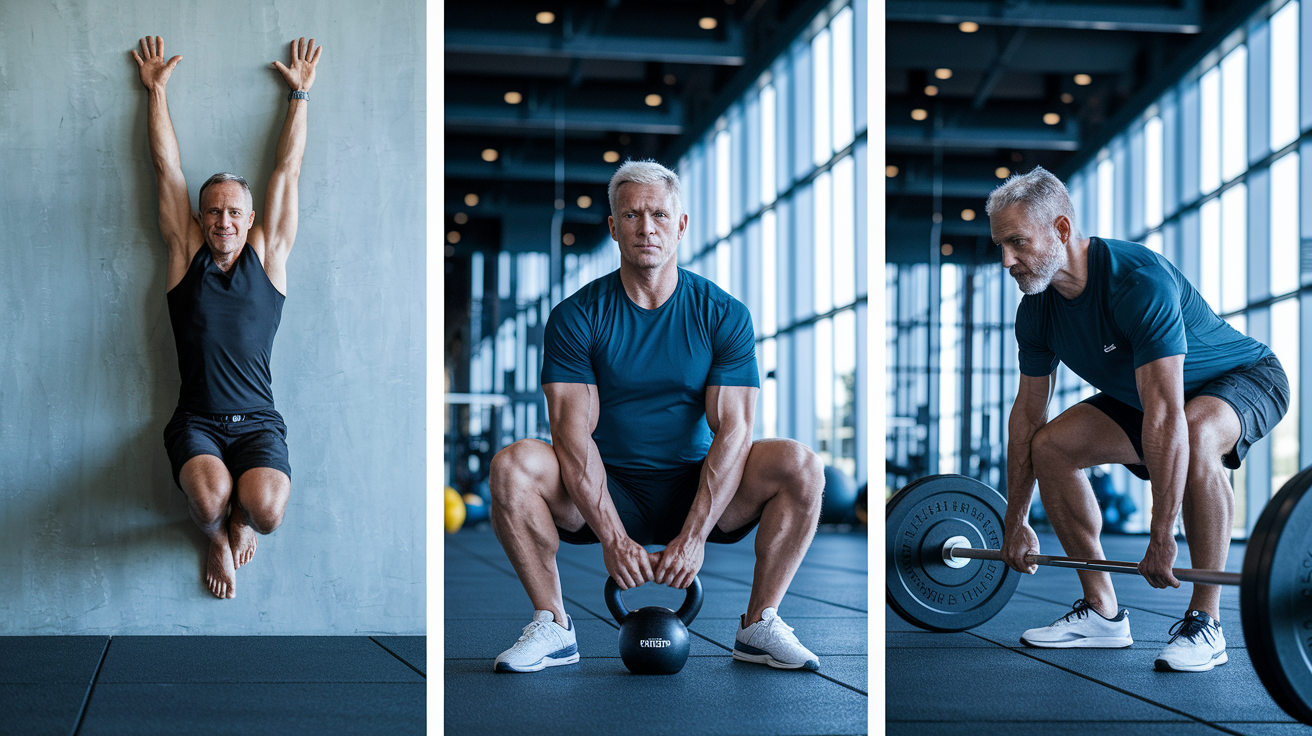
Beginner (Weeks 1 to 4)
This template prioritizes movement quality, joint safety, and building a consistent habit. Sessions last 30 to 40 minutes including warm-up and cool-down, performed twice per week with at least one full day of rest between. Start with 1 set of 8 to 12 reps per exercise, using bodyweight, light resistance bands, or 2 to 5 kg dumbbells. Focus on controlled tempo and pain-free range of motion.
- Box squat (bodyweight or holding light dumbbell): Sit to a bench, stand fully.
- Wall or incline push-up: Hands on wall or elevated surface, slow lower and press.
- Seated cable or band row: Pull to mid-torso, squeeze shoulder blades together.
- Glute bridge (bodyweight): Feet flat, lift hips, hold 1 second at top, lower.
Intermediate (Weeks 5 to 12)
Frequency increases to 2 to 3 sessions per week, and volume expands to 2 to 3 sets per exercise. Reps remain in the 8 to 12 range, but load increases to 60 to 70% of 1‑RM as strength improves. Sessions last 40 to 50 minutes. Add a deload week every 4 to 6 weeks by reducing sets to 2 or lowering load by 10%.
- Goblet squat (kettlebell or dumbbell): 10 to 12 reps, elbows inside knees at bottom.
- Dumbbell chest press (bench or floor): 8 to 12 reps, controlled descent.
- Single-arm dumbbell row: 10 to 12 reps per side, torso stable.
- Step-up (low bench): 8 to 10 reps per leg, drive through heel.
Advanced (Weeks 13+)
Designed for adults who’ve trained consistently for 12+ weeks and can tolerate higher intensity and frequency. Sessions occur 3 times per week, with 3 to 4 sets per exercise. Rep ranges drop to 6 to 8 for strength-focused lifts at 70 to 80% 1‑RM, and 1 to 2 power exercises at 30 to 50% 1‑RM are included weekly. Total session time is 45 to 60 minutes.
- Trap-bar deadlift: 6 to 8 reps, focus on hip hinge and neutral spine.
- Barbell or dumbbell bench press: 6 to 8 reps, spotter or safety bars recommended.
- Bulgarian split squat (rear foot elevated): 8 to 10 reps per leg.
- Medicine ball chest pass (explosive): 5 reps × 2 sets, 30 to 40% effort, focus on speed.
| Level | Sets per Exercise | Reps per Set | Frequency (sessions/week) |
|---|---|---|---|
| Beginner | 1–2 | 8–12 | 2 |
| Intermediate | 2–3 | 8–12 | 2–3 |
| Advanced | 3–4 | 6–8 (strength) or 3–6 (power) | 3 |
Recovery Needs and Nutrition for Adults Scaling Strength Work

Adults over 50 require 48 to 72 hours of recovery between sessions that target the same muscle groups. This extended window allows muscle protein synthesis to complete, connective tissue to repair, and the nervous system to restore readiness. Training the same muscles on consecutive days increases injury risk and reduces performance, especially when working at higher intensities (70 to 85% 1‑RM). Schedule full-body sessions on non-consecutive days. Or use upper/lower splits that alternate muscle groups to allow sufficient rest. Every 3 to 6 weeks, program a full deload week by cutting total sets by 30 to 50% or reducing load by 10 to 20% while maintaining frequency to prevent accumulated fatigue.
Protein intake of 1.2 to 1.6 grams per kilogram of body weight per day supports muscle repair and growth. Spread protein across meals, aiming for 20 to 40 grams per meal to maximize muscle protein synthesis throughout the day. Vitamin D at 800 to 2000 IU per day and calcium at 1000 to 1200 mg per day support bone health, especially important for older adults at higher risk of osteoporosis. Sleep quality directly affects recovery. Aim for 7 to 9 hours per night and monitor fatigue levels. If soreness persists beyond 72 hours or sleep quality drops, reduce training volume or intensity for the next session.
Five recovery-supporting habits:
- Prioritize 7 to 9 hours of sleep per night: Deep sleep phases drive muscle repair and hormonal recovery.
- Consume 20 to 40 g protein within 1 to 2 hours post-workout: Supports immediate muscle protein synthesis.
- Stay hydrated throughout the day: Dehydration impairs strength, endurance, and tissue repair.
- Include 1 to 2 full rest days per week: Active recovery (walking, light stretching) is fine, but avoid resistance training.
- Monitor resting heart rate and mood: Elevated morning heart rate or persistent irritability can signal overtraining. Reduce volume or take an extra rest day.
Preventing Setbacks While Scaling Strength Work After 50

A proper warm-up lasting 5 to 15 minutes prepares joints, tendons, and muscles for loaded movement. Begin with 1 to 2 minutes of light cardio (marching in place, stationary bike) to raise core temperature and heart rate. Then perform dynamic mobility drills like leg swings, arm circles, hip openers, and bodyweight squats. Finish with 1 to 2 light sets of the first exercise in your session at 40 to 50% of working load to rehearse the movement pattern and activate the target muscles. Skipping warm-ups increases the risk of muscle strains, joint irritation, and poor movement quality during working sets.
Cool-downs help return your body to baseline and support long-term flexibility. Spend 5 to 10 minutes performing static stretches, holding each position for 15 to 20 seconds per side. Focus on muscles worked during the session: hamstrings, hip flexors, chest, shoulders, and lower back. Light foam rolling or soft tissue massage on sore areas can reduce muscle tightness and improve recovery, but avoid aggressive pressure on inflamed or acutely painful joints.
Joint pain management requires clear guidelines to distinguish between productive discomfort and warning signs. Mild muscle soreness or a deep ache during and after training is normal and indicates adaptation. Sharp, localized pain, visible swelling, or pain that worsens with each rep signals a problem. Stop the exercise immediately. Reduce the load by 20 to 30%, shorten the range of motion, or substitute a different movement that trains the same muscle without aggravating the joint. For clients with osteoporosis, avoid loaded spinal flexion (crunches, forward bends under load) and high-velocity spinal loading to reduce fracture risk.
Four most important prevention checks:
- Perform a full warm-up every session: Never skip dynamic movement and light rehearsal sets.
- Use controlled tempo on all reps: 1 to 2 seconds concentric, 2 to 4 seconds eccentric. No bouncing or momentum.
- Stop at the first sign of sharp pain: Modify load, ROM, or exercise immediately.
- Schedule deloads every 3 to 6 weeks: Reduce volume or intensity to allow full tissue recovery.
When to Seek Professional Support for Strength Training After 50

Medical clearance before starting a strength program is recommended for adults with uncontrolled hypertension (blood pressure above 160/100 mmHg), a recent myocardial infarction or cardiac surgery within the past 3 months, recent fragility fracture, or severe joint pain that limits daily activities. A physician or cardiologist can provide exercise guidelines, medication adjustments, and clearance for specific intensities and movement patterns. Adults with multiple chronic conditions (type 2 diabetes, osteoporosis, arthritis, or cardiovascular disease) benefit from working with a physiotherapist or certified trainer experienced in older adult populations who can design individualized progressions and monitor form, pain, and recovery.
A qualified professional (physiotherapist, exercise physiologist, or certified strength and conditioning specialist) should conduct baseline assessments before programming. These include gait and balance screening, range-of-motion testing, blood pressure measurement, and a review of medications that may affect heart rate, blood sugar, or bone density. Standardized tools like the Physical Activity Readiness Questionnaire (PAR-Q) help identify individuals who need further medical evaluation before beginning moderate-to-vigorous exercise. Retest functional measures every 6 to 12 weeks (strength, gait speed, 30-second sit-to-stand, and timed up-and-go) to track progress and adjust the program.
Five common red flags that require immediate medical attention:
- Chest pain or pressure during or after exercise: May indicate cardiac ischemia. Stop immediately and seek emergency care.
- Sudden dizziness, lightheadedness, or fainting: Can signal blood pressure dysregulation or arrhythmia.
- New-onset severe joint pain with visible swelling: May indicate acute injury, fracture, or inflammatory flare.
- Acute shortness of breath disproportionate to effort: Possible cardiac or pulmonary issue. Stop exercise and contact a healthcare provider.
- Persistent muscle weakness or numbness in a limb: Could indicate nerve compression or neurological event. Requires clinical assessment.
Final Words
Start small and steady: pick joint-friendly moves, match load to comfort, and focus on form over ego. Use regressions and progressions, add short power drills, and keep mobility work in every warm-up.
Follow clear rules: 2-3 sessions/week, 8-12 reps for hypertrophy or 4-6 for strength, deload every 3-6 weeks, and eat 1.2-1.6 g/kg protein. Watch recovery – 48-72 hours between hard sessions – and modify for pain.
Scaling strength programs for older adults over 50 works when you move with purpose, measure small wins, and stay consistent. You’ll keep strength, bone health, and independence – one steady step at a time.
FAQ
Q: What is a good strength training routine for a 50 year old woman and how many times a week should she do strength training?
A: A good strength routine for a 50-year-old woman includes full-body compound moves (squat, hinge, push, pull, core), 8–12 reps, 1–3 sets, and typically 2–3 sessions per week for maintenance.
Q: What is the 3-3-3 rule for gym?
A: The 3-3-3 rule in gyms usually means three sets of three reps—heavy, low-rep work aimed at building maximal strength, with longer rest between sets and strict, controlled form.
Q: Should a 70 year old do strength training?
A: A 70-year-old should do strength training to preserve muscle, bone, balance, and independence, starting slowly with joint-friendly exercises, medical clearance if needed, and 1–3 sessions weekly depending on health.

