
Think recovery ends after your six‑week check? Not even close.
Postpartum healing is a process that takes weeks to months and depends on how you delivered, your health, and the help you get at home.
This guide gives clear, practical steps: what to do in the first 72 hours, how to manage swelling and pain, simple pelvic floor cues, and when to call your provider, so you can heal with less guessing and more confidence.
Start with one small habit today and build from there.
Key Foundations of Postpartum Recovery

Postpartum recovery is the weeks and months your body needs to heal after childbirth. It’s different for everyone, shaped by how you delivered, your health going in, and what support looks like at home. Some women feel noticeably better by 2 weeks. Others need 6 to 12 weeks to feel anywhere close to normal.
The first 24 to 72 hours? Expect bright red bleeding, swelling, soreness, and the kind of tired that makes you forget your own name. Bleeding (called lochia) usually starts bright red in the first 3 to 7 days, shifts to pink or brown over the next 3 weeks, and may keep going lighter for up to 6 weeks. You’ll probably get cramping, especially when you’re breastfeeding, as your uterus shrinks back down. Stitches from a tear or episiotomy dissolve in 1 to 2 weeks. C-section incisions heal on the surface in 2 to 3 weeks, but the deeper tissue takes longer.
Early postpartum care is about simple, repeatable actions that support healing:
Gentle mobility: Start short walks within 24 to 48 hours if you can, even just to the bathroom and back.
Hydration: Drink 8 to 12 cups of fluid daily. More if you’re breastfeeding.
Pain control: Use acetaminophen or NSAIDs as directed. Check with your provider if breastfeeding.
Perineal care: Use a peri bottle after you pee, take 10 to 15 minute sitz baths 2 to 3 times a day.
Incision awareness: Keep your C-section incision clean and dry. Watch for redness or drainage.
Emotional shifts: Hormones create rapid mood swings, peaking around days 3 to 5.
Breastfeeding challenges: Engorgement, sore nipples, and latch issues are common in the first week.
Know when to call your provider right away. A fever above 100.4°F after the first 24 hours can mean infection. Soaking more than one pad per hour for 2 straight hours, or passing clots bigger than a quarter, means emergency bleeding. Severe calf pain or swelling can be a sign of deep vein thrombosis. A sudden, severe headache with vision changes might mean high blood pressure. Chest pain, shortness of breath, or fainting? Emergency care, now.
Pros and Cons of Common Postpartum Recovery Approaches
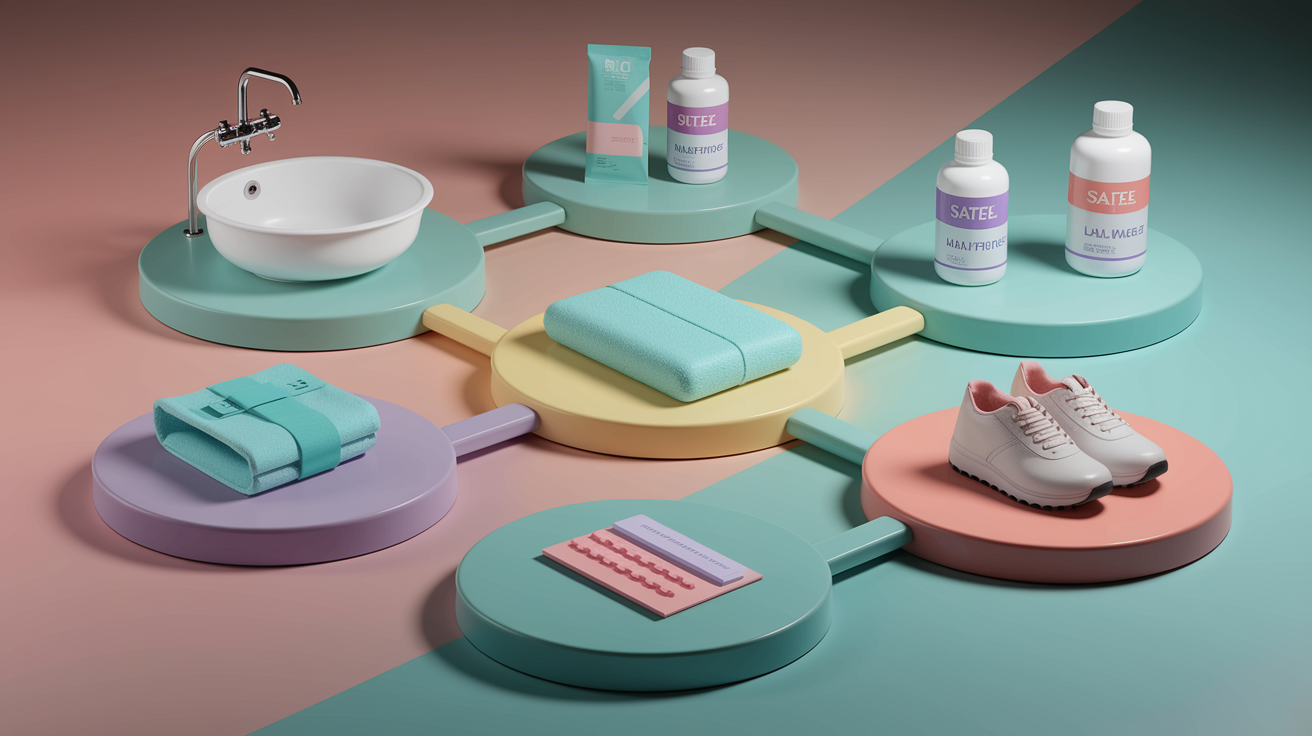
Most mothers piece together a recovery plan using home remedies, over-the-counter supplies, and medications. What works best depends on your delivery type, pain tolerance, and what symptoms you’re dealing with day to day.
Vaginal births and C-sections create different needs. Vaginal births focus on perineal comfort and bleeding control. C-sections add wound care and lifting restrictions. Even within each category, recovery varies, so flexibility helps.
Sitz baths: Pros are the soothing warmth that reduces perineal swelling and discomfort. You can do them 2 to 3 times daily for 10 to 15 minutes. Cons? You need a clean basin and bathroom time. It doesn’t eliminate pain, just eases it.
Peri bottle: Pros are gentle water rinse that prevents stinging during urination. Portable and inexpensive ($3 to $12). Cons are it needs refilling and warm water access. Doesn’t address deeper soreness.
Witch hazel pads: Pros are cooling relief for hemorrhoids and perineal tissue. Fits inside a pad ($6 to $15). Cons? Short-lived effect. Won’t heal severe tears.
Pain relief medications: Pros are acetaminophen and NSAIDs work well as first options. Safe for most breastfeeding mothers. Cons? Opioids (sometimes needed after C-section) can cause constipation and drowsiness. Require careful dosing.
Abdominal binders: Pros are gentle compression may support C-section or diastasis comfort. Helps some women feel more stable ($15 to $60). Cons are it can feel restrictive or hot. Not a substitute for core rehab.
Walking program: Pros are it promotes circulation, reduces DVT risk, lifts mood. Cons are overdoing it early can increase bleeding or fatigue. Start short and add minutes gradually.
Ice packs vs heat: Pros are ice reduces swelling in the first 24 to 48 hours. Heat soothes muscle aches later. Cons? Timing matters. Wrong choice can worsen discomfort.
Stool softeners: Pros are they prevent straining on perineal stitches or hemorrhoids. Cons? May take 1 to 2 days to work. Hydration and fiber still needed.
Choose based on what symptom you’re targeting right now. If you’re swollen and sore in the first 48 hours, lean on ice packs and peri bottles. If constipation is a problem by day 3, start a stool softener and add fiber. If you’re unsure whether a method is safe with your delivery or medications, ask your provider before adding it.
Understanding Vaginal Birth Recovery Essentials
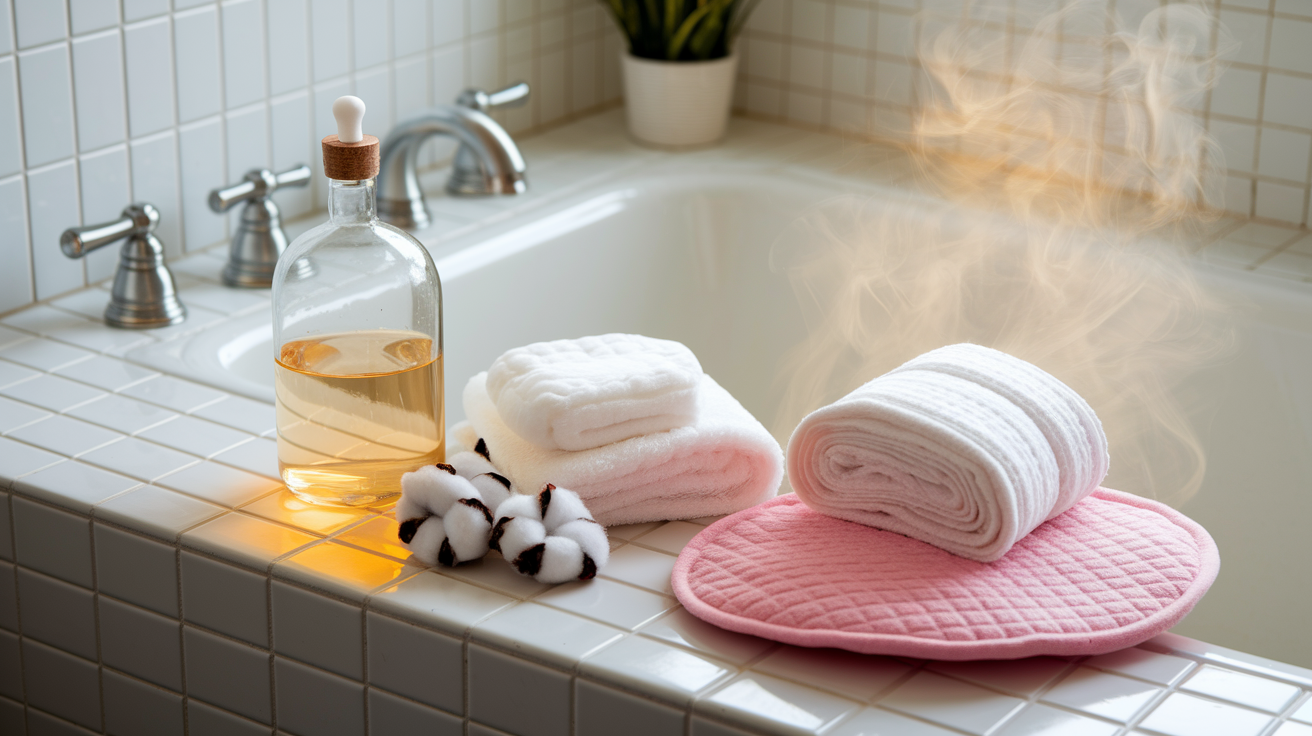
Perineal healing is the main physical task after vaginal delivery. Whether you had a natural tear, an episiotomy, or no tear at all, the tissue stretched significantly and needs time to knit back together. Most stitches dissolve within 1 to 2 weeks, but soreness can stick around for 3 to 4 weeks.
Lochia follows a predictable color pattern. Expect bright red for the first 3 to 7 days, then pink or brownish for the next 2 to 3 weeks, and finally light yellow or white discharge for up to 6 weeks total. Flow is heaviest in the first few days and gradually tapers. Passing small clots (smaller than a quarter) is normal early on. If you pass a clot larger than a quarter or soak more than one pad per hour for 2 straight hours, call your provider immediately. That’s the threshold for abnormal bleeding.
Core recovery components for vaginal birth:
-
Perineal hygiene: Use your peri bottle with warm water after every toilet visit. Pat dry gently, don’t wipe. Change your pad every 2 to 4 hours even if it’s not soaked, to reduce infection risk.
-
Sitz baths: Fill a shallow basin with warm water (no soap) and sit for 10 to 15 minutes, 2 to 3 times a day. This reduces swelling and keeps stitches clean.
-
Ice application: Apply a cold pack wrapped in a thin cloth to your perineum for 10 to 20 minutes at a time in the first 24 to 48 hours. This numbs pain and shrinks swelling.
-
Hemorrhoid care: If you developed hemorrhoids during pushing, use witch hazel pads between your pad and skin. Warm sitz baths also help. Avoid straining during bowel movements.
-
Bleeding monitoring: Keep track of how many pads you’re using and the color. If bleeding suddenly gets heavier after tapering, or if you develop a fever, contact your provider.
-
Mobility and rest balancing: Walk short distances to prevent blood clots and improve circulation, but rest lying down or with your feet elevated when you’re not moving. Overdoing activity in the first 2 weeks can increase bleeding.
If your stitches start to smell bad, pull apart, or cause increasing pain instead of decreasing pain, let your provider know. Most tears heal without issue, but infection or poor healing needs early treatment.
What C-Section Recovery Involves
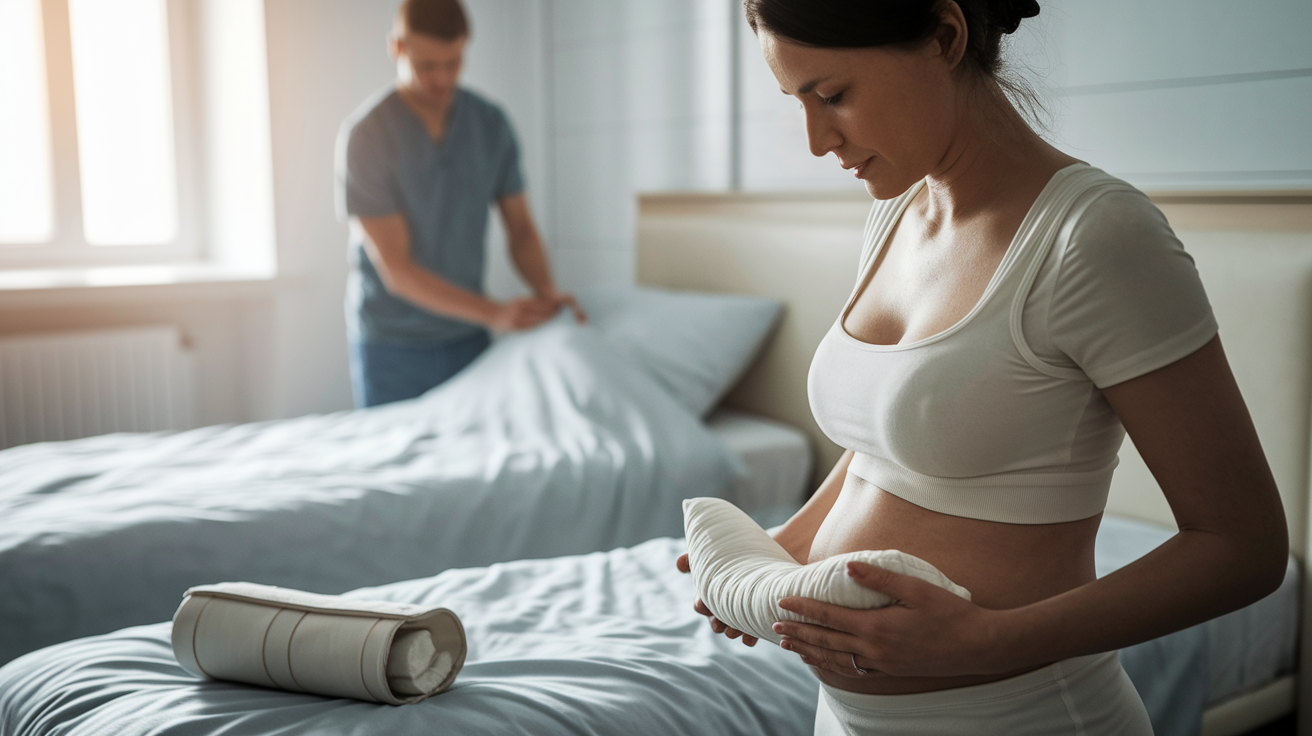
Your incision heals on the surface in about 2 to 3 weeks, but the deeper layers of muscle and fascia take 6 to 12 weeks to regain strength. Staples or sutures are usually removed or absorbed within 5 to 14 days, depending on the method your surgeon used. Expect tenderness and pulling sensations around the incision for several weeks, especially when you twist, cough, or pick something up.
Pain is typically worst in the first 48 to 72 hours. You may receive prescription pain medication (often a short course of opioids) to use at home, along with instructions to layer in acetaminophen or ibuprofen. Pain should decrease steadily each day. If it spikes or spreads, that can signal a problem.
Wound care essentials: Keep your incision clean and dry. You can shower, but pat the area dry gently afterward. Don’t soak in a tub until your provider clears you (usually after your follow-up visit). Watch for redness spreading beyond the incision line, warmth, swelling, pus, or foul odor. All signs of infection.
Activity restrictions: Avoid lifting anything heavier than your baby (roughly 10 to 20 pounds) for the first 6 weeks. Don’t do housework that requires bending, twisting, or reaching overhead. No vacuuming, no laundry baskets, no grocery bags.
Mobility guidelines: Start walking short distances within 24 hours of surgery to reduce blood clot risk and help your bowels wake up. Move slowly and support your incision with a pillow when you cough or laugh.
Signs of infection: Fever above 100.4°F, increasing incision pain after the first few days, or any drainage that’s not clear. Contact your provider the same day.
Breathing exercises: Deep breathing and gentle coughing (with incision support) prevent fluid buildup in your lungs. Do 5 to 10 deep breaths every hour while awake for the first few days.
Support garment usage: An abdominal binder or postpartum belt can help you feel more stable when moving, but take it off periodically to let your skin breathe. Some women find it helpful. Others find it uncomfortable.
If you’re breastfeeding, acetaminophen and ibuprofen are generally considered safe. Opioids pass into breast milk in small amounts, so use the lowest dose that controls your pain and watch your baby for excessive sleepiness. Most providers taper opioid prescriptions quickly, aiming to switch fully to non-opioid pain relief within 3 to 5 days.
Key Concepts in Pelvic Floor and Core Recovery
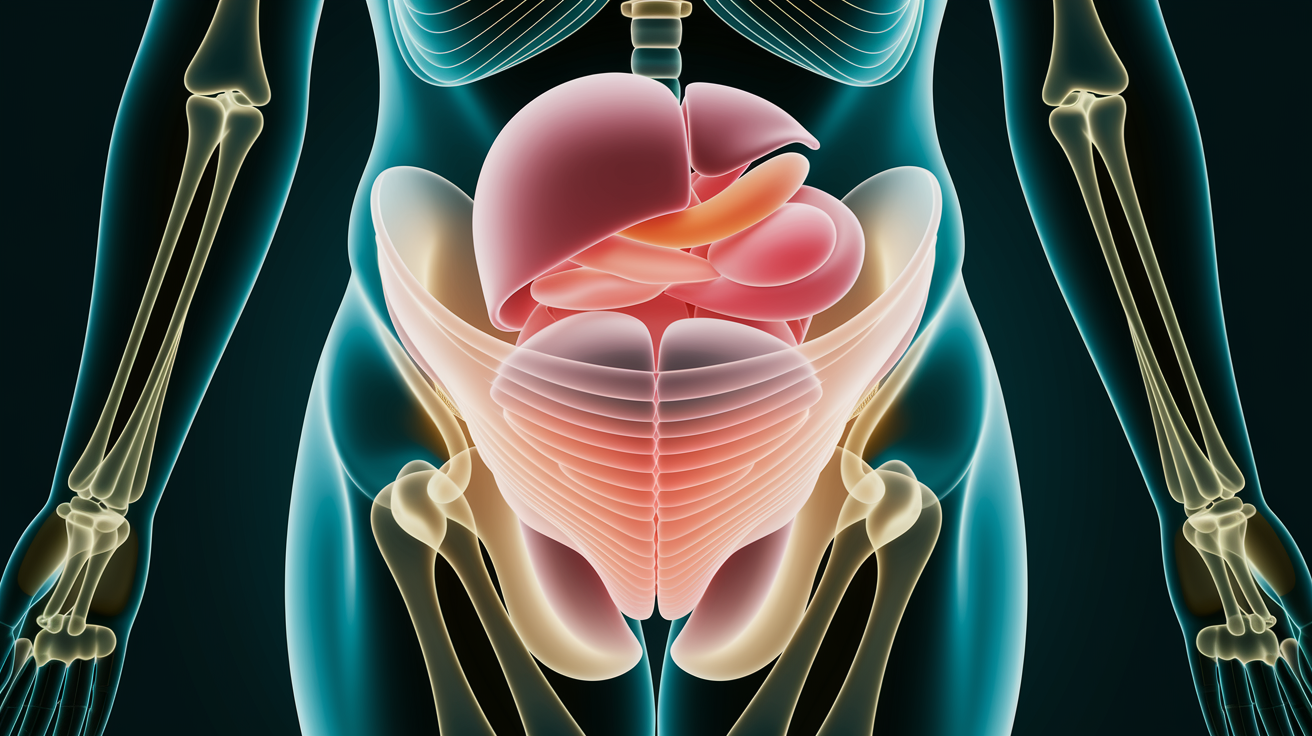
Your pelvic floor is the sling of muscles supporting your bladder, uterus, and rectum. Pregnancy and delivery stretch and weaken these muscles, which can lead to urinary leakage, pelvic pressure, or pain during sex if they don’t recover properly. Your abdominal muscles also stretch, and many women develop a gap between the left and right sides of the rectus abdominis (diastasis recti). That gap is common and usually improves with time and proper rehab, but it needs assessment at your 6 to 12 week visit.
Start pelvic floor work immediately, even on day one postpartum, as long as it doesn’t cause sharp pain. Early activation helps reduce swelling and jumpstarts healing. You’re not aiming for strength yet, just gentle reconnection. Walking within 24 to 48 hours also supports pelvic floor recovery by improving circulation and reducing pelvic congestion.
Basic recovery movements:
Kegels: Squeeze and lift your pelvic floor as if stopping urine mid-stream (but don’t practice during actual urination). Hold 3 to 5 seconds, relax 5 seconds, repeat 10 to 20 times. Do this several times a day. If you feel nothing, that’s okay. Nerve signals take time to reconnect.
Reverse Kegels: Gently relax and lengthen your pelvic floor, like releasing a deep breath. This balances the tightening work and prevents overactive muscles. Do 5 to 10 of these after each set of regular Kegels.
Diaphragmatic breathing: Lie on your back with knees bent. Breathe deeply into your belly, letting it rise, then exhale slowly. This re-establishes the connection between your diaphragm, pelvic floor, and core. Do 5 minutes daily.
Abdominal bracing: Gently draw your belly button toward your spine without holding your breath. Hold 5 seconds, release. This wakes up your deep core without crunching. Do 10 reps once or twice a day after the first week.
Safe core stabilization: Avoid traditional sit-ups, planks, or heavy lifting until you’re assessed for diastasis recti. Movements that dome or bulge your abdomen can worsen the gap.
If you’re leaking urine when you cough, sneeze, or pick up your baby, or if you feel a bulge or heaviness in your vagina, ask for a referral to a pelvic floor physical therapist. Referrals are often made at the 6 to 12 week visit, but you can request one earlier if symptoms are affecting daily life.
How to Do Postpartum Recovery Tips in Daily Life
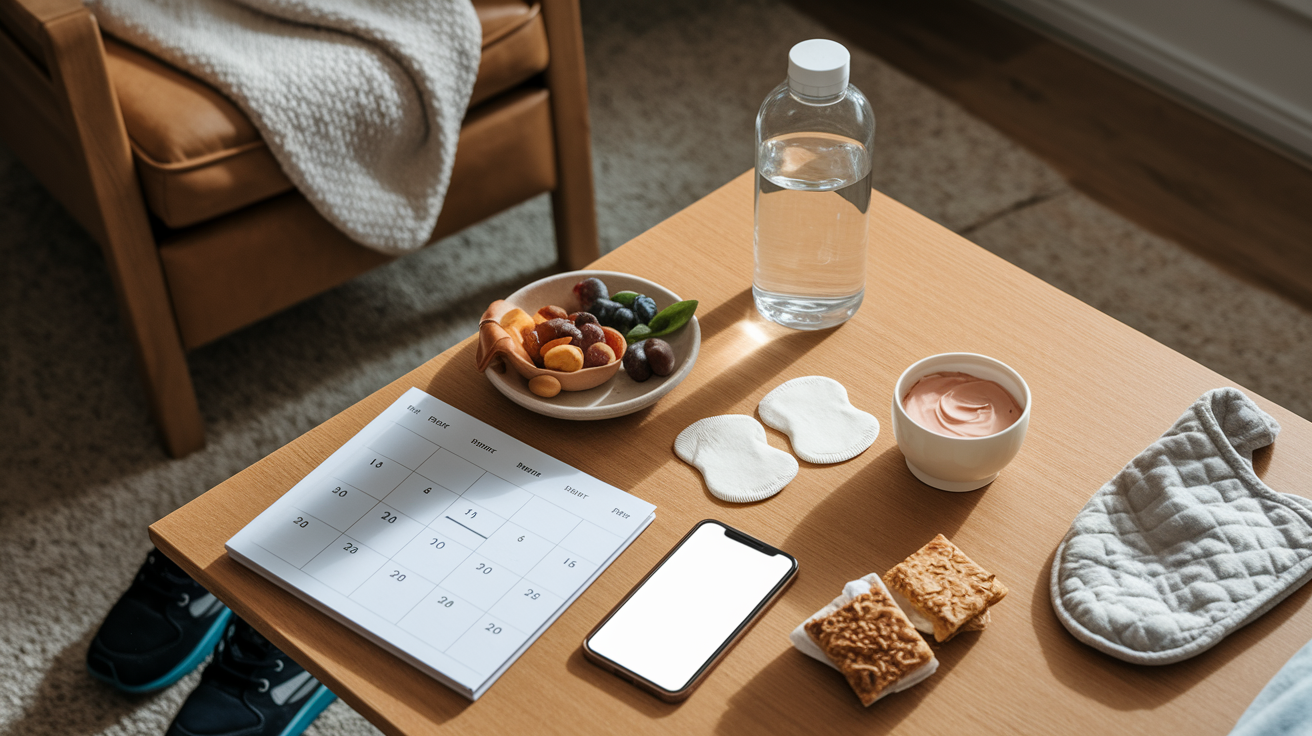
How to do a Daily Postpartum Healing Routine
A simple daily structure keeps recovery on track without feeling overwhelming. You’re not trying to do everything perfectly, just hit a few key actions that support healing and flag problems early.
-
Morning check: Before you get out of bed, do 10 gentle Kegels and 5 deep belly breaths. Notice how your body feels. Any new pain, fever, or heavier bleeding gets written down or reported.
-
Hydration targets: Fill a large water bottle (at least 32 ounces) and finish it by midday. Refill and finish a second bottle by bedtime. If you’re breastfeeding, aim for 8 to 12 cups total. More if you’re thirsty.
-
Perineal or incision care: After each bathroom trip, use your peri bottle if you had a vaginal birth. If you had a C-section, check your incision once a day for redness, swelling, or drainage. Take one sitz bath mid-morning and one in the evening if perineal soreness is still present.
-
Short walks: Walk 5 to 10 minutes in the morning and again in the afternoon. Indoors is fine. Stop if you feel dizzy, have increased bleeding, or your incision pulls sharply.
-
Track bleeding and pad count: Write down how many pads you used and the color. This helps you spot patterns and gives concrete numbers if you need to call your provider.
How to do Gentle Movement and Early Exercise
Movement reduces blood clot risk, lifts your mood, and helps your bowels start working again. But overdoing it in the first 2 weeks can increase bleeding and fatigue.
-
Week 1: Walk to the bathroom, kitchen, and back. Aim for a total of 10 to 15 minutes of upright movement spread across the day. Do 2 to 3 sets of 10 Kegels.
-
Week 2: Add a 5-minute walk outside or down your hallway twice a day. Start diaphragmatic breathing and gentle abdominal bracing (5 reps once daily). Avoid stairs if possible. If you have to use them, go slowly and hold the rail.
-
Weeks 3 to 4: Increase walks to 10 minutes twice a day. Add reverse Kegels (5 reps after each set of regular Kegels). Avoid picking up anything heavier than your baby, no squatting with weight, no twisting motions.
-
Weeks 4 to 6: Gradually extend walks to 15 to 20 minutes. Continue pelvic floor work. Wait for your provider’s clearance before starting structured exercise, especially core movements.
-
After 6 weeks (with clearance): Begin low-impact strength work like bodyweight squats, wall push-ups, and resistance band rows. Progress slowly. If anything causes pelvic pressure, leaking, or incision pulling, back off and consult a pelvic floor physio.
How to do Breastfeeding-Friendly Self-Care
Breastfeeding adds about 450 to 500 calories to your daily needs and significantly increases your fluid requirements. Neglecting hydration or nutrition can worsen fatigue and reduce milk supply.
-
Feeding station setup: Keep a large water bottle, healthy snacks (nuts, fruit, cheese sticks), nipple cream, and breast pads within arm’s reach of your nursing chair. Refill supplies every evening.
-
Positioning and latch: Use pillows to bring your baby to breast height so you’re not hunching. A poor latch causes nipple trauma. If feeding hurts beyond the first few seconds, break the latch gently with your finger and try again. Call a lactation consultant within the first week if pain persists.
-
Nipple care: After each feed, express a drop of milk and rub it on your nipple, then let air-dry for a minute. Apply lanolin-based cream if you’re cracked or sore. Change breast pads frequently to prevent moisture buildup.
-
Engorgement and mastitis prevention: Breastfeed or pump every 2 to 3 hours in the first 2 weeks to prevent severe engorgement (which peaks around day 3 to 5). If one breast becomes hard, red, and tender, and you develop a fever, contact your provider immediately. That’s mastitis, which needs antibiotics and continued milk removal.
-
Hydration reminders: Drink a full glass of water at the start of each feeding session. If your urine is dark yellow, you’re under-hydrated. Pale yellow is the goal.
Comparing Postpartum Recovery Paths

Recovery timelines and physical demands differ between vaginal and C-section births, but many elements overlap. Understanding the key differences helps you plan realistic expectations and identify when something falls outside the normal range.
| Recovery Factor | Vaginal Birth | C-Section |
|---|---|---|
| Pain level (first week) | Moderate perineal soreness; cramping during breastfeeding; worst days 1 to 3 | Significant incision pain; deep abdominal ache; worst 24 to 72 hours |
| Mobility restrictions | Minimal; walk as tolerated from day 1; avoid heavy lifting if severe tear | Strict: no lifting more than 10 to 20 lbs, no twisting/bending, no stairs when possible (6 weeks) |
| Bleeding duration | Lochia up to 6 weeks; heaviest first 7 days | Lochia up to 6 weeks; often lighter than vaginal but still present |
| Core healing | Abdominal stretching and possible diastasis; pelvic floor stretched during delivery | Surgical cut through abdominal layers; diastasis still common; pelvic floor less stretched if no labor |
| Incision or perineal care needs | Peri bottle, sitz baths, ice packs, witch hazel pads; stitches dissolve in 1 to 2 weeks | Incision cleaning, dry dressing, no soaking; staples/sutures removed/absorbed 5 to 14 days |
| Typical timelines | Major pain reduction by 2 weeks; most feel considerably better by 4 to 6 weeks | Surface healing 2 to 3 weeks; deeper healing 6 to 12 weeks; return to normal activity often slower |
Individual factors like age, pre-pregnancy fitness, and complications (infection, hemorrhage, multiple tears) change these timelines. A 25-year-old who exercises regularly and had an uncomplicated vaginal birth may feel close to normal by 3 weeks. A 38-year-old recovering from an emergency C-section after 20 hours of labor may need 10 to 12 weeks to reach the same point. Both are normal. Use the table as a baseline, then adjust based on your body’s signals and your provider’s guidance.
How to Benefit From Postpartum Recovery Tips Effectively
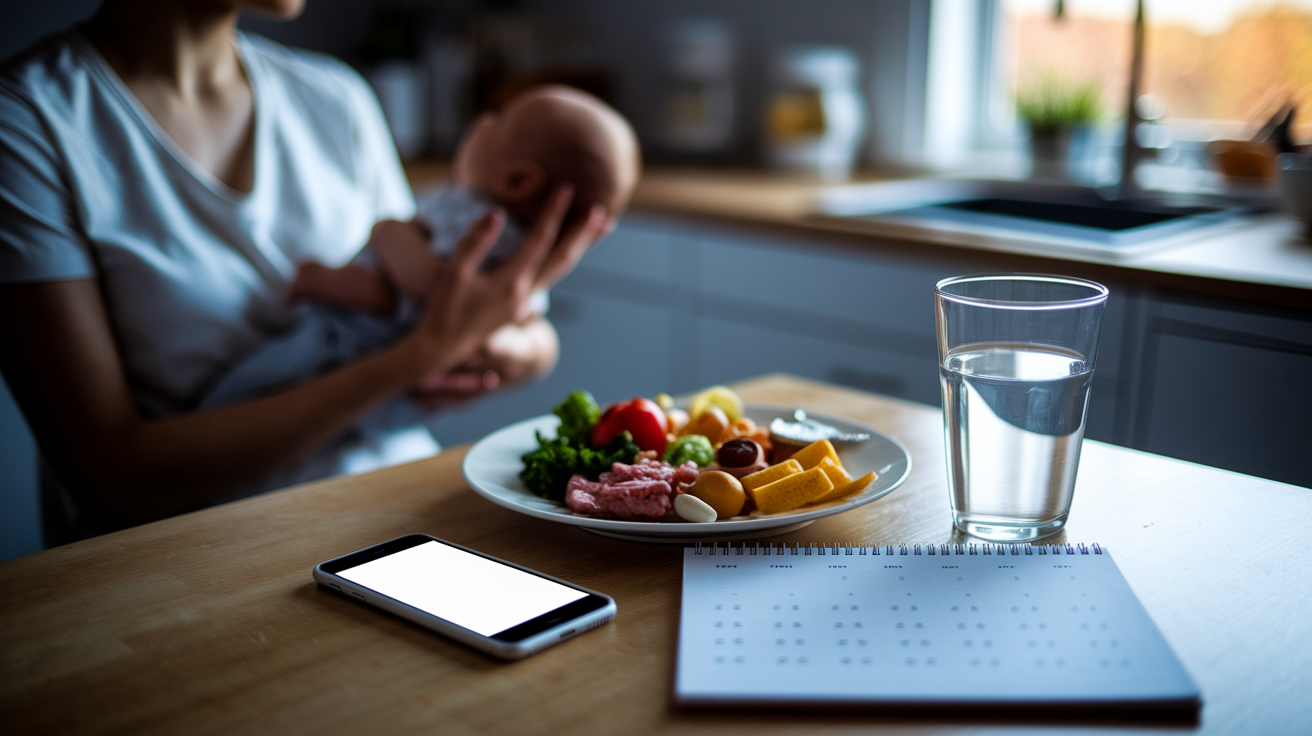
Recovery isn’t a checklist you finish by week six. It’s a series of small, repeatable habits that build strength, prevent complications, and protect your mental health over months. The mothers who recover most smoothly are the ones who pace themselves, track progress, and ask for help early.
Start by picking one or two actions from each category (physical care, nutrition, movement, and emotional support) and do them daily for a week before adding more. For example, week one might be peri bottle after every bathroom trip, one sitz bath per day, and drinking 8 cups of water. Week two, you add a 5-minute walk and start Kegels. By week four, you’re doing all the basics without thinking about it.
Habit-building works better when you link new actions to existing routines. Put your water bottle next to your nursing chair so you drink every time you feed. Do your Kegels while you wait for the kettle to boil. Take your evening walk right after your partner gets home. Small anchors make recovery automatic instead of another task on a mental to-do list.
Practical applications that improve outcomes:
Scheduling rest: Block out 1 to 2 nap windows each day, even if you don’t sleep. Lie down, close your eyes, and let your body recover. Cumulative rest across 24 hours matters more than one long night.
Meal prep: Batch-cook simple proteins (grilled chicken, hard-boiled eggs, slow-cooker beans) and keep cut veggies in the fridge. Assemble plates in 2 minutes instead of cooking from scratch when you’re exhausted.
Tracking bleeding and pain: Use your phone’s notes app or a paper calendar. Write the date, number of pads, color, and pain level (1 to 10 scale). Patterns emerge. If pain goes up after day 5, or bleeding increases after tapering, you have data to share with your provider.
Using support partners: Assign specific tasks. “Can you handle all diaper changes from 6 to 10 p.m. so I can shower and rest?” is clearer and more effective than “I need help.”
Monitoring mood: Check in with yourself once a day. If you feel sad, anxious, or numb for more than 2 weeks, or if the feelings get worse instead of better, contact your provider. Postpartum depression affects 10 to 20% of mothers and is highly treatable.
Planning follow-up appointments: Schedule your early postpartum contact (within 1 to 3 weeks) and your comprehensive visit (by 6 to 12 weeks) before you leave the hospital if possible. Mark them on your calendar and arrange childcare or a ride if needed.
Final Words
Focus on the basics: rest, perineal care, pain control, gentle movement, and watching for red flags right away.
Expect different paths after vaginal birth versus C-section. Start daily routines—sitz baths, walking, pelvic-floor work—and use meds or binders when needed. Call your provider for fever over 100.4°F, soaking more than one pad per hour for two hours, big clots, or sudden leg pain.
Pick one small step this week—a short walk, a sitz bath, or scheduling your 6-week check. These postpartum recovery tips help you get steadier, safer, and stronger.
FAQ
Q: What is the 3-3-3 rule for postpartum?
A: The 3-3-3 rule for postpartum describes checkpoints: first 3 days (24–72 hours) for immediate recovery, 3 weeks for early adjustment and bleeding changes, and 3 months for bigger energy and emotional shifts.
Q: What helps recover faster after giving birth?
A: What helps recover faster after giving birth is resting, staying hydrated, eating protein, using pain meds as needed, sitz baths (10–15 minutes, 2–3x/day), gentle walking within 24–48 hours, and asking for help.
Q: How long does it take to recover from pregnancy?
A: How long it takes to recover from pregnancy varies: expect 24–72 hours immediate changes, 2 weeks of improving energy, 4–6 weeks major healing, and a 6–12 week check; full recovery can take months.
Q: What are the hardest days postpartum?
A: The hardest days postpartum are often the first week—especially days 3–5 when baby blues peak—plus sleep‑deprived nights, heavy bleeding and perineal soreness; emotional and physical strain can resurface around weeks 2–4.

