
Rest alone won’t fix sore muscles, and that might upset your instincts.
If you want less pain and faster gains, timing and small habits matter more than one long nap.
Do a short cool down, eat protein and carbs within 30 minutes, rehydrate, roll tight spots, and prioritize good sleep.
These are the simple, science-backed recovery methods that actually speed healing and get you ready for your next workout sooner.
Stick to them and soreness fades faster.
Fastest Ways to Reduce Post‑Workout Soreness (Immediate Action Steps)

The fastest relief from post-workout soreness starts right after your last rep. Spend 10 to 15 minutes cooling down with easy movement and light stretching to keep blood moving and stop fluid from pooling in your muscles. Drink 8 ounces of water and grab a quick protein and carb snack within 30 minutes. Chocolate milk or a banana with peanut butter both work. Then, before you shower, take 10 minutes with a foam roller and work through the tight spots.
Recovery is how your body restores balance after exercise stress. Every workout creates controlled muscle damage and shifts fluids into tissues, which signals your body to repair fibers, refill energy stores, and build strength. When recovery falls short, your immune system weakens, injury risk climbs, and progress stalls.
Delayed onset muscle soreness typically shows up 12 to 48 hours after a tough session. It comes from microscopic muscle tears and your body’s inflammatory response as it floods damaged tissue with repair cells and fluid. DOMS is a normal part of adaptation. But excessive soreness can limit your range of motion and mess up your next workout. Recovery matters because it determines whether soreness fades in a day or sticks around for nearly a week.
Daily recovery actions that reduce soreness fast:
- Walk for 10 to 15 minutes after training to clear metabolic waste
- Drink 8 ounces of water for every 15 to 30 minutes you exercised
- Eat a protein and carb snack within 30 minutes, then a full meal within 2 hours
- Foam roll for 10 to 15 minutes before stretching to release knots and boost blood flow
- Do gentle dynamic stretches and static holds to maintain flexibility
- Keep moving lightly the next day instead of sitting still. Active recovery speeds healing.
Biological Mechanisms Behind Post‑Workout Recovery
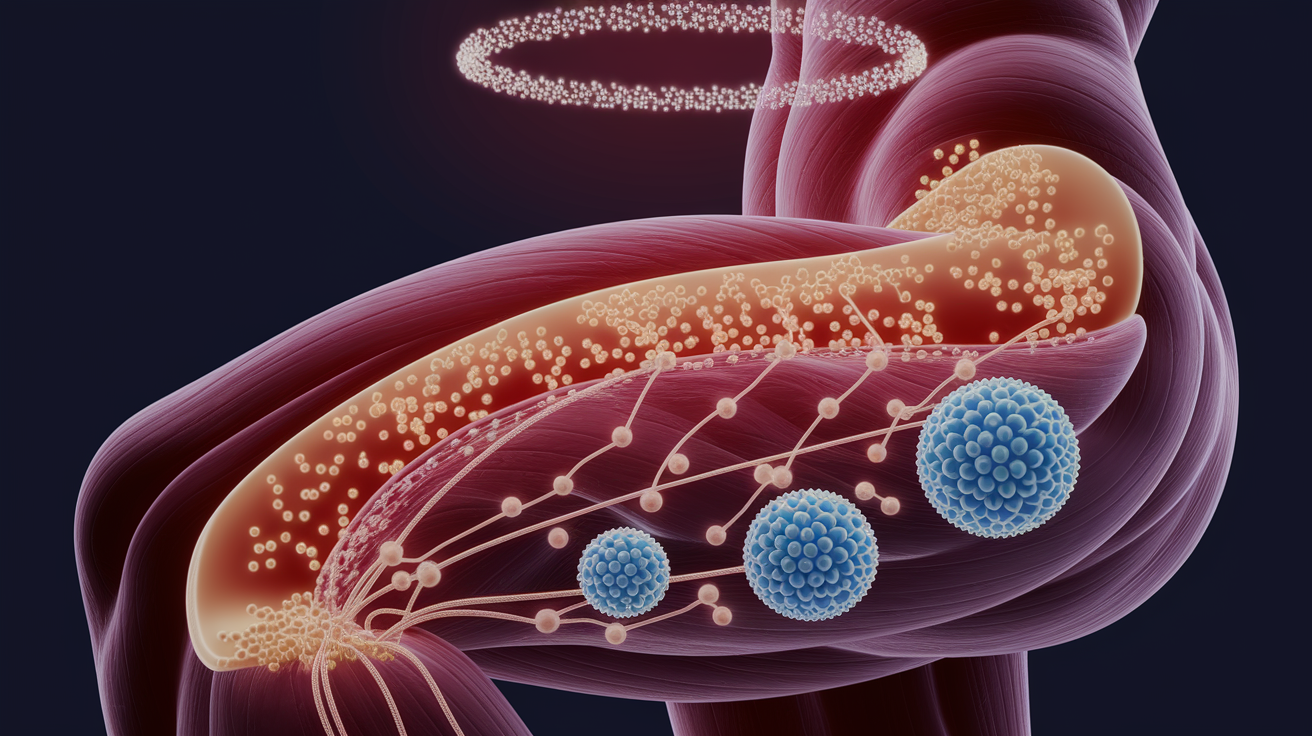
Recovery works through four overlapping biological processes that repair damage, refuel energy stores, manage inflammation, and reset your hormonal environment. Each process runs on its own timeline. All depend on adequate rest, nutrition, and sleep to complete their cycles. When you understand what’s happening inside your muscles and central nervous system, you can time your recovery methods to support each phase instead of guessing.
Muscle protein synthesis is the rebuilding process triggered by training. Resistance exercise damages muscle fibers on a microscopic scale. Your body responds by laying down new contractile proteins to make those fibers thicker and stronger. This repair peaks in the 24 to 48 hours after a workout and needs a steady supply of amino acids from dietary protein. If you skip protein or eat too little, synthesis slows and soreness lasts longer.
Glycogen restoration is equally time sensitive. Carbohydrates consumed after training replenish the glycogen stores in your muscles and liver, which were depleted during exercise. Without carbs, energy recovery drags and your next session suffers.
Inflammation is part of the adaptation signal, not a problem to eliminate. When muscle fibers tear, white blood cells and inflammatory molecules rush to the site to clean up debris and start repair. This localized inflammation causes the swelling and tenderness you feel as DOMS. But excessive inflammation can slow progress and increase soreness duration, so the goal is balance.
Hormone regulation ties everything together. During sleep, growth hormone and testosterone rise to support tissue repair, while cortisol should drop. Sleep debt keeps cortisol elevated, which breaks down muscle tissue faster than it can be rebuilt and leaves you feeling flat and sore.
Essential biological processes in post-workout recovery:
- Muscle protein synthesis repairs damaged fibers using amino acids from dietary protein
- Glycogen restoration refills energy stores in muscles and liver from dietary carbohydrates
- Controlled inflammation signals adaptation and clears cellular debris without excessive swelling
- Hormone reset during sleep raises anabolic signals and lowers cortisol to support net tissue growth
Overview of Post‑Workout Recovery Method Types
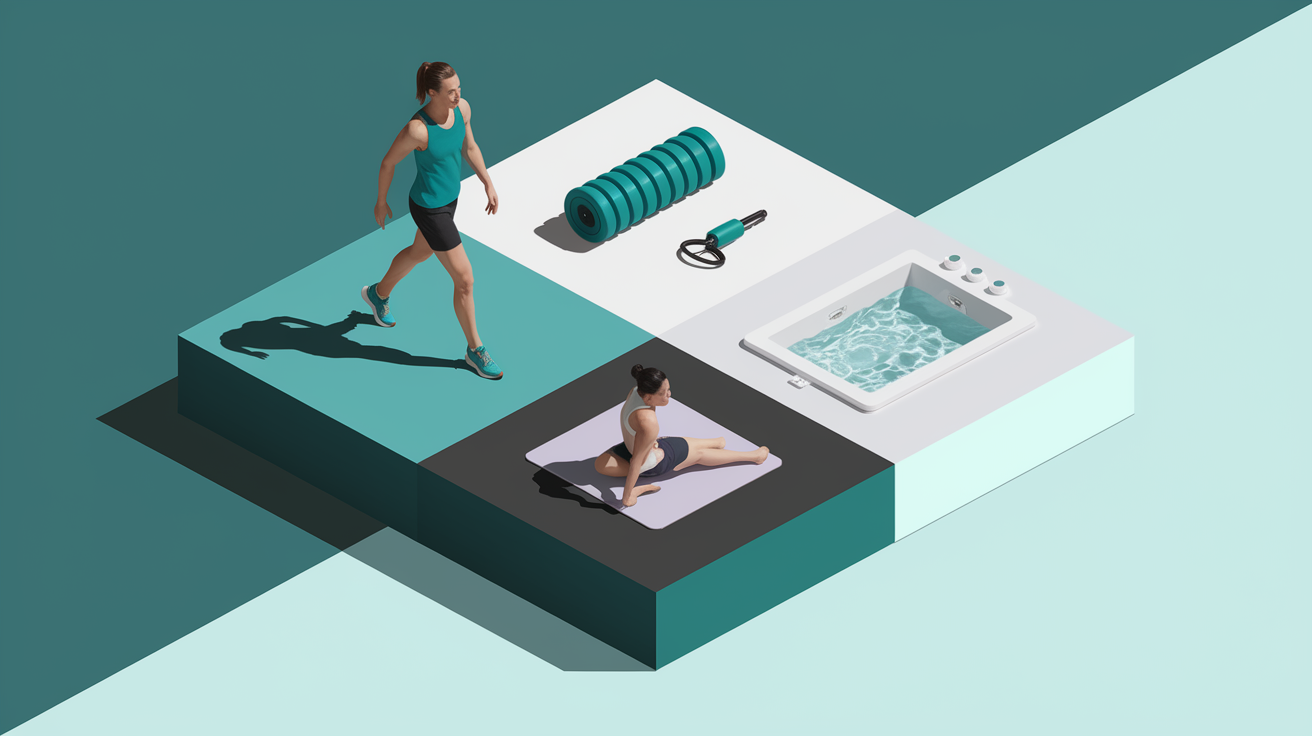
Recovery methods fall into a handful of major categories, each targeting a different part of the repair process. Movement based approaches keep circulation active to clear waste products and maintain flexibility. Soft tissue techniques manually release tension and increase local blood flow. Stretching restores range of motion and reduces stiffness. Cool downs reverse the warm up sequence to bring your heart rate and breathing back to baseline without letting fluids pool.
No single category handles every aspect of recovery. Most people combine methods based on what’s sore, how hard the workout was, and what tools they have at home.
| Method Category | What It Includes |
|---|---|
| Movement based recovery | Active recovery sessions, cool downs, low intensity steady state cardio |
| Soft tissue techniques | Manual massage, percussion therapy, foam rolling, trigger point release |
| Stretching | Static holds, dynamic stretches, proprioceptive neuromuscular facilitation (PNF) |
| Temperature modalities | Cold water immersion, contrast baths, heat therapy, cryotherapy |
Nutrition‑Based Post‑Workout Recovery Methods
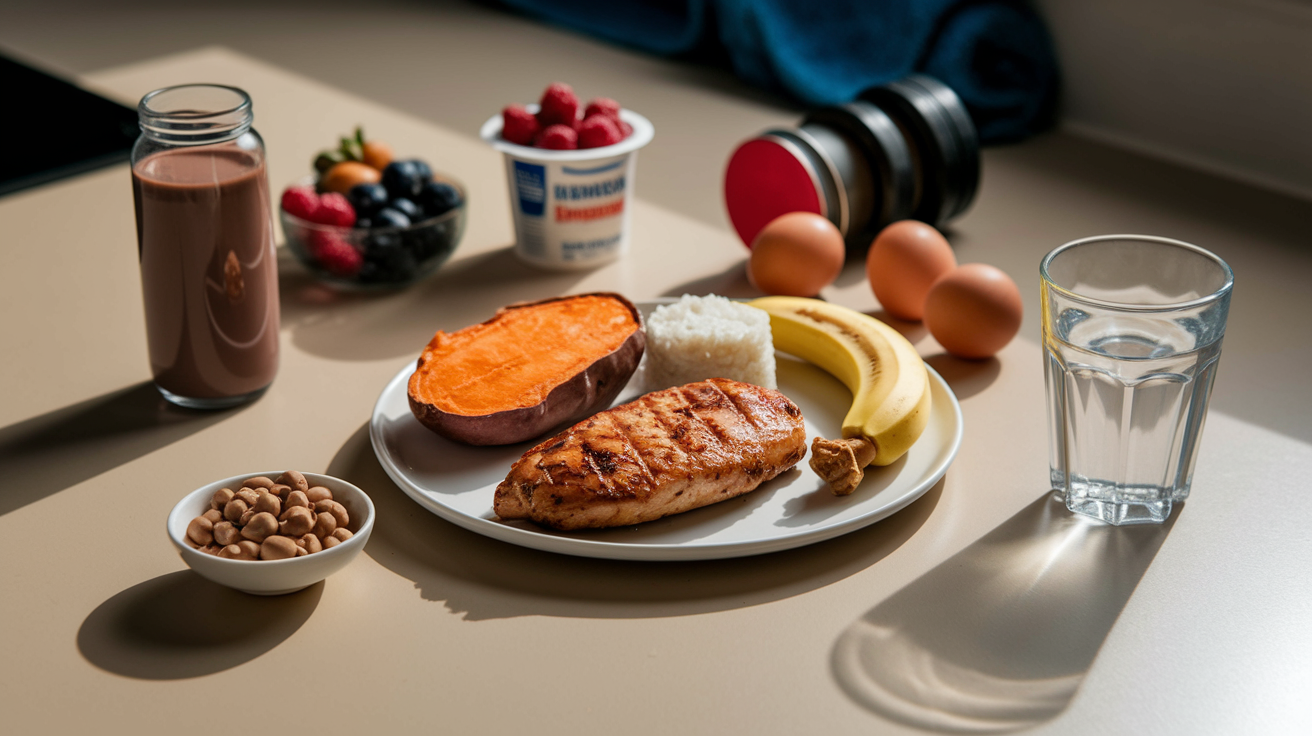
Nutrient timing is the practice of matching what you eat to when your body can best absorb and use it. After training, your muscles are primed to pull in carbohydrates and amino acids for about 30 minutes. While research shows this window is wider than once believed, eating a quick protein and carb snack within that first half hour still delivers the fastest glycogen replenishment and kickstarts muscle repair. Follow that snack with a full recovery meal within 2 hours to keep synthesis running and top off energy stores.
Protein is the building block. Aim for about 20 to 40 grams in your post-workout meal, depending on your body size and the intensity of the session. Foods like Greek yogurt, cottage cheese, chicken, eggs, and fish provide complete amino acids. Leucine, one of the branched chain amino acids, is especially important for triggering protein synthesis, so prioritize leucine rich sources like dairy and lean meat.
Carbohydrates refuel glycogen, and the amount you need depends on how much you depleted. Endurance sessions and high volume strength work demand more carbs than a short lifting session. Berries, bananas, sweet potatoes, whole wheat pasta, and rice are all solid choices that pair well with protein.
Timing your meals around training doesn’t mean you need to stress over the clock. Consistency helps though. If you train fasted or early in the morning, that post-workout snack becomes even more important because your body has been in a catabolic state overnight. On rest days, keep protein intake steady to support ongoing repair. Hydration counts as part of nutrition too. Drink water with every meal. If you sweat heavily, add a pinch of salt or a sports drink to replace sodium lost during exercise.
Sample carb and protein recovery meals and snacks:
- Chocolate milk (about 8 ounces) within 30 minutes of finishing
- Banana with 2 tablespoons of peanut butter
- Greek yogurt (1 cup) with a handful of berries
- Grilled chicken breast with sweet potato and steamed vegetables
- Cottage cheese (1 cup) with apple slices
- Whole wheat pasta (1 to 2 cups) with lean ground turkey and marinara
| Timing Window | Purpose | Example Foods |
|---|---|---|
| Within 30 minutes | Quick carb and protein for glycogen and synthesis | Chocolate milk, protein shake with banana |
| Within 2 hours | Full meal to complete energy restoration | Chicken with quinoa and vegetables, pasta with lean meat |
| Throughout the day | Steady protein for ongoing repair | Eggs, fish, Greek yogurt, cottage cheese |
Hydration and Electrolyte Recovery Methods
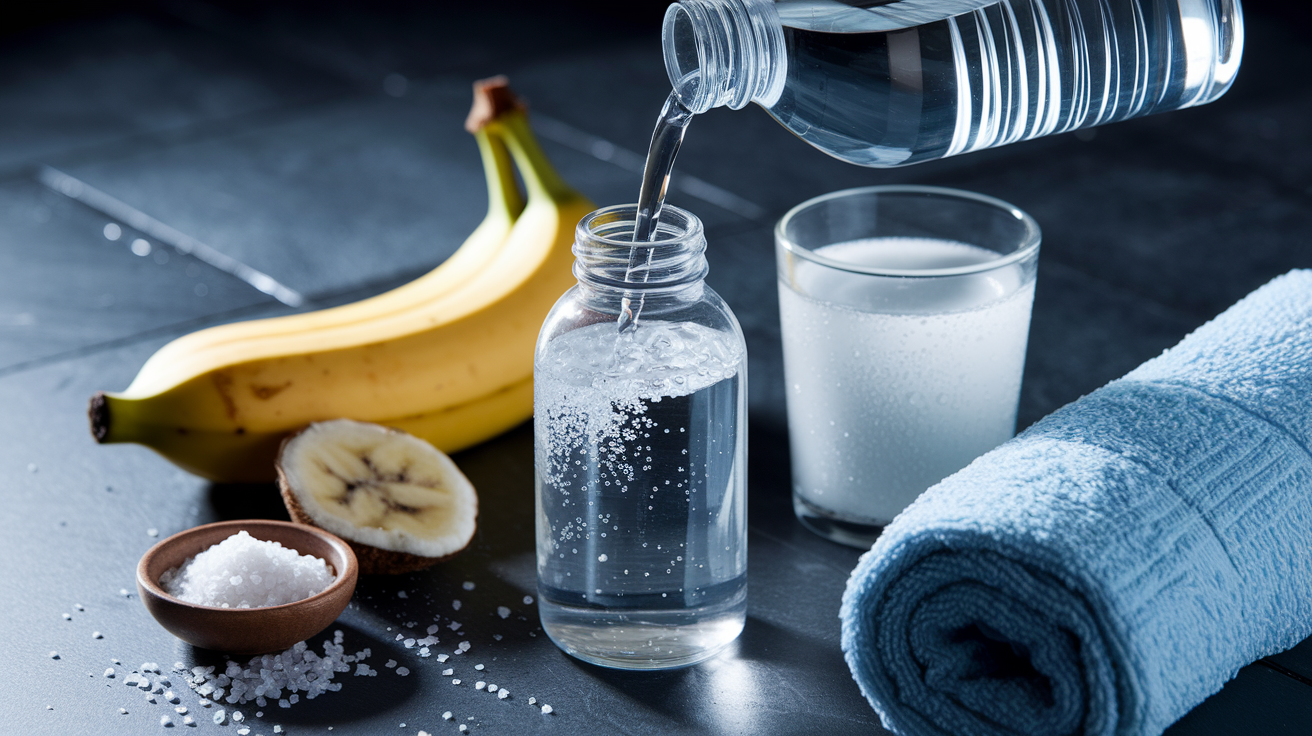
Dehydration magnifies soreness and slows every phase of recovery. Water supports nutrient transport, waste removal, and temperature regulation. Even a small fluid deficit can leave you feeling flat and achy. The general guideline is to drink about 8 ounces of water for every 15 to 30 minutes of exercise. A more precise method is to weigh yourself before and after training. For every pound of body weight you lose during a session, drink about 8 ounces of fluid to restore balance.
Electrolytes, especially sodium and potassium, regulate muscle contraction and fluid balance. When you sweat, you lose both water and electrolytes, and replacing only water can dilute the minerals left in your bloodstream. If you train hard or sweat heavily, add a pinch of salt to your post-workout meal or sip a drink that contains sodium and potassium. Sports drinks, coconut water, and oral rehydration solutions all work.
Don’t rely on thirst alone, especially in the first hour after training. By the time you feel thirsty, you’re already mildly dehydrated.
Practical hydration and electrolyte tactics:
- Weigh yourself before and after workouts to calculate fluid loss
- Drink 8 ounces of water per pound lost during training
- Add a pinch of salt to your post-workout snack or meal if you sweat heavily
- Sip coconut water or a sports drink to replace sodium and potassium
- Keep a water bottle nearby and take small sips throughout the day, not just during training
Sleep‑Driven Post‑Workout Recovery Methods

Sleep is when your body does the bulk of muscle repair and hormone reset. During deep sleep, growth hormone secretion peaks, protein synthesis accelerates, and cortisol levels drop to their lowest point of the day. If you’re only getting 5 or 6 hours a night, you’re cutting short the window your body needs to rebuild. Accumulated sleep debt keeps cortisol elevated even during rest. Aim for 8 to 10 hours of sleep per night, especially during heavy training blocks, and treat sleep as seriously as you treat your workout schedule.
Sleep quality matters as much as duration. A dark, cool room, consistent bedtime, and a wind down routine all help you fall asleep faster and stay in deep sleep longer. Avoid screens for at least an hour before bed because blue light suppresses melatonin and pushes your circadian rhythm later. If you train late in the evening, give yourself at least 2 hours between your last set and bedtime so your nervous system has time to downshift. Heavy meals right before bed can disrupt sleep, but a small protein rich snack, like cottage cheese or a handful of almonds, can support overnight muscle repair without waking you up.
Consistency anchors your circadian rhythm. Going to bed and waking up at roughly the same time every day, even on weekends, keeps your internal clock steady and makes falling asleep easier. If you’re struggling with sleep debt, prioritize an extra hour of sleep over an early morning workout for a week or two. You’ll recover faster and come back stronger than if you push through on low rest.
Sleep optimization tactics for faster recovery:
- Target 8 to 10 hours of sleep per night during training phases
- Keep your bedroom dark, cool, and quiet to improve deep sleep duration
- Avoid screens and bright lights for at least 1 hour before bed
- Finish training at least 2 hours before bedtime to let your nervous system calm
- Eat a small protein rich snack before bed if you train late or wake up hungry
Soft‑Tissue Recovery Methods (Massage, Massage Guns, Self‑Myofascial Release)
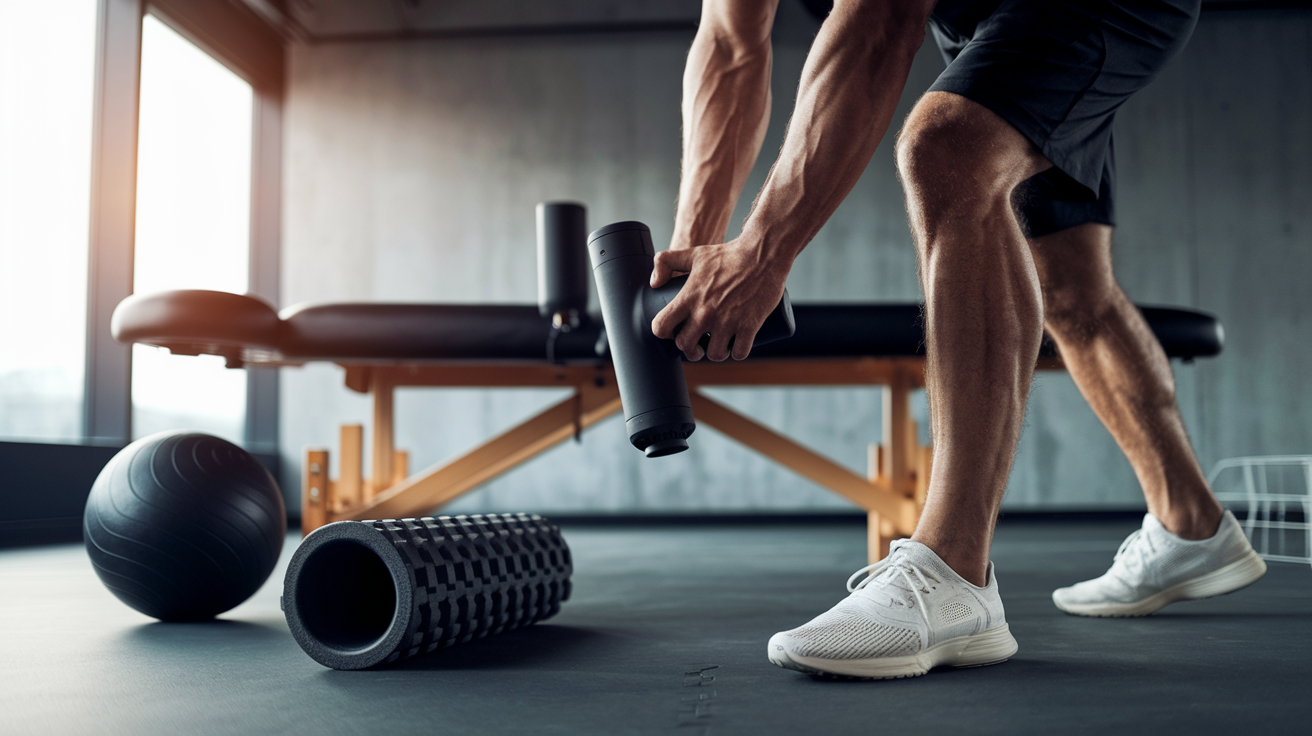
Manual massage releases muscle knots, increases local blood flow, and moves pooled fluid out of tissues. A skilled therapist can target specific tight spots and adjust pressure to match your tolerance, making massage one of the most effective soft tissue recovery tools when done correctly. Research shows mixed effects on lactate removal, and some studies suggest that deep massage immediately after training can temporarily impair blood flow. Timing matters. Schedule massage between sessions, not immediately post-workout, to get the relaxation and circulation benefits without slowing metabolic cleanup.
Percussion therapy tools, commonly called massage guns, mimic the rapid tapping of deep tissue massage. These devices deliver short, repetitive pulses that penetrate muscle layers and break up adhesions without the cost or scheduling hassle of a professional massage. Use a massage gun for 30 seconds to 2 minutes per muscle group, moving slowly over tight areas. Don’t press too hard or linger on bony landmarks. Percussion works best on large muscle groups like quads, hamstrings, glutes, and lats.
Self myofascial release, usually performed with a foam roller, applies sustained pressure to tight spots to release tension and improve blood flow. Foam rolling before stretching increases your range of motion more than stretching alone. After workouts, spend 10 to 15 minutes rolling through sore areas, pausing on tender spots for 20 to 30 seconds. The discomfort should feel like a deep ache, not sharp pain. If you hit a spot that makes you wince, ease off slightly and let the pressure sink in gradually.
Trigger point release targets specific knots, often using a lacrosse ball or a smaller, firmer roller. These tools let you apply more focused pressure than a standard foam roller. Place the ball under the tight spot, relax your body weight onto it, and hold for 30 to 60 seconds. Breathe slowly and let the muscle soften. Trigger point work is intense but effective for stubborn tension that foam rolling doesn’t fully resolve.
Comparing soft tissue recovery methods:
- Manual massage: best for targeted relief and full body relaxation. Schedule between sessions, not immediately post-workout.
- Massage guns: convenient at home option for large muscle groups. Use 30 seconds to 2 minutes per area.
- Foam rolling: budget friendly, effective for improving blood flow and range of motion. Spend 10 to 15 minutes after training.
- Trigger point release: precise pressure on stubborn knots. Use a lacrosse ball or small roller for 30 to 60 seconds per spot.
- Timing tip: perform soft tissue work before stretching to maximize flexibility gains
Temperature‑Based Post‑Workout Recovery Methods

Cold water immersion involves submerging your body in water chilled to about 50 to 59 degrees Fahrenheit for 10 to 15 minutes. The cold causes blood vessels to constrict, which reduces swelling and numbs pain receptors. When you exit the water, vessels dilate and fresh blood rushes back into your muscles, flushing out metabolic waste. Research shows that CWI reduces muscle soreness and strength loss at 24 and 48 hours compared to passive recovery, making it one of the better supported temperature methods.
Some studies suggest that frequent ice baths might blunt long term adaptations by dampening the inflammatory signals that trigger muscle growth. Save CWI for high volume training blocks or competitions, not every single session.
Contrast water therapy alternates between hot and cold water, typically 3 to 4 cycles of 1 minute cold and 2 to 3 minutes hot. The theory is that the rapid shift between constriction and dilation pumps fluid through tissues more effectively than cold alone. Evidence is mixed. Some athletes report reduced soreness, but controlled studies show little difference between contrast therapy and cold immersion alone. If you enjoy the sensation and have access to both hot and cold tubs, contrast therapy is low risk and may help subjectively.
Heat therapy, including hot baths and sauna sessions, increases circulation and relaxes tight muscles. Heat is best used later in the recovery window, at least 24 hours post-workout, because applying heat too soon can increase swelling. A 15 to 20 minute sauna session or a warm Epsom salt bath can reduce stiffness and improve sleep quality.
Whole body cryotherapy, where you stand in a chamber cooled to negative 200 degrees Fahrenheit for 2 to 3 minutes, is popular among elite athletes but has weak and inconsistent evidence. The extreme cold numbs pain quickly, but research hasn’t shown clear advantages over simpler methods like ice baths.
| Method | Mechanism | Best Use Case |
|---|---|---|
| Cold water immersion (CWI) | Vasoconstriction reduces swelling, rebound vasodilation flushes waste | After high volume sessions or competitions. Avoid daily use. |
| Contrast water therapy | Alternating hot/cold cycles pump fluid through tissues | Subjective relief. Use when CWI alone feels insufficient. |
| Heat therapy (sauna, hot bath) | Increases circulation and relaxes muscles | 24+ hours post-workout to reduce stiffness and improve sleep |
| Whole body cryotherapy | Extreme cold numbs pain receptors | High cost, weak evidence. Optional for athletes with access. |
Compression‑Based Post‑Workout Recovery Methods

Compression garments, like tight sleeves or socks, apply steady pressure to muscles and veins. The idea is that compression speeds blood return to the heart, reduces swelling, and stabilizes muscle vibration during activity. Research shows that elastic compression can reduce perceived soreness and fatigue. Some studies also suggest that constant pressure may slow the removal of metabolic byproducts because it doesn’t create the pulsing flow that active movement does. If you wear compression gear, put it on within an hour after training and keep it on for 2 to 4 hours, not all day.
Pneumatic compression devices use inflatable sleeves that rhythmically squeeze and release your legs or arms, mimicking the pumping action of muscle contractions. These devices increase blood flow more effectively than static compression and reduce stiffness without the risk of impairing waste clearance. Sessions typically last 20 to 30 minutes, and many athletes use them on rest days or between hard sessions. Meta analyses find small but consistent benefits for soreness and subjective recovery, with low risk of harm.
Compression method pros and limitations:
- Elastic garments reduce perceived soreness and stabilize muscles during activity
- May slow metabolic waste removal if worn continuously for long periods
- Wear for 2 to 4 hours post-workout, not all day
- Pneumatic compression (inflatable sleeves) increases blood flow and reduces stiffness
- Pneumatic devices show little effect on power or strength gains, but improve subjective recovery
- Use pneumatic compression for 20 to 30 minutes on rest days or between sessions
Monitoring Tools for Tracking Recovery Quality
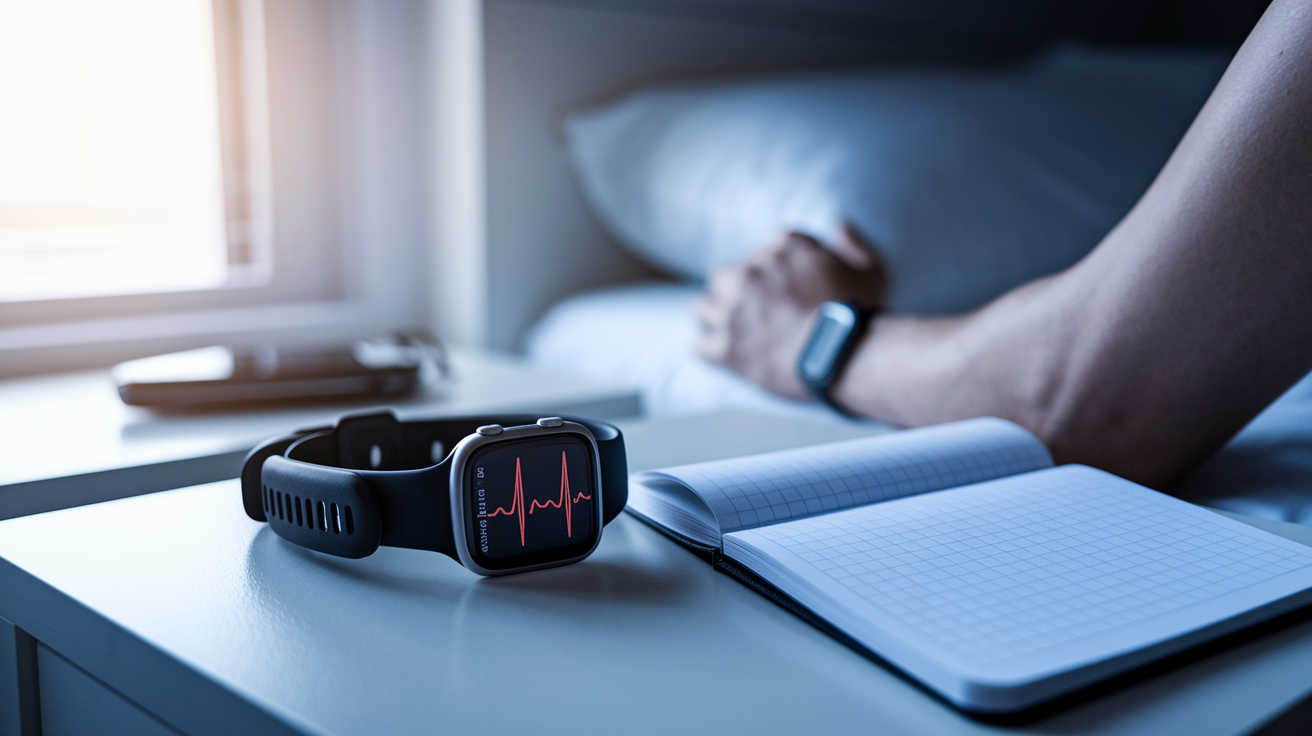
Resting heart rate is one of the simplest and most reliable markers of recovery. Measure your heart rate first thing in the morning, before getting out of bed, and track it over several days. Calculate a 5 day rolling average to smooth out daily fluctuations. If your morning RHR is elevated by 5 or more beats per minute above your average for several days in a row, you’re not fully recovered and should consider a lighter training day or a rest day. During a workout, if your exercise heart rate is more than 8 beats per minute above your typical RHR, it’s a sign your nervous system is still stressed.
Heart rate variability measures the time intervals between heartbeats. Higher variability indicates that your parasympathetic nervous system, the “rest and digest” branch, is dominant, which means you’re recovered and ready to train. Low HRV suggests sympathetic dominance, the “fight or flight” state, and incomplete recovery. HRV has been used in clinical settings for more than 40 years, and consumer wearables now make it accessible for daily tracking. Check your HRV within 10 minutes of waking, ideally while still lying down. If HRV drops below your baseline for multiple days, scale back intensity or volume.
Wearable tech, including smartwatches and chest strap monitors, can track RHR, HRV, sleep duration, and sleep stages automatically. Future technologies under development include cortisol patches that measure stress hormones through sweat, CNS dominance trackers that assess nervous system balance, and fabric strain gauges woven into shirts to monitor breathing patterns. These tools are still expensive and not widely validated, but they point to a future where recovery tracking is as precise as tracking workouts.
Key recovery metrics to monitor daily:
- Resting heart rate: measure first thing in the morning, track 5 day rolling average
- RHR elevation of 5+ beats above average signals incomplete recovery
- Heart rate variability: higher HRV means parasympathetic dominance and readiness to train
- Low HRV indicates sympathetic stress and need for rest or lighter training
- Sleep duration and quality: aim for 8 to 10 hours, monitor sleep stages if your device supports it
- Subjective measures: rate soreness, mood, appetite, and motivation daily to catch early overtraining signs
Practical Post‑Workout Recovery Plans for Everyday Readers
A practical recovery plan stacks the methods that matter most and fits them into your real schedule. Start with the non negotiables. Eat a protein and carb snack within 30 minutes, drink at least 8 ounces of water, and spend 10 to 15 minutes cooling down with light movement and stretching. Within 2 hours, eat a full meal. Before bed, foam roll for 10 to 15 minutes if you’re tight, and aim for 8 to 10 hours of sleep. These steps cover the biological essentials and cost almost nothing.
On rest days, replace passive sitting with active recovery. Go for a 20 to 30 minute walk, ride a bike at easy pace, or do a short yoga flow. Keep intensity low, around 60 to 70 percent of your maximum heart rate, so circulation stays active without adding new stress. If you’re sore from a particularly hard session, add a 10 minute ice bath or a 20 minute sauna session 24 hours later. Use foam rolling and stretching daily, not just after workouts, to maintain mobility and prevent tightness from building up.
Track your recovery quality with morning RHR and HRV if you have a wearable device. Or simply rate your soreness, sleep quality, and mood on a 1 to 10 scale each morning. If multiple markers trend down for 3 or more days, take a full rest day or reduce training volume by 20 to 30 percent for the week. Deloading every 4 to 6 weeks, by cutting volume or intensity by about half, prevents overtraining and keeps long term progress steady.
Daily recovery checklist for consistent progress:
- Cool down with 10 to 15 minutes of easy movement and stretching immediately post-workout
- Eat a protein and carb snack within 30 minutes and a full meal within 2 hours
- Drink 8 ounces of water for every 15 to 30 minutes you trained
- Foam roll or use a massage gun for 10 to 15 minutes before bed or on rest days
- Aim for 8 to 10 hours of sleep per night
- Perform active recovery (walk, easy bike, yoga) for 20 to 30 minutes on rest days
- Track RHR, HRV, and subjective markers daily to catch early overtraining signs
| Fitness Level | Daily Recovery Priorities |
|---|---|
| Beginner (new to training) | Snack within 30 minutes, full meal within 2 hours, 8 to 10 hours sleep, 1 to 2 rest days per week with light walking |
| Intermediate (training 3 to 5 days per week) | Same nutrition timing, add foam rolling daily, track RHR or HRV, use active recovery on rest days, schedule a deload week every 4 to 6 weeks |
| Advanced (training 5+ days per week or competing) | All intermediate priorities, plus weekly massage or percussion therapy, consider cold immersion after high volume sessions, monitor HRV daily, take at least 1 full rest day per week |
Final Words
Start by moving a little, like a short walk or easy bike, rehydrate, eat a quick protein-and-carb snack, and do light foam rolling or stretching. Those steps cut soreness fast and help you be ready for the next session.
We explained how recovery works—protein for repair, carbs for glycogen, sleep and fluids for hormone balance—and compared tools like cold, heat, massage, compression, and wearables.
Pick three habits from the plans and use them this week. Small, steady wins with post workout recovery methods add up, so keep going—you’ll notice the difference.
FAQ
Q: What is the 3-3-3 rule for gym?
A: The 3-3-3 rule for gym is a strength template: pick a main lift and perform three sets of three heavy reps, often across three compound movements to build raw strength.
Q: What is best for recovery after a workout?
A: The best for recovery after a workout is light active movement, rehydration, a protein-plus-carb snack within 30 minutes, gentle stretching or foam rolling, and quality sleep that night.
Q: What are the 4 R’s of recovery?
A: The 4 R’s of recovery are Refuel, Rehydrate, Repair, and Rest, meaning carbs to restore glycogen, fluids and electrolytes, protein for muscle repair, and sleep or rest to recover.
Q: What is the 5 5 5 30 rule?
A: The 5 5 5 30 rule most often refers to five sets of five reps with about 30 seconds rest, a conditioning-style template; variants exist, so check the original source for exact intent.

