
What if trying harder is actually slowing your healing?
Mindful recovery asks you to stop the struggle and pay attention to the present moment instead.
It’s not about sitting quietly for hours or chasing calm.
It’s about noticing cravings, pain, and thoughts as they rise, then choosing a small, steady response.
This approach reduces panic and relapse risk, improves sleep, and builds real decision-making under pressure.
Today’s post will show practical exercises and simple ways to fit them into busy lives so you can heal without burning out.
Foundations of a Mindful Approach to Recovery

Mindful recovery is showing up to your healing process without trying to force anything or run from what’s hard. You’re bringing awareness to what you’re feeling right now, whether you’re working through substance use, trauma, mental health struggles, or physical injury. No judgment. No scrambling to fix it. Just noticing thoughts, feelings, and sensations as they come up, then choosing how you respond instead of reacting on autopilot.
People lean into mindful strategies during recovery because the old stuff stops working. Avoidance, numbing, reacting without thinking. When you remove substances or drop the familiar defenses, your nervous system feels raw and your mind won’t shut up. Mindfulness gives you new tools: stress reduction that doesn’t need a pill or a distraction, emotion regulation that holds up even when you’re overwhelmed, and the clarity to catch what’s happening before you act. It’s not magic. But it creates space between what you feel and what you do, and that’s where change lives.
Core benefits of mindful recovery include:
- Less rumination and fewer obsessive thought loops
- Better coping with high-stress moments without old escape routes
- Catching triggers before they blow up
- Improved sleep quality as your nervous system learns to settle
- Calmer, clearer decisions in real time
- More resilience and confidence when setbacks happen
These practices work for all kinds of recovery because they meet you where you are. One week sober, six months into physical therapy, years into managing anxiety. Mindfulness scales to what you can handle right now and grows with you.
Core Principles Behind Mindfulness-Based Healing

Present-moment awareness and acceptance are the foundation. When your mind drags you into yesterday’s mistakes or tomorrow’s fears, the work is simple: notice where you are, what you’re doing, and bring your attention back. Acceptance doesn’t mean you like what’s happening. It means you stop fighting reality long enough to actually work with it. That shift cuts down on internal resistance, the exhausting mental tug-of-war that drains energy you need for healing.
Non-judgment and self-compassion are what you use when things go sideways. Recovery is messy. You’ll have hard days, intrusive thoughts, moments of doubt. Non-judgment means labeling those experiences without piling on shame. “I’m having a craving” instead of “I’m weak and broken.” Self-compassion means treating yourself the way you’d treat a friend who’s struggling: with patience, kindness, and the understanding that healing isn’t linear. These aren’t soft skills. They’re protective factors that keep you in the game when it gets rough.
Over time, these principles become automatic. You stop waiting for permission to be present. You stop punishing yourself for being human. And that consistency, showing up without judgment day after day, builds the long-term habits that outlast any single treatment or program.
Practical Mindfulness Exercises for Daily Recovery
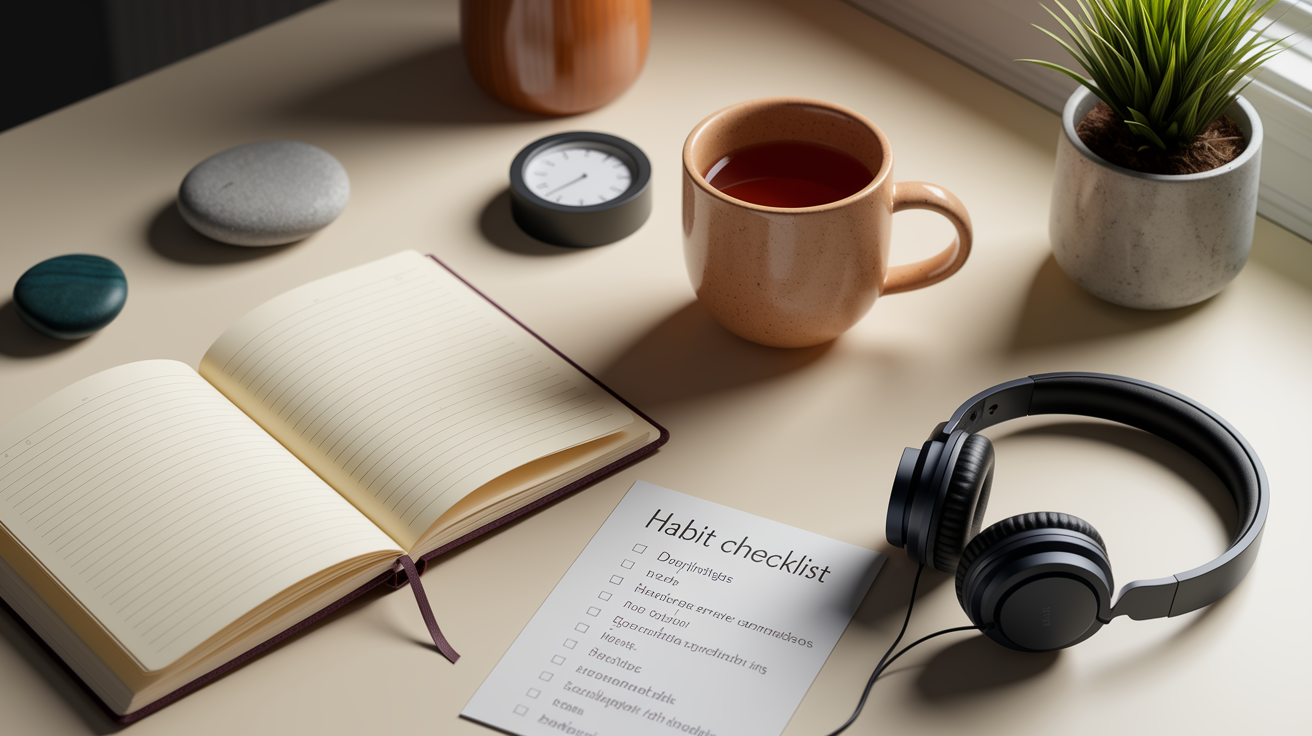
The following exercises are short, repeatable, and usable anywhere. Start with one or two and practice daily until they feel natural.
-
Breath awareness: Sit or stand comfortably. Inhale through your nose for a count of four, exhale through your mouth for a count of six. Notice where you feel the breath: nose, chest, ribs, belly. If your mind wanders, that’s normal. Gently guide it back to the sensation of breathing. Practice for three to five minutes whenever you feel your nervous system ramping up.
-
Body scan: Lie down or sit upright. Starting at your toes, slowly move your attention up through your body. Feet, calves, thighs, hips, stomach, chest, arms, neck, face. Notice tension, warmth, tingling, or numbness without trying to change anything. Spend 10 to 20 minutes moving through each area. This helps you reconnect with physical sensations you may have numbed or ignored.
-
Urge surfing: When a craving or uncomfortable emotion shows up, don’t fight it or give in. Observe it like a wave. Notice where you feel it in your body, how intense it is on a scale of one to ten, and how it changes over time. Ride the wave for 10 to 15 minutes. Most cravings peak and subside within that window if you don’t feed them with action or rumination.
-
Grounded sensory observation: Use the 5-4-3-2-1 technique. Name five things you see, four you can touch, three you hear, two you smell, one you taste. This pulls you out of your head and anchors you in the present environment. Takes two to three minutes and works anywhere.
-
Mindful journaling: Set a timer for five minutes. Write continuously without editing or censoring, whatever thoughts, feelings, or worries are present. The goal isn’t beautiful prose. It’s externalizing the mental clutter so you can see it clearly. Afterward, read what you wrote and notice patterns or recurring themes.
To schedule these into your routine, pick one morning anchor (breath awareness right after you wake up) and one evening anchor (body scan before bed). Add urge surfing and grounding on an as-needed basis throughout the day. Consistency matters more than duration. Five minutes daily beats an hour once a week.
Scientific Evidence Supporting Mindful Recovery

Research shows that consistent mindfulness practice reduces cortisol levels, the hormone tied to chronic stress and relapse risk. MRI studies have documented structural changes in the brain after eight weeks of mindfulness training, including increased gray matter density in the prefrontal cortex (responsible for decision-making and impulse control) and reduced activity in the amygdala (the brain’s fear and reactivity center). These aren’t abstract findings. They translate to real-world improvements in how you manage cravings, regulate emotions, and make choices under pressure.
In addiction treatment settings, mindfulness-based interventions have been associated with lower relapse rates and fewer heavy-use days compared to standard care alone. Randomized trials of Mindfulness-Based Relapse Prevention (MBRP) programs report that participants who practiced daily showed 20 to 40 percent relative reductions in relapse at six and twelve months post-treatment. The effect sizes are small to moderate, but the practices are low-cost, low-risk, and stackable with other therapies like cognitive-behavioral treatment or medication-assisted recovery.
Beyond addiction, mindfulness has demonstrated benefits for anxiety, depression, post-traumatic stress, and chronic pain. Studies measuring mood regulation show reduced rumination and improved emotional stability after eight to twelve weeks of structured mindfulness practice. Long-term practitioners report sustained improvements in sleep quality, interpersonal relationships, and overall quality of life. The data isn’t claiming mindfulness will cure everything, but it reliably moves the needle on outcomes that matter for recovery.
Applying Mindfulness in Addiction Recovery

Mindfulness changes your relationship with cravings by teaching you to observe them instead of obeying them. When a craving hits, the automatic response is to either act on it or white-knuckle through it with sheer willpower. Both approaches drain your resources. Mindfulness offers a third option: notice the craving, label it (“This is a craving, not an emergency”), and watch it rise, peak, and fall without doing anything. Over time, you learn that urges are temporary and that you can tolerate discomfort without self-destructing.
Mindfulness also plays a central role in relapse prevention. It helps you identify triggers before they escalate, interrupt automatic thought patterns that justify using, and create space for a different choice. When you’re present and aware, you catch the warning signs early: restlessness, irritability, isolation. And you can respond with a grounding practice, a phone call, or a walk instead of reverting to old behavior. That emotional stability compounds over weeks and months into genuine confidence.
| Technique | Purpose | When to Use |
|---|---|---|
| Urge surfing | Observe craving intensity without acting | Moment a craving arises |
| Breath awareness | Calm nervous system and reduce reactivity | Before high-stress situations or after triggers |
| 5-4-3-2-1 grounding | Anchor attention in present environment | During panic, dissociation, or intense emotion |
| Body scan | Reconnect with physical sensations | Daily practice or when feeling numb/disconnected |
| Mindful pause | Create space between thought and action | Before making a decision or responding to conflict |
Mindfulness for Mental and Emotional Healing

Mindfulness is a core component of evidence-based treatments for anxiety and depression, including Mindfulness-Based Cognitive Therapy (MBCT) and Acceptance and Commitment Therapy (ACT). These approaches teach you to notice anxious thoughts or depressive rumination without getting pulled into the spiral, reducing the intensity and duration of difficult episodes.
For trauma recovery, mindfulness provides grounding when flashbacks or dissociation occur. Trauma-sensitive practices emphasize shorter sessions, eyes-open options, and explicit permission to pause or modify any exercise. The goal is to help you stay present in your body without retraumatizing yourself. Grounding techniques like the 5-4-3-2-1 method are especially useful because they pull attention outward to safe, neutral stimuli rather than inward to overwhelming emotions.
Mindful awareness improves emotional clarity by helping you distinguish between a feeling and the story you tell about that feeling. When you’re anxious, your mind might say, “I’m going to fail. Everyone will judge me. I can’t handle this.” Mindfulness lets you step back and see those as thoughts, not facts, and respond to the actual emotion (nervousness) with self-compassion and a practical next step rather than catastrophic thinking. That shift is the difference between being hijacked by your emotions and working with them.
Mindfulness in Physical Rehabilitation and Pain Recovery

Mindfulness reduces pain perception by changing how you relate to discomfort. Chronic pain often comes with layers of secondary suffering: frustration, fear, catastrophizing. That amplifies the raw sensation. Mindfulness training teaches you to observe pain as a series of changing sensations (sharp, dull, throbbing, radiating) rather than a monolithic threat, which decreases emotional reactivity and improves your ability to function.
Studies in physical therapy settings show that patients who practice mindfulness report lower pain intensity scores and higher adherence to exercise protocols. When you’re present during movement, you notice subtle improvements in range of motion, balance, and strength that you’d miss if you were dissociated or bracing against pain. That awareness builds motivation and helps you pace rehabilitation without overdoing it.
Pain-relief techniques enhanced by mindfulness include:
- Focused breathing during painful movements to calm the nervous system
- Body scans to identify areas of tension and consciously release guarding
- Mindful walking to improve gait patterns and reduce compensatory habits
- Progressive muscle relaxation paired with visualization to support tissue healing
Implementing Mindful Recovery: Steps, Tools, and Resources

Starting a mindful recovery practice doesn’t require a meditation cushion, a silent retreat, or hours of free time. It requires intention, consistency, and a willingness to start small.
-
Choose one anchor practice. Pick a single five-minute exercise (breath awareness or grounding) and commit to doing it at the same time every day for two weeks. Habit formation happens faster when the cue is consistent: right after you brush your teeth, during your lunch break, or before bed.
-
Set environmental cues. Place a sticky note on your bathroom mirror, set a phone reminder, or put a journal on your pillow. Visual and auditory prompts reduce the mental load of remembering to practice.
-
Track your practice. Use a simple habit tracker: paper, app, or calendar check marks. Log the date, duration, and a one-word mood rating. Seeing progress over weeks builds motivation and helps you spot patterns.
-
Add informal practices. Once your anchor is stable, layer in mindfulness during daily tasks. Wash dishes with full attention to the water temperature and soap texture. Walk to your car noticing each footstep. These micro-practices don’t add time to your day but multiply your reps.
-
Use guided resources when motivation dips. Apps, recorded meditations, and structured courses provide scaffolding when self-discipline wavers. Look for programs that match your recovery context: MBRP for addiction, trauma-sensitive yoga for PTSD, pain management courses for chronic injury.
-
Build in reflection time. Every two weeks, review your tracker and journal. Ask: What’s working? What feels forced? What did I learn about my patterns? Adjust your practice based on honest feedback, not perfection.
When choosing resources, prioritize accessibility and evidence base. Free community groups, library-based programs, and sliding-scale clinics often offer mindfulness training. Apps like Insight Timer and Headspace provide hundreds of guided practices for $0 to $15 per month. If you’re working with a therapist, ask if they integrate mindfulness into sessions. Many CBT and DBT practitioners do.
Long-term sustainability comes from making mindfulness a non-negotiable part of your routine, the way brushing your teeth is non-negotiable. You won’t feel like doing it every day. Do it anyway. The practice works whether you’re motivated or not, calm or agitated, hopeful or exhausted. Show up, do the thing, and let the consistency build the brain changes that make recovery feel less like a battle and more like a way of life.
Final Words
Start small: use breath awareness, body scans, and urge-surfing as daily anchors to steady your emotions and cut through stress.
We defined mindful recovery, unpacked the core principles, offered five practical exercises, reviewed the science, and showed how this approach helps addiction, mental health, and physical pain. We also mapped clear steps and tools to make it stick.
Pick one practice this week and add it to your routine. Mindful recovery grows with consistency – keep going.
FAQ
Q: What is mindful recovery?
A: Mindful recovery is a practice that pairs present-moment, non-judgmental awareness with recovery work to reduce stress, manage cravings, improve emotional regulation, and build lasting resilience.
Q: What are the 3 P’s of sobriety?
A: The 3 P’s of sobriety are people, places, and things—identify, avoid, or manage these common triggers to protect your recovery and lower relapse risk.
Q: What is the SAMHSA recovery model?
A: The SAMHSA recovery model is a person-centered framework focused on health, home, purpose, and community, guided by hope, peer support, trauma-informed care, and multiple pathways to recovery.
Q: What are some coping skills for recovery?
A: Coping skills for recovery include breath awareness, urge surfing, grounding, mindful journaling, joining support groups, regular exercise, sleep routines, and planning to handle cravings and strong emotions.

