
Who says you need a big garage to build a real gym?
If you’ve got a corner, a wall, or a rack, a compact cable machine for home gym can deliver the same cable movements you get at commercial gyms without eating your living room.
This guide tests and ranks five top options, from rack-mounted plate columns to wall-mounted smart units and true portable systems, based on footprint, build quality, resistance type, and real-home fit.
Read on to find the model that matches your space, strength goals, and budget.
Best Compact Cable Machines for Home Gyms (Ranked)
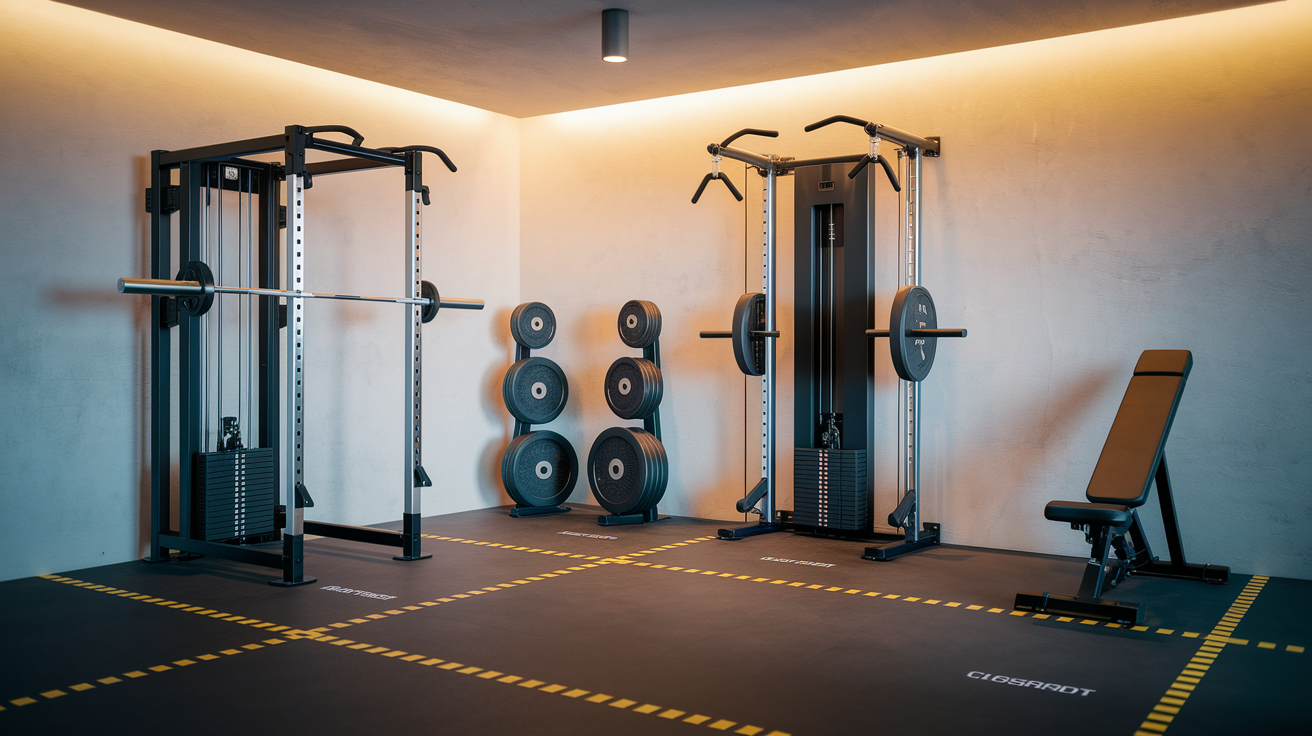
Finding the right compact cable machine means balancing space constraints against what you actually need to train. These five machines are the best options across different budgets and formats, tested for build quality, footprint efficiency, and whether they’ll actually fit in a real home gym.
-
REP Athena (Plate-Loaded Single Column) – Footprint: 0 added sq ft (rack-mounted); 21 cable positions; 1:1 lat pulldown plus 2:1 adjustable column; price around $500–$700. Best for rack owners who want serious cable work without eating up floor space. Uses your existing plates, so resistance scales with what you own.
-
Bells of Steel Cable Tower 2.0 – Footprint: 6 sq ft (under 2.5′ × 2.5′); 33 cable positions; 2:1 ratio with 1:1 adapter included; price around $500–$800. Best for budget-conscious lifters who already have plates and need a true space saver. 2024 redesign swapped nylon pulleys for aluminum sleeve bearings.
-
Body-Solid GDCC250 (Compact Crossover) – Footprint: about 40 sq ft; dual 210 lb stacks; 1:1 ratio; 8 ft column spacing; price around $1,500–$2,000. Best for serious lifters prioritizing wide stance crossovers and true dual cable work. Lifetime frame and welds, 3 year pulley/cable warranty.
-
Tonal 2 (Wall-Mounted Smart) – Footprint: 50.9″ H × 21.5″ W × 5.25″ D; up to 250 lb digital resistance; price around $3,500+ (plus subscription). Best for apartment dwellers and tech-forward users who can’t spare floor space. Requires wooden stud walls. Won’t work on concrete or steel stud construction.
-
MAXPRO SC (Portable) – Footprint: laptop-sized when closed (4.1″ × 32.3″ × 3.6″); 5–300 lb digital magnetic resistance; price around $800–$1,000. Best for travelers, military, or anyone moving frequently. Packs into a backpack and mounts to any door.
If you own a compatible rack and plates, start with the REP Athena. If you’re building from scratch on a budget, the Bells of Steel Tower 2.0 delivers the best value for money. Serious lifters who want dual cables and full body versatility should look at the Body-Solid GDCC250, while apartment renters with zero floor space should consider Tonal 2. The MAXPRO SC is the only true portable option but isn’t meant to replace a permanent station.
Compact Cable Machine Comparison Chart
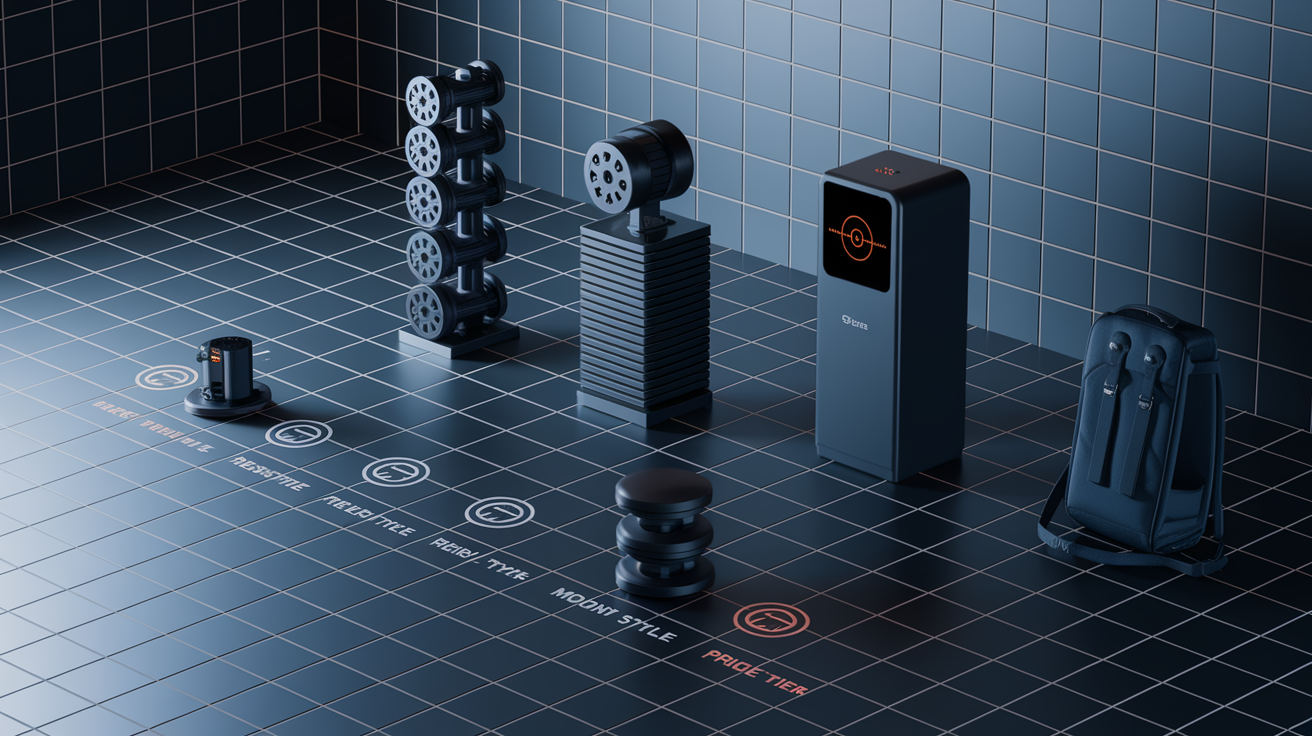
| Model | Footprint Dimensions | Cable Ratio | Max Resistance | Mount Type | Approx Price |
|---|---|---|---|---|---|
| REP Athena | 0 sq ft added (rack-mounted) | 1:1 lat/row, 2:1 adjustable | User plates (unlimited) | Rack-mounted | $500–$700 |
| Bells of Steel Cable Tower 2.0 | 6 sq ft (under 2.5′ × 2.5′) | 2:1 (1:1 adapter included) | User plates (unlimited) | Wall/floor/rack | $500–$800 |
| Body-Solid GDCC250 | ~40 sq ft | 1:1 | Dual 210 lb stacks | Free-standing | $1,500–$2,000 |
| Tonal 2 | 50.9″ H × 21.5″ W × 5.25″ D | Digital (variable) | Up to 250 lb digital | Wall-mounted (studs) | $3,500+ |
| MAXPRO SC | 4.1″ × 32.3″ × 3.6″ closed | Digital (variable) | 5–300 lb magnetic | Portable/door | $800–$1,000 |
The main differentiators are footprint size, resistance system, and installation method. Plate-loaded machines (REP Athena, Bells of Steel) offer unlimited scalability if you own heavy plates, but you’re changing weights manually between sets. Selectorized stacks (Body-Solid) let you drop a pin and go, but you’re capped at whatever the stack weighs. Smart digital units (Tonal 2, MAXPRO SC) save the most space and adjust resistance instantly, but you’re locked into subscription models or proprietary ecosystems. Cable ratio matters for felt resistance. 1:1 means you lift the full stack weight; 2:1 means you lift half the stack weight, which feels lighter but lets you move faster.
Space Requirements and Home Gym Fit
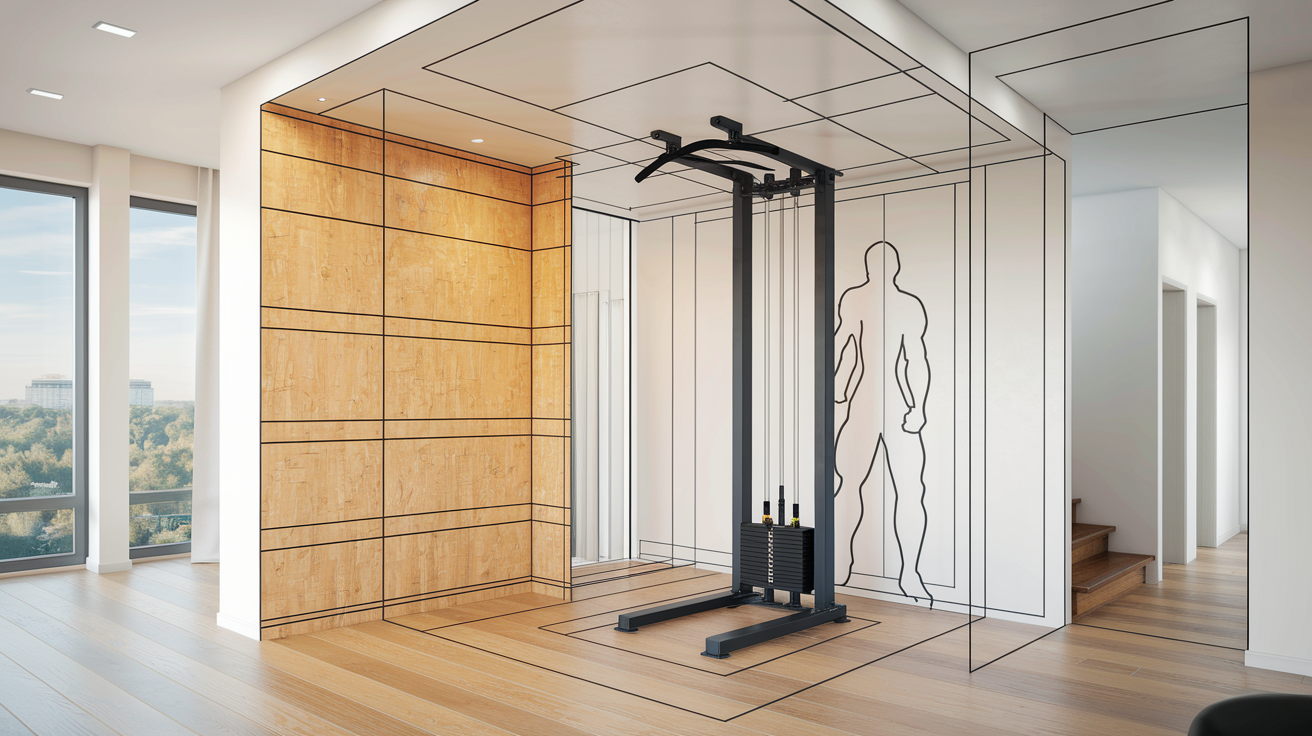
Most compact cable machines need 7–8 ft of ceiling height for full overhead movements like lat pulldowns and high cable crossovers. Taller lifters should add another 6–12 inches of clearance. Wall-mounted units like Tonal 2 or Bells of Steel require wooden studs spaced at standard 16 inch intervals and stick out roughly 5–6 inches from the wall when installed. Free-standing towers typically eat up 18–36 inches of depth and 24–48 inches of width, but you’ll need 4–6 feet of clearance around the machine to perform full cable extensions without smacking walls or furniture.
For rack-mounted options like the REP Athena, the footprint is zero added square footage because the cables bolt to your existing power rack uprights. This is the single best space saving move for lifters who already own a rack. Dedicated crossover units like the Body-Solid GDCC250 require the largest footprint (around 40 sq ft) because the wide column spacing (8 ft between towers) creates the proper cable angle for chest flyes and wide pulls.
Common space related mistakes to avoid:
Installing wall-mounted cable machines on drywall without hitting studs. These units carry 300–500 lb dynamic loads and will rip out of drywall anchors.
Placing a free-standing tower too close to a wall or rack, leaving no room to step back during exercises like cable squats or standing chest press.
Ignoring ceiling height for taller users. An 8 ft ceiling might work for someone 5’8″, but a 6’2″ lifter will hit the pulley stop mid rep on overhead moves.
Forgetting to measure doorways and stairwells before ordering. Many compact towers ship in one piece and weigh 150–400 lbs assembled.
Pros and Cons of Compact Cable Machines
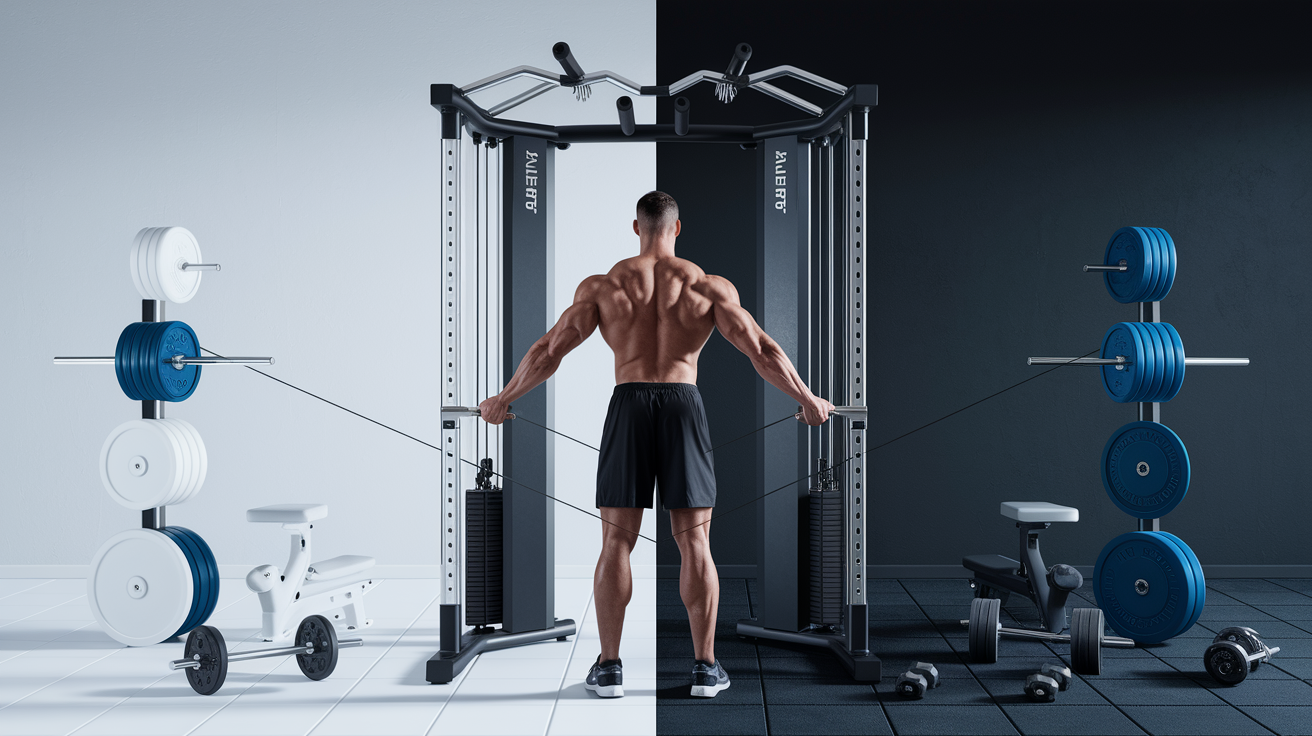
Compact cable machines deliver gym-quality movement patterns in a fraction of the space required by full dual-stack functional trainers. They enable 30+ exercises: cable crossovers, rows, lat pulldowns, tricep pushdowns, curls, cable squats, leg kickbacks, and face pulls, all from one station. Continuous cable tension keeps muscles loaded through the entire range of motion, which is harder to replicate with dumbbells or barbells on certain exercises like flyes or face pulls.
The main drawbacks are limited max resistance on most compact units and the installation effort required for wall-mounted or rack-mounted models. Many compact machines cap out at 150–200 lb weight stacks or rely on user-loaded plates, which means you’ll outgrow them faster if you’re already lifting heavy. Wall-mounted units need proper stud anchoring, and compact towers still weigh 150–400 lbs, making them difficult to move or reposition once assembled.
Key advantages and limitations:
Pro: Takes up 70–80% less floor space than a full dual-stack functional trainer while covering most of the same exercises.
Pro: Rack-mounted cable columns (like REP Athena) add cable work without using any additional floor space.
Pro: Plate-loaded models scale infinitely if you keep adding plates, making them future proof for strength gains.
Con: Compact stacks often max at 150–200 lbs; strong lifters will hit the ceiling on heavy lat pulldowns or rows within 1–2 years.
Con: Wall-mounted and rack-mounted units require proper installation. You can’t just set them down and start training.
Con: Limited on-board storage for accessories means you’ll need hooks or a separate bin for handles, ropes, and bars.
Installation and Setup Considerations
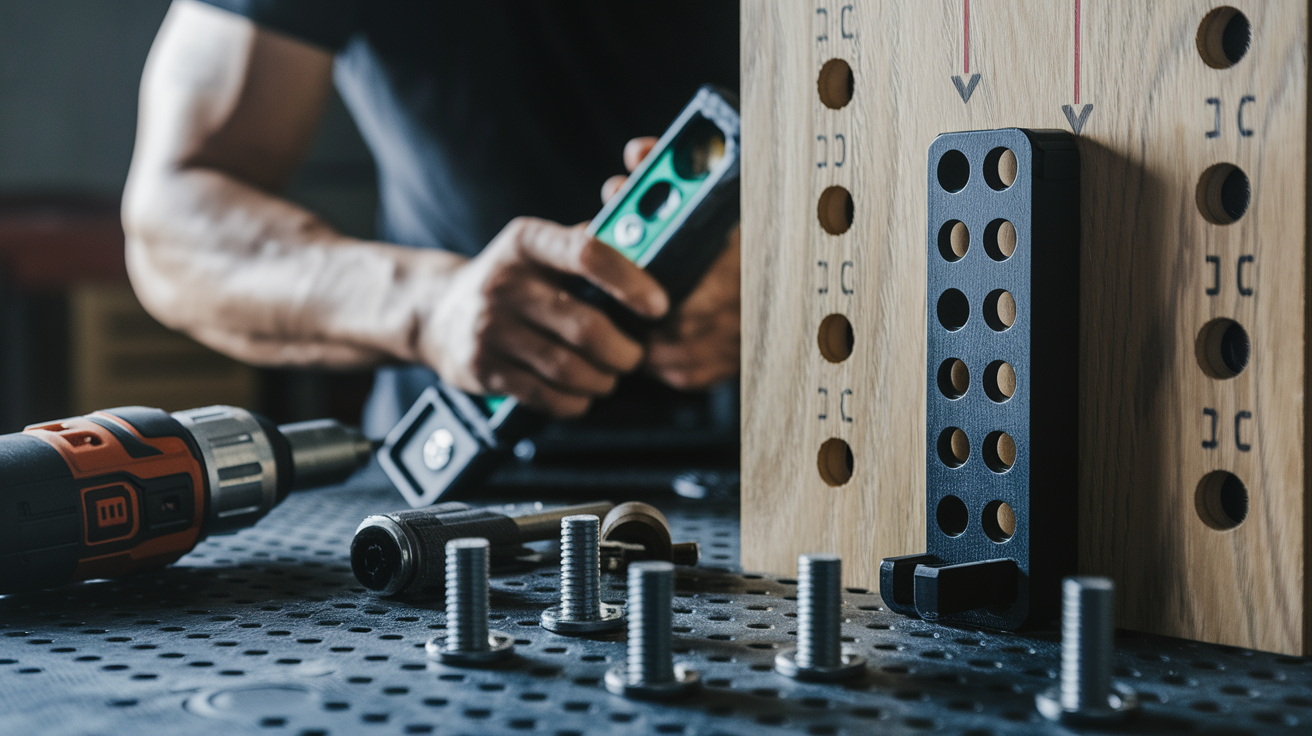
Wall-mounted cable units require locating wooden studs with a stud finder, marking drill points with a level to make sure the unit sits straight, and securing the machine with lag bolts rated for the machine’s dynamic load (typically 300–500 lbs). If you’re mounting to cinder block, concrete, or steel stud walls, you’ll need masonry anchors or reinforcement plates, and even then some manufacturers (like Tonal) explicitly void warranties for non-wood-stud installations.
Rack-mounted cable columns bolt directly to the uprights of compatible power racks using included hardware. The main concern is making sure your rack frame can handle the added weight and dynamic load. REP’s Athena and Ares systems are designed specifically for REP PR-4000 and PR-5000 racks and won’t fit Rogue, Titan, or Force USA racks without custom drilling. Free-standing compact towers sit on the floor but should still be anchored if you’re doing heavy single arm work that might tip the unit. Most manufacturers include floor anchor brackets; use them if the machine weighs under 300 lbs or if you train alone without a spotter.
Basic setup workflow:
Unbox and inventory all parts. Check for pulleys, cables, hardware bags, and any pre-assembled sections. Missing parts delay assembly by days.
Assemble the frame first, following torque specs in the manual. Under-tightened bolts will rattle; over-tightened bolts can strip threads on aluminum components.
Route and attach cables through pulleys, checking that each cable runs smoothly and doesn’t bind at any pulley position. Test the full range of motion before loading weight.
Load weight stacks or plates, then test each cable position with light resistance to confirm smooth travel and proper alignment. Adjust pulley height stops or cable tension if anything feels sticky or uneven.
Detailed Reviews of the Top Ranked Machines
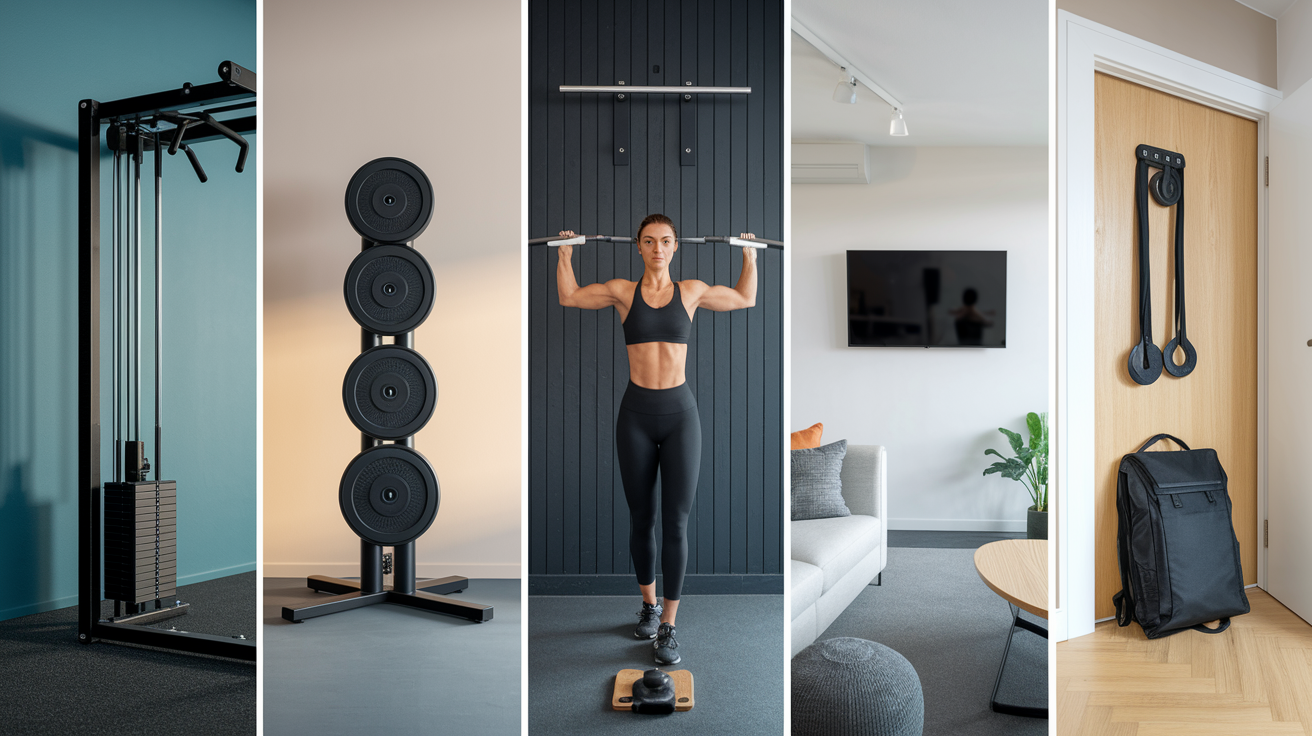
REP Athena (Plate-Loaded Single Column)
The REP Athena is a plate-loaded cable column that mounts to REP PR-4000 or PR-5000 power racks, adding serious cable functionality without stealing any floor space. It includes a 1:1 lat pulldown and low row station plus a 2:1 adjustable column with 21 height positions, covering most upper body cable work. The aluminum pulleys with sealed bearings run smooth and quiet, matching the feel of machines three times the price.
Ideal for rack owners who already have plates and want to add cable exercises without buying a second machine or expanding their footprint. Resistance scales with whatever plates you load, so it grows with your strength. The 1:1 ratio on the lat pulldown means you’re pulling the full weight of the plates (no mechanical advantage), so you get true progressive overload.
Notable pros include zero added footprint, lifetime frame warranty, and simple plate loading. The main con is that it’s a single column, so true crossover movements (two independent cables working simultaneously) aren’t possible. You’ll also spend time changing plates between exercises, which is slower than pin-drop selectorized stacks.
Bells of Steel Cable Tower 2.0
The Bells of Steel Cable Tower 2.0 is the best budget compact option, occupying just 6 sq ft of floor space and offering 33 cable height positions. It’s plate-loaded with a default 2:1 pulley ratio, but the kit includes a 1:1 adapter for heavier lat work. The 2024 redesign upgraded the pulleys from nylon to aluminum with sleeve bearings, which dramatically improved longevity. Owners of the original nylon version reported glazing and skipping by year five.
Best for lifters on a tight budget who already own plates and need a true space saver. You can bolt it to a wall stud, anchor it to the floor, or attach it to a compatible rack. The 33 height positions cover everything from low cable rows to high face pulls and overhead tricep extensions.
Pros include the lowest price point in this list, a tiny footprint, and the flexibility to mount it wherever you have solid anchoring. Cons are the sleeve bearings (not sealed), which wear faster than sealed bearings and may need replacement after heavy use, and the single column limitation (no dual cable crossovers).
Body-Solid GDCC250 (Compact Crossover)
The Body-Solid GDCC250 is a dedicated dual column crossover station with 8 feet of spacing between the towers, creating the proper cable angle for wide chest flyes and lat crossovers. It features dual 210 lb selectorized stacks with a 1:1 pulley ratio, meaning you lift the full stack weight. The 11-gauge steel frame and aluminum pulleys on sealed bearings are built to last 10–15+ years in home use.
Ideal for serious lifters who prioritize dual cable exercises and want a true commercial gym feel at home. The wide column spacing lets you perform crossovers with a full stretch at the bottom, which is hard to replicate on narrow functional trainers. The 1:1 ratio delivers more resistance per stack pound, but it also means the cables move fast if you’re used to 2:1 machines.
Notable pros include lifetime frame and weld warranty, 3 year coverage on pulleys and cables, and true wide stance dual cable work. The main con is the 40 sq ft footprint. It’s the largest machine on this list and won’t fit in tight apartment gyms. It’s also a single purpose machine with no integrated rack or Smith, so you’ll need separate equipment for squats and presses.
Tonal 2 (Wall-Mounted Smart)
Tonal 2 is a wall-mounted smart cable machine with up to 250 lb of digital electromagnetic resistance, adjustable in 1 lb increments via touchscreen or wearable ring controller. It measures just 50.9″ H × 21.5″ W × 5.25″ D and protrudes only 6 inches from the wall, making it the smallest footprint serious cable machine available. The system includes AI coaching, a Smart View camera for form feedback, and training modes like eccentric overload and chain mode.
Best for apartment dwellers, renters with zero floor space, and tech-forward lifters who want guided programming and instant resistance changes. The quiet magnetic resistance and compact profile make it apartment-friendly, and the on-screen library covers 200+ exercises with video demos.
Pros include the smallest physical footprint, silent operation, precise 1 lb resistance increments, and a strong smart ecosystem with regular software updates. Cons are the mandatory subscription (12 month minimum for full features), the requirement for wooden stud walls (won’t work on concrete, cinder block, or steel stud construction without major modifications), and no barbell or leg press options. Accessories are proprietary and sold separately.
MAXPRO SC (Portable)
The MAXPRO SC is a portable cable machine that folds into a 4.1″ × 32.3″ × 3.6″ package and fits in a backpack. It delivers 5–300 lb of digital magnetic resistance via a smartphone app and can mount to any door using the included brackets (no drilling, no stud finding required). The kit includes a long bar, handles, ankle and wrist straps, and door mount hardware.
Ideal for military personnel, frequent travelers, and anyone who moves apartments or homes regularly. It’s the only true portable cable machine on this list, and it works well for moderate intensity full body training when you can’t access a real gym. The magnetic resistance is quiet and smooth, and the door mount system takes under two minutes to set up.
Pros include true portability, silent magnetic resistance, quick setup with no permanent installation, and a full accessory kit included in the box. Cons are the symmetric resistance curve (no eccentric overload like Tonal), a clunky app interface that owners report lags or disconnects occasionally, and lower quality accessories compared to selectorized stack trainers. It’s a great travel or backup solution but not a permanent replacement for a serious home gym cable station.
Final Words
In the action, we ranked five compact cable machines by footprint, max resistance, cable ratio, and best use. Each pick includes specs, price range, and who it fits.
We also showed a comparison chart, covered space and installation needs, and listed pros and cons so you can choose the right style for your room and routine.
Pick the option that fits your space. A compact cable machine for home gym gives full-body variety without crowding your floor, and it makes steady progress feel doable.
FAQ
Q: How much space do I need for a compact cable machine at home?
A: A compact cable machine typically needs 18–24 inches depth for the unit, 4–6 ft of front clearance for full cable extension, and about 7–8 ft ceiling height for overhead moves.
Q: Do wall-mounted cable machines save space and what do they require?
A: Wall-mounted cable machines save the most space and suit small rooms, but they require studs spaced about 16 inches, lag bolts, and a wall that can handle 300–500 pounds of load.
Q: What resistance range do compact cable machines usually offer?
A: Compact cable machines usually offer roughly 150–200 pounds of resistance, with some models or add-on stacks reaching higher for stronger lifters.
Q: Can I do full-body workouts on a compact cable machine?
A: You can do full-body workouts on a compact cable machine—presses, rows, squats, pulldowns, and single-leg moves—if the cable range and accessories match your goals.
Q: How hard is it to install a wall-mounted unit and what are the steps?
A: Installing a wall-mounted unit is doable with basic tools: locate studs, mark and level, drill pilot holes, use lag bolts, then test load and cable alignment.
Q: What are the main pros and cons of compact cable machines?
A: Compact cable machines offer versatility, small footprints, and full-body options; downsides include lower max resistance, installation needs, and limited accessory storage.
Q: Are portable cable stations a good fit for small apartments?
A: Portable cable stations are a good fit for small apartments because they’re compact and storable; confirm footprint, resistance, and that noise or floor protection meet your space limits.
Q: What should I check before buying a compact cable machine?
A: Before buying, check footprint dimensions, cable ratio (1:1 vs 2:1), max resistance, mount type, accessory compatibility, ceiling height, and approximate price range.
Q: How does cable ratio affect training on compact machines?
A: Cable ratio affects feel and required weight: 1:1 gives direct resistance, 2:1 halves the cable travel so you need less weight for the same force.
Q: What basic maintenance does a compact cable machine need?
A: A compact cable machine needs regular checks: lubricate pulleys, tighten bolts, inspect cables for fray, and replace worn parts to maintain smooth, safe operation.

