
Think you need a big garage to get strong? Think again.
Compact all-in-one home gyms now pack rows, pulldowns, leg presses, and even smith-style lifts into footprints you can fit in a spare bedroom or a closet wall.
This post shows the best compact options, from packable suspension systems to wall-mounted smart rigs to fold-in racks and mini cages, so you can match space, budget, and how heavy you want to lift.
If you want real strength work without stealing your living room, read on for clear picks and quick buying tips.
Top Compact Multi‑Function Home Gyms for Small Spaces
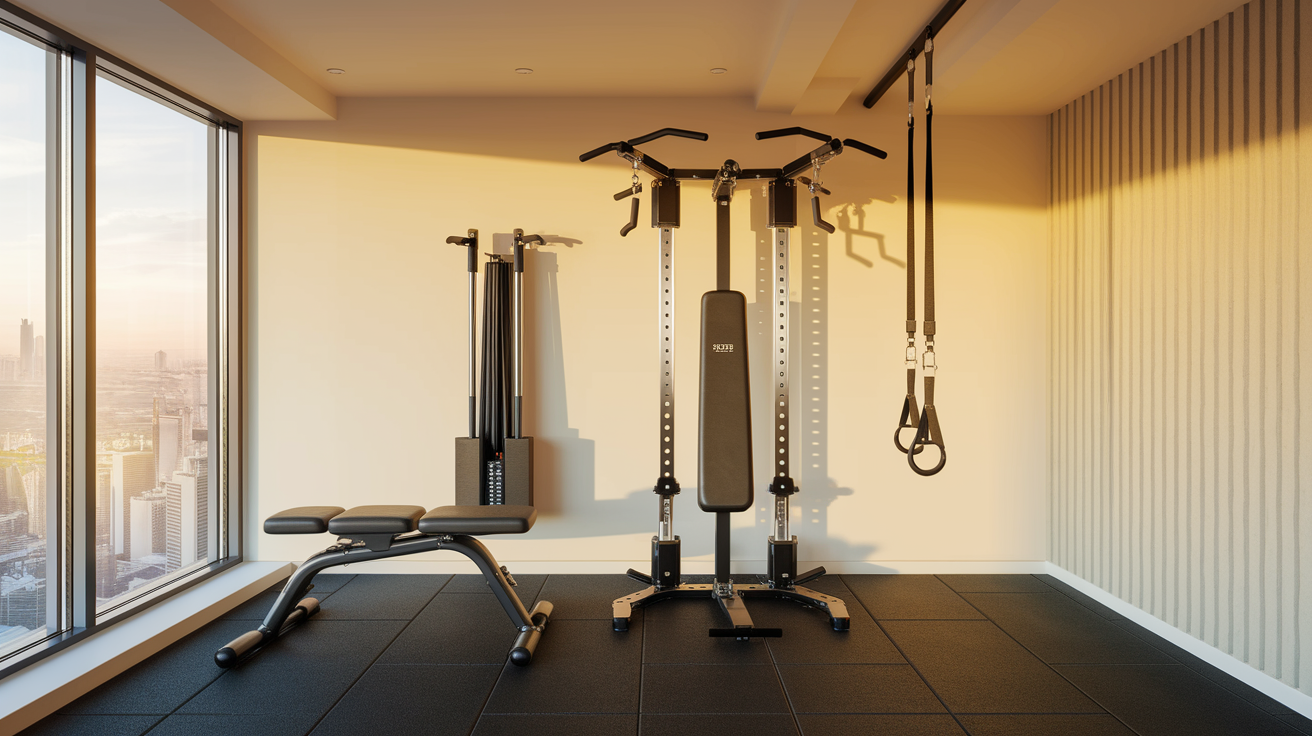
Compact all-in-one home gyms squeeze strength stations, adjustable resistance, and bodyweight platforms into footprints under 8 ft × 6 ft. Most units deliver anywhere from 50 to 200 lb of resistance through cables, plate stacks, or power rods, and you’re looking at $300 to $2,000 depending on what you need. These systems fit into spare bedrooms, garage corners, or apartment living areas without eating up the floor space a full rack or multi-station cage demands.
1. Bowflex PR1000 Home Gym
Dimensions: 103 in L × 80 in W × 82 in H
Price range: $$
Primary functions: Power rod resistance up to 210 lb, lat pulldown, leg extension, chest press, rowing station
Key strengths: Lightweight tension rods reduce overall weight, includes cardio rowing option, supports up to 25 exercises in a single footprint.
2. Tonal
Dimensions: 50.9 in H × 21.5 in W × 5.25 in D (wall-mounted)
Price range: $$$
Primary functions: Electromagnetic cable arms delivering up to 100 lb per arm, auto-adjusting resistance, real-time rep counting
Key strengths: Wall-mounted design saves floor space, folds flat when not in use, offers barbell-style lift variety without needing plates.
3. PRx Performance ONE Fold‑In Rack
Dimensions: 49 in W × 90 in H × 6.7 in D (folded), extends to 27.5 in D
Price range: $$
Primary functions: Barbell squat and bench press station with rated capacity up to 1,000 lb
Key strengths: Folds to under 7 inches depth for wall storage, lifetime warranty, ideal for plate-based heavy training in tight quarters.
4. TRX All‑in‑One Trainer Bundle
Dimensions: 53 in L × 1.5 in D × 6 in W (packable)
Price range: $
Primary functions: Suspension straps and four variable-resistance bands, bodyweight exercises only
Key strengths: Ultra-portable, packs into a storage bag, includes 6-year warranty and 30-day app trial, perfect for travel or closet storage.
5. Technogym Bench
Dimensions: 44.5 in L × 14.8 in W × 17.9 in H
Price range: $$$
Primary functions: Free-weight dumbbell exercises, resistance bands, mat-based movements, includes 5 pairs of dumbbells 5–20 lb
Key strengths: Integrated storage compartments, sleek furniture-grade design, bench-based programming supports 200+ exercises per manufacturer claim.
6. Force USA G6 All‑in‑One Trainer
Dimensions: 72 in W × 63 in D × 91 in H
Price range: $$$$
Primary functions: Two 200-lb plate stacks, Smith machine, cable crossover, chin-up station, leg press attachment, landmine post
Key strengths: Commercial-grade build with lifetime structural warranty, supports heavy compound lifts and isolation work, all-in-one design reduces need for separate machines.
7. RitFit Power Cage with Bench
Dimensions: 44 in W × 52 in L × 85 in H
Price range: $$
Primary functions: Power rack rated to 1,000 lb, lat pulldown pulley, T-bar row attachment, dip station, included adjustable bench
Key strengths: Combines free-weight barbell station with cable and bodyweight exercises, accessible price point for full-service power cage.
These products split into three buckets. Suspension and bodyweight systems for absolute minimal footprints (TRX). Wall-mounted or foldable units that reclaim space when stored (Tonal, PRx). And compact multi-station cages that stay in place but fit smaller than traditional gym setups (Bowflex, RitFit, Force USA, Technogym). Choose based on whether you prioritize portability, heavy free-weight training, or variety without needing barbells and plates.
Side‑by‑Side Comparison of Leading Compact Home Gyms
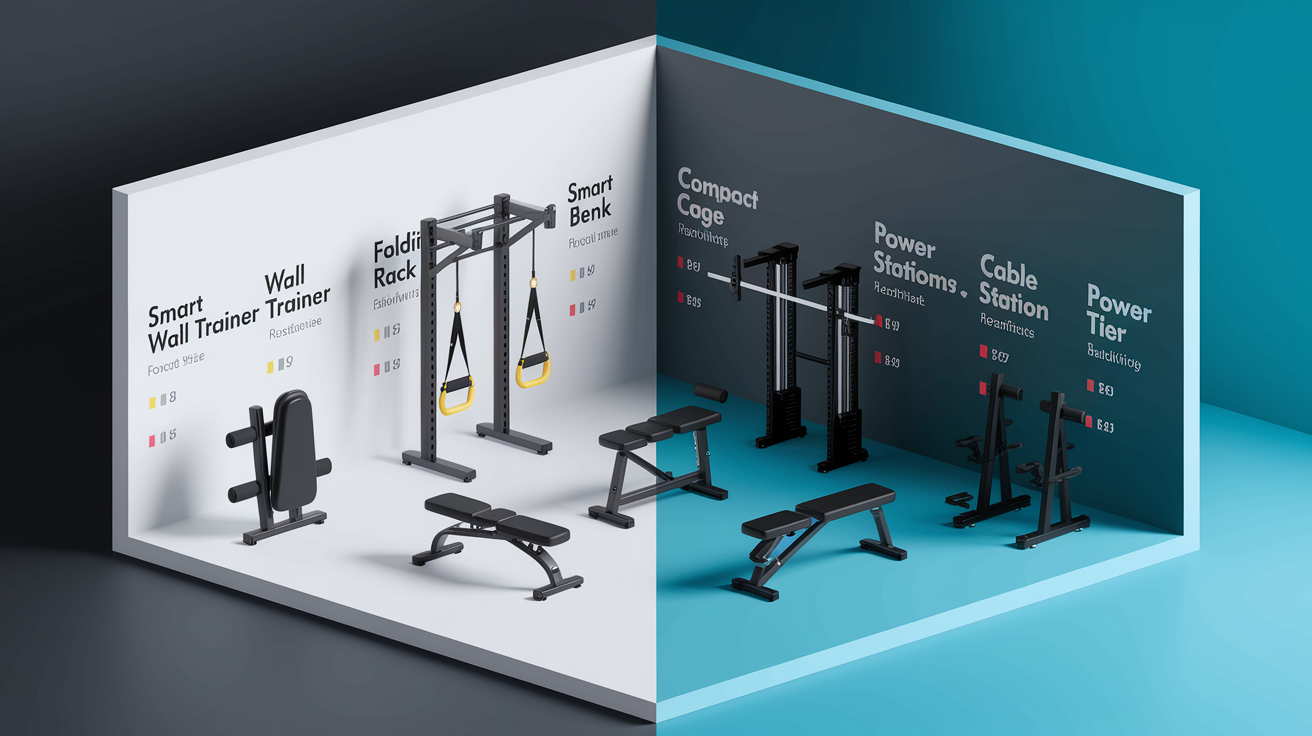
When shopping for a compact all-in-one home gym, side-by-side specs reveal which models match your training style, available floor space, and budget. Comparing footprint, resistance type, key functions, and price bracket in one view helps you spot the trade-offs between portability, load capacity, and feature set before you buy.
| Model Name | Footprint (L×W×H) | Resistance Type | Key Functions | Price Range | Best For |
|---|---|---|---|---|---|
| Bowflex PR1000 | 103 × 80 × 82 in | Power rods up to 210 lb | Lat pulldown, leg extension, rowing, chest press | $$ | Mid-range strength + cardio in one unit |
| Tonal | 50.9 × 21.5 × 5.25 in | Electromagnetic arms, 100 lb per arm | Cable exercises, auto-adjust resistance, rep tracking | $$$ | Smart strength with zero floor space |
| PRx Fold‑In Rack | 49 × 90 × 6.7 in (folded), extends to 27.5 in | Free weight, 1,000 lb capacity | Barbell squats, bench press, overhead press | $$ | Barbell training that hides against wall |
| TRX All‑in‑One | 53 × 1.5 × 6 in (packable) | Bodyweight + variable bands | Suspension exercises, banded resistance | $ | Ultra-portable, travel-ready training |
| Technogym Bench | 44.5 × 14.8 × 17.9 in | Free weights 5–20 lb + bands | Dumbbell, band, mat-based movements | $$$ | Furniture-style design for shared spaces |
| Force USA G6 | 72 × 63 × 91 in | Dual 200-lb stacks + free weight | Smith machine, cable crossover, leg press | $$$$ | Commercial-grade heavy training |
| RitFit Power Cage | 44 × 52 × 85 in | Free weight, 1,000 lb rated | Power rack, lat pulldown, T-bar row, dip station | $$ | Full barbell station + cable versatility |
The standout differences? Tonal and PRx deliver the smallest permanent footprints through wall mounting and folding arms, while TRX packs into a bag for true portability. Bowflex offers a mid-range blend of strength and rowing for users who want variety without free weights. Force USA and RitFit provide the most exercise stations and heaviest load capacities but occupy the largest floor and ceiling space. Technogym splits the difference with a compact bench and included light dumbbells, but caps max resistance at 20 lb per hand unless you purchase heavier pairs separately.
Detailed Reviews of Top Compact Multi‑Function Gyms
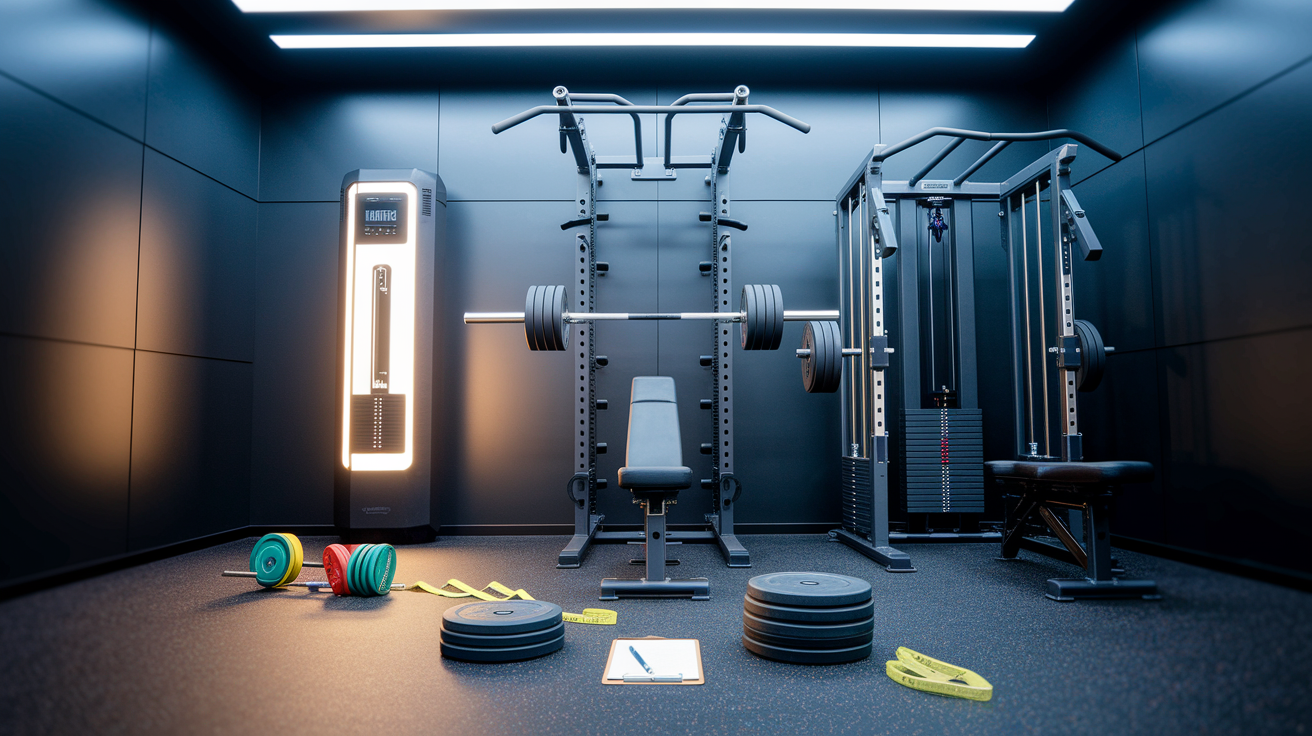
Tonal
Tonal’s electromagnetic resistance system replicates barbell, dumbbell, and cable movements through two adjustable arms that extend from a wall-mounted screen. You can perform squats, deadlifts, presses, rows, and isolation exercises by swapping handles and adjusting arm height on a vertical rail. The screen displays real-time rep counts, tracks weight progression, and auto-adjusts load mid-set when the system detects you hitting failure or cruising through reps. This makes progressive overload automatic without manually changing pins or plates.
The unit mounts to wall studs and protrudes just over 5 inches when arms are folded, freeing floor space entirely when not in use. Build quality centers on machined aluminum arms, a steel mounting plate rated for dynamic loads, and sealed electromagnetic resistance modules that require zero maintenance. The screen is commercial-grade and the pulley system runs silently. Downsides: you must purchase the smart accessory bundle separately for the bench, barbell, and rope attachments, pushing total investment higher than the base unit price. The $49/month membership is required to unlock guided programs and auto-adjusting features.
Pros:
Wall-mounted design reclaims all floor space when arms fold flat. Auto-adjusting resistance and digital spotting remove need for manual weight changes. Quiet electromagnetic system with no moving plates or clinking metal.
Cons:
Requires separate purchase of bench, bar, and handles to maximize exercise variety. Monthly subscription mandatory for interactive features and programming. Maximum 100 lb per arm may limit advanced lifters on heavy compound movements.
PRx Performance ONE Fold‑In Rack
The PRx Fold-In Rack is a wall-mounted barbell cage that extends 27.5 inches from the wall for squats, bench presses, and overhead presses, then folds back to 6.7 inches depth for storage. J-hooks and safety spotter arms adjust on numbered holes along steel uprights, and the frame is rated to support 1,000 lb. This makes it suitable for heavy progressive barbell training without needing a permanent footprint. The fold mechanism uses gas-assist struts that require minimal effort to deploy and retract.
Frame construction uses 3×3-inch 11-gauge steel with laser-cut holes and powder-coat finish. All hardware is Grade 8 bolted, and welds are reinforced at stress points. The rack ships with a limited lifetime warranty on the frame. Performance is stable during heavy lifts when properly mounted to studs or concrete, with no wobble reported in user reviews. The main limitation: you supply your own barbell, plates, and bench, so budget those separately. Installation requires secure wall mounting and at least 8 feet of ceiling clearance for overhead lifts.
Pros:
Folds to under 7 inches, smallest stored depth among barbell racks. Lifetime structural warranty and commercial-grade steel construction. Supports heavy compound lifts up to 1,000 lb rated capacity.
Cons:
Rack only, barbell, plates, and bench sold separately. Installation demands secure wall studs or concrete mounting. Limited exercise variety compared to cable or multifunction systems.
RitFit Power Cage with Bench
The RitFit Power Cage bundles a 1,000-lb-rated barbell rack, adjustable bench, lat pulldown pulley, T-bar row post, dip station, and landmine sleeve into a 44×52×85-inch steel frame. This lets you perform squats, bench presses, rows, pulldowns, dips, and barbell-accessory lifts in a single station. The cage uses 2×2-inch steel tubing with numbered hole spacing for J-hook and safety-bar adjustments. Pulley stations mount to the top crossbar with aircraft cable and sealed bearings, delivering smooth lat and triceps movements.
Build quality is solid for the price bracket, with powder-coated steel, reinforced welds at joints, and a 3-year frame warranty plus 1-year parts coverage. The bench is fully adjustable from flat to incline and includes leg-roller attachments for leg curls and extensions. Stability is good on level floors. User reviews note minimal sway during heavy squats when the cage is anchored or weighted. The cage doesn’t include a barbell, weight plates, or collars, so factor those purchases into your total budget. Assembly takes 2 to 3 hours with two people.
Pros:
Combines barbell rack, cable pulley, and accessory stations in one compact frame. Includes adjustable bench with leg-curl/extension attachments. Affordable entry point for full power-rack versatility.
Cons:
Barbell and weight plates sold separately. No smart features, tracking, or guided programming. Assembly complexity and time commitment higher than plug-and-play systems.
Space Requirements and Room‑Fit Considerations
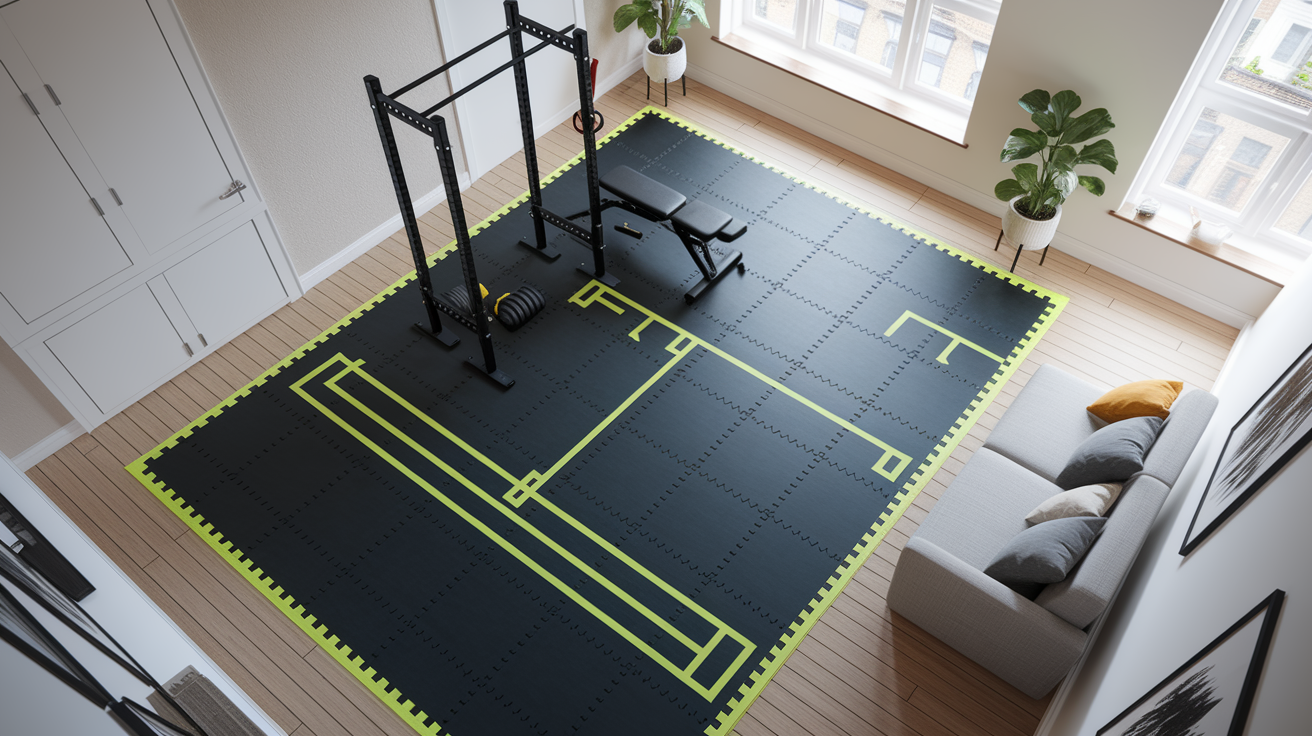
Compact all-in-one home gyms still demand clear floor space, vertical clearance, and room for cables, benches, or barbell movements to extend safely. A unit with a 4×4-foot footprint might actually need 6×8 feet of usable area once you account for user position, arm extension, and equipment swing. Measure your available room before ordering, and check ceiling height to ensure overhead presses, lat pulldowns, or suspension exercises fit without hitting fans or lights.
Most compact gyms require 6 to 8 feet of vertical clearance for overhead barbell lifts, suspension straps, or cable pulleys. Wall-mounted units like Tonal or PRx need at least 6 feet of clear space in front of the wall when deployed. Freestanding cages and multifunction stations need 2 to 3 feet of clearance on all sides for safe entry, exit, and spotter access. Flooring matters too. Rubber mats or interlocking foam tiles protect subfloors from dropped weights and reduce noise, while also stabilizing equipment on uneven surfaces.
Key room-fit factors:
Clearance space: Add 2 to 3 feet beyond the equipment footprint on all sides for movement, spotting, and safe exercise range.
Ceiling height: Confirm at least 8 feet for barbell overhead presses. 7 feet minimum for bodyweight or cable exercises without overhead extension.
Flooring: Use rubber gym mats or heavy-duty foam tiles under weight-bearing equipment to protect floors and dampen sound.
Wall proximity: Wall-mounted systems need secure stud or concrete anchoring. Freestanding units should sit away from walls to allow cable or bench adjustments.
Apartments and shared living spaces benefit from wall-mounted or foldable designs that reclaim floor area daily. Garage corners or spare bedrooms can accommodate freestanding cages if you leave the unit in place permanently. Bedroom corners work for compact benches or suspension systems as long as you can move furniture out of the exercise zone. Always test-fit dimensions with painter’s tape on the floor and measure door widths if you need to move assembled equipment through hallways.
Assembly Difficulty and Maintenance Expectations
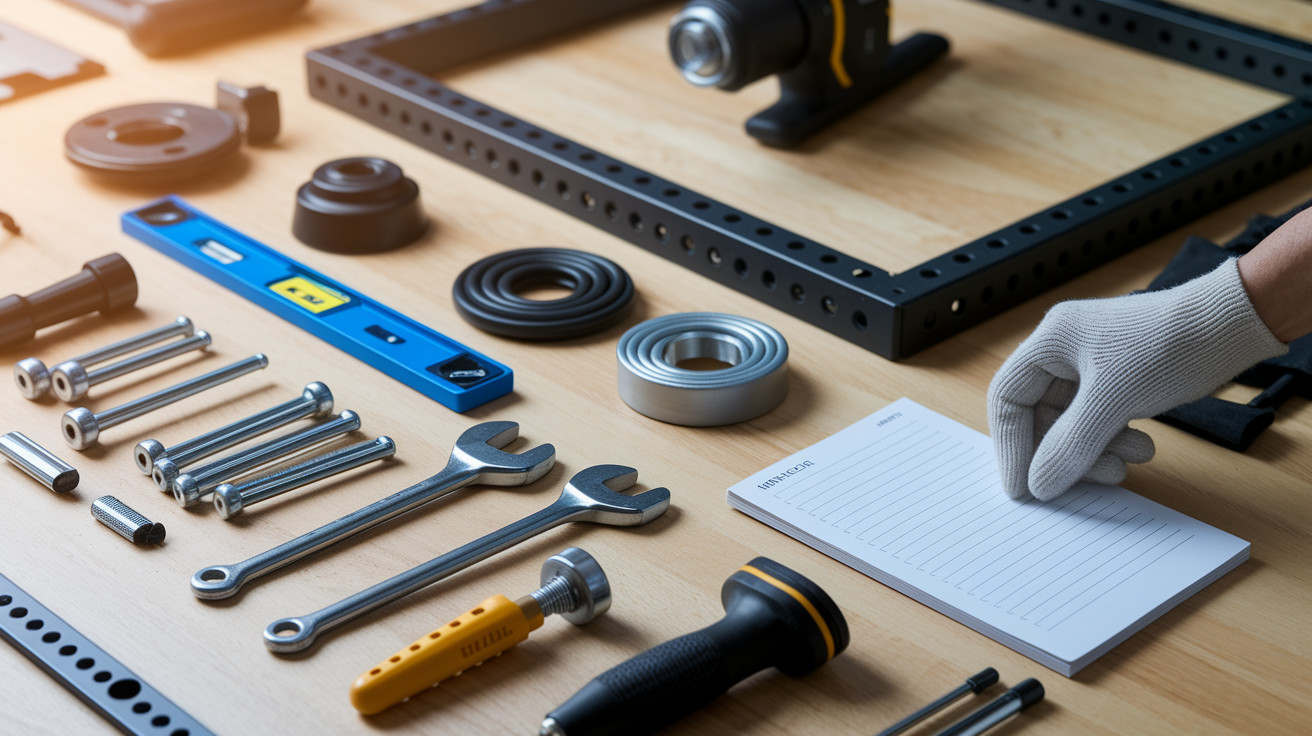
Compact multifunction gyms range from plug-and-play wall mounts that require stud-finder and drill work to multi-hour cage assemblies with dozens of bolts, pulleys, and cable routing. Simple systems like TRX or Tonal mount in under an hour with basic tools. Mid-complexity units such as Technogym Bench or Bowflex PR1000 take 1 to 2 hours and include pre-assembled sections that bolt together. Full power cages like RitFit or Force USA demand 2 to 4 hours, two people, and methodical part identification to avoid mistakes that compromise stability.
Required tools typically include socket wrenches, Allen keys (often supplied), adjustable wrenches, and a level. Wall-mounted systems need a stud finder, drill, and appropriate lag bolts or concrete anchors. Read the manual completely before starting, lay out all parts by section, and tighten bolts finger-tight during initial assembly, then torque to spec once alignment is confirmed. Skipping this step causes misalignment that stresses welds and pulley mounts over time.
Maintenance keeps your compact gym safe and smooth. Inspect cables monthly for fraying, check all bolts quarterly for looseness, and lubricate pulley bearings and guide rods every 3 to 6 months with silicone spray or manufacturer-recommended grease. Electromagnetic systems like Tonal require no mechanical maintenance, but keep the screen clean and software updated. Power-rod systems need periodic rod inspection for cracks or bends. Weight stacks should glide without sticking. If they bind, clean guide rods and apply light oil.
Essential ongoing checks:
Cable inspection: Look for frayed strands or kinks every month. Replace cables immediately if damage is visible to prevent mid-lift failure.
Bolt retightening: Check all frame bolts, pulley mounts, and safety-bar connections every 3 months. Vibration loosens hardware over time.
Pulley lubrication: Apply silicone spray or light machine oil to pulley axles and guide rods every 6 months to maintain smooth, quiet operation.
Long‑Term Durability and Build Quality Factors
Durable compact home gyms use 11 to 14-gauge steel for frames, which translates to wall thicknesses between 0.075 and 0.120 inches. Thicker steel resists flex under heavy loads and prevents frame wobble during dynamic movements like pull-ups or cable crossovers. Look for welded joints with visible bead reinforcement and gusset plates at stress points like upright-to-base connections. Powder-coat or commercial-grade paint finishes protect against rust and wear, especially in humid garages or basements.
Pulley quality determines how smooth cables run and how long the system lasts. Sealed ball bearings outlast bushings and reduce friction, keeping resistance consistent across the range of motion. Aircraft-grade or coated steel cables handle repeated bending better than standard galvanized wire. Resistance systems matter too. Electromagnetic units have no moving parts to wear out, while plate stacks need machined guide rods and durable weight plates that don’t crack or chip. Power-rod systems rely on fiberglass or composite rods that can degrade with UV exposure or over-tensioning, so store them away from direct sunlight and follow manufacturer resistance limits.
Warranties signal manufacturer confidence. Lifetime structural warranties on frames indicate heavy-gauge steel and solid engineering. Multi-year coverage on moving parts (pulleys, cables, resistance modules) suggests quality components. Short warranties (60 days to 1 year) often accompany budget builds with thinner steel, plastic pulleys, or minimal quality control. Check user reviews for reports of frame cracking, cable snapping, or pulley seizing within the first year. These are clear durability red flags.
Red flags indicating poor construction:
Thin steel tubing: Frames made from 16-gauge or thinner steel flex under load and develop weld cracks at joints after months of use.
Loose joint points: Wobble or play at upright connections, crossbar mounts, or pulley brackets means inadequate hardware torque or undersized bolts.
Plastic pulleys: Non-sealed plastic wheels wear grooves quickly, create jerky cable motion, and often crack under sustained tension or side load.
Final Words
We ran through the best compact multi-function home gyms, then laid out a side-by-side comparison and three detailed reviews to show real performance and build tradeoffs.
You also got practical fit tips, assembly expectations, and durability signs to watch for so you can match a model to your space and strength goals.
If you want one piece that does it all, a compact all-in-one home gym is an easy win for small spaces. Pick the model that fits your room, budget, and routine, and start lifting.
FAQ
Q: How much floor and ceiling space does a compact multi-function home gym need?
A: A compact multi-function home gym needs about 20–40 square feet of floor space and 6–8 feet of ceiling clearance, plus extra room for cable travel, bench movement, and user height.
Q: What resistance range do compact multi-function home gyms typically offer?
A: Compact multi-function home gyms typically offer 50–200 pounds of resistance or plate-loaded options, which suits most beginners to intermediate lifters; pick higher resistance if you plan heavy strength training.
Q: What primary functions do compact multi-function home gyms include?
A: Compact multi-function home gyms include cable systems, adjustable resistance mechanisms, bodyweight platforms, pull-up stations, and often a bench or pulley attachments for presses, rows, and leg exercises.
Q: Are compact multi-function home gyms suitable for apartments?
A: Compact multi-function home gyms are suitable for apartments if the footprint and noise fit your space; choose rubber flooring, quieter attachments, and check building rules or neighbor noise sensitivity first.
Q: How long does assembly take and what tools are required?
A: Assembly time for compact multi-function home gyms ranges from one to several hours; common tools include wrenches, screwdrivers, and sockets, and heavier units may need two people to lift and align parts.
Q: What routine maintenance keeps a compact gym functioning well?
A: Routine maintenance for compact multi-function home gyms includes regular lubrication, monthly cable and pulley inspections, and frequent bolt checks to prevent loose parts and keep motion smooth and safe.
Q: Which build features indicate a durable compact home gym?
A: Durable compact home gyms use 11–14 gauge steel frames, reinforced welds, sealed bearings, coated cables, and heavy-duty pulleys, all of which reduce wobble and improve long-term performance.
Q: What are common red flags that show poor construction?
A: Common red flags of poor construction are thin-gauge steel, plastic pulleys, loose welds or joints, excessive frame wobble, and cheaply coated cables that fray or stretch quickly.
Q: How do I choose the right compact multi-function gym for my needs?
A: Choose a compact multi-function gym by matching footprint, resistance type, key attachments, build quality, and budget to your goals; test motion smoothness and progressive loading if you can.
Q: What price range should I expect for compact multi-function home gyms?
A: Compact multi-function home gyms usually cost between $300 and $2,000, with higher prices reflecting sturdier frames, smoother pulleys, better warranties, and more included resistance or attachments.

