
Think you need a big room to build a real home gym?
Think again.
Compact home gym machines let you train hard without turning your living room into a storage unit.
They use vertical layouts, fold-away frames, and adjustable resistance to pack rows, presses, and squats into a corner.
This post breaks down five top picks—tempo-style all-in-ones, wall-mounted racks, folding cardio, and adjustable dumbbells—that prove small spaces can handle serious workouts.
Pick one, reclaim your floor, and actually stick to a routine.
Best Space‑Saving Home Gym Equipment (At a Glance)
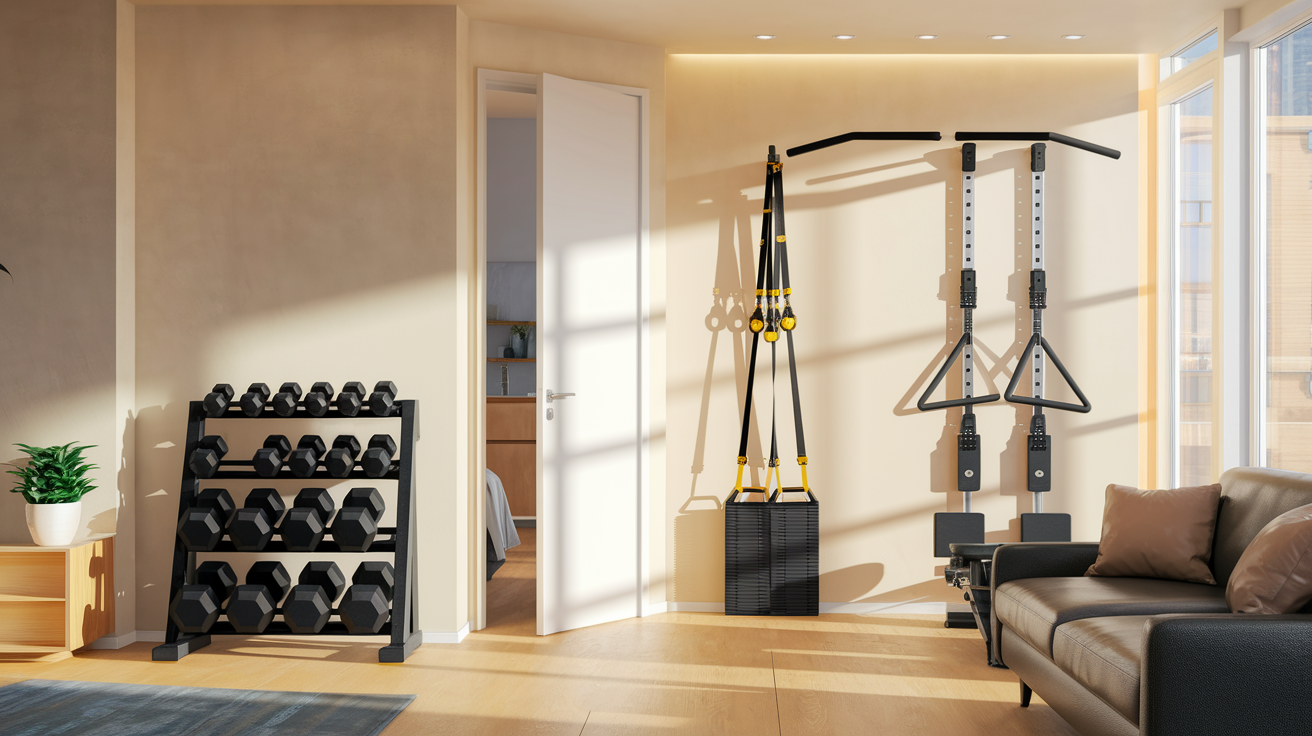
If you’ve ever tried squeezing a workout into a studio apartment, you know what happens. Most gym equipment swallows your floor space before you can blink.
That’s the problem compact home gym machines solve. They’re built to give you real workouts without turning your living room into a storage unit.
Here are five picks that prove you don’t need a garage to train hard:
- Tempo Move costs around $500 and takes up a cabinet footprint of 22″ H × 13.5″ W × 13.5″ D. It’s got built-in AI rep counting and interchangeable dumbbells up to 35 lbs, perfect for streaming strength classes in tight corners.
- Bowflex PR1000 runs $600 to $800 with a footprint of 103″ L × 80″ W × 82″ H. Power-rod resistance goes up to 210 lbs, plus there’s a built-in rowing station. You can train 25+ movements on one frame.
- PRx Profile ONE Squat Rack stays under $1,000. It’s wall-mounted and folds flush to under 5″ depth. Rated to 1,000 lbs and perfect for barbell work if you’ve got standard stud spacing.
- TRX All-in-One Trainer Bundle costs under $500 and packs down to 53″ L × 1.5″ D × 6″ W. Suspension straps plus four resistance bands deliver functional training you can toss in a duffel.
- Aviron Strong Go Rower is $1,599, measures 84″ L × 27″ W × 48″ H, and stores vertically. Combo magnetic and air resistance gives you smooth, quiet rowing for cardio without a treadmill eating your floor.
These machines all do the same thing. They replace big, single-purpose equipment with vertical designs, fold-away frames, or stackable resistance. Most measure under 6 feet in one dimension or collapse to less than 10 inches when stowed.
If your floor plan is tight, start with one piece from this list. You’ll get a foundation you can build on without moving furniture every time you work out.
Folding Treadmills and Cardio Machines for Small Spaces
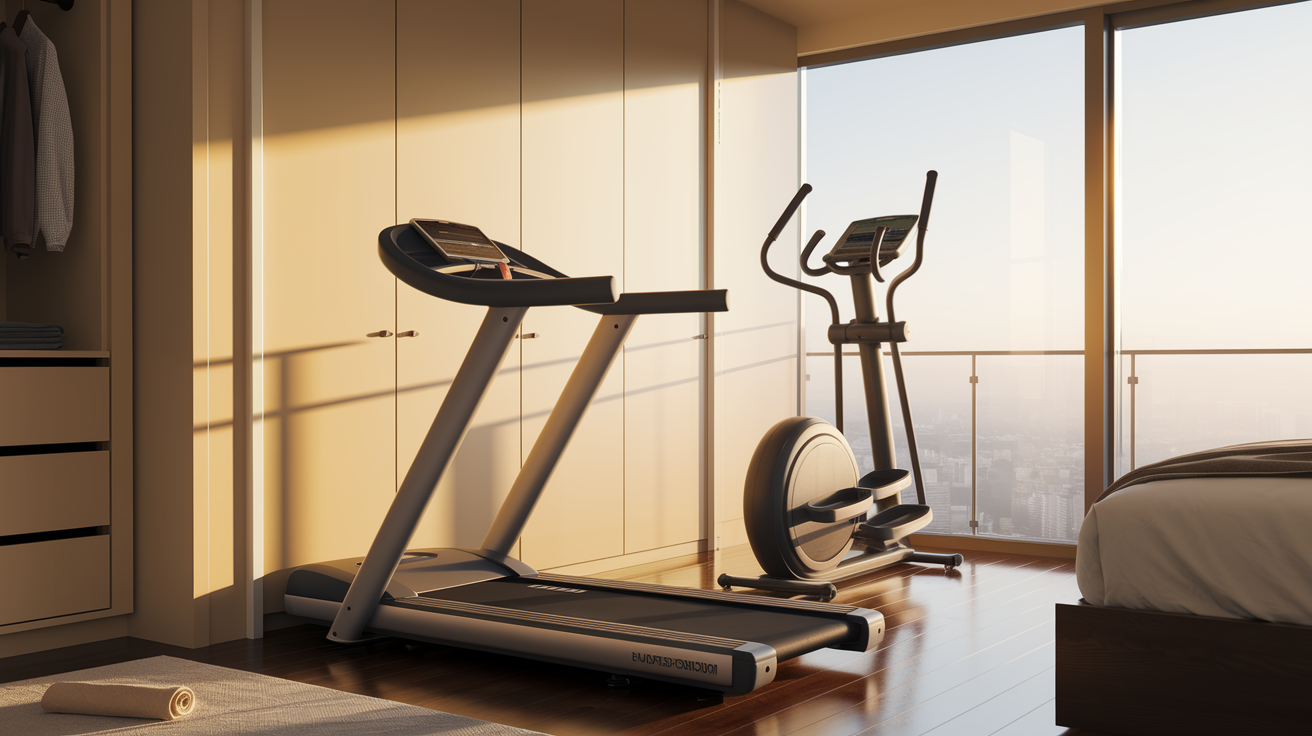
Cardio equipment usually hogs space. But folding treadmills and compact ellipticals flip that.
Modern folding treadmills collapse to under 10 inches in storage height. You can slide them under a bed or tuck them behind a door. The NordicTrack Commercial 1750 takes up about 21 square feet when open and folds via an EasyLift Assist hinge, so you’re not wrestling a 300-pound deck every session. Most units pack a 3.5 CHP motor, motorized incline to 12%, and a touchscreen for streaming classes. Features that used to require a dedicated room.
Compact ellipticals follow the same logic but trade the deck for a gliding stride path that stays under 4 feet long. They run quieter than treadmills because there’s no belt slap. Matters in apartments with thin floors. Many models weigh under 150 pounds and include transport wheels, so you can roll them into a closet after your session.
Four reasons these machines work in small spaces:
- Noise control. Magnetic resistance and quiet belts keep decibel levels low enough for early morning or late night sessions without angry neighbors.
- Vertical storage. Folding frames and upright designs reclaim floor space the moment you finish training.
- Portability. Built-in wheels and lighter frames (under 200 lbs for most compact models) mean one person can move them solo.
- Screen integration. Many include tablet holders or touchscreens that replace bulky entertainment setups, keeping your floor plan clean.
If cardio is a daily habit but your square footage isn’t, a folding treadmill or compact elliptical gives you the sweat without the permanent footprint.
Adjustable Dumbbells and Compact Strength Tools
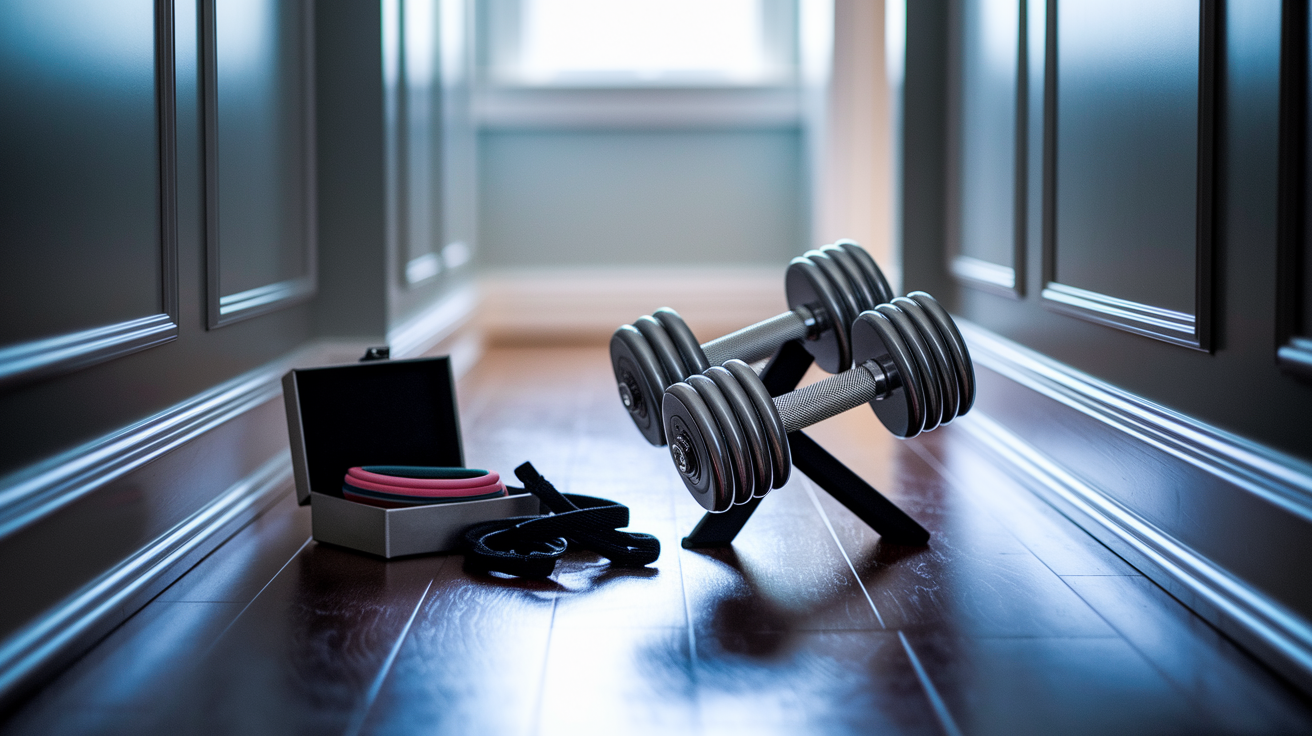
Adjustable dumbbells are the MVP of small home gyms. They replace an entire rack of weights with two handles.
A single pair typically covers 5 to 52.5 pounds in 2.5-pound increments. You can progress through bicep curls, shoulder presses, goblet squats, and chest presses without stacking 20 pairs of cast iron along your wall. The Tempo Move cabinet ships with interchangeable dumbbells from 7.5 to 35 pounds per hand, all stored inside a 13.5-inch-wide tower.
Beyond dumbbells, compact strength tools include resistance bands, suspension trainers, and weighted knuckles or vest systems. Resistance bands pack into a shoebox but deliver tension equivalent to light to medium free weights when anchored properly. Suspension systems like the TRX bundle provide bodyweight resistance across hundreds of movements and fold into a bag you can carry on a plane.
These tools won’t replicate a 400-pound barbell squat. But they cover the full spectrum of pressing, pulling, hinging, and core work for most people training at home.
Three advantages that make adjustable and compact strength gear essential:
- Space savings. One set of adjustable dumbbells occupies about one square foot and replaces 10 to 15 traditional pairs.
- Versatility. Bands, straps, and adjustable weights support every major movement pattern. Push, pull, squat, hinge, carry. No separate machines.
- Cost efficiency. Buying one adjustable set for $300 to $500 costs less than acquiring individual dumbbells over time. You avoid the rack or shelf to store them.
If your training space maxes out at a corner of a bedroom or a hallway nook, adjustable dumbbells and a suspension trainer give you a real strength program without turning your home into a weight room.
Compact All-in-One Home Gym Machines
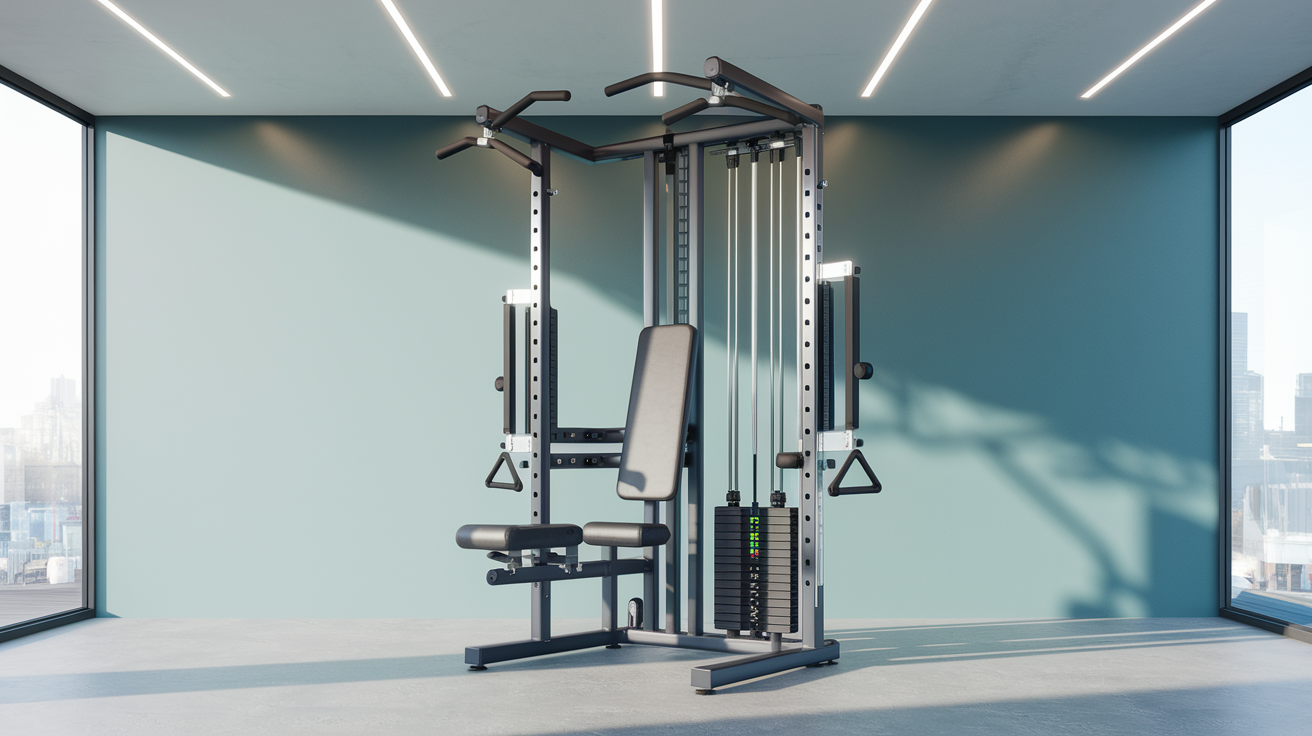
All-in-one machines stack multiple exercise stations into a single vertical frame, usually under 7 feet tall and smaller than a 4×4-foot square.
These systems combine cables, pulleys, benches, and sometimes Smith-machine or power-rack functions so you can train chest, back, legs, and shoulders without buying separate pieces. The Force USA C10 measures 76.5″ W × 51.5″ D × 87″ H and packs 13 training stations, including dual 220-pound weight stacks, into one footprint. That’s roughly the floor space of a large couch but with the exercise variety of a mid-size commercial gym.
Compact multi-gyms work especially well if you prefer cable or lever movements over free weights. Cables offer constant tension and let you isolate muscles without a spotter, which is safer and more practical when training alone. Many models include adjustable benches, lat pulldown bars, and low-row attachments as part of the base package. You’re not chasing accessories or waiting for delivery to complete your setup.
| Machine Name | Footprint Size | Number of Exercises | Ideal For |
|---|---|---|---|
| Force USA C10 | 76.5″ W × 51.5″ D | 70+ (13 stations) | Serious lifters wanting commercial variety at home |
| Bowflex Xtreme 2 SE | 53″ L × 49″ W | 70+ | Full-body training with power-rod resistance |
| Major Fitness Raptor F22 | 83.5″ H × compact base | 50+ | Bodybuilders needing rack, cables, and plate-loaded options |
| Bowflex PR1000 | 103″ L × 80″ W | 25+ | Budget-conscious users adding rowing and basic cable work |
The trade-off is assembly time and weight. Many all-in-ones weigh 200 to 300 pounds and take 5 to 6 hours to build, sometimes longer if you’re doing it solo. Professional assembly runs around $800 for larger systems, which is worth considering if your toolkit stops at a screwdriver.
Once assembled, though, these machines deliver years of training variety without requiring you to shuffle equipment between sets.
Wall-Mounted and Fold-Away Systems
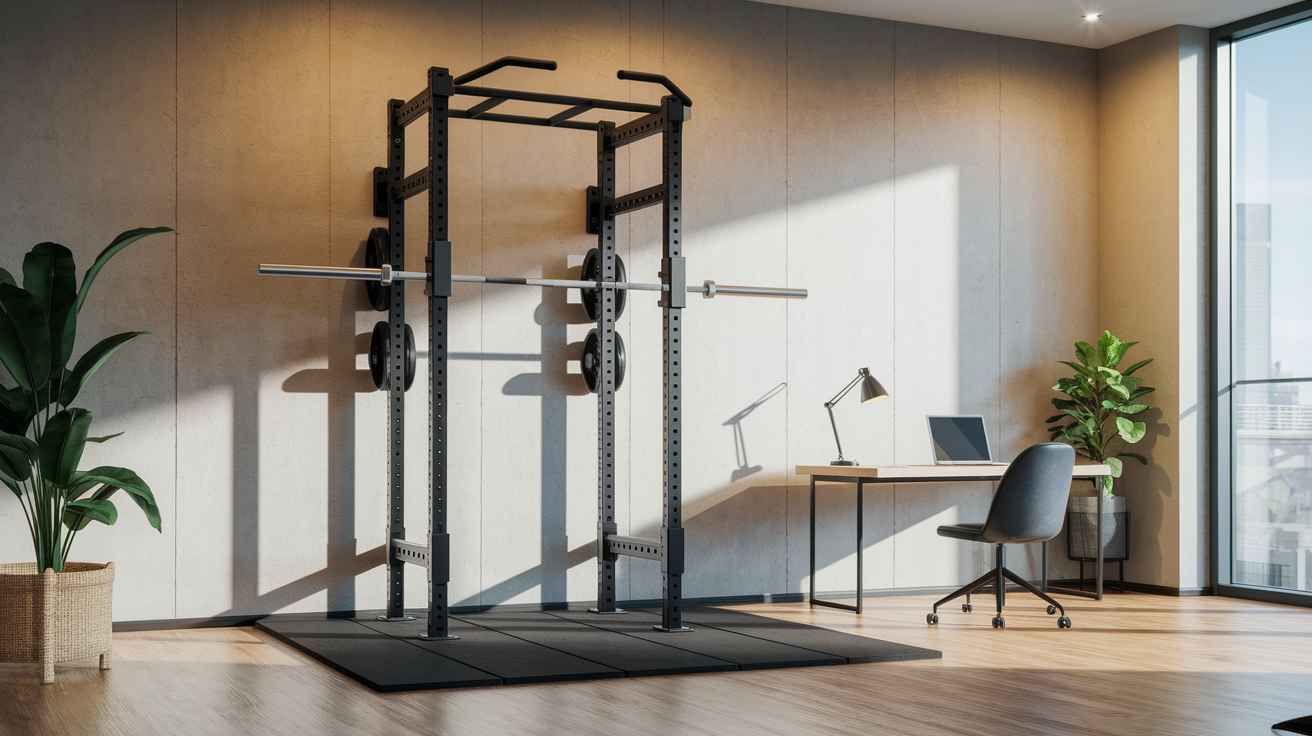
Wall-mounted gym systems bolt directly to studs and fold flush when not in use. They reclaim floor space the moment your workout ends.
The PRx Profile ONE Squat Rack mounts at standard 16″ or 24″ stud spacing and collapses to under 5 inches from the wall thanks to four 100-pound gas shocks. When you’re ready to train, a one-handed pull swings the uprights out, locking them into a stable frame rated to 1,000 pounds. That’s enough capacity for heavy squats, bench press, and pull-ups without the permanent footprint of a freestanding rack.
Fold-away stations work best in garages, home offices, or multipurpose rooms where you need the floor clear for other activities. Some wall systems include pull-up bars, dip attachments, and plate storage directly on the frame, so everything folds away together.
Others, like the Tonal 2, mount a compact 21.5″ × 50.9″ unit with digital resistance arms that deliver up to 200 pounds of cable-style load. When the screen is off, it looks like a sleek wall panel instead of gym equipment.
Three main advantages of wall-based systems:
- Near-zero floor footprint. Folded depth under 8 inches means your training space doubles as a playroom, office, or yoga studio the rest of the day.
- High weight capacity. Most wall racks support 1,000+ pounds when properly anchored, matching or exceeding freestanding power racks.
- Fast transitions. Gas-assist hinges let you deploy or stow the entire system in under 30 seconds, making it realistic to train daily even in shared spaces.
If you can’t dedicate a room to fitness, a wall-mounted system gives you serious strength capacity without a permanent installation cluttering your floor.
Comparison: Compact Machines vs Traditional Home Gym Equipment
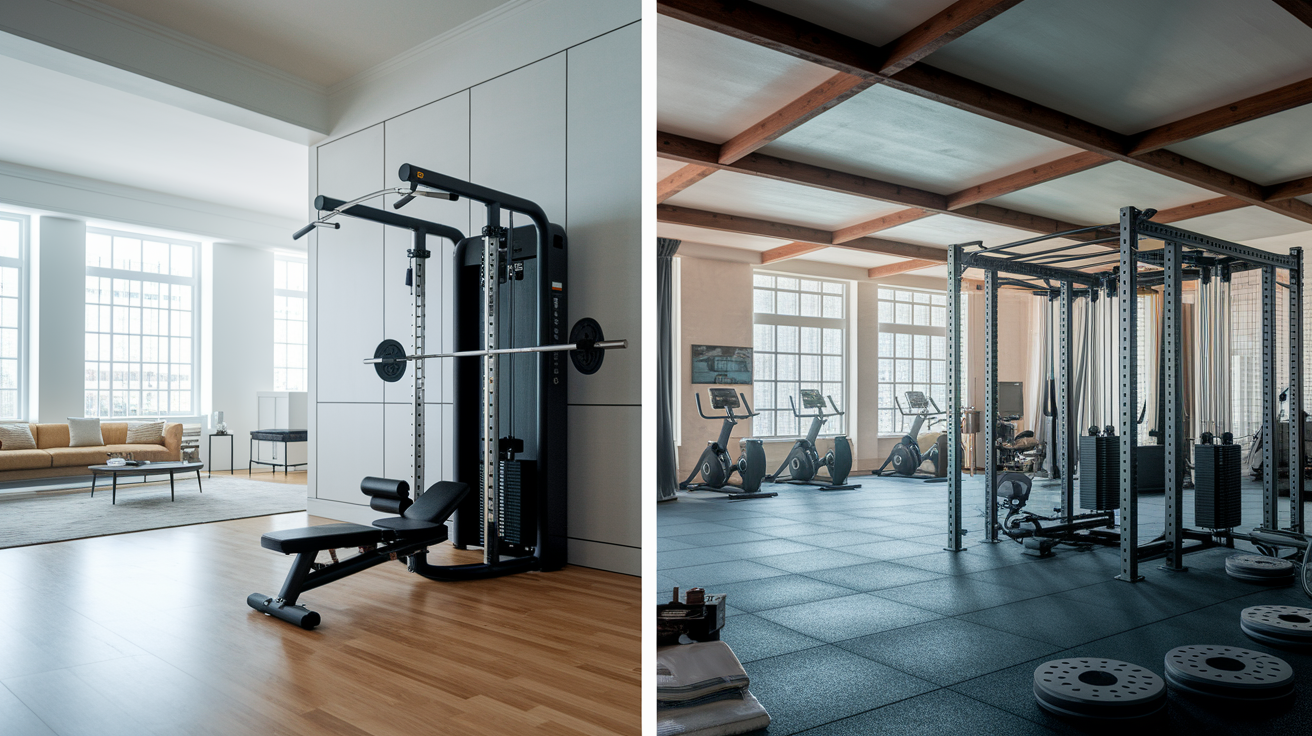
Traditional home gym equipment prioritizes capacity and stability. That usually means heavy steel frames, wide footprints, and dedicated rooms.
Compact machines trade some of that heft for foldability, vertical storage, and apartment-friendly dimensions. The result is a different set of trade-offs, not a downgrade. Just a match to different living situations.
A full-size power rack might measure 7 feet tall, 4 feet wide, and 4 feet deep, with 12-gauge steel uprights and a 1,000-pound rating. That same capacity in a wall-mounted PRx rack folds to under 6 inches and still supports the same load when deployed. The compact version costs more per pound of steel, but it gives you back 16 square feet of floor space.
If you live in a 600-square-foot apartment, that 16 feet matters more than saving $200 on raw materials.
| Feature | Compact Machines | Traditional Machines |
|---|---|---|
| Footprint | Under 25 sq ft, often foldable or wall-mounted | 40 to 70+ sq ft, permanent floor placement |
| Weight Capacity | 600 to 1,000 lbs (lighter frames, still safe for most users) | 1,000 to 2,000 lbs (heavier gauge steel, commercial-grade stability) |
| Assembly Time | 2 to 6 hours; some require wall anchors and stud finders | 4 to 35+ hours for large multi-stations; bolting to floor common |
| Portability | Many fold, collapse, or disassemble for moves | Heavy, often need professional movers or disassembly crews |
| Cost per Exercise | Higher upfront per movement due to engineering for space savings | Lower per movement; raw steel and simple frames cost less |
Compact machines also tend to favor cable or power-rod resistance over plate-loaded systems. That keeps the profile slim but changes the feel of the lift.
If you’re chasing a 500-pound deadlift, you’ll eventually need a traditional barbell setup. If your goal is to stay strong, build muscle, and train consistently in a small space, compact gear delivers the same results with a floor plan you can live with.
How to Choose the Right Compact Home Gym Machine
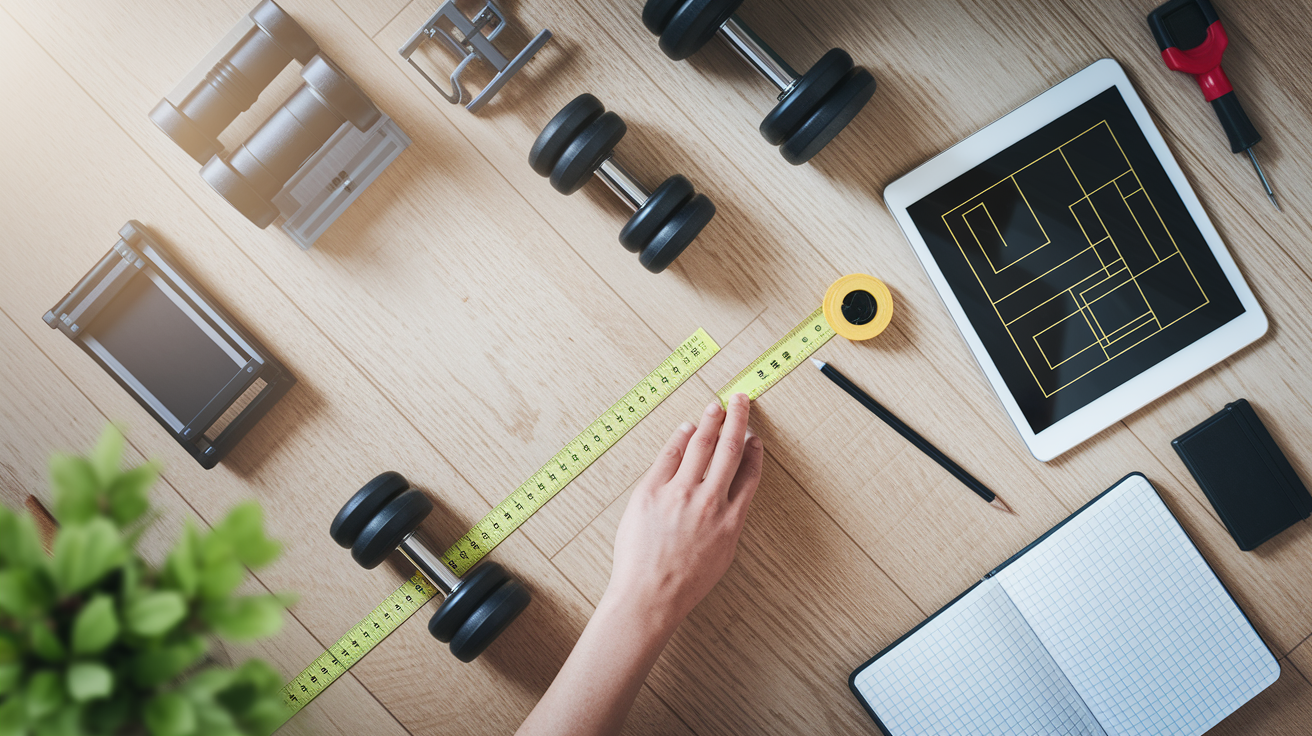
Start by measuring your actual usable space. Not just floor area, but also ceiling height and wall clearance.
A folding treadmill might occupy 21 square feet when open, but you’ll need an extra 2 feet behind it for safe dismount and another foot on each side for arm swing. Wall-mounted racks often require 94 to 107 inches of ceiling height to deploy comfortably. You’ll need access to studs at 16″ or 24″ spacing.
Measure twice, order once.
Next, list your primary training goals and match them to resistance type. If you’re focused on heavy compound lifts (squats, deadlifts, bench press), look for systems with barbell compatibility and at least 600-pound capacity. If your program centers on hypertrophy with cables and dumbbells, an all-in-one multi-gym or adjustable dumbbell set will cover your bases.
For cardio and mobility work, prioritize folding treadmills, compact rowers, or streaming platforms like the lululemon MIRROR that focus on bodyweight and light resistance.
Check noise levels if you live in an apartment or share walls. Magnetic resistance on rowers and ellipticals runs quieter than air resistance. Power-rod systems like the Bowflex are nearly silent compared to weight-stack machines that clang with every rep. Folding treadmills with belt-dampening tech keep the thud under control, but they’ll never be as quiet as a rower.
Five buying criteria to evaluate every compact machine:
- Footprint and foldability. Measure deployed and stored dimensions. Confirm you can actually fold or stow the unit in your space.
- Weight capacity and resistance range. Match the machine’s max load or resistance to your current and near-future strength levels. Add 20 to 30% headroom for progression.
- Exercise variety. Count the number of distinct movements the system supports. Aim for at least 15 to 20 exercises to avoid boredom and plateaus.
- Assembly difficulty and time. Read real-user reviews for assembly hours. Budget for professional help if the estimate exceeds 6 hours or requires two people.
- Subscription and recurring costs. Add up monthly fees for apps, streaming classes, or software unlocks. A $50/month subscription adds $600/year to the true cost.
If a machine checks four of the five boxes and fits your measured space, it’s likely the right pick. If it misses on capacity or variety, keep looking. Buying twice because you outgrew a piece in six months costs more than starting with the right gear.
Space Optimization Tips for Small Home Gyms
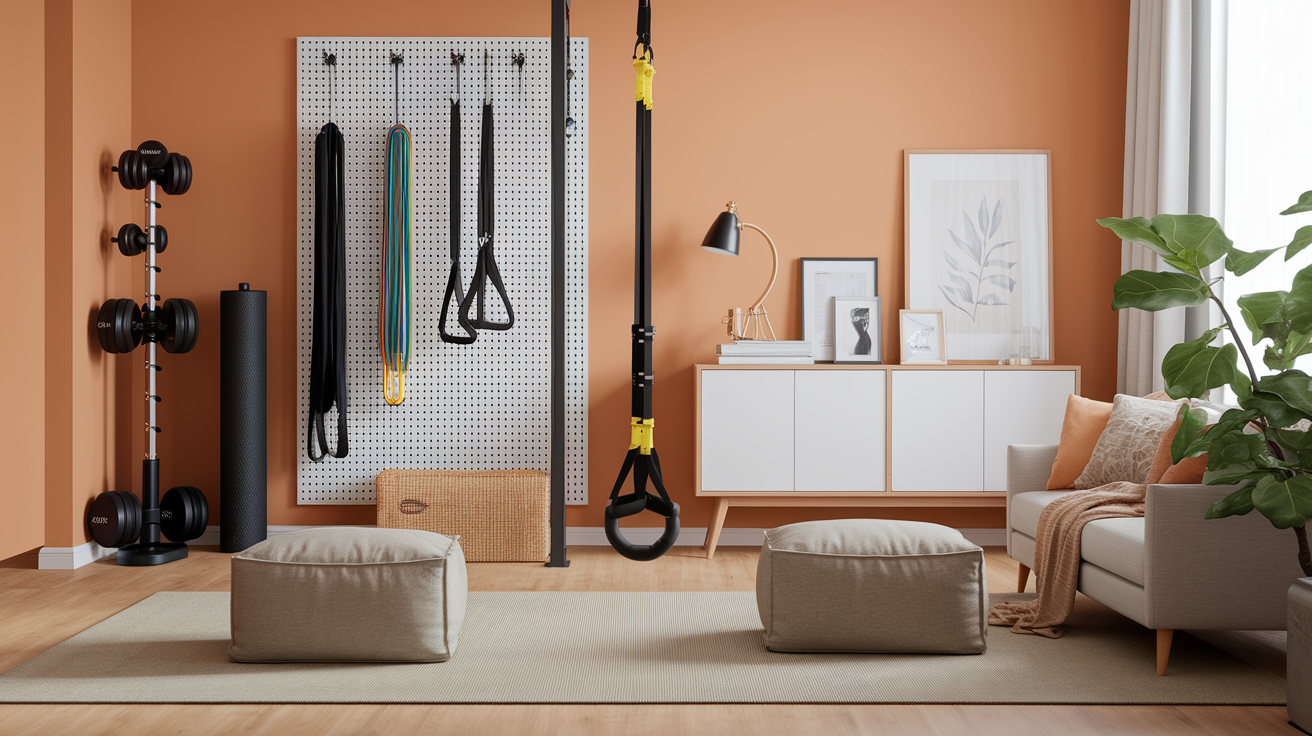
Even the most compact machine needs a strategy if your training area is also your living room or bedroom.
Start by using vertical storage wherever possible. Wall-mounted racks, pegboards for resistance bands, and overhead hooks for suspension trainers free up 20 to 40% of usable floor space. The Aviron Strong Go Rower stores upright in a 27″ × 48″ footprint instead of lying flat across 7 feet of floor.
Under-bed or under-furniture storage works for flat items like yoga mats, foam rollers, resistance bands, and folded benches. Adjustable dumbbells fit neatly on a single shelf or inside a cabinet. Tempo Move’s entire dumbbell set lives in a 13.5-inch-wide tower that doubles as a side table when closed.
If your machine doesn’t fold, consider furniture risers to create clearance underneath for storing accessories or smaller weights.
Plan your layout around the machine’s deployed footprint plus clearance. A treadmill needs at least 2 feet behind the deck for safe exit. A wall-mounted rack requires arm’s length in front for barbell work. Sketch the room on graph paper or use a tape outline on the floor to visualize the full space before you buy.
It’s easier to catch a clearance problem on paper than after a 300-pound machine arrives.
Four practical optimization tips:
- Anchor multi-use furniture. Use a sturdy bench as both a coffee table and a lifting platform. Store weights inside ottoman-style storage cubes.
- Rotate equipment seasonally. If you cycle between cardio-heavy months and strength phases, swap machines in and out of a closet or garage instead of keeping everything deployed year-round.
- Install a fold-down mirror. Wall mirrors make small spaces feel larger and provide form feedback. Hinge-mounted mirrors fold flat when not training.
- Group accessories in bins. Use labeled bins or hanging organizers for bands, straps, and small weights so they don’t scatter across the floor between sessions.
Small spaces work when everything has a home and a reason to be there. Treat your compact gym like a well-organized kitchen. Every tool earns its spot or it goes.
Final Words
Start by measuring your space and choosing gear that folds, stacks, or tucks against a wall.
This post ran through the best space-saving picks: quick top machines, folding treadmills and compact ellipticals, adjustable dumbbells, compact all-in-one systems, wall-mounted and fold-away setups, a compact vs traditional comparison, a buying checklist, and space-saving tips.
With those steps, compact home gym machines let you build a small, efficient setup that fits your life. Pick one piece, clear a corner, and start – small wins add up.
FAQ
Q: What are the best space‑saving home gym machines?
A: The best space-saving home gym machines are adjustable dumbbells, a foldable bench, a compact multi-gym, a folding treadmill, and a wall-mounted system — each reduces footprint while covering strength and cardio needs.
Q: How do folding treadmills and compact ellipticals differ?
A: Folding treadmills collapse flat for storage and are better for running or walking; compact ellipticals have smaller footprints, quieter operation, and suit low-impact cardio in apartments.
Q: Why choose adjustable dumbbells for small spaces?
A: Choosing adjustable dumbbells saves space by replacing many pairs, lets you progress in small weight jumps, and cuts cost compared with full dumbbell sets.
Q: What is a compact all‑in‑one home gym and who is it for?
A: A compact all‑in‑one home gym is a vertical machine under about 7 ft tall offering multiple exercises; it’s ideal for people wanting full-body strength work without a big footprint.
Q: How do wall‑mounted and fold‑away systems save space?
A: Wall‑mounted and fold‑away systems fold to a few inches from the wall, freeing floor area, and support functional moves like rows, presses, and bodyweight training when needed.
Q: How do compact machines compare to traditional home gym equipment?
A: Compact machines cut required floor space by 40–70%, cost less, and fit apartments, though they may offer fewer station-specific exercises than full-size commercial gear.
Q: What should I look for when choosing a compact home gym machine?
A: Look for footprint dimensions, weight capacity, noise level, foldability, and exercise variety — prioritize the factors matching your space, strength goals, and apartment rules.
Q: How can I optimize space for a small home gym?
A: Optimize space by using vertical storage, wall racks, foldable benches, under‑bed gear, and keeping a clear 4‑6 ft training zone; rotate equipment by workout type.
Q: Are compact cardio machines noisy for apartments?
A: Compact cardio machines are often quieter than full-size models; choose low‑impact ellipticals or treadmills rated for quiet use and add a mat to reduce vibration and noise.
Q: What footprint size should I expect for space‑saving machines?
A: Expect folding treadmills to store under 10 inches high, ellipticals under 4 ft footprint, and compact multi‑gyms around 4×4 ft with vertical profiles under 7 ft.
Q: Can compact equipment deliver a full‑body workout?
A: Compact equipment can deliver full-body workouts by combining adjustable dumbbells, a foldable bench, resistance bands, and a multi‑gym to cover pushing, pulling, legs, and core.
Q: How much will compact home gym gear typically cost?
A: Compact home gym gear ranges widely: adjustable dumbbells and bands are budget-friendly, mid-range for compact multi‑gyms, and higher for folding treadmills — plan based on features and durability.

