
Think protein shakes are only for bodybuilders? That idea sells them short.
If you lift regularly, the right shake can speed recovery, kick-start muscle protein synthesis, and help you actually gain lean mass without extra guesswork.
This post cuts through the marketing and shows what works, like whey, casein, and plant blends, how much to drink, 20 to 40 grams, when to sip, post-workout or before bed, and easy homemade recipes you can make in minutes.
Read on for a practical plan you can stick to week after week.
What Makes Protein Shakes Effective for Muscle Building

Whey isolate, casein, and blended plant proteins keep showing up as the best shake bases for muscle growth. All three deliver amino acids straight to working muscles after you finish lifting.
Protein shakes work because they spike bloodstream amino acid levels fast, which kicks off muscle protein synthesis. That’s the process your body uses to repair and build new muscle fibers. A single serving with 20–40 grams of protein reaches your muscles faster than chicken breast or scrambled eggs, which is why shakes are so useful right after training when your body’s ready to rebuild.
Research backs this up. Lifters who combine shakes with resistance training see bigger gains in lean mass and less muscle breakdown during cuts compared to those who skip supplemental protein. But here’s what actually matters more: the convenience of a shake means you’re way more likely to hit your daily protein target consistently.
Key things protein shakes do post-workout:
- Get muscle protein synthesis going within 30 minutes of drinking
- Supply all nine essential amino acids your muscles need to repair
- Cut down delayed-onset muscle soreness by speeding up recovery
- Restore glycogen stores when you add simple carbs
- Stop muscle cramps through electrolyte-rich additions like banana (potassium)
- Keep amino acid availability elevated for up to four hours after training
Shakes are most effective when you drink them within two hours of finishing a workout. Pair them with a carb source like oats or fruit, and make sure you’re getting at least 0.8 grams of protein per kilogram of body weight daily. If you lift regularly, you’ll want closer to 1.6–2.2 grams per kilogram. If your meals already deliver enough protein, adding shakes just increases total calories without speeding up muscle growth.
Comparing Protein Types for Muscle Building Results
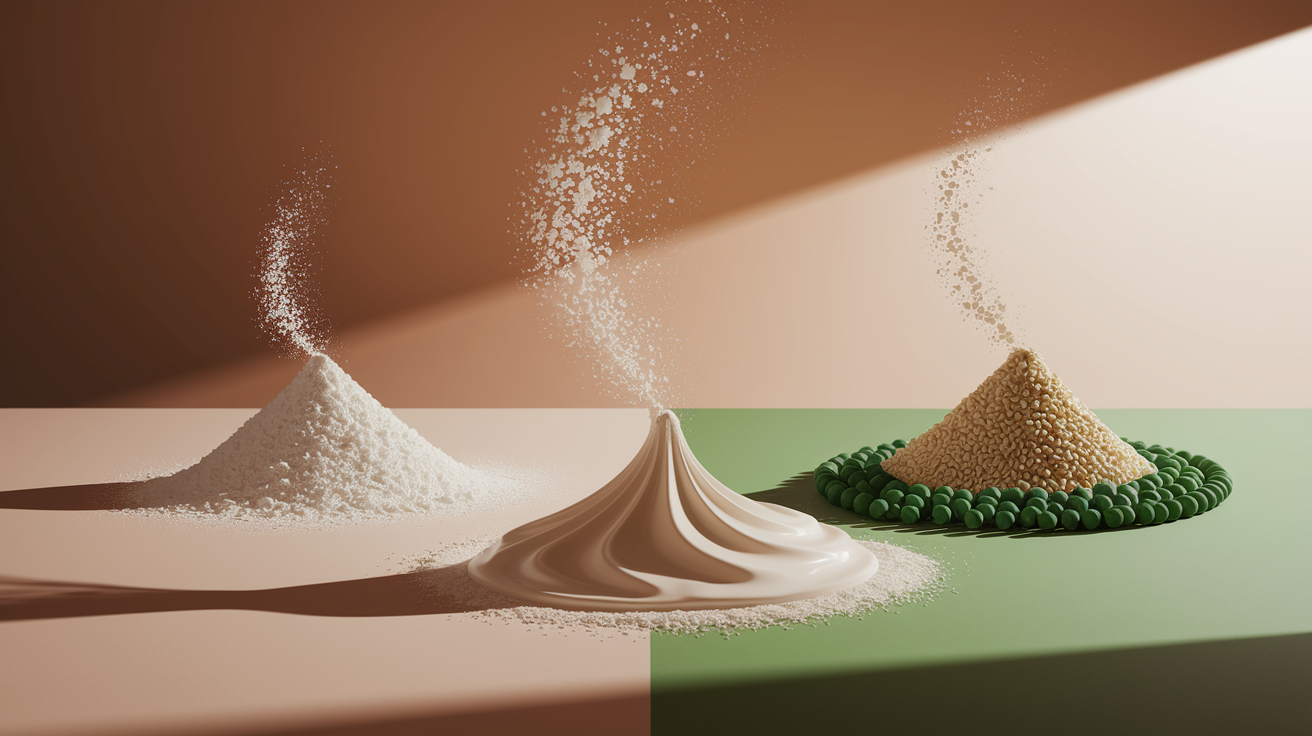
Picking between whey, casein, and plant proteins comes down to your training schedule, how your stomach handles different types, and what you eat.
Whey Protein
Whey digests fast. Blood amino acids spike within 20 minutes, making it perfect right after you lift. It’s loaded with all essential amino acids, especially leucine, which is the main trigger for muscle protein synthesis. Whey isolate strips out most lactose and fat, giving you 90–95% protein per scoop. Whey concentrate keeps more natural carbs and costs less but might cause bloating if you’re lactose-sensitive.
Casein Protein
Casein releases amino acids slowly over six to eight hours, stopping muscle breakdown overnight or during long gaps between meals. It forms a gel in your stomach, which slows digestion and provides a steady drip of nutrients. Lots of lifters take casein before bed to support recovery during sleep, though it doesn’t beat whey right after training.
Plant-Based Proteins
Soy, pea, and rice proteins used to be considered weaker options. But blends of rice and pea protein now build muscle just as well as whey when you dose them right. Plant options typically deliver 70–80% protein per scoop, so you need slightly larger servings to match whey’s leucine content. They’re perfect for vegans or anyone avoiding dairy. Hemp and rice proteins on their own tend to be lower in certain amino acids, so combination blends work best for muscle building.
| Protein Type | Digestibility | Protein per Scoop | Ideal Timing | Lactose-Free | Relative Cost |
|---|---|---|---|---|---|
| Whey Isolate | Very Fast (20–40 min) | 90–95% | Post-workout | Yes | High |
| Whey Concentrate | Fast (30–60 min) | 70–80% | Post-workout | No | Low |
| Casein | Slow (6–8 hours) | 80–90% | Before bed | No | Medium |
| Pea+Rice Blend | Medium (1–2 hours) | 70–80% | Any time | Yes | Medium |
| Soy Isolate | Fast (30–60 min) | 85–90% | Post-workout | Yes | Low |
If you train in the morning or afternoon and want quick amino acid delivery, go with whey isolate or a pea-rice blend. If you skip breakfast or train late at night, casein before bed supports overnight recovery. Lactose-intolerant lifters should grab isolates or plant blends. Budget-conscious athletes often get solid results from whey concentrate despite slightly slower digestion and lower protein density per scoop.
How Much Protein You Need Per Shake and Per Day
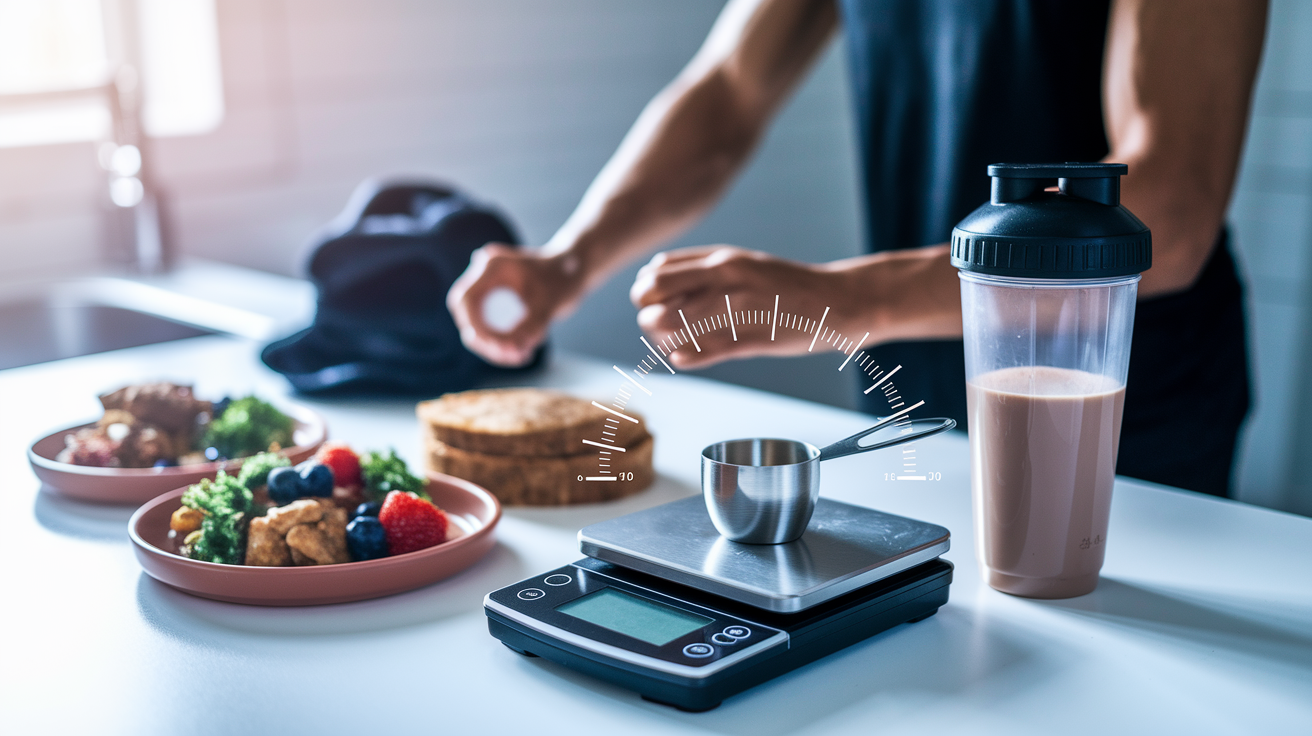
Your total daily protein intake matters way more than any single shake. But each serving should deliver enough amino acids to trigger muscle protein synthesis without piling on unnecessary calories. The baseline RDA sits at 0.8 grams per kilogram of body weight, about 55 grams per day for a 150-pound person. That level was designed to prevent deficiency, not build muscle.
Lifters who resistance train three or more times per week benefit from 1.6 to 2.2 grams of protein per kilogram daily, spread across multiple meals and shakes. One serving of 20–40 grams maximally stimulates muscle synthesis. Consuming more than 40 grams at once primarily adds calories and may actually blunt your body’s muscle-building response. A 180-pound lifter weighing roughly 82 kilograms should aim for 130–180 grams of protein daily, split into four or five doses of 25–40 grams each.
Recommended protein per shake and per day by training level:
- Beginners (first 6 months of lifting): 1.2–1.6 g per kg body weight daily, 20–25 g per shake
- Intermediate lifters (1–3 years training): 1.6–2.0 g per kg daily, 25–35 g per shake
- Advanced lifters or older adults (40+ years): 2.0–2.2 g per kg daily, 30–40 g per shake
- Calorie-deficit phases (cutting): maintain 2.0–2.2 g per kg to preserve muscle, same shake sizes
- Vegan or plant-based athletes: add 10% to daily target due to slightly lower amino acid density, 30–40 g per shake using blended plant proteins
Skip the mega-shakes that pack 50–60 grams into a single serving. Your muscles can only process so much protein at once, and the excess converts to energy or gets stored as fat if you’re eating above maintenance calories.
Timing Protein Shakes for Maximum Muscle Growth

The so-called anabolic window (once thought to close 30 minutes after lifting) is wider than early studies suggested. But consuming protein within two hours of training still offers clear benefits. Your muscles remain sensitive to amino acids for at least 24 hours post-workout, so total daily intake across multiple meals beats obsessing over the exact minute you finish your shake.
Effective protein shake timing strategies:
- Post-workout (0–2 hours after lifting): fast-digesting whey or plant blend with 20–40 g protein plus a carb source like banana, oats, or honey to restore glycogen and maximize amino acid uptake
- Pre-workout (30–60 minutes before training): optional 15–25 g dose if your last meal was more than three hours earlier, keeping the shake light to avoid stomach discomfort during heavy sets
- Before bed (casein for overnight recovery): 25–40 g slow-digesting casein to supply amino acids during the eight-hour fasting window while you sleep, especially useful after evening training sessions
- Evening training (7 p.m. or later): take your post-workout shake immediately after lifting, then follow with casein before bed if daily protein target isn’t met. Avoid large carb loads late at night unless you train fasted in the morning.
Spacing protein doses every three to four hours throughout the day maintains elevated muscle protein synthesis more effectively than consuming all your daily protein in one or two large meals. If you lift at lunch, a mid-morning shake, post-workout shake, and evening casein dose will cover most of your needs without requiring enormous servings at dinner.
Homemade Muscle-Building Shake Recipes and Ingredient Breakdowns
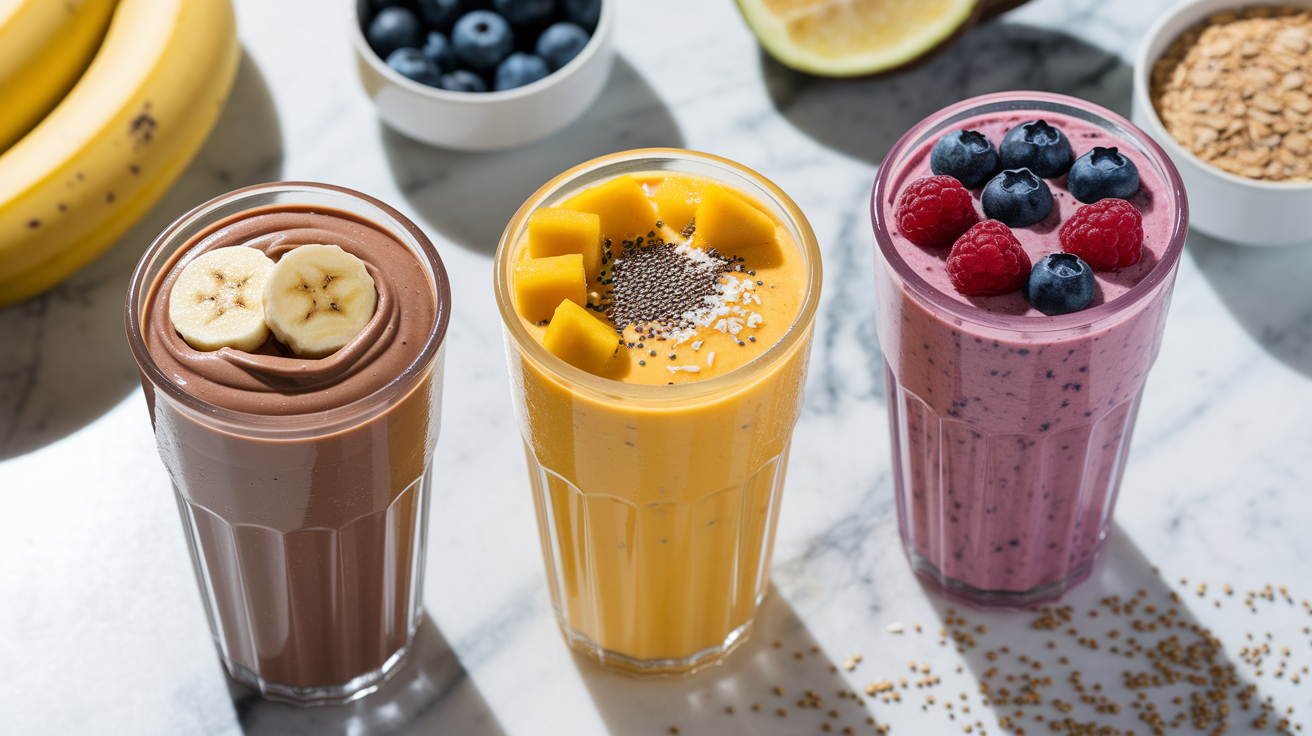
Building your own shakes gives you control over ingredients, macros, and cost per serving. Each recipe below uses one scoop of protein powder as the base, then adds whole-food sources of carbs and healthy fats to support recovery and energy.
Classic Chocolate Banana Protein Shake
- 1 scoop chocolate protein powder
- 1 cup unsweetened almond milk (or any milk)
- 1 tablespoon natural peanut butter
- 1 banana
- 1 teaspoon honey (optional)
- Ice cubes
The banana supplies 400 mg of potassium to help prevent post-workout muscle cramps. Peanut butter adds healthy monounsaturated fats and an extra 4 grams of protein. Almond milk keeps the shake light and lactose-free, though whole dairy milk increases total protein and calories if you’re bulking. Blend until smooth and drink within 30 minutes of finishing your workout.
Tropical Mango Coconut Protein Shake
- 1 scoop vanilla protein powder
- 1 cup frozen mango chunks
- 1/2 cup plain Greek yogurt
- 1/2 cup coconut milk
- 1 tablespoon chia seeds
- Ice cubes
Mango provides vitamins A and C plus natural antioxidants that reduce exercise-induced inflammation. Chia seeds deliver 2 grams of omega-3 fatty acids and another 2 grams of protein. Greek yogurt boosts the total protein count to roughly 40 grams per shake and adds a creamy texture. This shake works well as a post-cardio or lighter post-lift option when you don’t need heavy carbs.
Berry Blast Protein Shake
- 1 scoop berry-flavored (or vanilla) protein powder
- 1/2 cup mixed berries (strawberries, blueberries, raspberries)
- 1 cup unsweetened almond milk (or any milk)
- 1/4 cup rolled oats
- 1 tablespoon flaxseeds
- Ice cubes
Berries deliver fiber and antioxidants without spiking blood sugar, making this shake perfect for morning training or calorie-deficit phases. Oats add slow-digesting carbs that sustain energy for two to three hours. Flaxseeds contribute omega-3s and additional fiber to support digestion. Blend the oats first to break them down, then add remaining ingredients.
| Recipe Name | Primary Carb Source | Primary Fat Source | Protein Base |
|---|---|---|---|
| Chocolate Banana | Banana, honey | Peanut butter | Chocolate whey or plant |
| Mango Coconut | Mango | Coconut milk, chia seeds | Vanilla whey or plant, Greek yogurt |
| Berry Blast | Oats, berries | Flaxseeds | Berry or vanilla whey or plant |
Choosing High-Quality, Safe Protein Powders
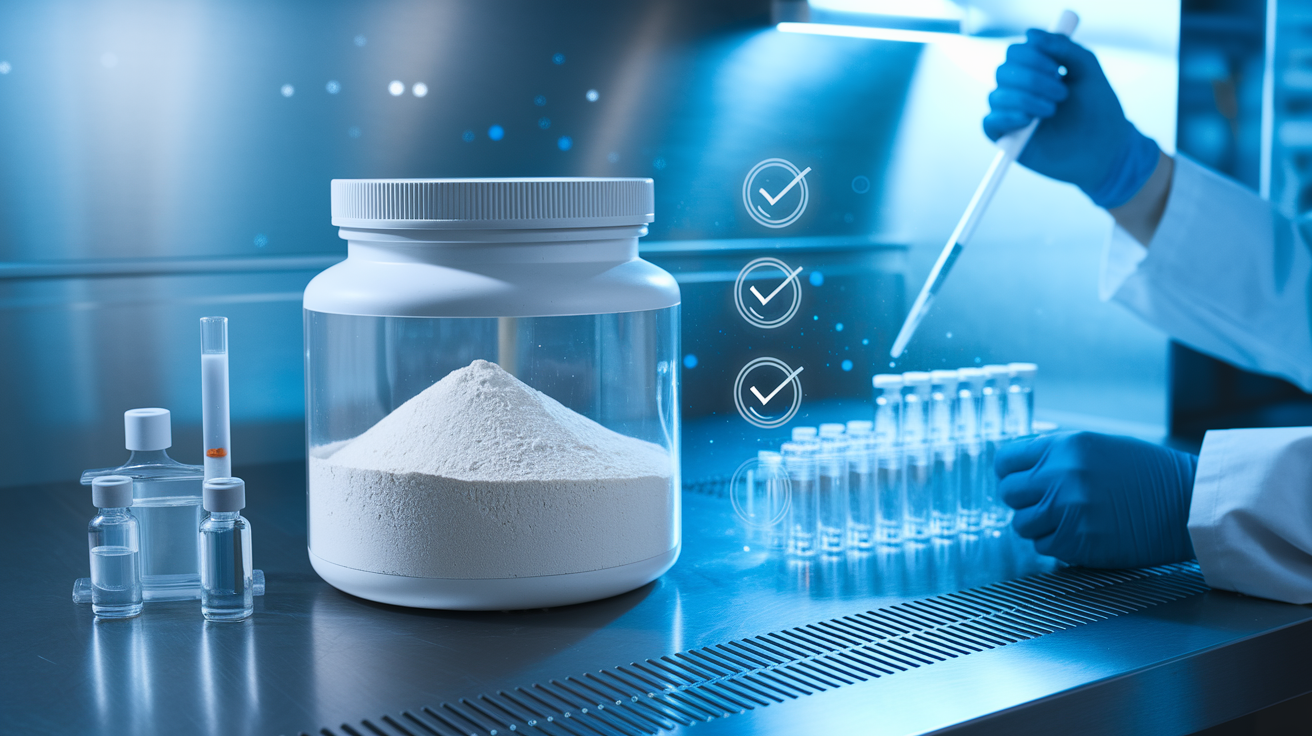
Protein powders are classified as dietary supplements, which means the FDA doesn’t pre-approve them for safety or verify label accuracy before they reach store shelves. Manufacturers are responsible for testing and quality control. Roughly 25% of supplement companies received regulatory citations in 2017 for issues related to purity, ingredient strength, or contamination.
Third-party certifications close that gap. Look for NSF Certified for Sport, Informed-Choice, or USP Verified seals on the label. These independent organizations test every production batch for banned substances, heavy metals like arsenic and mercury, and label accuracy. Products without third-party testing may contain undisclosed ingredients, including herbs or enzymes that interact with medications or pose risks during pregnancy.
Five qualities that signal a trustworthy protein powder:
- NSF Certified for Sport or equivalent third-party testing seal printed on the label
- Short ingredient list with recognizable items: protein isolate, natural flavors, stevia or sucralose, and minimal fillers
- Protein content per scoop matches or exceeds 20 grams, with at least 70% of total weight coming from protein
- Transparent nutrition facts showing exact grams of carbs, fats, and added sugars
- Clear allergen warnings and a manufacture date or lot number for traceability
If you’re pregnant, have kidney disease, or take prescription medications, consult a healthcare provider before adding protein supplements. People with chronic kidney conditions often require protein intake below the standard RDA, and high-dose supplements can accelerate kidney function decline. Pregnant individuals should avoid powders that include herbal extracts like ginkgo or digestive enzymes like papain, which may not be safe during pregnancy.
Budget-Friendly Strategies for Using Protein Shakes
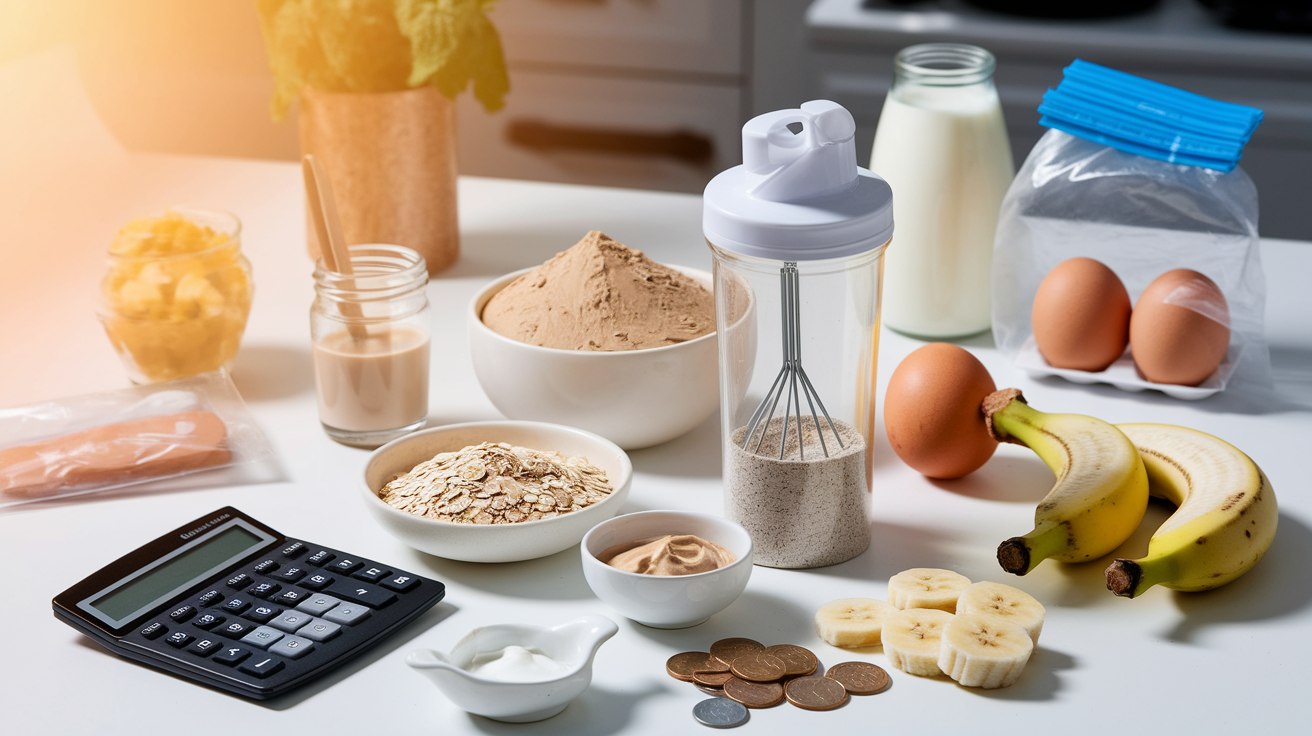
Protein powders can cost two to three dollars per serving. Many lifters find they can meet daily protein targets through whole foods like eggs, chicken, Greek yogurt, and legumes at a lower per-gram price. Shakes remain useful for convenience, but smart buying and simple recipes keep costs manageable.
Buying five-pound bulk containers instead of single-serving packets cuts per-shake cost by 30–50%. Unflavored or vanilla powders cost less than specialty flavors and mix easily with natural ingredients like cocoa powder, frozen fruit, or a teaspoon of instant coffee. Preparing shakes in a shaker bottle with a wire whisk ball eliminates the need for an expensive blender and makes cleanup faster.
Five budget tactics for muscle-building shakes:
- Purchase large tubs of whey concentrate or blended plant protein during sales. Store in a cool, dry place and use within six months of opening.
- Use inexpensive whole-food add-ins like oats, peanut butter, frozen bananas, and milk instead of pre-made smoothie packs.
- Stick to one or two versatile flavors (vanilla, chocolate, unflavored) rather than buying multiple specialty options that sit unused.
- Prep dry shake ingredients (oats, flaxseeds, protein powder) in resealable bags the night before. Add liquid and shake in the morning.
- Compare cost per 20 grams of protein across brands by dividing total container price by the number of servings, not by container weight.
Whole foods remain the most cost-effective protein source for most people. A dozen eggs delivers roughly 72 grams of protein for three to four dollars. A five-pound tub of whey providing 70 servings runs fifty to seventy dollars, about one dollar per shake. If you already eat three protein-rich meals daily, adding shakes may be an unnecessary expense.
Potential Side Effects and Common Mistakes

Even high-quality protein powders can cause digestive discomfort if you consume them too quickly, choose a type that doesn’t match your tolerance, or ignore total daily calorie intake. Most side effects are mild and preventable with small adjustments.
Whey concentrate contains lactose, which triggers bloating, gas, or diarrhea in people with lactose intolerance. Switching to whey isolate (which removes most lactose) or using a plant-based blend solves the issue for most lifters. Some powders include sugar alcohols like erythritol or xylitol as low-calorie sweeteners. These can cause stomach cramping and loose stools when consumed in amounts above 10–15 grams per day.
Protein provides four calories per gram. A 40-gram shake adds 160 calories from protein alone, more once you include milk, nut butter, and fruit. One study found that participants who increased daily protein intake by 40% without adjusting other foods gained body weight and fat, not muscle. If you add shakes without reducing calories elsewhere or increasing training volume, you may gain unwanted fat.
Four common protein shake mistakes to avoid:
- Taking oversized servings above 40 grams per shake, which adds calories without boosting muscle protein synthesis
- Ignoring lactose intolerance or food allergies and continuing to use whey concentrate or powders with tree nut ingredients
- Relying entirely on shakes and skipping whole-food protein sources that provide additional vitamins, minerals, and fiber
- Choosing the cheapest powder without checking third-party testing, risking contamination or inaccurate labeling
Key Things to Keep in Mind About Muscle-Building Shakes
Protein shakes accelerate muscle growth only when combined with consistent resistance training and adequate total daily protein intake. They offer convenience, not magic.
Three essential takeaways for effective shake use:
- Aim for 20–40 grams of protein per shake, consumed within two hours of training or spaced evenly throughout the day.
- Pair fast-digesting whey or plant blends post-workout with a carb source. Use slow-digesting casein before bed for overnight recovery.
- Prioritize third-party tested powders and whole-food ingredients to ensure safety, minimize side effects, and control costs.
Final Words
You’ve seen why protein shakes speed recovery and trigger muscle protein synthesis, how whey, casein, and plant blends compare, and practical recipes, timing, and safety tips.
Use shakes to fill gaps: aim for 20–40 g after training or between meals, add a carb when possible, and pick third‑party tested powders if safety matters.
If you want a simple next step, make one post‑workout shake this week. Protein shakes for muscle building are a practical tool, use them consistently and you’ll see steady progress.
FAQ
Q: Are protein shakes actually good for building muscle?
A: Protein shakes are effective for building muscle because they supply quickly absorbed amino acids that trigger muscle protein synthesis; aim for 20–40 g after resistance training to support growth and recovery.
Q: What protein shake is best for muscle gain?
A: The best protein shake for muscle gain is one matching your needs: whey isolate post-workout for fast amino acids, casein before bed for slow release, or blended plant proteins if you’re vegan.
Q: What is the 2 hour protein rule?
A: The 2 hour protein rule is the idea you must eat protein within two hours of training. It’s overstated; aim for 20–40 g within a few hours around workouts, not strictly two hours.
Q: What not to mix with protein shake?
A: You should not mix protein shakes with alcohol, carbonated sugary drinks, or medications without checking. Also avoid extra sugar-heavy ingredients if tracking calories, and watch high-fiber add-ins that may cause digestive upset.

