
Think you need a garage-sized setup to get a real workout?
You don’t.
In this guide I show the exact, compact gear and layouts that let you build a serious home gym in a closet, corner, or balcony.
Adjustable dumbbells, a foldable bench, bands, and a doorway pull-up bar cover almost every move without eating floor space.
I’ll also give storage hacks, noise tips for apartments, and low-cost builds so your gym actually gets used.
Read on to plan a small-space setup that fits your life and workouts.
Top Compact Equipment Picks for Small Home Gyms
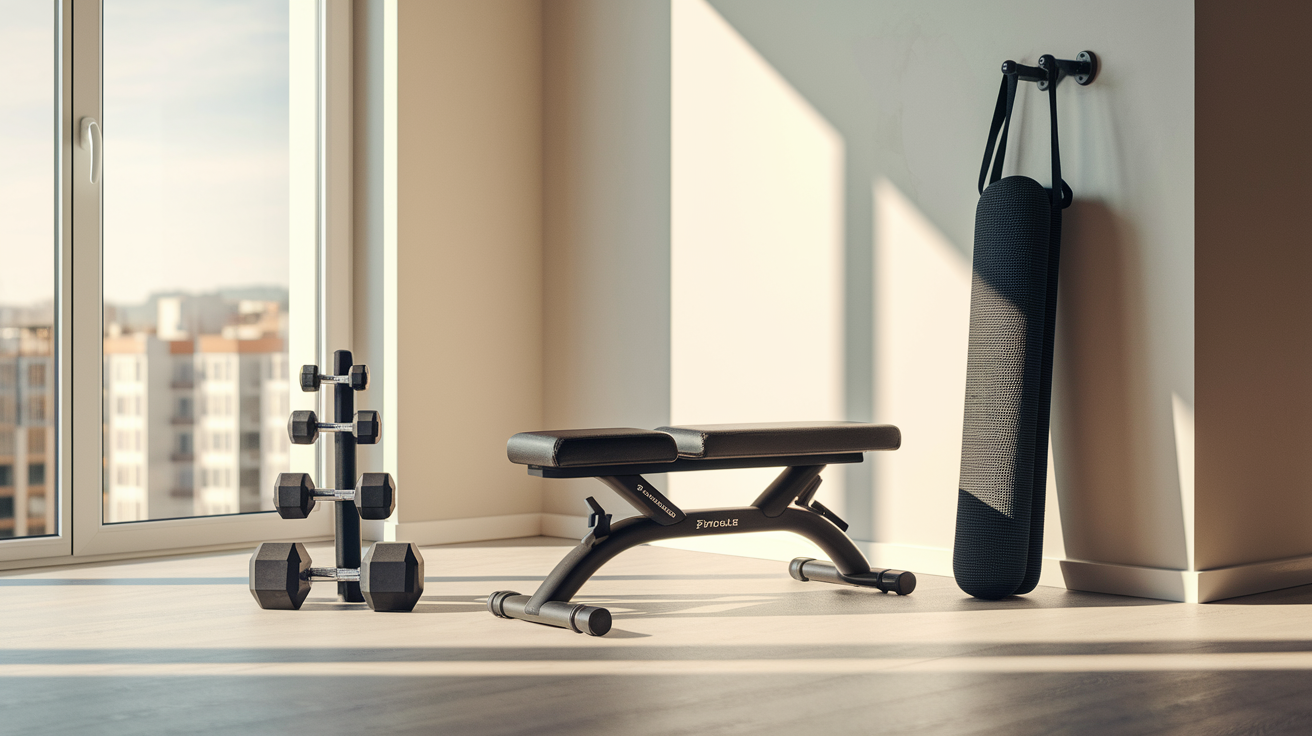
Adjustable dumbbells solve the biggest problem in small spaces. One set replaces 10 to 15 pairs of traditional dumbbells and fits in less than two square feet. You can run push press, chest flies, and goblet squats without stacking weights along your wall or shoving them under your bed.
Foldable benches collapse to under 10 inches thick. Slide them behind a door, under a couch, or upright in a closet between sessions. Most models adjust to flat, incline, and decline angles, so you’re not sacrificing exercise variety to save space.
Resistance bands require almost zero storage. Roll them into a drawer or hang them on a hook. They deliver full body training for upper, lower, and core work.
If you only buy three pieces, these are it:
- Adjustable dumbbells because they cover strength progression without the footprint of a rack
- Foldable bench to support pressing, rowing, and step-ups, then disappear after your session
- Resistance band set for pull-up assistance, variable resistance on squats, and warm-up mobility without eating floor space
Essential Equipment for a Full‑Body Workout in Tight Spaces
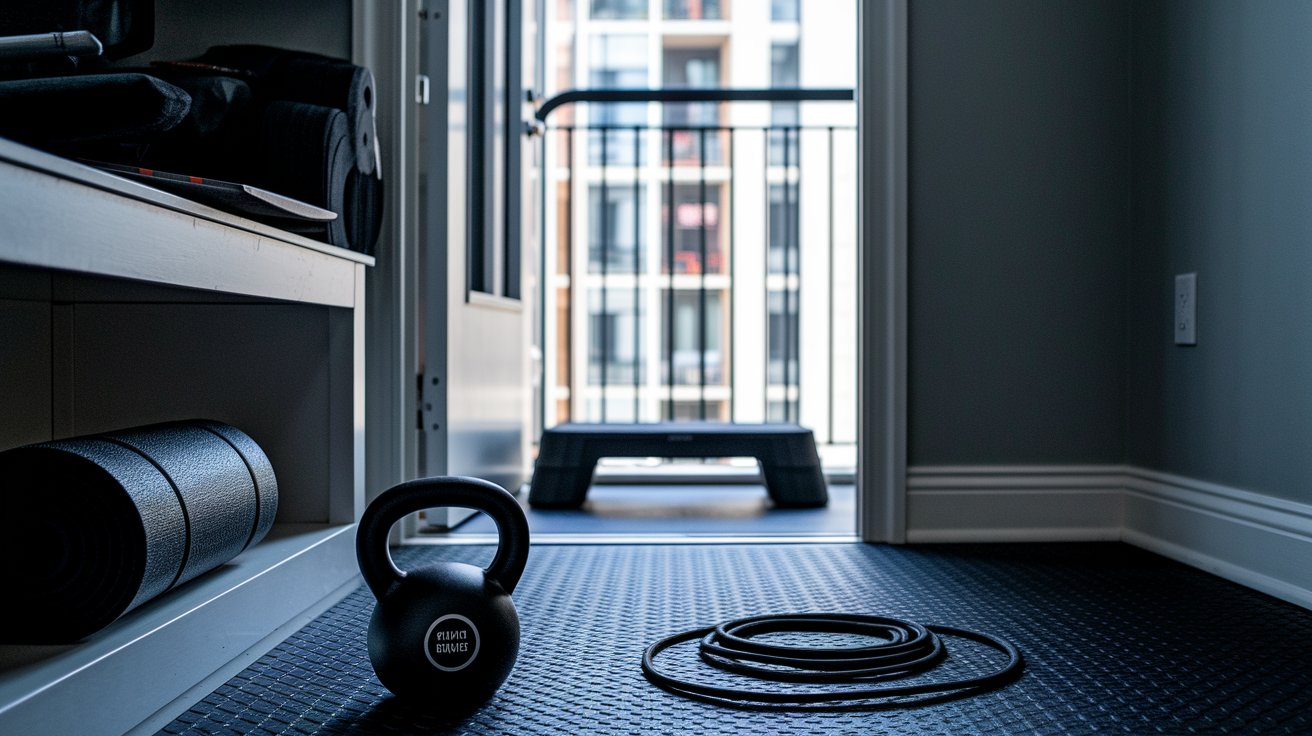
Compact kettlebells add a cardio-strength hybrid option that fits in a corner or under a shelf. A single 35 pounder supports swings, cleans, goblet squats, and Turkish get-ups without demanding the clearance of a barbell or the width of a bench.
Doorway pull-up bars don’t need permanent installation. Most modern models clip into the frame without drilling. You get vertical pulling for lats and biceps. Flip around and you can use the bar for inverted rows or hang resistance bands for assisted pull-ups.
Mini step platforms fit under most couches and give you a stable surface for step-ups, box squats, and elevated push-ups. They’re light enough to move between rooms and short enough (usually 4 to 8 inches) that they don’t trigger the same space anxiety as a full plyo box.
With these additions, you cover the movement patterns missing from the core three:
- Compact kettlebell for ballistic hinge work and single arm carries
- Doorway pull-up bar to get vertical pull without a rack or wall mount
- Mini step platform for unilateral leg work and elevated angles on upper body
- Jump rope because cardio with a footprint measured in inches, not square feet
Best Multi‑Functional and All‑in‑One Compact Gym Solutions
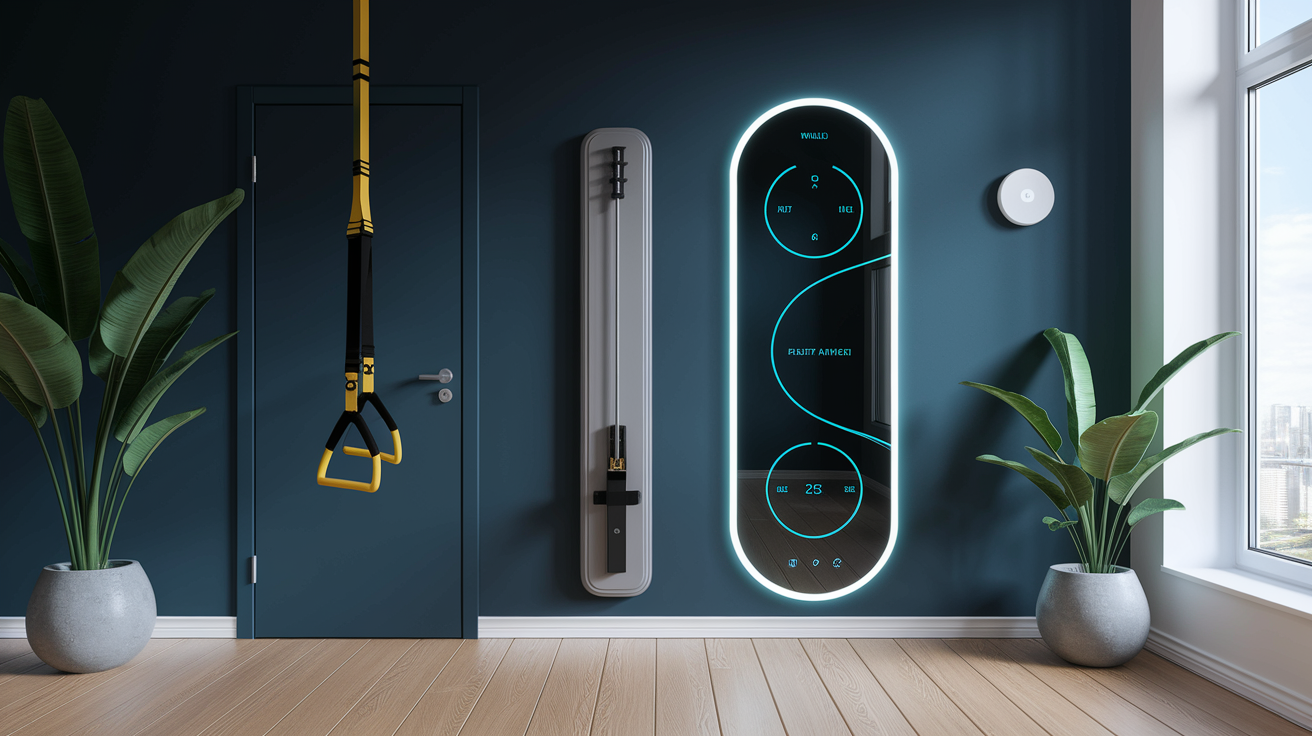
Suspension trainers mount to any door and replace cable machines, assisted pull-up rigs, and bodyweight stations. You anchor the straps at the top of the frame and adjust strap length to hit rows, chest flies, hamstring curls, and plank variations. When you’re done, unhook the anchor and toss the straps in a bag.
Compact cable systems that wall-mount and fold away deliver adjustable resistance for tricep pushdowns, face pulls, and lat work without the bulk of a traditional cable tower. Some models use resistance cords instead of weight stacks, which cuts the footprint in half while still giving you the constant tension that free weights can’t match.
Smart mirrors offer guided workouts and biometric tracking without claiming any floor space. When the screen’s off, it looks like a normal mirror on your wall. The trade-off is that most systems excel at cardio, HIIT, and mobility but lack integrated heavy strength training unless you add your own dumbbells.
| Equipment | Footprint Size | Primary Functions |
|---|---|---|
| Suspension trainer | 0 sq ft (door-mounted) | Bodyweight rows, push-ups, hamstring curls, core |
| Wall-mounted cable system | 2–4 sq ft (folds flat) | Tricep, lat, rear-delt, bicep isolation |
| Smart mirror | 0 sq ft (wall-mounted) | Cardio, HIIT, mobility, guided classes |
Small Space Floor Plans and Room Layout Examples
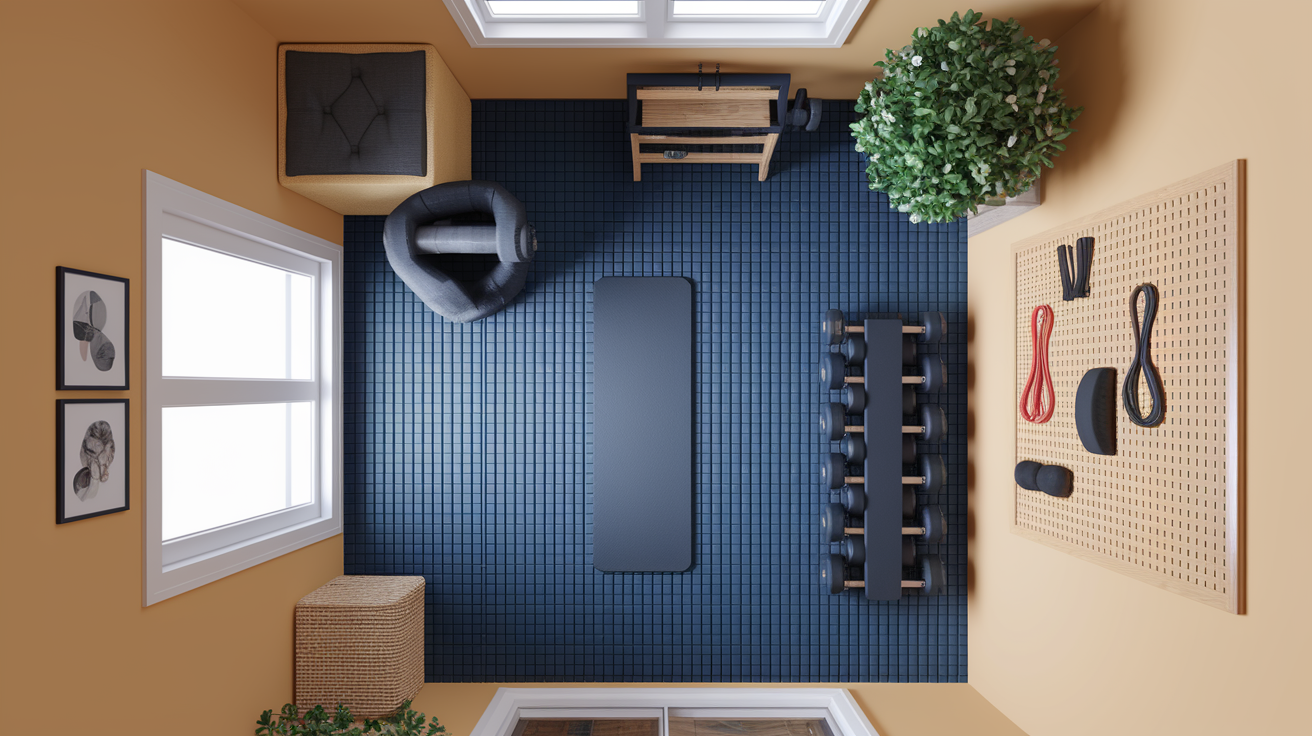
A 6 by 6 foot layout fits adjustable dumbbells on a small rack, a yoga mat for floor work, and a foldable bench stored upright against the wall. You need about 18 inches of clearance on each side of the mat for dumbbell rows and presses, which leaves just enough room to step back for goblet squats or lunges.
Corners let you stack storage vertically. Mount a pegboard or slat wall for bands, jump ropes, and smaller accessories, then place a narrow shelf or dumbbell stand below. The corner footprint is tiny but the vertical reach gives you all the organization of a full wall without blocking windows or doorways.
Here are three proven micro gym layouts:
Tiny bedroom corner (4×4 ft): Adjustable dumbbells on a stand in the corner, resistance bands on wall hooks, yoga mat rolls up and slides under the bed, foldable bench stores upright behind the door.
Studio apartment wall setup (6×3 ft): Wall-mounted pull-up bar and suspension trainer anchor at the top, compact kettlebell and mini step platform on a low shelf, mirror mounted at eye level for form checks.
Balcony or garage micro gym (6×6 ft): Foldable bench in the center when in use, adjustable dumbbells on a cart that rolls to the side, rubber flooring tiles cover the work zone, wall-mounted plate storage if you add a barbell later.
Smart Storage Solutions to Keep Gear Out of the Way
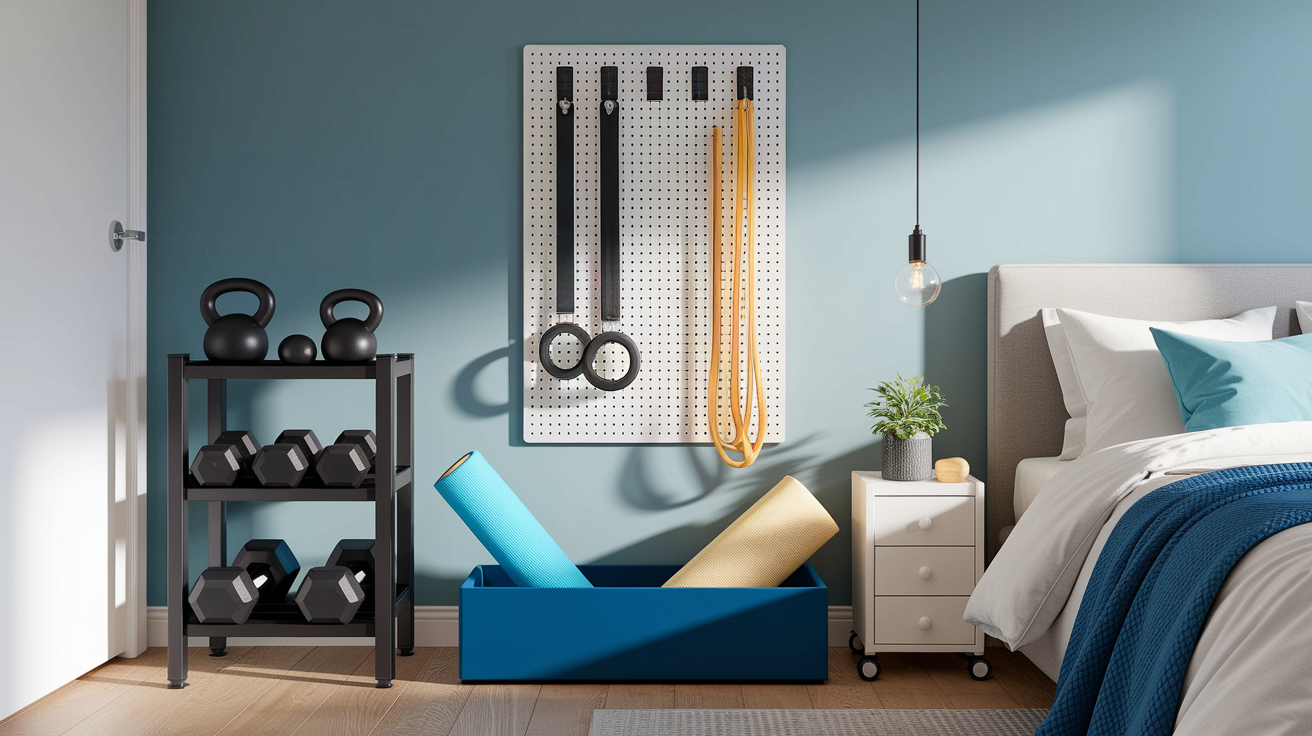
Wall-mounted racks free up 10 to 20 square feet of floor space by moving dumbbells, kettlebells, and plates vertical. A single three tier rack holds two sets of adjustable dumbbells, a kettlebell, and a few resistance bands without taking any usable floor area.
Under-bed storage bins fit yoga mats, foam rollers, sliders, and rolled resistance bands. The low profile bins slide out when you train and disappear the rest of the day. Vertical shelving works for kettlebells as long as the shelf is rated for the load and the bells sit toward the back edge.
Small space storage works when every piece has a dedicated spot and nothing lives on the floor between workouts:
- Pegboard or slat wall panels to hang bands, ropes, straps, and smaller accessories at eye level
- Over-the-door hooks for suspension trainers, jump ropes, or a yoga mat without drilling
- Rolling cart with handle to move dumbbells or kettlebells between rooms, then tuck the cart beside furniture
- Foldable bench with built-in storage because some models include a compartment under the seat for resistance bands or ankle weights
Installation Tips for Tight Apartments or Shared Spaces
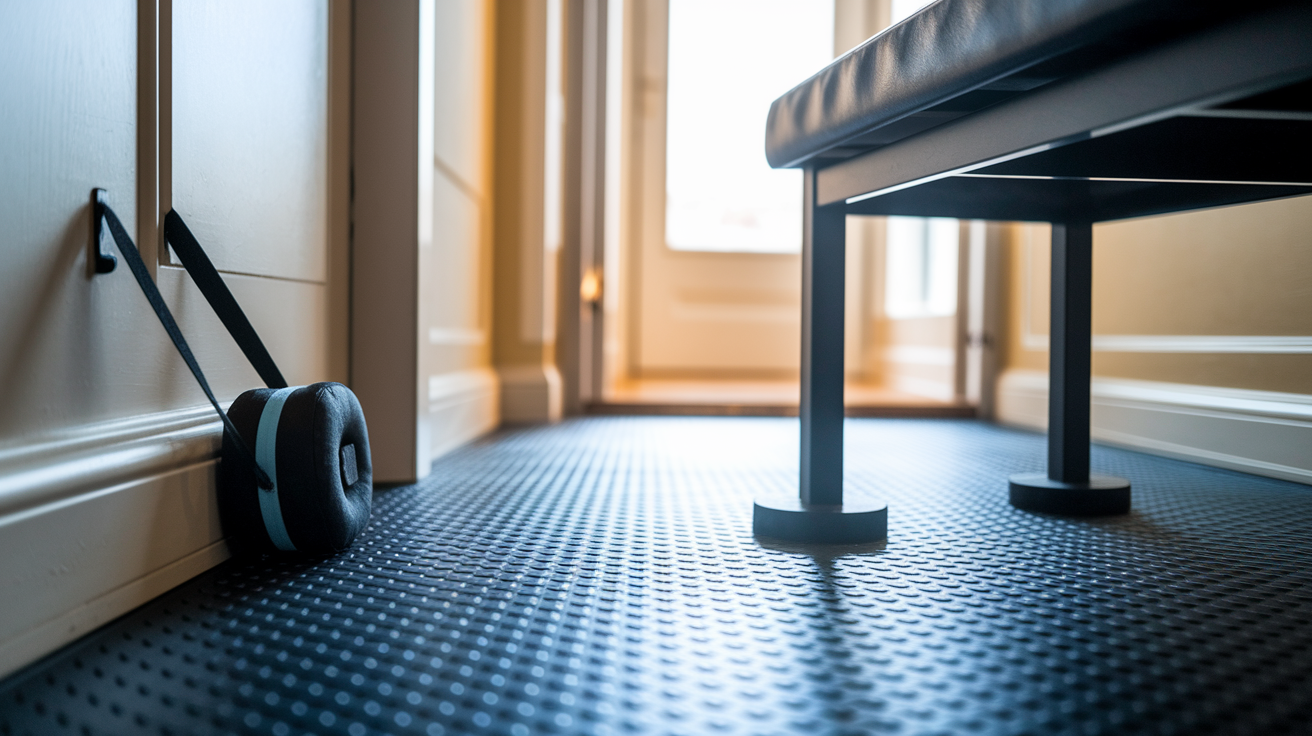
Door frame anchors avoid drilling and leave no permanent marks. Suspension trainers and resistance bands clip into the anchor, you close the door to lock it in place, and you remove the whole setup in under a minute. Foldable wall mounts use removable adhesive brackets or tension rods that press between floor and ceiling, so you get vertical storage or a pull-up bar without damaging walls.
Rubber tiles reduce noise by up to 30 percent and protect floors from dropped weights, which matters in apartments with neighbors below. Most interlocking tiles install without glue and lift up when you move.
Keep these apartment safe tips in mind:
Test weight limits on door frames. Most modern frames hold up to 300 pounds for pull-up bars, but older construction might need a stud-mounted bar instead.
Use furniture sliders under equipment feet. Keeps benches and racks from scratching hardwood or tile when you shift them around.
Check lease rules on adhesive and hardware. Some landlords allow removable hooks, others require you to patch and paint any holes when you leave.
Budget Guide for Building a Small‑Space Home Gym
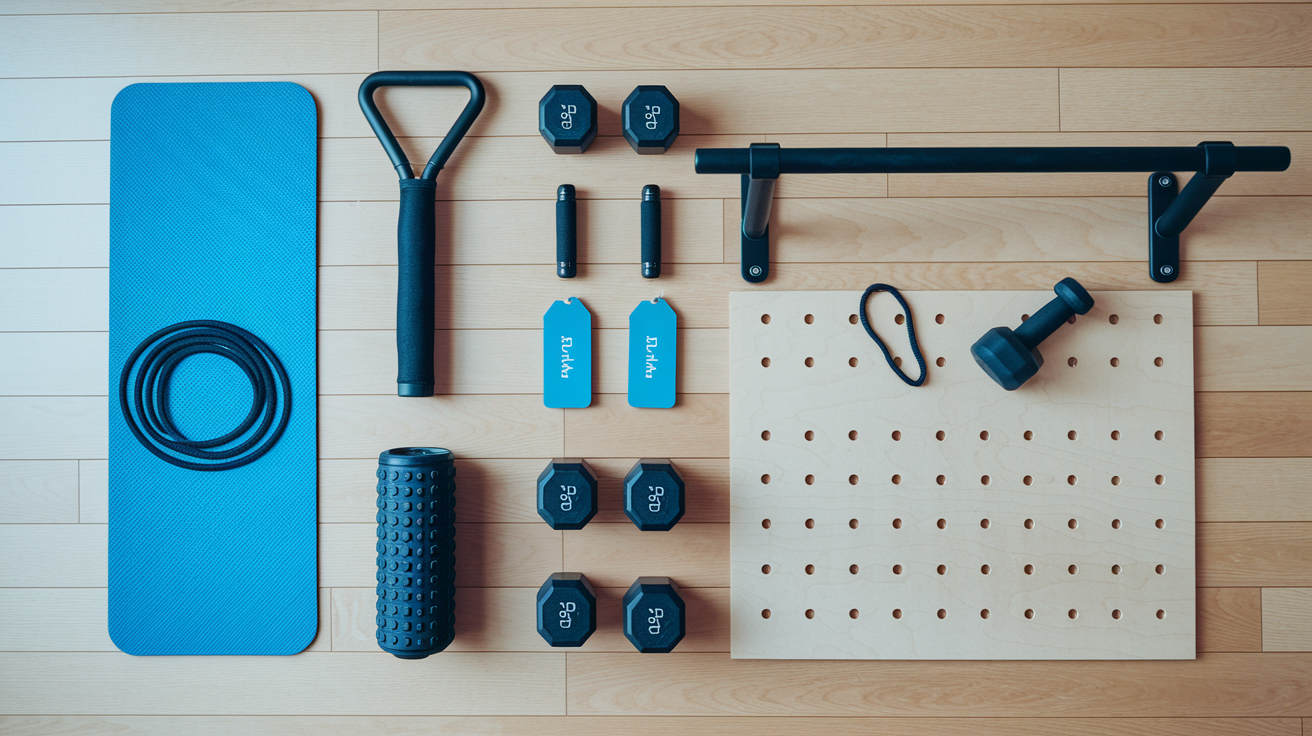
Resistance bands cost under 30 dollars for a full set and cover warm-ups, assistance work, and variable resistance for squats and presses. Add a yoga mat and a doorway pull-up bar, and you’ve got a complete bodyweight and band program that fits in a backpack.
Adjustable dumbbells range from 150 to 300 dollars depending on the weight span and adjustment mechanism. The budget models use pin select dials, the premium versions use magnetic quick change systems. A foldable bench adds another 100 to 200 dollars, but those two purchases give you enough variety to run a serious strength program.
DIY storage can cut costs by 40 percent if you’re comfortable with basic tools. A wall-mounted pegboard costs 20 dollars at a hardware store, and you can build a simple dumbbell shelf from a single board and a pair of brackets.
Here’s how to build at three budget levels:
Under $100: Resistance band set ($25), yoga mat ($15), doorway pull-up bar ($30), foam roller ($20), jump rope ($10).
Under $300: Add adjustable dumbbells 5 to 50 lb ($200), upgrade to a thicker mat ($30), mini step platform ($40), keep the rest from tier one.
Under $500: Add foldable bench ($150), compact kettlebell ($50), suspension trainer ($80), wall-mounted storage rack ($60), upgrade dumbbells to a 5 to 60 lb set ($250).
Compact Equipment Comparison by Footprint Size
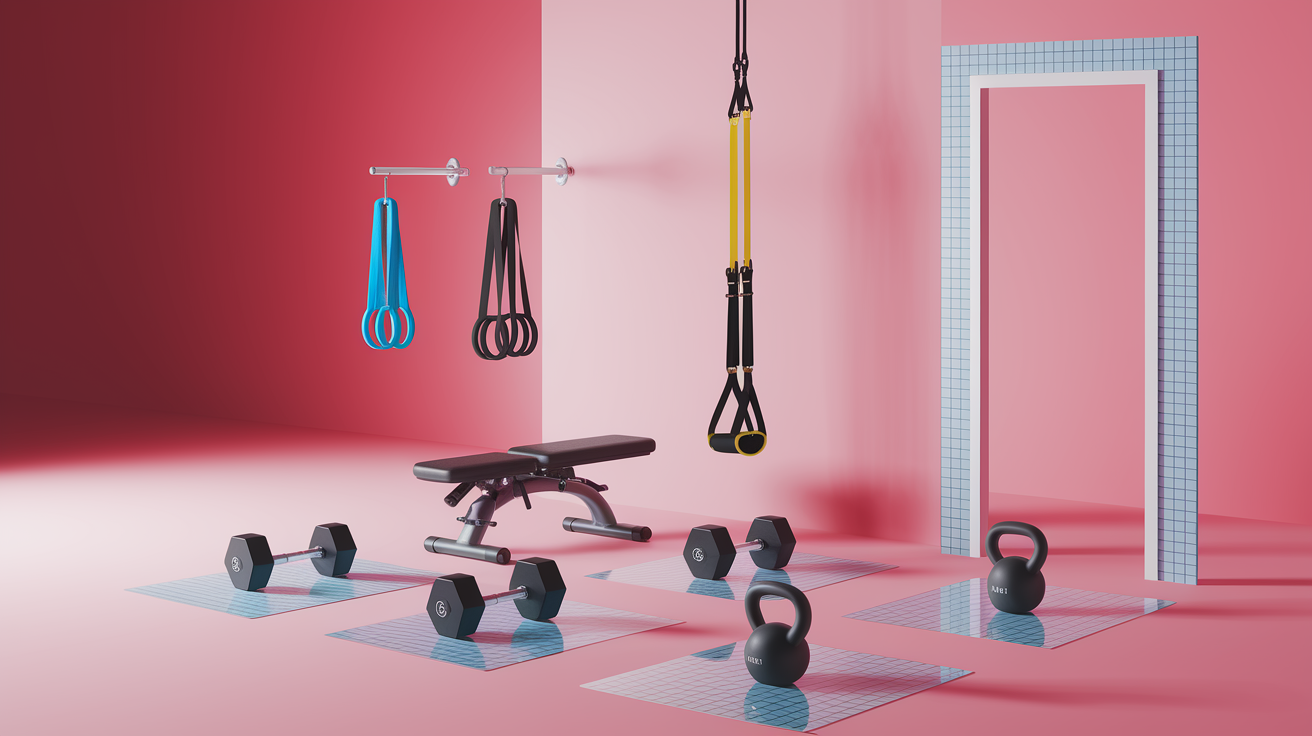
Adjustable dumbbells take up under two square feet and replace an entire wall of fixed weight pairs. Suspension trainers require zero floor space because they hang from a door anchor. A foldable bench collapses to under 10 inches deep so it slides behind furniture or stands upright in a closet.
When you’re planning a small space gym, footprint size is often more important than the exercise list or the brand name. If the gear doesn’t fit, it won’t get used.
This table shows the most efficient compact picks side by side:
| Equipment | Footprint (Sq Ft) | Key Benefit | Best For |
|---|---|---|---|
| Adjustable dumbbells | 1.5–2 | Replaces 10+ pairs of fixed weights | Progressive strength in minimal space |
| Resistance bands | 0 (hangs on hook) | Full-body resistance, travels anywhere | Warm-up, assistance, variable tension |
| Foldable bench | 2–3 (6–8 when folded upright) | Flat/incline/decline angles, stores thin | Pressing, rowing, step-ups |
| Suspension trainer | 0 (door-mounted) | Bodyweight rows, push-ups, curls, core | Travel-friendly full-body training |
| Compact kettlebell | 0.5–1 | Ballistic and grind work in one tool | Swings, cleans, carries, goblet squats |
Final Words
Start by picking the three compact essentials: adjustable dumbbells, a foldable bench, and resistance bands. They replace lots of bulky gear and let you train full body in a tiny footprint.
Add a couple of small extras like a kettlebell, doorway pull-up bar, or suspension trainer. Plan your layout, use wall storage, and pick renter-friendly mounts to save space and noise.
Match choices to your budget and compare footprints before you buy.
This guide gives everything you need to create the best home gym setup for small spaces. Start small, store smart, and you’ll get big results.
FAQ
Q: What are the top compact equipment picks for small home gyms?
A: The top compact equipment picks for small home gyms are adjustable dumbbells, a foldable bench, and resistance bands because they save floor space, replace many items, and cover full-body training.
Q: What other essentials do I need for a full-body workout in a tight space?
A: The other essentials for a full-body workout in a tight space are a compact kettlebell, a doorway pull-up bar, a mini step platform, and a mat to add strength, pulling, cardio, and stability options.
Q: Can multifunctional or all-in-one systems replace bulky machines in small homes?
A: Multifunctional systems can replace bulky machines: suspension trainers, compact wall-mounted cable units, and smart mirrors give resistance, pulling, and guided classes while keeping floor use minimal.
Q: How should I plan a small-space floor layout for a home gym?
A: To plan a small-space floor layout, carve a 6×6 ft main zone for dumbbells, mat, and a foldable bench, use corners for vertical storage, and keep wall space free for bands and hooks.
Q: How can I store gym gear to keep a small space tidy?
A: To store gym gear in a small space, use wall-mounted racks to free floor area, under-bed bins for mats and bands, vertical shelving for kettlebells, and hooks for bands and trainers.
Q: What renter-friendly installation tips work for apartments or shared spaces?
A: Renter-friendly installation options include door-frame anchors, removable brackets for foldable mounts, and rubber tiles to cut noise by roughly 30 percent without drilling into walls.
Q: How much will a compact home gym cost at different budget levels?
A: A compact home gym under $100 can include bands and a mat, under $300 adds adjustable dumbbells, and under $500 adds a foldable bench, kettlebell, and basic storage solutions.
Q: Which compact equipment items take the least floor space?
A: The most space-efficient items are suspension trainers (zero floor space), adjustable dumbbells (under 2 sq ft footprint), and foldable benches that collapse to under 10 inches depth.
Q: What should I buy first when building a compact home gym?
A: The first buys for a compact home gym are resistance bands and a mat, then adjustable dumbbells for strength, followed by a foldable bench or compact kettlebell as space and budget allow.

