Research
Push Pull Legs Progression Template Unlocks Steady Hypertrophy
By fitness
November 20, 2026
Field Notes

Feel like you’re spinning your wheels in the gym and not getting bigger?
This push-pull-legs progression template fixes that with a simple, repeatable plan for steady hypertrophy.
Use it as a three-day starter or a six-day split, follow the 48-72 hour recovery rule, and add weight once a set hits the top of its rep range in two sessions.
There are built-in deloads, clear sets, reps, and rest guidelines, and exact weight jumps so you stop guessing and actually build muscle week to week.
Ready-to-Use Push Pull Legs Hypertrophy Workout Template
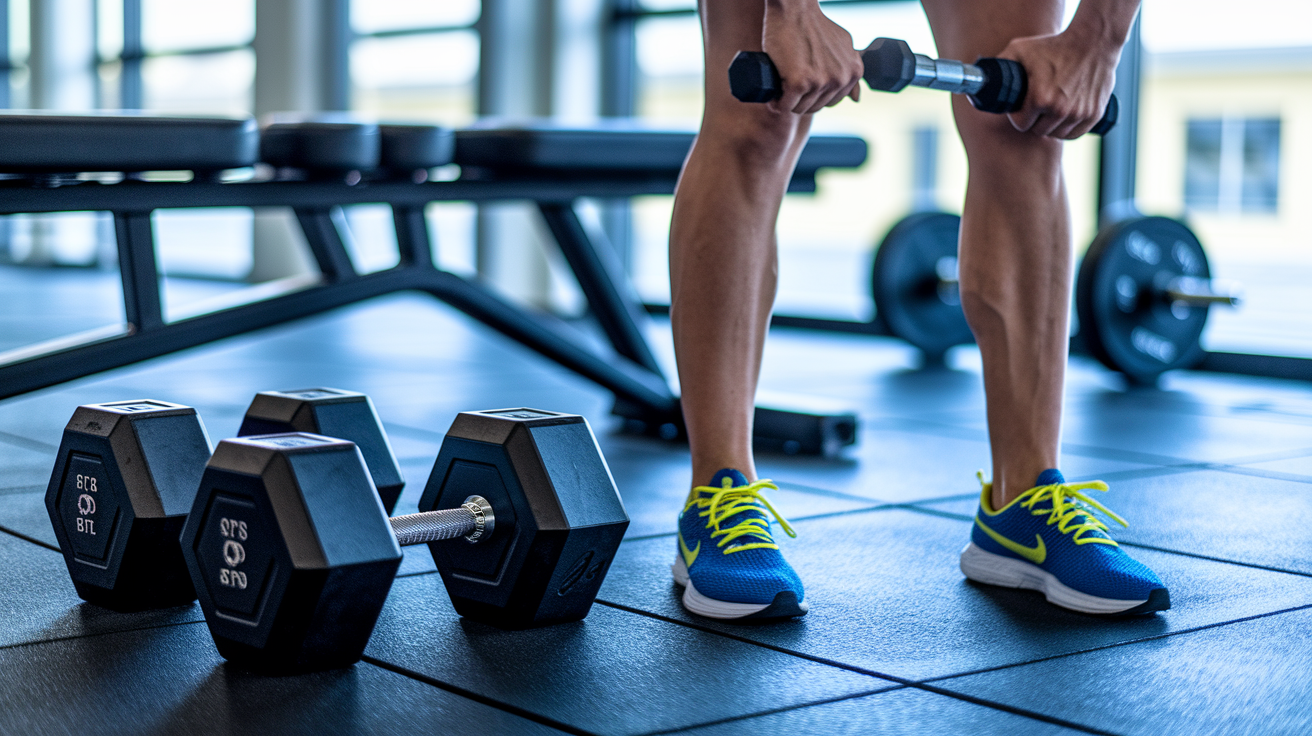
Copy this straight into a spreadsheet or notes app and start training this week. The template works as a 3-day routine if you’re new to structured lifting, or a 6-day routine if you already handle frequent training without your recovery falling apart. Not sure which one fits? Start with three days. You can always add sessions once you see how your body responds.
Here are the four scheduling rules to follow before you touch a single weight:
- Three-day schedule: Push on Monday, Pull on Wednesday, and Legs on Friday.
- Six-day schedule: Push A, Pull A, Legs A, Push B, Pull B, Legs B, then one rest day.
- Leave at least 48 to 72 hours before training the same muscle group again.
- Begin every working set with roughly 1 to 3 reps in reserve (stop a couple reps before failure).
| Session Label | Exercise | Sets | Reps | Rest | Starting RPE | B-Session Alternative |
|---|---|---|---|---|---|---|
| Push A/B | Bench Press | 4 | 6-10 | 120-180s | 7-8 | DB Bench Press |
| Push A/B | Incline Dumbbell Press | 3 | 8-12 | 90-120s | 7-8 | Machine Incline Press |
| Push A/B | Overhead Press | 3 | 6-10 | 90-120s | 7-8 | DB Shoulder Press |
| Push A/B | Lateral Raise | 3 | 12-20 | 45-90s | 8-9 | Cable Lateral Raise |
| Push A/B | Triceps Pushdown | 3 | 10-20 | 45-90s | 8-9 | Overhead DB Extension |
| Pull A/B | Barbell Row | 4 | 6-10 | 120-180s | 7-8 | Chest-Supported Row |
| Pull A/B | Pull-Up or Lat Pulldown | 3 | 8-12 | 90-120s | 7-8 | Neutral-Grip Pulldown |
| Pull A/B | Seated Cable Row | 3 | 8-12 | 90-120s | 7-8 | Single-Arm DB Row |
| Pull A/B | Face Pull | 3 | 12-20 | 45-90s | 8-9 | Rear Delt Fly |
| Pull A/B | Biceps Curl | 3 | 10-20 | 45-90s | 8-9 | Hammer Curl |
| Legs A/B | Back Squat | 4 | 6-10 | 120-180s | 7-8 | Front Squat |
| Legs A/B | Romanian Deadlift | 3 | 8-12 | 90-120s | 7-8 | Good Morning |
| Legs A/B | Leg Press | 3 | 8-12 | 90-120s | 7-8 | Hack Squat |
| Legs A/B | Leg Curl | 3 | 10-20 | 45-90s | 8-9 | Nordic Curl |
| Legs A/B | Calf Raise | 4 | 12-20 | 45-90s | 8-9 | Seated Calf Raise |
Note: three-day trainees stick to the A session labels only. Six-day trainees can either repeat the same exercises during B sessions or swap in the listed alternatives, as long as the movement pattern and target muscles stay the same.
| Weeks | Phase | Main Action |
|---|---|---|
| 1-3 | Accumulation | Accumulate quality repetitions at RPE 7-9 |
| 4 | Deload | Complete a reduced-volume deload |
| 5-7 | Loading | Use the progression rule to raise training loads |
| 8 | Assessment | Assess performance, technique, measurements, and recovery |
Here’s the core progression rule in one sentence: once every prescribed set reaches the top of its rep range in two consecutive workouts, add 2.5 to 5 pounds to upper-body lifts and 5 to 10 pounds to lower-body lifts. Head to the eight-week section below for the full breakdown on periodization, deloads, tracking, and how to review your progress along the way.
Push Day Technique and Programming Notes
(((alt-img2)))
Push day covers your chest, front and side shoulders, and triceps. The order matters more than people think. Your biggest compound press goes first, since it demands the most coordination and tends to create the most overall fatigue.
Final Words
Copy the ready-to-use template into a spreadsheet or notes app and run it 3–6 days per week. Beginners start at three days. If you recover well, repeat the rotation for six.
You now have session templates, schedule rules, an eight-week roadmap, and clear progression cues, like sets, reps, rest, RPE, and the double-progression rule. Use the loading steps so progress stays simple and measurable.
This push pull legs progression template for hypertrophy is copyable and repeatable. Track your sets, follow the eight-week plan, and make small, steady increases. Stick with it. Progress comes from consistent, patient work.
FAQ
Q: How many days per week can I run this PPL template?
A: You can run this PPL template 3–6 days per week; beginners should start with three days using A sessions only, while trainees with good recovery can repeat A/B for six days and take one rest day.
Q: What are the schedule rules I should follow?
A: The schedule rules are: three-day = Push Mon, Pull Wed, Legs Fri; six-day = Push A/Pull A/Legs A/Push B/Pull B/Legs B then one rest day; leave 48–72 hours before retraining a muscle; start sets with 1–3 RIR.
Q: What sets, reps, rest, and RPE should I use?
A: Use 3–5 sets of 6–12 reps for main compounds, 2–4 sets of 10–20 reps for isolations; rest 120–180s after heavy compounds, 90–120s moderate, 45–90s isolations; target RPE 7–9 and 45–90 minute sessions.
Q: What is the eight-week roadmap for this program?
A: The eight-week roadmap uses Weeks 1–3 to accumulate quality reps at RPE 7–9, Week 4 for a reduced-volume deload, Weeks 5–7 to increase training loads, and Week 8 to assess performance, measurements, technique, and recovery.
Q: How does double progression and load increases work?
A: Double progression means add reps until you hit the top of the range, and after two consecutive workouts at that top, increase weight; add 2.5–5 lb for upper-body and 5–10 lb for lower-body, using 1.25 lb plates to microload.
Q: What overload methods should I use and in what order?
A: Only change one overload variable at a time: add reps first, confirm two top-range sessions, then add the smallest practical weight, consider an extra set or reduced rest only if recovery stays stable, and keep sets at RPE 7–9.
Q: When should I add sets or weekly volume?
A: Add sets or weekly volume when performance and recovery remain stable; keep major muscles near 10–20 hard sets per week and limit volume increases to roughly 5–10% at a time.
Q: How should I order exercises and choose substitutions across Push/Pull/Legs?
A: Exercise order places the highest-priority compound first, then secondary press/row, accessory work, and isolation. Push: horizontal/incline/vertical presses then lateral/triceps; Pull: vertical then horizontal, rear-delt, biceps; Legs: priority squat or hinge first. Substitute only if the swap keeps movement direction, target muscles, range of motion, and progression potential.
Q: Who should pick 3-, 4-, 5-, or 6-day PPL schedules?
A: Choose three days if you’re learning technique, returning from a break, or have limited recovery; four or five days suit rolling rotations or added emphasis; six days fits intermediates who reliably manage sleep, nutrition, joints, and performance.
Q: How should I track progress and when should I deload?
A: Track date, session, exercise, sets, reps by set, load, RPE, total volume, and notes; deload when performance drops >10% versus the prior two-week average, RPE repeatedly hits 9.5+, or soreness stays above 7/10 for over three days.
Q: How do I handle grip fatigue or lower-back carryover from pull exercises?
A: Use lifting straps when grip fails before the back but still monitor grip strength; prefer chest-supported rows or reduce extra hinge work if unsupported rows create lower-back fatigue that affects your leg sessions.