Featured
Progressive Overload Methods: Tempo, Density, and Volume Strategies
By fitness
September 12, 2026
Field Notes
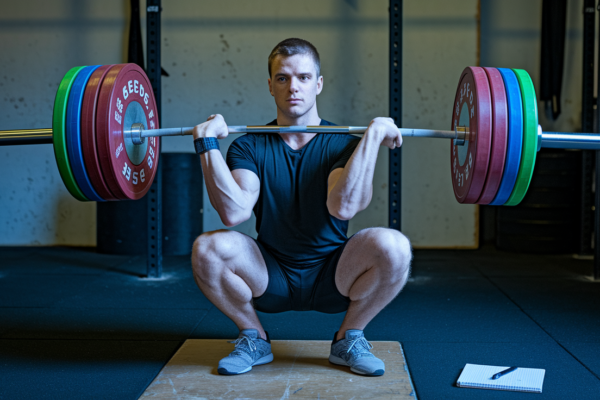
Think adding more plates is the only way to get stronger?
It works at first, but soon you’re up against dumbbell limits, achy joints, or weight jumps that feel like a canyon.
Tempo changes, work density (more work in less rest), and smarter weekly volume let you force adaptation without heavier loads.
This post shows practical tempo, density, and volume strategies, how to use each for 2 to 4 weeks, common mistakes to avoid, and a simple next step you can try this week.
Advanced Progressive Overload: Rapid Methods to Break Through Plateaus

Progressive overload isn’t just about slapping more weight on the bar. Yeah, that works for a while. But eventually you hit equipment limits, your joints start complaining, or the jump from one dumbbell to the next feels like trying to leap across a canyon.
That’s where things get interesting.
You can mess with other training variables to keep forcing your body to adapt. Tempo changes, work density, time under tension, mechanical tweaks. All of these create new stress without needing heavier plates. And they work especially well if you’ve already milked linear progression dry, you’re cutting calories, or your joints are sending you angry messages.
The trick? Change one thing at a time. Track it. Give each method 2 to 4 weeks before you switch again. Otherwise you’re just guessing.
Here are six proven methods that break plateaus without adding load:
- Push reps higher in your target range. Hit 8 reps? Work up to 12 with that same weight before you add anything. Once you’re cruising past 25 to 30 reps, you’ve crossed into endurance territory instead of muscle building.
- Slow things down. Take 3 to 5 seconds on the way down, or pause for a second or two at the stretched position. You’ll see this written like 3-1-1 (3 second lower, 1 second pause, 1 second lift).
- Cut your rest periods. Drop from 90 seconds between sets to 75, then 60. Don’t go below 30 to 45 seconds on big compound moves though, unless you want your form falling apart.
- Go deeper or farther. Deficit push-ups with your hands on blocks, squatting an extra inch lower, holding the stretch at the bottom. More range equals more work per rep.
- Pick harder variations. Go from two arms to one arm. Flat bench to incline. Stable movements to unstable ones. Single-arm dumbbell press is way harder than regular bench even if the total weight is the same.
- Train the same muscles more often. Split your 9 weekly chest sets across two days instead of one, or add an extra lower body session while keeping your upper body days the same.
Some real examples of how this looks:
Bench press at 3 sets of 8 reps with 135 lb gives you 3,240 lb of total work. Bump it to 3 sets of 9 reps and you just added 405 lb of volume without touching the weight.
Standard back squat at 185 lb? Try a 3-1-1 tempo instead. You just tripled your time under tension per rep.
Regular push-ups feeling easy? Stick your hands on 4-inch blocks and drop your chest 2 inches deeper than the floor. Same bodyweight, way more work.
Doing bilateral Romanian deadlifts with dumbbells? Switch to single leg with the same weight. Now each leg is handling the full load plus you’re fighting to stay balanced.
Deadlifting 275 lb for 3 sets of 5 with 2 minute rest? Next week, same weight and reps but only 105 seconds rest. Week after that, 90 seconds. You’re doing more work in less time.
Mechanical Manipulation Strategies

Changing the mechanics of a movement makes it harder without adding plates. You’re shifting leverage, altering tension curves, messing with muscle recruitment. Perfect for when you’re stuck at a certain weight or your joints are being cranky.
ROM Progression
Extending your range of motion means your muscles have to work through more distance. More distance equals more total work, and often you get greater stretch at the lengthened position, which is huge for growth.
You can move from partial reps to full depth. Quarter squats to below parallel. Add a deficit by standing on plates for Romanian deadlifts or putting your hands on blocks for push-ups. Hold the stretched position for a second or two.
Here’s the math on it. Regular floor push-ups versus hands on 25-lb plates that give you an extra 2 inches of depth. Over 4 weeks, 3 sessions per week, 4 sets of 10 reps each session, that’s 960 extra inches of total work. Just from a couple plates under your hands.
Same thing with squats. Going 2 inches below parallel instead of just hitting parallel adds measurable depth that compounds across every single weekly set.
Leverage and Position Changes
Adjusting your body angle or limb position shifts where the exercise is hardest. Moving from a strong position to a weaker one makes the same weight feel heavier.
Flat bench to incline lengthens the lever arm for your front delts. Decline push-ups shift more bodyweight forward. Close-grip variations reduce your mechanical advantage.
This works great when the next dumbbell up is too big of a jump. Or when you want to target a lagging muscle. Like going from chest-supported dumbbell rows (super stable, no core demand) to single-arm bent-over rows where you’re fighting rotation and your torso is working overtime.
Or switching from goblet squats with a single dumbbell to Bulgarian split squats with that same dumbbell. Now one leg is doing all the work instead of splitting it with the other leg.
Unilateral Progression
Single-limb training doubles the per-limb load when you’re using the same total weight. Two 50-lb dumbbells for bench press? That’s 100 lb total split between both arms. Single-arm dumbbell press with one 50-lb dumbbell puts all 50 lb on one side, plus you’re fighting to stay stable.
Super useful when dumbbell jumps are too big to handle bilaterally.
Also exposes strength imbalances you didn’t know existed. You might find out one leg is way weaker during single-leg Romanian deadlifts. Then you can fix it.
Progression goes from bilateral to alternating (like split squats) to true single-limb work (pistol squats, single-leg deadlifts). Or from two-arm rows to single-arm rows. Extends your effective training range before you need heavier equipment.
| Technique | Effect on Demand | Sample Exercise Progression |
|---|---|---|
| ROM Progression | Increases total work per rep, greater stretch tension | Floor push-up → Deficit push-up (hands on blocks) |
| Leverage Change | Alters tension curve and shifts peak difficulty | Flat bench press → Incline bench press (same load) |
| Unilateral Progression | Doubles per-limb load, adds stability/anti-rotation demand | Bilateral dumbbell curl → Single-arm dumbbell curl (same dumbbell) |
Volume and Frequency Variables

Volume and frequency are probably the easiest overload methods to track. Volume is your total hard sets per muscle per week. Frequency is how many times per week you train that muscle. Bump either one up and you’ve increased your weekly workload without touching the weight.
Adding sets is straightforward volume progression. Going from 9 weekly sets for a muscle to 12 sets is a 33 percent increase in stimulus. Let’s say you’re doing 3 sets of bench press, 3 sets of incline dumbbell press, 3 sets of dips. That’s 9 chest sets weekly. Add one set to each exercise and now you’re at 12 sets. If each set averages 10 reps at 135 lb across all movements, that’s 4,050 lb of extra weekly volume.
Works great until your recovery can’t keep up. Most intermediate lifters can handle 10 to 20 sets per muscle per week before they start seeing diminishing returns or piling up too much fatigue.
Frequency changes either split your existing volume across more sessions or add completely new sessions. Taking those 9 chest sets from one Monday workout and splitting them into 5 sets Monday and 4 sets Thursday improves recovery quality between sessions. You’ll probably perform better on each individual set too.
Or you could add a third lower body day while keeping upper body frequency the same. Total weekly volume goes up, lower body gets more stimulus.
Frequency tweaks work especially well for bringing up weak muscles or getting better at technical lifts through more practice.
Six practical ways to progress volume and frequency:
- Add one set per exercise each week. Go from 3 sets of bench to 4 sets. Watch your recovery and performance for 2 weeks before adding another.
- Increase reps within your working range. Move from 3 sets of 8 to 3 sets of 10 with the same weight. Once you’re past 15 to 20 reps for strength or 25 to 30 for size, reset and try a different method.
- Throw in an extra training day. Go from 3 full body days to 4, or hit chest once a week instead of twice. Rotate muscle groups so you’re not overlapping and asking for injuries.
- Add sets for a lagging muscle. Been skipping direct biceps work? Add 3 weekly sets and track your arm measurements every 3 to 4 weeks.
- Spread your volume across more frequent sessions. Had 12 leg sets all on Monday? Split them into 6 sets Monday and 6 Thursday. Usually improves quality and reduces how trashed you feel after each workout.
- Use mini-sets or rest-pause for extra reps. After your planned 3 sets of 10, rest 15 seconds and crank out another 3 to 5 reps. Boosts weekly reps without programming a whole extra set.
Intensity-Based Overload Techniques

Intensity techniques push sets past normal failure or crank up the difficulty per rep without adding weight. They’re brutal but effective. High motor unit recruitment, extended time under tension, serious metabolic stress.
They also trash you pretty hard. Use them strategically, not in every session.
Drop Sets
You work to near failure, immediately drop the weight by 15 to 25 percent, keep going without rest. The lighter load lets you continue even though you’re already fatigued. Extends time under tension and total volume per set.
Best on your last set of an exercise. Works great with machines, dumbbells, cable stacks. Anything you can change weight on quickly.
Example: lateral raises with 20-lb dumbbells for 12 reps to near failure. Immediately grab the 15s for 6 to 8 more reps. Drop to 10s for a final 4 to 6 reps. You just did 20 to 26 total reps in one extended set.
Drop sets create a ton of muscle damage and metabolic buildup. Limit them to 1 or 2 exercises per session. Save them for hypertrophy blocks, not when you’re trying to peak strength.
Rest-Pause Sets
You break one hard set into mini-sets separated by 10 to 20 second breaks. The short rest gives you partial recovery so you can get more high quality reps with a weight that would normally cause failure.
Standard protocol: 8 to 12 reps to near failure (maybe 1 rep left in the tank). Rest 15 seconds while staying in position or holding the weight safely. Crank out as many more reps as possible, usually 3 to 5. Rest another 15 seconds. Final cluster of 2 to 3 reps. Total might hit 15 to 20 reps with a load that normally only lets you get 8 to 12.
Works best on compound moves late in your session. Final set of squats, bench, rows. Avoid it on movements where your form breaking down could hurt you.
Cluster Sets
These use short rests between small rep clusters to keep bar speed and technique sharp at heavier weights. Unlike rest-pause where you go near failure first, cluster sets start with a manageable load (often 80 to 90 percent of your 1RM) and insert 20 to 30 second rests every 2 to 4 reps.
Lets you pile up more total reps at heavier loads than straight sets allow.
Back squat example: load 85 percent of your 1RM (normally good for 5 to 6 reps). Do 3 reps, rack the bar, rest 25 seconds. Another 3 reps, rest 25 seconds. Final 2 to 3 reps. You just did 8 to 9 reps at 85 percent instead of 5 to 6.
Great for strength development and keeping power up during hypertrophy phases. Use them sparingly though. High demand on your central nervous system and the sets take longer.
Mechanical Drop Sets
You change exercise variations mid-set to keep going without reducing the load. Once the first movement gets too hard, immediately switch to a mechanically easier version that targets the same muscle. Same weight, different leverage.
Shoulder example: strict overhead barbell press for 8 reps to near failure. Immediately switch to push press (using leg drive to help) for 4 to 6 more reps. Finish with push jerks for 2 to 3 final reps. Same barbell weight the whole time, but your legs provide assistance as fatigue builds.
Another one: pull-ups to failure, drop to chin-ups (easier because biceps help more), finish with band-assisted chin-ups.
Requires planning your exercise sequence ahead of time. Solid for hypertrophy and muscular endurance.
Extended Sets
After you hit concentric failure, you keep going with partial reps, slow eccentrics, or holds at stretched or contracted positions. Massively increases time under tension and metabolic stress.
Leg press example: 12 full range reps to failure. Immediately bang out 6 to 8 partial reps in the top half of the movement. Finish with a 10 to 15 second hold at the bottom stretched position.
Or barbell curls: hit failure, then do slow 5-second eccentric-only reps for 3 to 4 more reps (use momentum or help from your other hand to get the bar back up).
Creates extreme localized fatigue and muscle damage. Save them for final sets. Don’t use them on big compounds where technique breakdown gets dangerous.
| Technique | Primary Goal | Fatigue Cost | Best Use Case |
|---|---|---|---|
| Drop Sets | Hypertrophy, extend TUT | High local, moderate systemic | Final set on isolation exercises, hypertrophy blocks |
| Rest-Pause | Increase reps at a given load | High local, moderate systemic | Final compound set, plateau-breaking on main lifts |
| Cluster Sets | Strength, maintain quality reps at high intensity | Moderate local, high CNS | Strength phases, power maintenance in hypertrophy |
| Extended Sets | Extreme TUT and metabolic stress | Very high local, moderate systemic | Hypertrophy specialization, final set on accessories |
Technical Improvements as Progressive Overload

Better technique puts more tension on your target muscles and wastes less energy. Tighter bracing, cleaner bar paths, better joint alignment, stronger mind-muscle connection. All of this increases training stimulus without changing sets, reps, or weight.
For a lot of lifters past the beginner stage, technique refinement is the biggest untapped progression method they’re ignoring.
Improved bracing and core stability let you transfer more force during compounds. A lifter who learns to keep a neutral spine and proper abdominal pressure during squats can handle the same weight with less energy leaking out and more tension going to quads and glutes. Optimizing bar path on bench (slight J-curve instead of straight up and down) or deadlift (bar hugging your shins) cuts out wasted movement and improves mechanical efficiency.
Won’t show up on your weight log. But you’ll see measurable strength and size gains over 4 to 8 weeks.
Mind-muscle connection and intentional targeting is another technical jump. Someone doing rows with poor scapular retraction and too much biceps involvement might be pulling the same weight for the same reps, but the tension distribution is garbage. Cue scapular depression, external shoulder rotation, focus on feeling your lats work. Now you’re hitting lats way harder per rep even though the external load didn’t change.
Improves growth and often reveals weaknesses you didn’t know existed. Once you fix those, load progression starts moving again.
Five technique progressions you can track:
- Tempo control and eccentric quality. Track whether each rep includes a controlled 2 to 3 second lowering phase with no bouncing. Video yourself or get a partner to confirm.
- Range of motion consistency. Measure squat depth (hip crease below knee on every rep) or bench press touch point (bar hits the same chest spot every rep). Use depth markers or film yourself.
- Bracing and spinal position. Track your ability to hold neutral spine with no lumbar rounding on deadlifts or squats. Work on breath hold duration under load and abdominal pressure.
- Bar path optimization. Record your bar path on video for bench, squat, overhead press. Aim for minimal side-to-side drift and a consistent vertical line or slight J-curve.
- Mind-muscle connection and contraction quality. Use pre-fatigue sets, slow tempos, pause reps to increase target muscle engagement. Track subjective feel (like “felt my lats way harder on rows today”) and see if it correlates with growth or performance changes over 3 to 4 weeks.
Periodization and Long-Term Overload Planning
Periodization structures your training into planned blocks that vary volume, intensity, and exercise selection over time. Prevents adaptation plateaus, manages fatigue buildup, spreads different overload methods across cycles.
Instead of trying to add weight every single session, periodized programs rotate between rep progression, tempo work, density phases, intensity techniques. Keeps you progressing long term.
Good periodization isolates one or two overload variables per block and gives them enough time (usually 3 to 6 weeks) to create adaptation before shifting focus. A 12-week plan might look like 4 weeks emphasizing volume (adding sets and reps), then 4 weeks focusing on tempo and time under tension, finishing with 4 weeks using rest-pause and cluster sets. Each block builds on what came before while providing fresh stimulus.
Linear Periodization
Linear periodization gradually cranks up intensity (load or effort) while dropping volume over a training cycle. Oldest and simplest model, common in strength programs.
Typical linear setup starts with higher reps and moderate loads (like 4 sets of 12 at 65 percent of your 1RM), moves to moderate reps and heavier loads (4 sets of 8 at 75 percent), peaks with low reps and maximal loads (3 sets of 3 at 90 percent).
Works great for beginners and early intermediates because progression is clear and predictable. You focus on one thing at a time. But it can get limiting for advanced lifters who need more frequent variation to avoid getting stale.
A 16-week linear cycle might go: Weeks 1 to 4 at 10 to 12 reps (building size), Weeks 5 to 8 at 6 to 8 reps (building strength), Weeks 9 to 12 at 3 to 5 reps (peaking strength), Weeks 13 to 14 taper, Weeks 15 to 16 test max strength. Deload weeks after each 4-week block.
Undulating Periodization
Undulating (non-linear) periodization varies intensity and volume within the same week or even the same session. Instead of spending months in one phase, you rotate between different rep ranges, loads, and training goals across multiple weekly sessions. Keeps things fresh and lets you develop multiple qualities at once.
Simple weekly undulating template for a main lift: Monday (heavy) 4 sets of 4 at 85 percent of 1RM, Wednesday (volume) 4 sets of 10 at 70 percent, Friday (speed/power) 5 sets of 3 at 75 percent with explosive tempo. Each session targets something different and you benefit from varied stimulus without long boring blocks.
Fits intermediate and advanced lifters well. Especially useful when you’re training 4 to 6 days per week, letting you train multiple qualities in parallel.
Block Periodization
Block periodization organizes training into sequential blocks (mesocycles) lasting 2 to 6 weeks, each emphasizing one primary quality. Accumulation, intensification, realization. You focus almost entirely on that quality during the block, then move to the next block to build on what you just did. Common in strength sports. Allows deep focus without dilution.
Typical 12-week block sequence: Block 1 (Weeks 1 to 4) Accumulation. High volume, moderate intensity, focus on size and work capacity. Block 2 (Weeks 5 to 8) Intensification. Moderate volume, high intensity, focus on max strength and neural adaptations. Block 3 (Weeks 9 to 11) Realization. Low volume, very high intensity, technical refinement and peaking. Week 12 deload and testing.
Each block sets up the next one. Fatigue gets managed by dropping volume as intensity climbs. Works best for experienced lifters with clear competitive goals. Requires careful planning to avoid overtraining.
| Model | Pros | Cons | Best Use Case |
|---|---|---|---|
| Linear | Simple, clear progression, effective for beginners | Can become stale, less effective for advanced lifters | Novice to early intermediate, clear strength goals |
| Undulating | Frequent variation, develops multiple qualities simultaneously | Requires more planning, can be confusing for beginners | Intermediate to advanced, high training frequency |
| Block | Deep focus on single quality per block, peak performance timing | Requires long planning horizon, qualities may detrain between blocks | Advanced lifters, competitive athletes, periodized peaking |
Key Implementation Guidelines to Avoid Overlap or Overtraining

Stacking multiple progression methods at once piles up fatigue faster than changing one variable at a time. Raises your risk of overtraining, injury, performance tanking. Sustainable overload means isolating variables, rotating methods across blocks, monitoring performance to catch early warning signs of too much stress.
You want consistent, measurable progress over months and years. Not a short burst followed by a crash.
Effective progression depends on clear tracking and decision rules. Each session should show improvement in at least one measurable thing compared to last time. More reps, heavier weight, shorter rest, slower tempo, deeper range. If nothing improves for three straight sessions or weeks, your current method has run its course. Time to introduce a new overload variable.
Rotating methods every 3 to 6 weeks prevents staleness while giving each method enough time to work.
Seven practical rules for safe, sustainable overload:
- Change only one variable per training block. If you’re increasing reps, hold load, tempo, and rest constant. If you’re cutting rest, keep reps and load steady. Isolating variables shows you what’s actually working.
- Track every relevant training variable in a log. Write down date, exercise, load, sets, reps, tempo (like 3-1-1), rest duration in seconds, RPE or reps in reserve. Actual data beats guessing.
- Progress in the smallest possible jumps. Add 2.5 to 5 lb on upper body, 5 to 10 lb on lower body, 1 to 2 reps per set, or 10 to 15 seconds less rest. Small changes pile up safely over weeks.
- Monitor performance markers weekly. Track total weekly volume (sets times reps times load), average session RPE, sleep quality, subjective recovery. If volume jumps more than 10 to 15 percent week over week without a planned reason, dial it back.
- Deload every 4 to 6 weeks. Cut volume by 40 to 50 percent or intensity by 10 to 15 percent for one week to clear accumulated fatigue. Keep movement patterns and frequency but lower total stress.
- Avoid high fatigue techniques on multiple exercises per session. Limit drop sets, rest-pause, extended sets to 1 or 2 exercises per session and only on final sets. Stacking intensity methods across everything creates unsustainable fatigue.
- Prioritize movement quality over numeric progression. If your form breaks down (rounding, shifting, bouncing, incomplete range), stop progressing and fix your technique. Adding weight with poor mechanics leads to injury and inefficient stimulus.
Final Words
Start by picking one change and using it for a few weeks. Try a tempo shift, paused reps, or swapping to single-leg work so you can feel the difference.
The post covered mechanical tweaks, volume/frequency shifts, intensity techniques, technical work, periodization, and safety rules. Each method includes exact steps so you can apply it right away.
Use progressive overload methods beyond adding weight volume density tempo as a tool, not a trick, and track one simple metric like rep quality or weekly sets. You’ll keep getting stronger without chasing heavier plates.
FAQ
Q: What is the 3-3-3 rule for gym?
A: The 3-3-3 rule for gym is a simple progression: perform 3 sets of 3 reps, and when you hit that across three consecutive sessions, increase weight or introduce a tougher variable next session.
Q: What are the different methods of progressive overload training? What are the three ways to increase progressive overload?
A: The different methods of progressive overload training and the three main ways to increase it are: add load, raise volume (more reps/sets or frequency), and change intensity or mechanics (tempo, rest, range of motion, unilateral work, or advanced techniques).
Q: What is the 5 5 5 30 rule?
A: The 5 5 5 30 rule typically means doing 5 sets of 5 reps with 30 seconds rest between sets; it’s a density-focused strength scheme to increase work per minute and build strength under short recovery.