Featured
Lower Body Strength Workout: Build Powerful Legs and Glutes
By derekthornfield
September 13, 2026
Field Notes
Want stronger legs without wasting hours on the treadmill?
This routine focuses on big, practical moves that build real strength and help you in day-to-day life.
We start with compound lifts, then add single-leg and isolation work so you don’t end up with weak spots.
The plan gives exercises, sets and rep ranges, rest guidelines, and a simple progression rule to add weight safely.
If you’ve ever felt stuck or sore for no reason, this is a clear lower body workout you can start this week.
Best Lower Body Strength Exercises (Quick Routine)
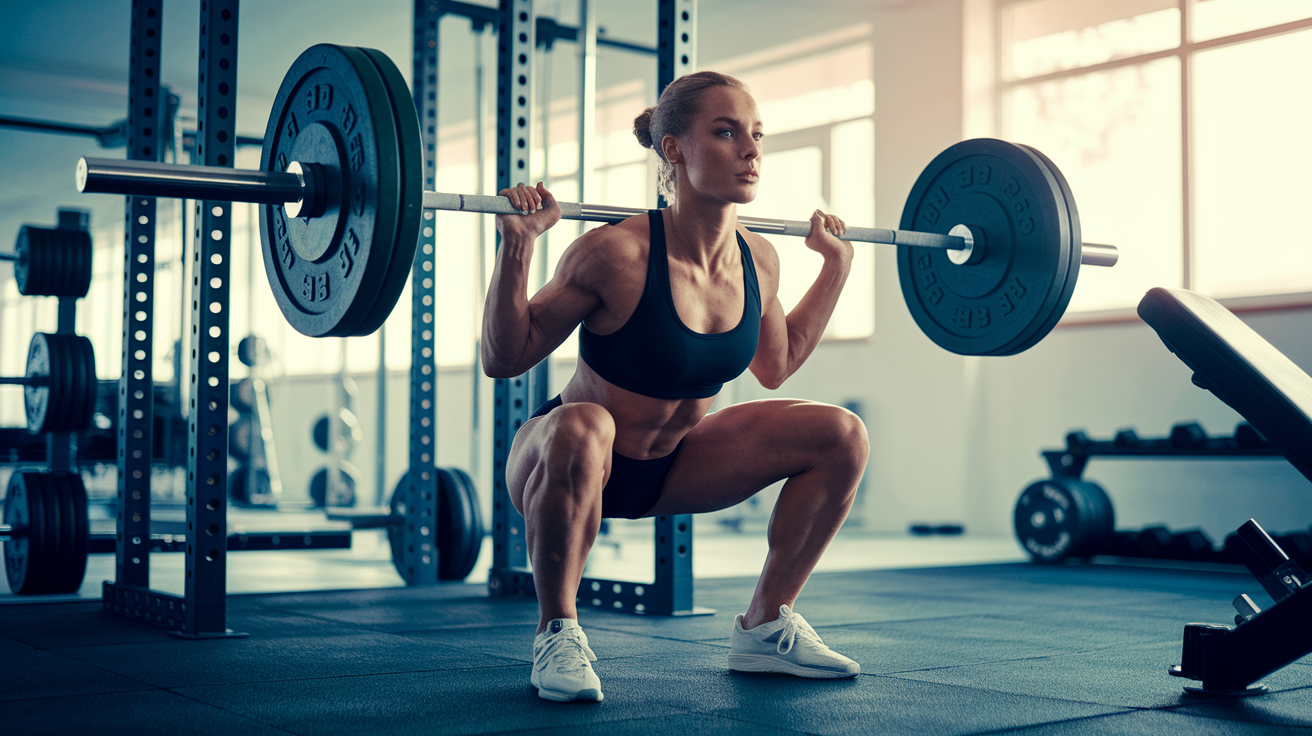
A solid lower body strength routine hits your quads, hamstrings, glutes, and calves while letting you progress safely week after week. This section hands you a ready-to-run workout with exercise picks, set and rep ranges, and rest guidelines you can use today.
Start with compound moves that recruit multiple joints and muscle groups. These deliver the biggest return for your effort. Then add single leg and isolation exercises to catch any imbalances and pile on extra volume where you need it. Keep the order logical: heavy, technical lifts when you’re fresh, then lighter accessory work when fatigue sets in.
Here’s a straightforward list of foundational lower body exercises that work for beginners through advanced lifters:
- Dumbbell or barbell back squat – targets quads, glutes, core
- Romanian deadlift – emphasizes hamstrings, glutes, lower back
- Bulgarian split squat – unilateral quad and glute builder
- Barbell hip thrust – glute dominant with high hip extension
- Walking dumbbell lunges – quads, glutes, and balance
- Leg press – machine based quad and glute work with controlled load
- Single leg Romanian deadlift – hamstring and glute isolation plus stability
- Standing or seated calf raise – calf strength and ankle stability
| Exercise | Sets | Reps | Rest |
|---|---|---|---|
| Barbell Back Squat | 4 | 6–8 | 90–120 sec |
| Romanian Deadlift | 3 | 8–10 | 90 sec |
| Bulgarian Split Squat | 3 | 8–10 per leg | 60–90 sec |
| Barbell Hip Thrust | 4 | 8–12 | 60–90 sec |
| Walking Lunges | 3 | 12–16 total steps | 60 sec |
| Standing Calf Raise | 3 | 12–20 | 45–60 sec |
If you’re new to strength training, start with the lower end of the set and rep ranges. Focus on control over load. Use two sets per exercise and complete every rep with stable form. Once you hit the top of the rep range across all sets for two consecutive sessions, add 5 pounds to upper body loaded moves or 10 pounds to lower body lifts. That simple progression rule keeps you moving forward without guessing.
Pros and Cons of Lower Body Strength Training
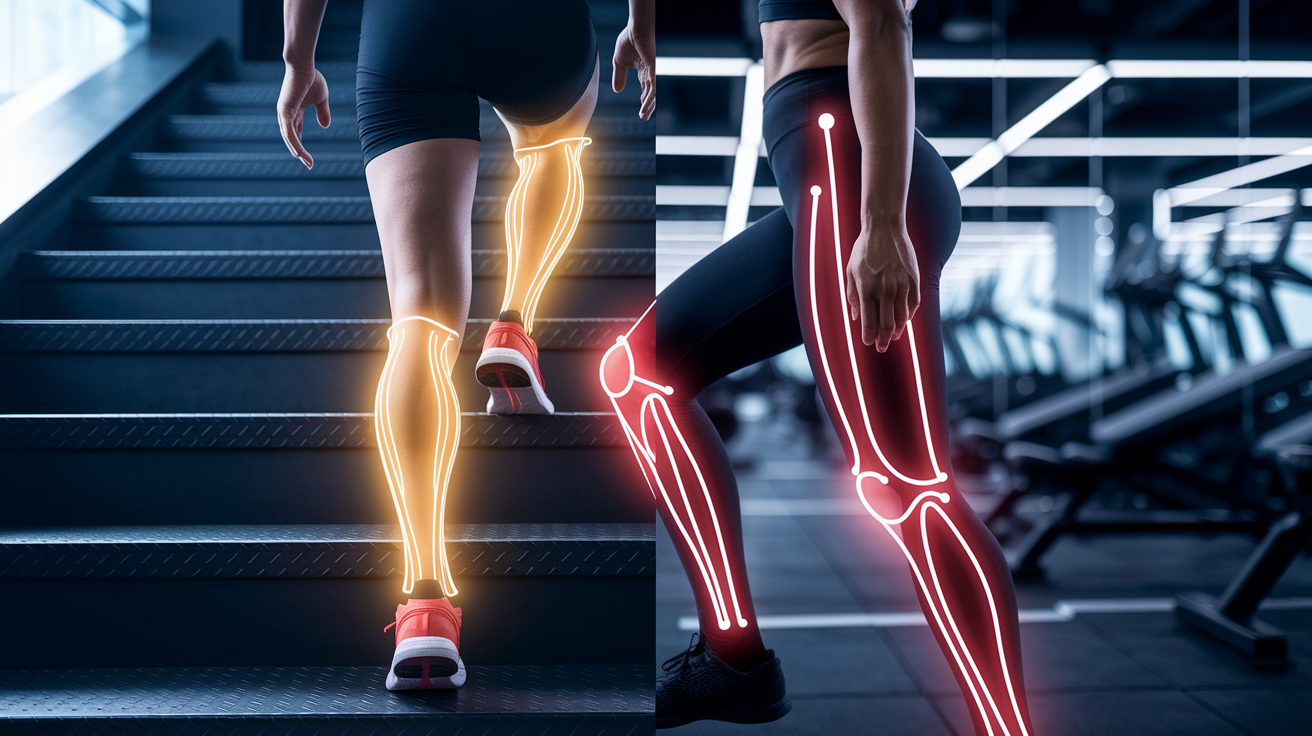
Training your lower body brings measurable improvements to daily function, metabolism, and injury resilience. Large muscle groups demand more energy to work and recover, which raises your resting metabolic rate and helps with body composition. Strong legs and hips also improve posture, reduce compensations that strain your lower back, and support better movement in sports and everyday tasks like climbing stairs or carrying groceries.
But lower body sessions are demanding. You’ll feel fatigue during and after workouts, and delayed onset muscle soreness can last 48 to 72 hours, especially when you’re new or trying unfamiliar movements. Poor technique on heavy lifts can lead to knee, hip, or lower back strain. Balancing volume, intensity, and recovery takes attention.
Pros:
- Increases resting metabolic rate and daily calorie burn
- Builds bone density in hips, spine, and legs
- Improves balance, stability, and coordination
- Reduces injury risk by strengthening stabilizers and connective tissue
- Boosts athletic performance and explosive power
- Supports better posture and reduces lower back compensations
Cons:
- Can cause significant muscle soreness, especially early on
- Requires longer recovery windows than upper body work
- Technique errors under load increase injury risk
- Demands mental focus and energy to execute heavy lifts
- May require specialized equipment for progressive overload
- Can temporarily reduce performance in endurance activities if volume is high
You can manage most of these downsides with smart programming. Warm up for five to ten minutes before each session. Start light, learn the movement pattern, then add load gradually. Allow at least 48 hours between lower body sessions, and dial back volume or intensity if soreness interferes with your form. Use video checks or a coach’s eye to catch technique drift before it becomes a problem. Plan deload weeks every four to eight weeks by cutting volume or load by about 40 percent.
Key Lower Body Muscle Groups
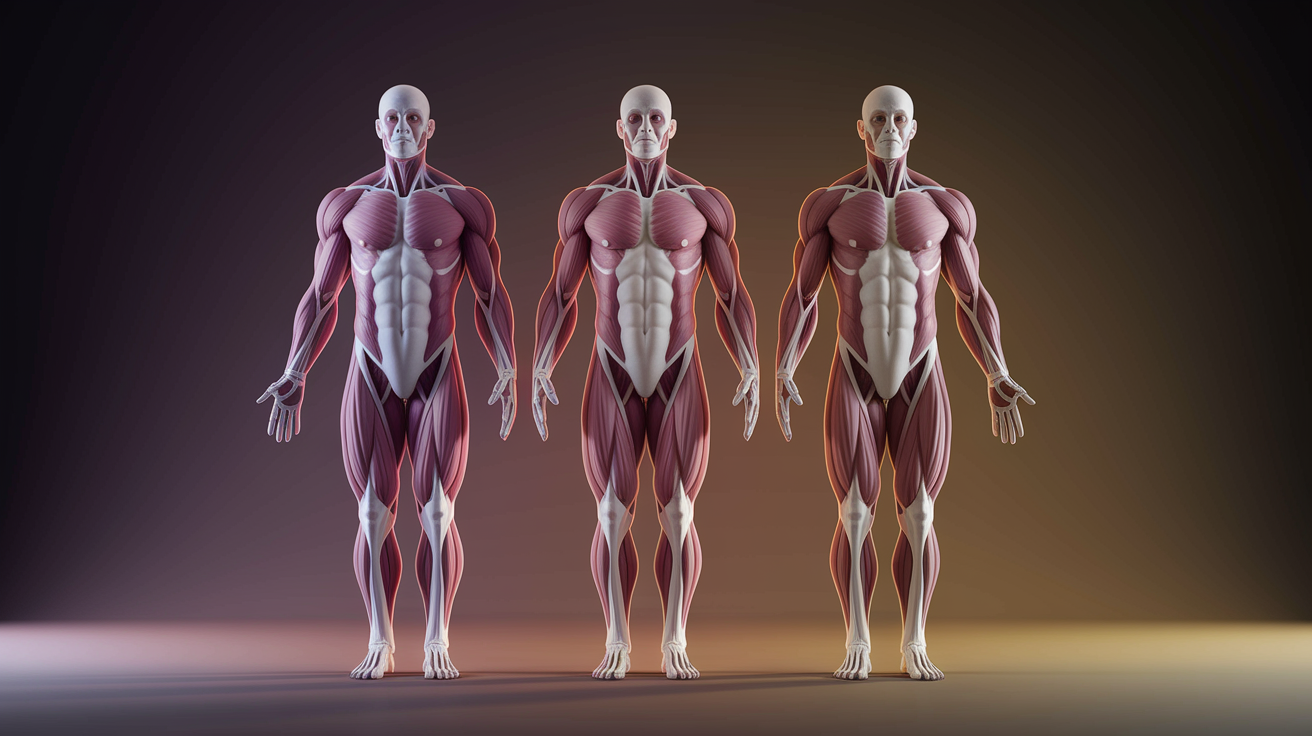
Your quadriceps sit on the front of your thigh and handle knee extension. They fire every time you stand up, climb stairs, or push a sled. Strong quads stabilize your knee joint and support activities that involve jumping, sprinting, or changing direction. Squats, lunges, and leg presses all put high demand on the quads.
The hamstrings run along the back of your thigh and work two jobs: flexing your knee and extending your hip. They’re critical during the lowering phase of a squat, the pull in a deadlift, and any movement that involves hip hinge. Weak hamstrings increase the risk of knee and lower back strain because other muscles have to compensate. Romanian deadlifts, good mornings, and Nordic curls target this group directly.
Your glutes (the maximus, medius, and minimus) extend, abduct, and externally rotate your hip. The glute maximus is the largest and most powerful muscle in your body. It drives you upward in a squat, propels you forward when you run, and stabilizes your pelvis when you stand on one leg. Hip thrusts, step ups, and Bulgarian split squats all emphasize glute activation.
The calves, made up of the gastrocnemius and soleus, handle ankle plantarflexion. You use them every time you walk, run, or jump. Strong calves improve your ability to absorb impact, support balance on uneven surfaces, and contribute to explosive movements. Standing and seated calf raises build strength and endurance in this often overlooked area.
Daily movements powered by these muscles:
- Standing up from a chair or getting out of bed
- Climbing stairs or walking uphill
- Picking up objects from the floor with proper hip hinge
- Pushing off the ground when running or jumping
- Stabilizing your body on one leg while walking or reaching
Essential Lower Body Equipment
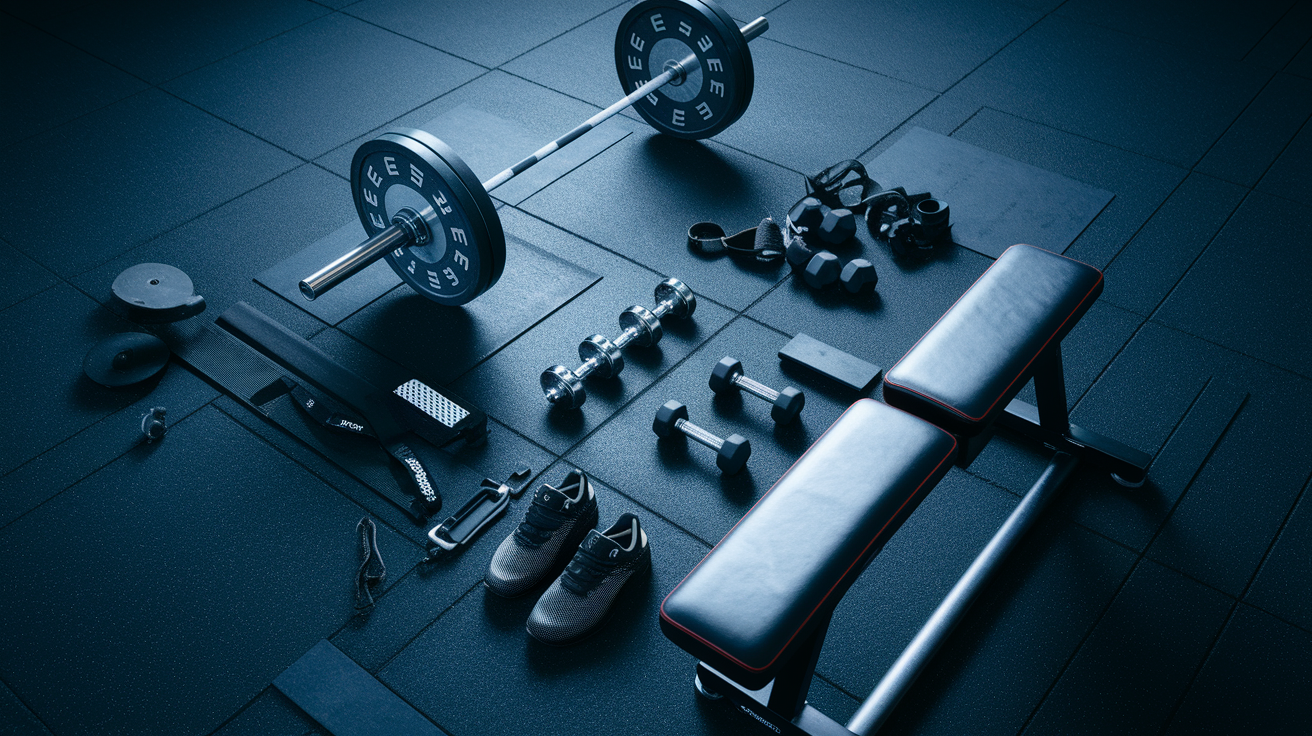
The right equipment expands your exercise options and lets you apply progressive overload in measurable steps. Dumbbells are versatile and beginner friendly. You can use them for goblet squats, lunges, Romanian deadlifts, and step ups. A set ranging from 10 to 50 pounds covers most home training needs, and you can progress to heavier pairs as you gain strength.
Barbells and weight plates allow you to load exercises more heavily than dumbbells. A standard Olympic bar weighs 45 pounds, and adding plates in small increments (2.5 to 10 pounds per side) makes it easy to follow a clear progression plan. If you’re training at home, a power rack with safety pins lets you squat and bench safely without a spotter. Microplates in the 0.5 to 2.5 pound range help when you’re close to your limits and can’t jump by five pounds per side.
Resistance bands offer variable resistance that increases as the band stretches. They’re excellent for activation work. Banded lateral walks and monster walks fire up your glutes and hip stabilizers before heavy lifts. Bands also add accommodating resistance to squats and deadlifts, challenging the top portion of the movement where you’re strongest. For travel or small spaces, bands deliver effective training without taking up room or adding much weight to your bag.
Common lower body equipment:
- Dumbbells (10–100+ lb range)
- Barbell and Olympic plates
- Power rack or squat stand with safety pins
- Flat bench (for hip thrusts and Bulgarian split squats)
- Resistance bands (light to heavy, plus mini bands for activation)
- Plyo box or sturdy platform (for step ups and box jumps)
- Leg press or hack squat machine
- Weight belt and lifting shoes (for heavy compound lifts)
Bodyweight Lower Body Exercises
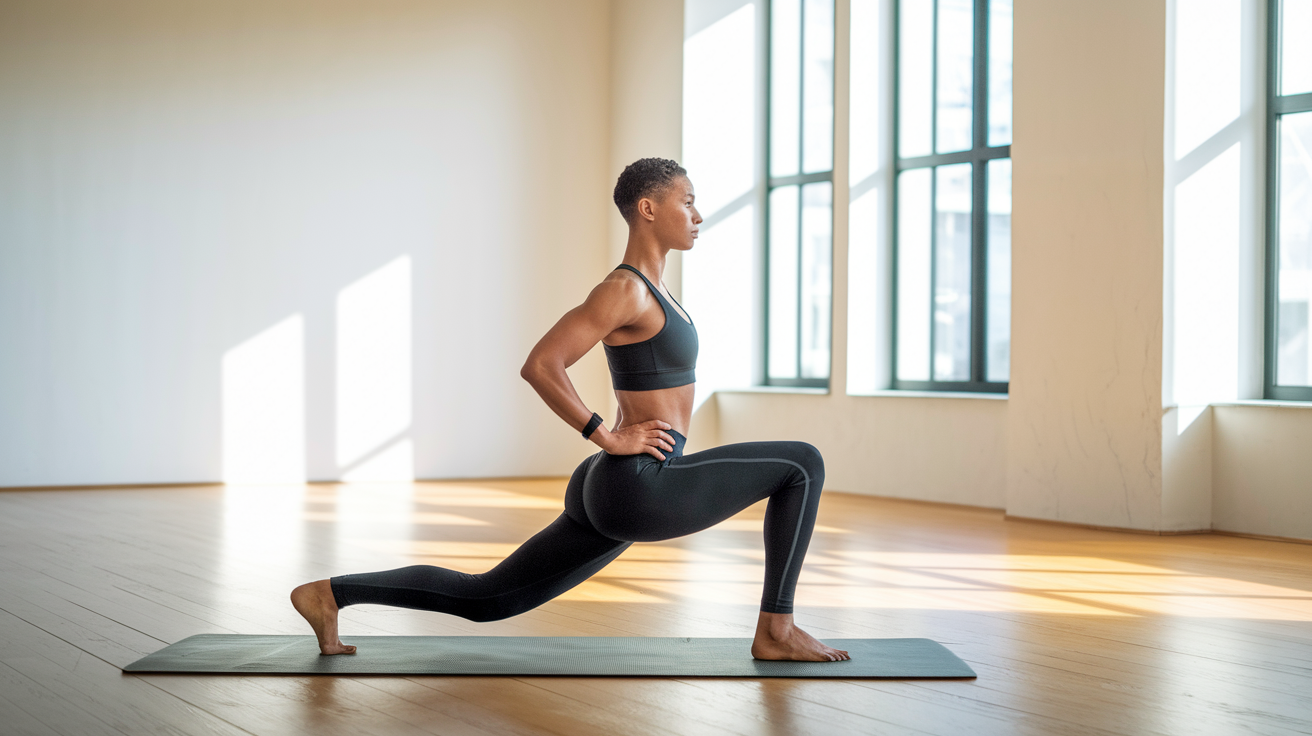
Bodyweight movements build coordination, improve mobility, and teach proper movement patterns before you add external load. They’re also practical when you don’t have access to equipment or when you want a low impact session that still challenges your muscles.
Effective bodyweight lower body exercises:
- Bodyweight squat – full range knee and hip flexion
- Reverse lunge – reduces knee stress compared to forward lunge
- Glute bridge – targets glutes and teaches hip extension
- Single leg glute bridge – adds stability demand
- Bulgarian split squat (rear foot elevated, no weight) – unilateral quad and glute work
- Lateral lunge – emphasizes hip abductors and adductors
- Wall sit – isometric quad endurance
- Calf raise (standing, bodyweight) – ankle plantarflexion
- Step up onto a box or bench – quad and glute activation with balance
- Walking lunge – dynamic lower body coordination
Progressions and Regressions
You can scale bodyweight exercises up or down by changing tempo, range of motion, or stability. Slowing the lowering phase to three or four seconds increases time under tension and builds control. Reducing range (stopping a squat at quarter depth instead of full depth) makes the move easier if you have mobility limits or joint discomfort. Adding a pause at the bottom of a squat or lunge increases difficulty without extra weight.
Six ways to adjust bodyweight exercise difficulty:
- Tempo manipulation – slow eccentric (lowering) to 3–4 seconds for more challenge
- Isometric holds – pause at the bottom of a squat or lunge for 2–5 seconds
- Single leg variations – pistol squats, single leg Romanian deadlifts, or single leg glute bridges
- Plyometric versions – jump squats, jump lunges, or box jumps for power
- Reduced range – quarter or half squats when full depth isn’t accessible yet
- Assisted support – hold a doorframe or use a suspension trainer for balance during single leg moves
How to Perform Lower Body Strength Exercises Safely
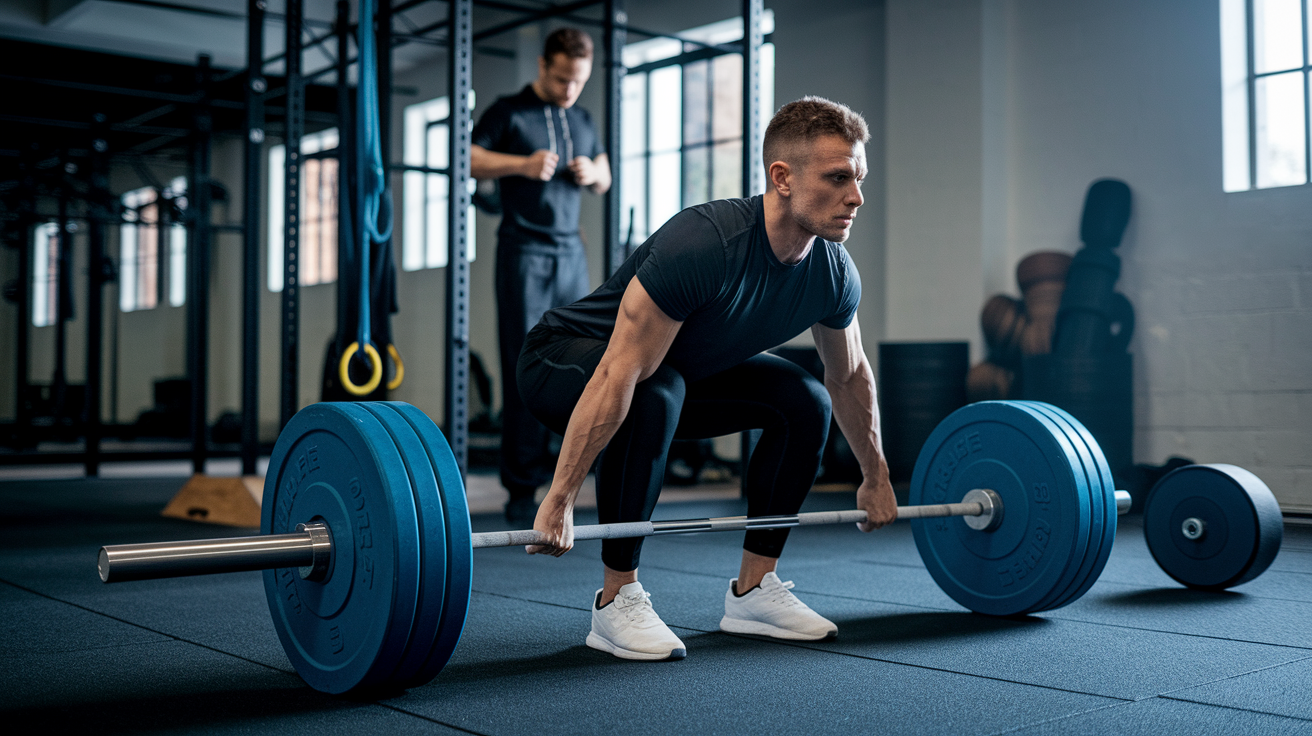
Safe execution starts with understanding the movement pattern before you add significant load. Poor form under heavy weight magnifies stress on joints and connective tissue, turning a productive exercise into a setup for strain or injury. Take time to rehearse each lift with an empty bar, light dumbbells, or just your bodyweight until the movement feels smooth and controlled.
Warming up prepares your muscles, joints, and nervous system for the work ahead. Spend five to ten minutes on light cardio (walking, cycling, or rowing) to raise your heart rate and increase blood flow. Follow that with dynamic stretches: leg swings, walking lunges, and hip openers. Finish with one or two activation sets of your first exercise at 40 to 60 percent of your working weight. That ramp primes the specific muscles and movement pattern you’re about to load.
Neutral spine alignment protects your lower back during loaded exercises. Keep your chest up, shoulders back, and avoid excessive rounding or arching. Engage your core by bracing as if you’re about to take a punch to the stomach. Maintain that tension throughout the lift. Breathing matters too: inhale at the top or during the easier phase, hold your breath through the hardest part to maintain intra abdominal pressure, then exhale as you return to the start.
Seven steps for safe lower body exercise execution:
- Warm up for 5–10 minutes with light cardio and dynamic mobility drills.
- Perform 1–2 activation sets at 40–60% of your working load to rehearse the pattern.
- Set your stance and alignment before you initiate the movement. Feet stable, core braced, spine neutral.
- Control the eccentric (lowering) phase. Use a 2 to 3 second descent to maintain tension and stability.
- Drive through your midfoot or heels on the concentric (lifting) phase. Avoid shifting weight onto your toes.
- Stop the set if form breaks down. Don’t chase one more rep at the expense of technique.
- Rest adequately between sets. 60 to 120 seconds for hypertrophy work, 2 to 5 minutes for heavy strength sets.
Comparison of Lower Body Training Approaches
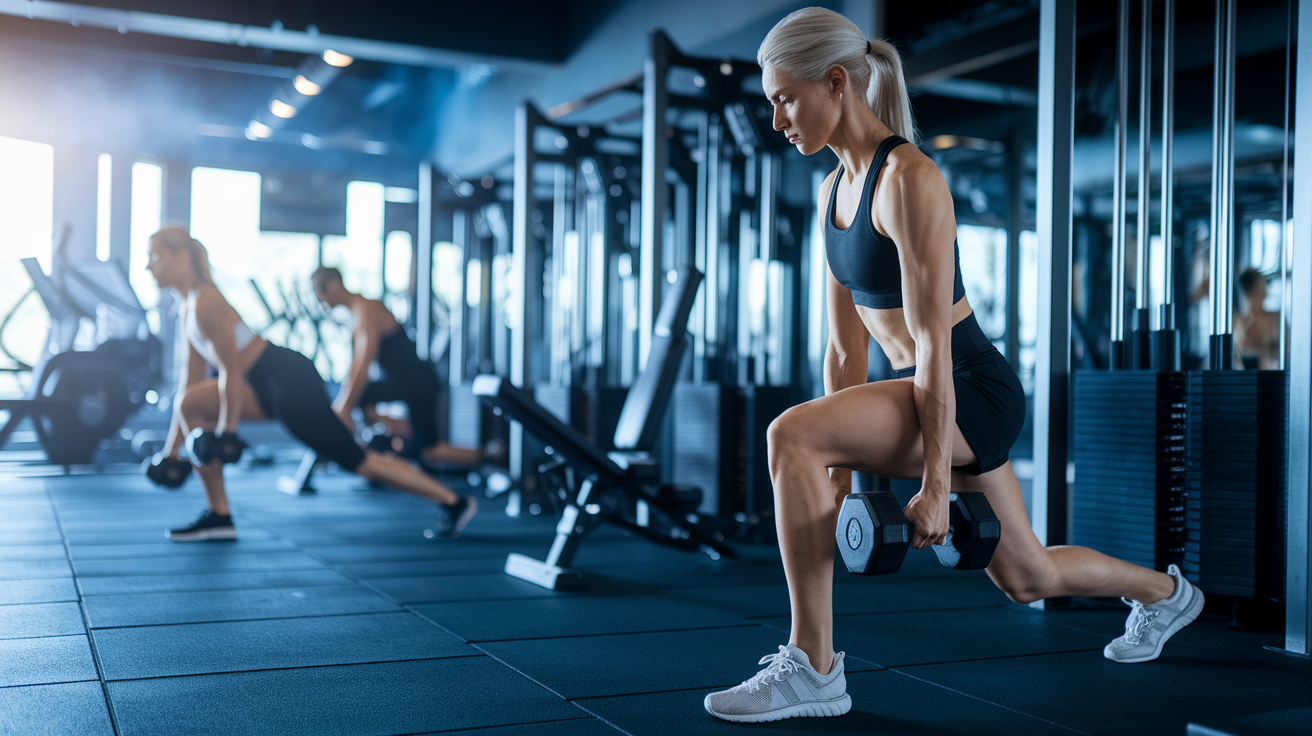
Different training methods serve different goals. Compound exercises like squats and deadlifts recruit multiple joints and muscle groups, making them efficient for building overall strength and power. They also demand more from your nervous system, which means they’re best placed early in a session when you’re fresh. Isolation exercises (leg curls, leg extensions, calf raises) target a single muscle group and let you add volume without the same systemic fatigue.
Free weights require you to stabilize the load in three dimensions, which builds coordination and engages smaller stabilizer muscles. Machines guide the movement path and remove some stabilization demand, letting you focus purely on pushing or pulling against resistance. That makes machines useful when you want to safely load a muscle group to fatigue or when you’re working around an injury that limits your ability to balance a barbell.
| Training Method | Benefits | Limitations |
|---|---|---|
| Compound exercises (squat, deadlift) | Recruits multiple muscles; builds functional strength; efficient use of time | Higher technical demand; longer recovery; requires equipment or gym access |
| Isolation exercises (leg curl, calf raise) | Targets specific muscles; easier to learn; adds volume with less fatigue | Lower carryover to real world movement; less efficient for total strength |
| Free weights (barbell, dumbbell) | Builds stabilizer strength; teaches balance; scalable load | Steeper learning curve; injury risk if technique is poor; requires safety equipment |
| Machines (leg press, hack squat) | Guided movement; safer for beginners; allows heavy loads with less risk | Limited stabilizer engagement; less carryover to free movement; gym dependent |
| Bodyweight exercises | No equipment needed; improves coordination; low injury risk | Harder to apply progressive overload; may become too easy as strength increases |
How to Progress Lower Body Strength Over Time
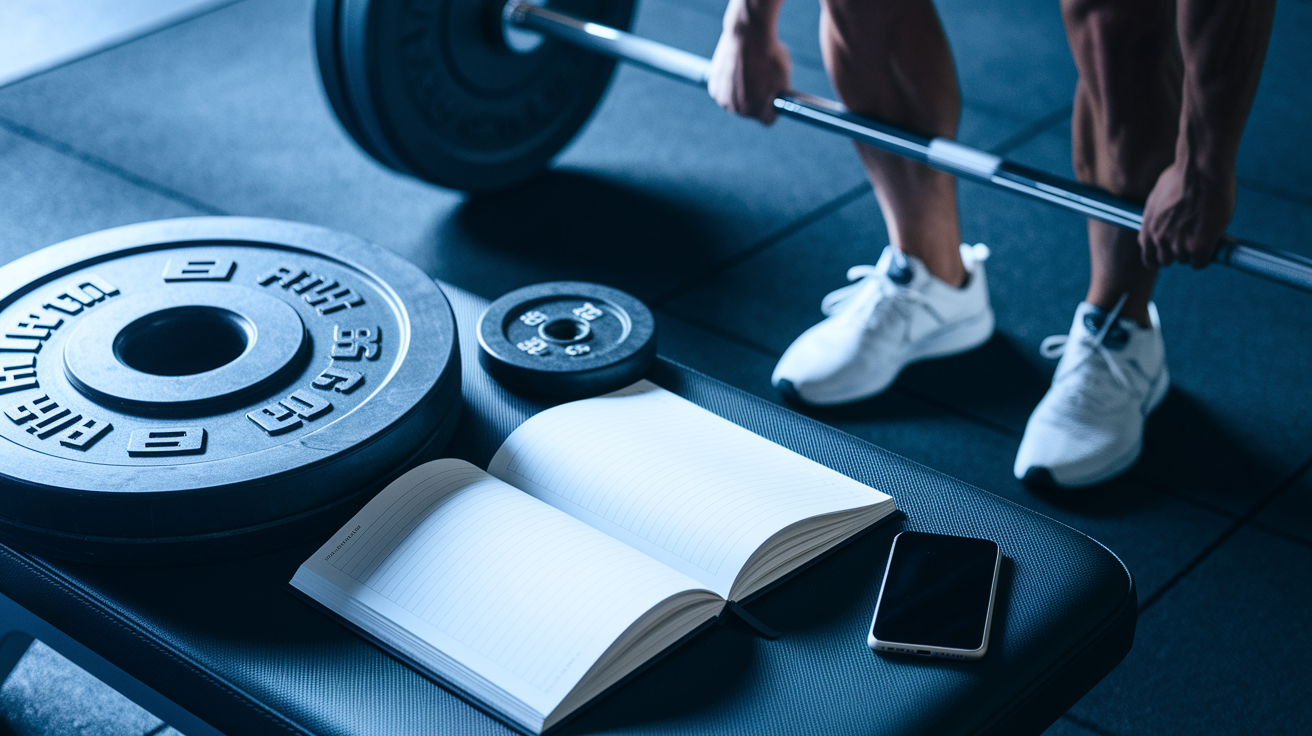
Progressive overload is the principle that drives strength gains. Your muscles adapt to the stress you place on them, so you need to gradually increase that stress to keep improving. The simplest method is adding weight. Once you complete all your target reps across all sets with good form, increase the load by 2.5 to 5 percent and start the rep range over.
You can also progress by increasing reps within a given range. If your program calls for 6 to 8 reps, start at 6. When you hit 8 reps for all sets, add weight and drop back to 6. Another option is to slow your tempo. Taking three or four seconds on the lowering phase increases time under tension and makes the same load feel harder. Adding training frequency, extra sets, or reducing rest periods between sets all create new stimulus without immediately requiring more weight on the bar.
Practical Progression Examples
- Add 5–10 pounds per week to lower body compound lifts once you hit the top of your rep range across all sets
- Increase reps by 1–2 per session until you reach the upper limit of your target range, then add load
- Slow the eccentric to 3–4 seconds to increase time under tension without changing weight
- Add one extra set to your primary exercises every 2–4 weeks to increase weekly volume
- Reduce rest periods by 10–15 seconds between sets to increase workout density
- Switch to a more challenging variation (goblet squat to barbell back squat, or regular lunge to Bulgarian split squat)
- Use microplates (0.5–2.5 lb) for small, consistent jumps when standard plates feel too large
- Incorporate tempo pauses (pause for 2 seconds at the bottom of a squat or lunge to build strength in the weakest position)
Track your sets, reps, and loads in a notebook or app so you can see whether you’re moving forward. If progress stalls for two to three weeks, check your recovery, nutrition, and sleep before adding more volume. Sometimes the fix is a planned deload week at 60 percent of your normal volume, giving your body a chance to adapt to the work you’ve already done.
Final Words
Hit the big moves first — squats, lunges, deadlifts, hip thrusts, step‑ups and calf raises — with the quick routine and the 3–5 set, 8–12 rep guidelines we laid out.
We also walked through pros and cons, the main muscle groups, gear options, bodyweight swaps, safety steps, and straightforward progression ideas. Keep technique, warm ups, and gradual volume changes as your guardrails.
Pick one simple plan this week and stick to it. A steady lower body strength workout builds strength, confidence, and better daily movement.
FAQ
Q: What are 5 exercises to build lower body strength?
A: Five exercises to build lower body strength are squats, deadlifts, lunges, hip thrusts, and calf raises; they target quads, hamstrings, glutes, and calves for functional power and stability.
Q: What is the 3-3-3 rule for working out?
A: The 3-3-3 rule for working out means choosing three exercises, doing three sets of each, and training them three times per week to build strength and consistent habit formation.
Q: How to build strength in your lower body?
A: To build strength in your lower body, prioritize compound lifts (squats, deadlifts, lunges), use progressive overload (add weight or reps), aim for 3–5 sets of 4–8 reps, and allow proper recovery.
Q: Do leg exercises lower blood pressure?
A: Leg exercises can lower blood pressure: regular aerobic and resistance work for the legs modestly reduces resting blood pressure, especially when paired with overall weekly cardio and resistance sessions.