Featured
Microcycle and Mesocycle Planning for a 12-Week Strength Block
By fitness
September 12, 2026
Field Notes
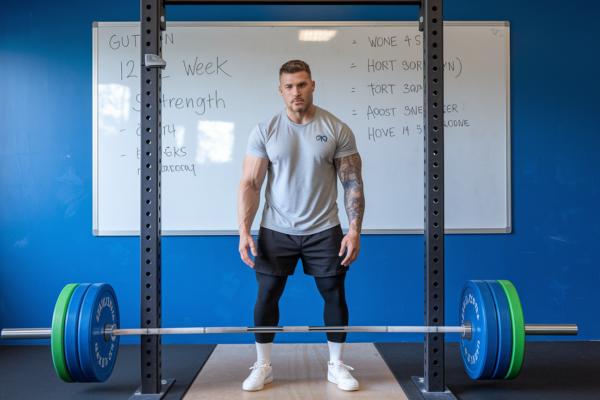
Most lifters waste 12 weeks by winging it.
If you want real strength gains, plan your 12-week strength block as three 4-week mesocycles, each built from repeatable weekly microcycles.
That simple structure has three hard weeks and a lighter deload week.
It lets you add weight or reps predictably while avoiding long-term fatigue.
This post shows exactly how to set those microcycles and mesocycles, what to push each week, when to deload, and which main lifts to prioritize so you finish the block stronger and ready for the next phase.
12-Week Strength Block Structure at a Glance

A 12-week strength block breaks naturally into three 4-week mesocycles. Each one targets a different adaptation. Mesocycle 1 (weeks 1–4) focuses on accumulation and hypertrophy, building work capacity with moderate intensity and higher volume. Mesocycle 2 (weeks 5–8) shifts into intensification, raising intensity while keeping volume steady or slightly reduced. Mesocycle 3 (weeks 9–12) moves into peak or realization, where you lift the heaviest loads with lower total volume to express the strength you’ve built. Each mesocycle follows a 3:1 pattern. Three weeks of progressive overload followed by one lighter deload week.
Microcycles run on a 7-day schedule, organizing your weekly training rhythm. Each week includes hard sessions, recovery days, and adjustments to load or volume based on where you are in the mesocycle. Most lifters train 3–5 days per week, with one or two heavy compound sessions, one moderate session, and lighter accessory or technique work as needed. Microcycles let you tweak things week to week without derailing the larger plan.
Weekly progressions are simple and repeatable. During weeks 1–3 of each mesocycle, you add weight, reps, or sets. Week 4 is your deload. Cut volume by 40–50% and reduce intensity slightly to recover. This pattern repeats across all three mesocycles, but the emphasis shifts from volume to intensity as the block progresses.
| Mesocycle | Weeks | Primary Focus | Typical Intensity Range | Volume Trend |
|---|---|---|---|---|
| 1 – Accumulation | 1–4 | Hypertrophy, work capacity | 60–75% 1RM | High sets/reps |
| 2 – Intensification | 5–8 | Strength development | 75–90% 1RM | Moderate sets, lower reps |
| 3 – Realization/Peak | 9–12 | Peak strength expression | 85–95% 1RM | Low sets, heavy loads |
Definitions and Roles of Mesocycles and Microcycles

A mesocycle is a multi-week training phase focused on a single primary adaptation. Most mesocycles last 3–6 weeks, with 4 weeks being the most common length in strength programs. Each mesocycle targets one goal: building muscle, increasing max strength, or peaking for a test.
A microcycle is the smallest planned training unit, typically lasting one week. It dictates your daily schedule. Which days you lift heavy, which days you recover, and which movements you prioritize. Microcycles repeat weekly but adjust in load, sets, or reps as the mesocycle progresses.
Both layers work together to create sustainable progress. Mesocycles give you a multi-week roadmap, preventing random jumps in intensity or volume. Microcycles organize the week-to-week rhythm so you don’t overload the same muscle or movement pattern without recovery. When you stack three mesocycles with progressive microcycles inside each, you get 12 weeks of structured, predictable gains without guesswork or burnout.
Volume and Intensity Progression Across the Block

Weekly progression follows a clear pattern. Increase training stress for 3 weeks, then reduce stress in week 4 to allow recovery and supercompensation. During overload weeks, you can add load (typically 2.5–5% per week on compound lifts), add reps (move from 6 reps to 8 reps at the same weight), or add sets (go from 4 sets to 5 sets). Pick one variable and push it each week.
Mesocycle shifts change the emphasis. In weeks 1–4, you do more total work at moderate intensity. Think 3–5 sets of 8–12 reps at 65–75% 1RM. By weeks 5–8, you increase load to 75–90% 1RM and drop reps to 3–6 per set, keeping total hard sets similar but raising intensity. In weeks 9–12, you lift heavy. 85–95% 1RM with fewer total sets but maximum neural demand. Volume drops as intensity climbs because you can’t sustain high sets at very high percentages without accumulating fatigue faster than you can recover.
Deload weeks (4, 8, and 12) cut volume and intensity to refresh your system. You’re not trying to push progress during deloads. You’re absorbing the last three weeks of work and resetting fatigue. After a proper deload, you should feel ready to attack the next mesocycle with fresh energy and healed tissues.
Week 1 of any mesocycle: Start slightly below your current capability to allow technique refinement and readiness assessment.
Week 2: Increase load or volume by 2.5–5%, or add 1–2 reps per set.
Week 3: Push to the top of the planned range. Highest reps, heaviest load, or peak sets for the mesocycle.
Week 4 (deload): Drop volume by 40–50%, keep intensity moderate (10–20% lighter), or maintain load but cut sets in half.
Between mesocycles: Retest or re-estimate maxes at the start of week 5 and week 9 to recalibrate percentages based on new strength.
Periodization Models for a 12-Week Strength Block

Linear periodization means you steadily increase intensity week-over-week across the entire 12 weeks. You might start at 60% 1RM in week 1 and finish near 95% by week 11, reducing reps as load climbs. This model is simple, easy to track, and works well for beginners or anyone coming off a long training break.
Daily undulating periodization (DUP) varies intensity and rep ranges within the same week. You might squat heavy (3–5 reps at 85%) on Monday, moderate (6–8 reps at 75%) on Wednesday, and light-volume (10–12 reps at 65%) on Friday. Each session targets a slightly different adaptation, spreading fatigue across the week and keeping technique sharp. DUP fits well into a 12-week block by cycling these three intensities every microcycle and nudging all three intensity zones upward as each mesocycle progresses.
Block periodization divides the 12 weeks into distinct mesocycles, each with one dominant training quality. Weeks 1–4 build muscle and work capacity (accumulation). Weeks 5–8 develop max strength (intensification). Weeks 9–12 peak or realize the built strength with low-volume, high-intensity work (realization). Block periodization is the most common choice for intermediate and advanced lifters running a 12-week strength block because it allows deep focus on one adaptation at a time without dilution.
All three models can work. But block periodization aligns best with the mesocycle structure described here because each 4-week mesocycle has a clear purpose, and you don’t try to chase multiple goals at once.
Exercise Selection and Movement Priorities

Your strength block should center on 3–5 primary compound lifts. These are the movements you’ll progress weekly and test at the end of the block. Common choices include squat variations (back squat, front squat, safety-bar squat), hinge patterns (conventional deadlift, Romanian deadlift, trap-bar deadlift), horizontal press (barbell bench press, close-grip bench), vertical press (overhead press, push press), and primary pulls (barbell row, weighted pull-up). Choose lifts that match your goal, equipment, and injury history.
Accessory lifts fill gaps and support the main movements. They target weak points. If your squat collapses because of quad strength, add leg press or Bulgarian split squats. If your bench stalls at lockout, program close-grip press or triceps work. Accessories run at moderate to high reps (6–15) and moderate intensity, and they don’t need weekly progression like the main lifts. You can rotate accessories every mesocycle or keep them consistent if they’re working.
Volume for main lifts varies by mesocycle. During accumulation, aim for 8–15 hard sets per main lift per week across all sessions. During intensification, keep heavy sets in the 8–12 range but increase intensity. During realization, drop to 4–8 heavy sets per main lift but lift near-maximal loads. Accessories add another 6–12 sets per muscle group per week, spread across 2–3 exercises, depending on your total training days and recovery capacity.
Squat or primary lower-body press pattern
Hinge or posterior-chain dominant pull (deadlift, RDL)
Horizontal press (bench press or close-grip variation)
Vertical press or overhead movement
Primary back/pull movement (row or pull-up)
Targeted accessories for weak points (split squats, hamstring curls, triceps, rear delts, core)
Deload Placement and Fatigue Management

Deloads appear at the end of each mesocycle: week 4, week 8, and week 12. These weeks give your muscles, joints, and nervous system time to recover from three weeks of progressive overload. Without scheduled deloads, accumulated fatigue eventually outpaces your ability to adapt, leading to stalled progress, nagging aches, or overreaching.
A proper deload reduces training stress without eliminating it entirely. The most common approach is to cut volume by 40–50% while keeping intensity moderate. If you normally squat 5 sets of 5 reps at 80% 1RM, your deload might be 2–3 sets of 5 reps at 70–75%. Alternatively, keep the load similar but cut sets in half and stop all sets 2–3 reps short of failure. Both methods work. Pick the one that leaves you feeling refreshed but not detrained by the end of the week.
Week 12 can be a full deload if you’re not testing, or it can serve as a taper if you plan to test maxes. A taper maintains intensity but drastically reduces volume (1–2 hard sets per lift at 85–90%) so you peak for testing without residual fatigue. Either way, don’t skip the final recovery week. Pushing through fatigue in week 12 won’t add strength. It just risks injury or a poor test result.
Example Weekly Templates and Loading Parameters

Weekly templates organize your training days and recovery days into a repeatable rhythm. A 4-day upper/lower split might look like this: Monday (lower heavy), Tuesday (upper heavy), Wednesday (rest or active recovery), Thursday (lower volume), Friday (upper volume), Saturday and Sunday (rest). A 3-day full-body template might train Monday, Wednesday, Friday with varied intensities each session. Heavy squat and light bench on Monday, moderate deadlift and moderate press Wednesday, light squat and heavy press Friday.
Loads are prescribed using percentages of your 1RM or with RPE (rate of perceived exertion) targets. During accumulation, main lifts sit around 65–75% 1RM or RPE 6–7 (leaving 3–4 reps in the tank). Intensification pushes to 75–90% or RPE 7–9 (1–3 reps in reserve). Realization weeks hit 85–95% or RPE 9–10 (0–1 reps in reserve). If you don’t know your 1RM, use a 3–5RM test at the start of the block and estimate percentages from there.
| Day | Main Lift | Sets/Reps | Intensity (% or RPE) |
|---|---|---|---|
| Monday | Back Squat | 5 × 5 | 80% / RPE 8 |
| Wednesday | Bench Press | 4 × 6 | 75% / RPE 7 |
| Thursday | Deadlift | 3 × 5 | 82% / RPE 8 |
| Friday | Overhead Press | 4 × 8 | 70% / RPE 7 |
Testing and Evaluation Protocols

Testing happens after a taper or deload to remove fatigue and let your true strength show. Most lifters test in week 12 or immediately after completing the final deload. Common test options include a true 1RM (single-rep max), a 3RM (three-rep max that you convert to an estimated 1RM using a formula), or an AMRAP set (as many reps as possible at a fixed percentage, then estimate max from reps completed).
True 1RM testing requires careful warm-up progression and a spotter or safety setup. Start with an empty bar, add weight in 10–20% jumps until you reach around 60% of your estimated max, then make smaller jumps (5–10%) until you hit a weight you can lift once with good form but can’t repeat. Rest 3–5 minutes between heavy attempts. Don’t attempt more than 3–4 true max-effort singles in one session to avoid excess fatigue or injury risk.
Taper for 5–7 days before testing: reduce volume by 50–70%, keep intensity at or above 85%, and prioritize sleep and nutrition.
Perform a standardized warm-up on test day: 5–10 minutes of light cardio, dynamic stretching, then progressive load warm-up sets (bar, 50%, 70%, 85%, 95% before attempting max).
Record all test results and compare to your baseline numbers from the start of week 1 to measure block effectiveness and set new training maxes for your next cycle.
Final Words
Run three 4-week mesocycles—accumulation, intensification, and peak—while structuring each week as a clear 7-day microcycle with progressive overload and planned deloads.
You’ve got volume and intensity rules, periodization options, movement priorities, sample weekly templates, and testing steps to use right away.
Use these simple rules to guide your microcycle and mesocycle planning for a 12-week strength block: add weight when you hit the top of the rep range, drop volume for deloads, and test after the peak. Do the work, track it, and you’ll finish stronger.
FAQ
Q: Can a mesocycle be 12 weeks?
A: A mesocycle can be 12 weeks, but typical strength plans split 12 weeks into three 4-week mesocycles; longer single-phase mesocycles suit skill or hypertrophy but cut chances to tweak load and fatigue.
Q: What is the 3-3-3 rule for gym?
A: The 3-3-3 rule in the gym usually means 3 sets of 3 reps, focusing on heavy, low-rep strength work with longer rest between sets; it’s useful for building maximal strength.
Q: What is an example of a mesocycle workout plan?
A: An example mesocycle workout plan is a 4-week accumulation phase: three weekly sessions, main lifts 3–5 sets of 6–10 reps, accessories 2–3 sets, add one rep or small weight each week.
Q: What is the 12 week hypertrophy program?
A: The 12-week hypertrophy program is three 4-week blocks: accumulation (high volume), intensification (heavier loads), and a final block or taper; train 3–5 days weekly and progressively add reps or weight each week.