Featured
How to Calculate Weekly Training Load Using RPE and Sets: Simple Formula and Tracking Method
By fitness
September 12, 2026
Field Notes
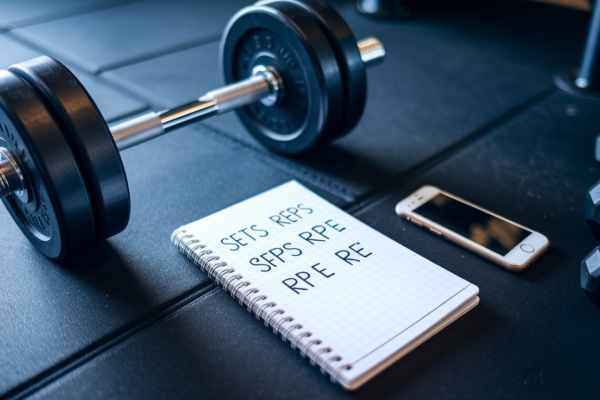
Think counting sets and reps tells you everything about training load? Not even close.
Using RPE (rate of perceived exertion) with sets gives one simple number that actually matches how hard you worked.
In this post you’ll get the exact formula, sets × reps × RPE, how to add session totals into a weekly load in arbitrary units (AU), and a no-fuss tracking method to spot spikes, plan deloads, and avoid surprise fatigue.
Start tracking today; it’s quick and you don’t need lab gear.
Core Formula for Calculating Training Load
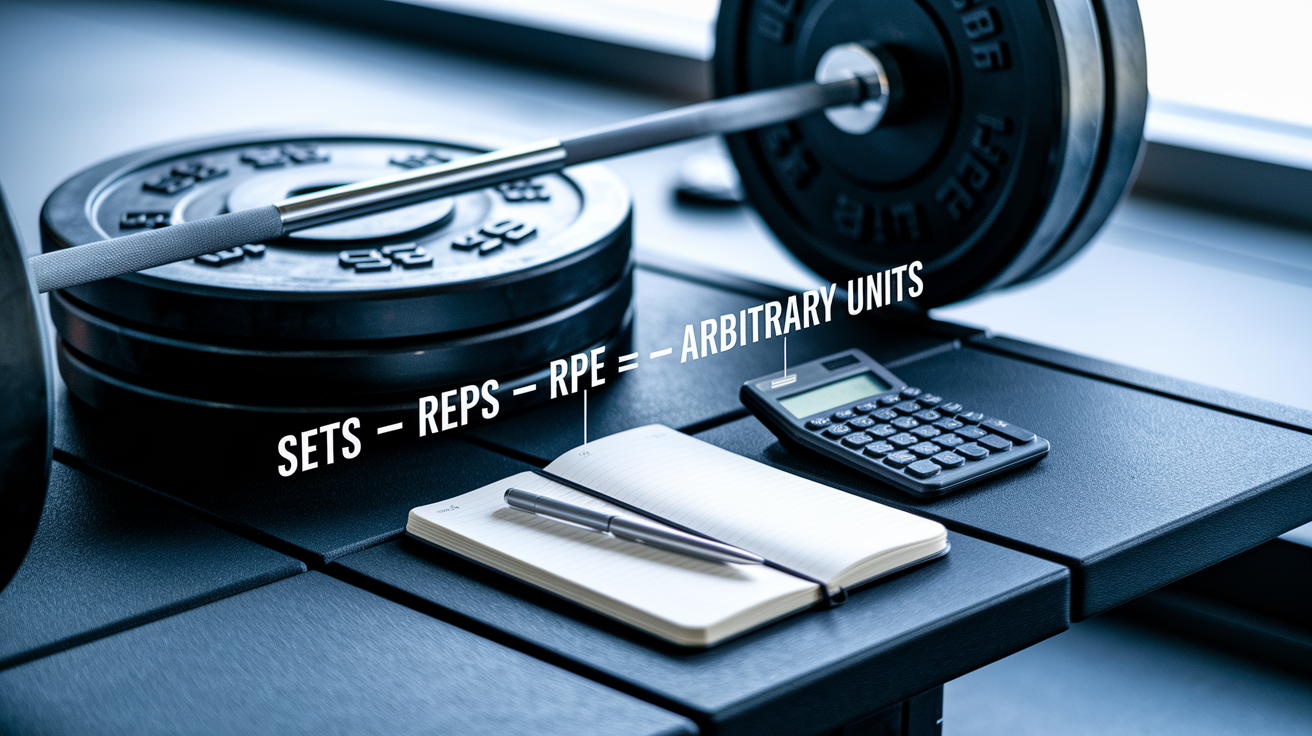
The formula is Sets × Reps × RPE. You multiply the number of sets you completed by the total reps in each set, then multiply that result by your perceived effort on a 1–10 scale. The answer is expressed in arbitrary units (AU) that let you compare sessions and weeks without needing lab equipment.
For example, if you complete 4 sets of 6 reps at an RPE of 8, the calculation is 4 × 6 × 8, which equals 192 AU. That single number captures both the volume of work (24 total reps across four sets) and how hard it felt to complete them. Higher RPE ratings push the load up even when volume stays the same, which makes the formula sensitive to intensity changes that pure set and rep counting misses.
Calculation steps:
- Count the number of working sets you performed for one exercise.
- Multiply sets by the number of reps completed in each set.
- Rate the difficulty of those sets on the 1–10 RPE scale immediately after finishing.
- Multiply the sets × reps result by your RPE rating to get the exercise load in AU.
- Repeat for every exercise in the session, then sum all exercise loads to get your session total.
Worked example:
Back squat: 3 sets × 5 reps × RPE 8 → 3 × 5 × 8 = 120 AU
Bench press: 4 sets × 6 reps × RPE 7 → 4 × 6 × 7 = 168 AU
Romanian deadlift: 2 sets × 3 reps × RPE 9 → 2 × 3 × 9 = 54 AU
Session total = 120 + 168 + 54 = 342 AU
Understanding the RPE Scale

RPE stands for Rate of Perceived Exertion and runs from 1 to 10. Lower numbers mean easier effort with many reps still available, while higher numbers signal you’re close to or at your physical limit. The scale is subjective, but it works because you’re the expert on how hard your body is working, especially when external measures like bar speed or heart rate aren’t available.
RPE 1–10 breakdown:
| RPE | Effort Level |
|---|---|
| 1 | Minimal effort, like standing or walking slowly. |
| 2 | Very light activity, barely any strain. |
| 3 | Light effort, could continue indefinitely without fatigue. |
| 4 | Moderate effort, starting to feel some work but still comfortable. |
| 5 | Moderately hard, noticeable exertion but sustainable for a while. |
| 6 | Hard effort, could manage 4+ more reps before failure. |
| 7 | Very hard, approximately 2–3 reps left in reserve. |
| 8 | Extremely hard, 1–2 reps left before technical breakdown or failure. |
| 9 | Near maximal, maybe 1 rep remaining. |
| 10 | Maximal effort, nothing left, complete failure or hardest session ever. |
Applying the Formula Across Different Exercises

Every exercise gets its own load calculation because effort varies by movement pattern, muscle group, and fatigue state. A heavy deadlift at RPE 9 generates far more load per rep than an accessory curl at RPE 6, even if the set and rep schemes look similar on paper. Summing individual exercise loads gives you a realistic picture of total session stress.
Compound lifts typically produce higher loads because they recruit more muscle mass and allow heavier loads, which pushes RPE up faster. Isolation moves contribute smaller totals but still count toward your weekly accumulation. If you’re running a program with varied intensity across exercises, calculating each one separately prevents you from underestimating total fatigue or missing a recovery need.
Sample exercise loads:
Overhead press: 5 sets × 5 reps × RPE 8 → 5 × 5 × 8 = 200 AU
Barbell row: 4 sets × 8 reps × RPE 7 → 4 × 8 × 7 = 224 AU
Leg curl: 3 sets × 10 reps × RPE 6 → 3 × 10 × 6 = 180 AU
Cable triceps extension: 3 sets × 12 reps × RPE 5 → 3 × 12 × 5 = 180 AU
Plank hold (timed, 3×30 sec treated as 3 sets × 1 “rep”): 3 × 1 × RPE 7 → 21 AU
Walking lunges: 2 sets × 20 reps × RPE 8 → 2 × 20 × 8 = 320 AU
Creating a Weekly Training Load Total

Add up every session total from Monday through Sunday to get your weekly training load. If you trained four days and logged session loads of 342 AU, 280 AU, 300 AU, and 220 AU, your weekly total is 342 + 280 + 300 + 220 = 1,142 AU. That single number lets you compare this week to last week or track trends over a training block.
Steps to calculate weekly load:
Log each training session’s total load in arbitrary units right after the workout. At the end of the week, sum all logged session totals. Record the weekly total alongside the date range (for example, “Week of May 5: 1,142 AU”). Compare the new weekly total to the previous week and to your four-week rolling average to spot sudden spikes or drops.
Example using three training days:
Monday (lower body): Back squat 120 AU + Romanian deadlift 54 AU + leg press 210 AU = 384 AU
Wednesday (upper body): Bench press 168 AU + barbell row 224 AU + overhead press 200 AU = 592 AU
Friday (full body): Deadlift 180 AU + incline press 140 AU + leg curl 180 AU = 500 AU
Weekly total = 384 + 592 + 500 = 1,476 AU
Interpreting Weekly Load Numbers

Weekly load totals tell you how much stress you accumulated and whether your body had time to adapt. Low totals (below your recent average by 20% or more) may signal under-recovery from illness, travel, or intentional deload. Moderate totals that sit within 10% of your four-week average suggest stable training. High totals (15% or more above average) can indicate productive overreach if planned, but become risky when they appear multiple weeks in a row without scheduled recovery.
Sudden jumps above 10–20% week-to-week raise injury and overtraining risk because tissues and the nervous system need gradual adaptation. If you jump from 1,000 AU one week to 1,400 AU the next without a ramp, fatigue compounds faster than fitness improves.
Common weekly load thresholds:
| Load Range | Training Status |
|---|---|
| Below 0.8 × chronic average | Under-trained relative to recent baseline, may lose conditioning. |
| 0.8–1.3 × chronic average | Safe progression zone, low injury risk. |
| 1.3–1.5 × chronic average | Moderate risk, monitor recovery closely. |
| Above 1.5 × chronic average | Elevated risk, consider reducing volume or intensity. |
| Week-to-week increase >10% | Flag for possible excessive jump, especially if unplanned. |
Practical Adjustments for Programming

You can dial load up or down by changing any part of the formula. Reducing sets or reps lowers volume, while backing off RPE by one or two points cuts intensity without altering the number of lifts. If your weekly total climbed too high last week, trimming one or two sets per exercise across the week can bring load down by 20–30% without scrapping the entire plan.
Methods to raise or lower load:
Add or remove sets. One extra set per exercise across four exercises can add 100+ AU to a session.
Adjust reps per set. Moving from 5 reps to 8 reps increases volume; dropping to 3 reps reduces it.
Shift RPE targets. Programming RPE 7 instead of RPE 9 for the same sets and reps cuts load by roughly 20%, preserving movement practice with less fatigue.
Change exercise selection. Swap a compound lift (high load per set) for an isolation move (lower load per set) to reduce total session stress.
Insert rest days or split sessions. Spreading four high load days across five or six days with active recovery slots prevents acute spikes.
Use deload prescriptions. Cut volume by 40–50% for one week every 3–6 weeks, keeping intensity moderate (RPE 6–7) to maintain skill without accumulating fatigue.
Tracking Load Progress Over Time

Consistent tracking turns raw numbers into actionable patterns. When you log every session and compute weekly totals, you can spot whether you’re climbing steadily, plateauing, or spiking unpredictably. A four-week rolling average (chronic load) smooths out day-to-day noise and gives you a stable baseline to compare against. Divide this week’s total (acute load) by the four-week average to calculate the Acute-to-Chronic Workload Ratio, a key metric for injury prevention.
Steps to set up a simple tracking system:
Create a spreadsheet or note with columns for Date, Exercise, Sets, Reps, RPE, and Calculated Load (Sets × Reps × RPE). Sum all exercise loads at the end of each session to get the session total. At the end of each week, add up all session totals to record your weekly training load. Every Sunday, calculate the average of the past four weeks’ totals to update your chronic baseline and compute the current week’s ACWR (acute ÷ chronic).
Troubleshooting Common Load Calculation Issues

Misjudging RPE is the most frequent mistake. If you consistently rate sets as RPE 7 when you actually have four reps left, your calculated load will be artificially high and won’t match your real fatigue. Rating effort right after the last set, before you cool down or forget how hard it felt, keeps numbers honest. Some lifters also forget to exclude warm-up sets, which inflates totals without adding meaningful training stress.
Inconsistent rep counting happens when you log target reps instead of completed reps. If the plan called for 5 but you only finished 3 on the final set, use 3 in the formula for that set. Forgetting to calculate load per set and then sum them leads to errors when RPE or reps vary across sets. Track each working set separately, then add them up for the exercise total.
Common problems:
Underestimating or overestimating RPE. Use a reference like reps-in-reserve (RIR 2 ≈ RPE 8) to anchor your ratings.
Including warm-up sets. Only count working sets at or above RPE 6.
Logging planned reps instead of actual reps. Record what you completed, not what the program prescribed.
Forgetting to sum all exercises. A session isn’t complete until you add every exercise load together.
Skipping weekly aggregation. Without a weekly total, you can’t spot trends or calculate ACWR.
Inconsistent recording timing. Rating RPE hours later introduces recall bias; do it within 30 minutes of finishing the set.
Final Words
We started with the exact formula, sets × reps × RPE, and showed how to use it right away. You learned the RPE 1–10 meaning, per-exercise examples, and a worked session calculation.
Then we covered summing session loads into a weekly total, how to read low, moderate, and high loads, simple tweaks to change load, and a quick tracking method.
Try tracking three workouts this week and summing them, which is how to calculate weekly training load using RPE and sets. You’ll learn fast and can adjust safely.
FAQ
Q: What is the core formula for calculating training load?
A: The core formula for calculating training load is sets × reps × RPE (RPE on a 1–10 scale), giving a simple session score that rises as intensity or volume increases.
Q: How do I calculate load step-by-step using sets × reps × RPE?
A: To calculate load step-by-step: multiply sets by reps by RPE for each set, add sets for the exercise, then sum all exercises to get the session total.
Q: How does the RPE 1–10 scale map to effort for load calculation?
A: The RPE 1–10 scale maps effort: lower numbers mean easier work; RPE 6 means several reps left, RPE 10 is maximal effort—use the RPE number directly in the load formula.
Q: How do I calculate load for different exercises and combine them for a session?
A: Calculate load per set (sets×reps×RPE), total the sets for each exercise, then add each exercise’s totals to get the session load.
Q: How do I create a weekly training load total from daily sessions?
A: A weekly training load total is the sum of all session loads across the week; record each session and add them to monitor weekly stress.
Q: How should I interpret low, moderate, and high weekly load numbers?
A: Low weekly load suggests recovery or too little stimulus; moderate supports steady progress; high signals elevated fatigue and higher injury risk—prefer gradual weekly increases.
Q: What simple rules help adjust programming using load changes?
A: To adjust programming using load: change RPE, reps, sets, or weight; increase one element slowly, decrease volume or RPE to lower load, and keep weekly changes small.
Q: How can I track load progress over time with a simple system?
A: Track load progress by logging session loads in a spreadsheet or app, note RPE and context, then review weekly and monthly trends to spot progress or sudden jumps.
Q: What common mistakes should I avoid when calculating training load?
A: Common calculation mistakes include misjudging RPE, skipping per-set totals, inconsistent rep counts, and failing to sum exercises—double-check entries and standardize RPE cues.