
What if surgery didn’t have to mean long hospital stays and avoidable problems?
Enhanced Recovery After Surgery, or ERAS, is a step-by-step care plan that cuts complications by about 20 to 50%, shortens hospital stays by 1 to 3 days, and lowers opioid use.
It works because teams optimize what happens before, during, and after your operation, from prehab and nutrition to gentle anesthesia and early walking.
This article shows the simple, proven ERAS steps that speed healing and keep you safer.
Core Overview of Enhanced Recovery After Surgery

Enhanced Recovery After Surgery (ERAS) is a multimodal, evidence-based care pathway that reduces the physical stress of surgery, keeps your body functioning normally, and speeds up how fast you heal. It’s not just one thing. It’s a coordinated plan that covers what happens before surgery, what the surgical team does during the operation, and how you’re cared for afterward. ERAS also treats you as an active participant in your own recovery, and the protocols get tailored to whatever type of surgery you’re having, whether that’s a colon resection or a joint replacement.
The purpose is simple. Get you back to normal life faster while keeping you safer. Traditional surgical care often meant long hospital stays, more complications, and weeks of slow recovery. ERAS fixes those problems by optimizing every step, using proven interventions like early feeding, early walking, and pain control that doesn’t rely so heavily on opioids. When teams apply ERAS consistently, patients see measurable improvements across many types of operations.
Benefits you can expect from ERAS pathways:
- Hospital stays are shorter, often by 1 to 3 days
- Fewer complications, with reductions commonly between 20% and 50% depending on the surgery
- Lower opioid use during and after surgery, which means less risk of side effects and dependency
- Faster return to eating, walking, and daily activities
- Lower healthcare costs because of shorter stays and fewer readmissions
ERAS isn’t a single fix. It’s a bundle of around 20 distinct components, each backed by clinical research. Some apply to nearly every surgery. Others get modified for specific procedures or patient needs. The pathway works because each element reinforces the others, creating a system that consistently improves outcomes when teams stick to the full protocol.
Preoperative Components of ERAS Pathways

The preoperative phase starts weeks before surgery. Instead of just showing up on the day of your operation, you actively work to optimize your health, correct nutritional gaps, manage chronic conditions, and learn what to expect during recovery. This preparation is where many ERAS gains begin. Entering surgery in better condition leads to faster healing and fewer complications.
Nutrition plays a big role in pre-surgery prep. Patients get screened for malnutrition, defined as a body mass index below 18.5 or unintentional weight loss of more than 10% in three to six months. When malnutrition shows up, teams prescribe high-protein supplements or specialized nutrition counseling. The goal is giving your body enough fuel and building blocks, especially protein, to repair tissue after surgery. Many programs recommend eating protein-rich foods like lean meat, fish, eggs, low-fat dairy, nuts, and protein shakes daily leading up to the operation.
Prehabilitation, or “prehab,” refers to structured exercise and conditioning before surgery. A common target is walking 30 minutes, about 2 miles, three times per week in the weeks before the procedure. Even light activity helps maintain muscle mass, cardiovascular fitness, and lung capacity, all of which support post-surgery recovery. If you can’t walk that distance, you’re encouraged to do what you can and gradually build up. Prehab also includes deep breathing exercises and education on post-op mobilization.
Key preoperative ERAS interventions:
- Patient education sessions explaining the surgery, recovery timeline, and your responsibilities
- Smoking cessation at least 2 to 4 weeks before surgery to reduce lung and wound complications
- Alcohol cessation for at least 4 weeks to lower infection and healing risks
- Anemia correction through iron supplementation or other treatments if hemoglobin is low
- Glucose control, making sure diabetic patients have well-managed blood sugar before the operation
- Medication review and adjustment, especially for blood thinners, diabetes drugs, and chronic pain medications
- Carbohydrate loading, typically a 12.5% carbohydrate drink (800 mL the evening before, 400 mL two to three hours before surgery) to reduce insulin resistance and muscle breakdown
This structured preparation sets the stage for safer anesthesia, smoother surgery, and a body that’s ready to heal.
Intraoperative Strategies Supporting ERAS

During surgery, ERAS protocols focus on minimizing physical stress through careful anesthesia, precise fluid management, body temperature control, and surgical techniques that cause less trauma. These strategies work together to keep your body as close to normal function as possible, even while you’re under anesthesia and undergoing an operation.
Minimally invasive surgical techniques, like laparoscopy or robotic-assisted procedures, are preferred when appropriate. They result in smaller incisions, less pain, reduced blood loss, and faster recovery. Even when open surgery is necessary, ERAS teams apply principles like smaller, carefully placed incisions and avoidance of unnecessary tissue dissection. The choice depends on clinical evidence and the specific procedure, but the goal is always to reduce surgical trauma.
Anesthesia management in ERAS emphasizes opioid-sparing multimodal approaches. Instead of relying mostly on intravenous opioids, anesthesiologists combine regional nerve blocks, local anesthetic infiltration at the incision site, and non-opioid medications like acetaminophen and NSAIDs. This combination controls pain effectively while avoiding the sedation, nausea, breathing suppression, and constipation caused by high-dose opioids. For major abdominal surgeries, epidural analgesia is often used. For joint replacements, nerve blocks around the surgical site provide excellent pain relief without general side effects.
Fluid management during surgery follows a “goal-directed” approach rather than giving large, fixed volumes of intravenous fluids. Using monitors that track stroke volume and cardiac output, anesthesia teams tailor fluid administration to each patient’s needs in real time. This individualized strategy prevents both fluid overload, which can cause lung complications and delayed bowel function, and dehydration, which can impair organ perfusion. Maintaining normal body temperature, with a target core temperature of at least 36.0°C, is another critical component. Warming blankets and heated IV fluids prevent hypothermia, which increases infection risk, impairs blood clotting, and slows drug metabolism.
| Component | Purpose | Expected Benefit |
|---|---|---|
| Minimally invasive surgery | Reduce tissue trauma and incision size | Less pain, faster mobilization, shorter hospital stay |
| Multimodal analgesia | Control pain using multiple non-opioid medications and nerve blocks | 30–70% reduction in opioid use, fewer side effects |
| Goal-directed fluid therapy | Individualize IV fluid based on real-time hemodynamic monitoring | Avoid fluid overload and dehydration, better organ function |
| Normothermia maintenance | Keep core body temperature ≥36.0°C | Reduced infection and bleeding risk, faster drug clearance |
| Prophylactic antibiotics | Deliver within 60 minutes before incision | Lower surgical site infection rates |
| Avoidance of routine drains and tubes | Limit nasogastric tubes and surgical drains unless clearly indicated | Faster return of bowel function, earlier mobilization |
Postoperative ERAS Measures

The hours and days right after surgery are where ERAS protocols make some of their biggest differences. Traditional post-surgery care often kept patients in bed, delayed food and drink, and relied heavily on opioid pain medications. ERAS flips that. It encourages early eating, early walking, and opioid-sparing pain control from the moment you wake up.
Early oral intake means offering clear fluids and food as soon as you’re awake and able to swallow safely, often within hours of surgery. For many operations, you can start sipping water in the recovery room and progress to a regular diet by the next morning. This early feeding reduces the risk of muscle breakdown, supports wound healing, and restores normal gut function faster. Studies consistently show that early feeding doesn’t increase complications like nausea or anastomotic leaks in colorectal surgery. It often shortens hospital stays.
Early mobilization is a cornerstone of ERAS postoperative care. The goal is getting you sitting up, standing, and walking within 6 to 12 hours after surgery, then continuing to walk two to three times per day while in the hospital. Moving early prevents blood clots in the legs, maintains muscle strength, improves lung expansion, and speeds the return of bowel function. Nurses and physical therapists assist you in taking those first steps, which can feel difficult but are critical for recovery. Even simple in-bed exercises like ankle pumps and rotations help circulation when full walking isn’t possible yet.
Pain management after surgery relies on scheduled, around-the-clock non-opioid medications rather than opioids given only when pain becomes severe. A typical multimodal regimen includes acetaminophen 1 gram every 6 to 8 hours, an NSAID like ibuprofen 200 to 400 mg every 6 to 8 hours (if kidneys and bleeding risk allow), and sometimes gabapentin for nerve-related pain. This combination treats pain through different mechanisms and often provides better relief than opioids alone, while dramatically reducing opioid consumption. Opioids are still available as rescue medication if pain breaks through, but they become the backup rather than the first line.
Additional postoperative ERAS elements:
- Antiemetic prophylaxis using scheduled medications to prevent nausea and vomiting, which improves comfort and supports early feeding
- Early removal of urinary catheters, typically within 24 hours unless there’s a specific reason to keep them, to reduce infection risk and encourage mobility
- Thromboprophylaxis with mechanical compression devices (inflatable leg sleeves) and sometimes blood-thinning medications to prevent deep vein thrombosis
- Structured discharge criteria that focus on functional recovery, like tolerating a regular diet, controlling pain with oral medications, and walking independently, rather than arbitrary time-based milestones
- Patient education on warning signs to watch for at home, including fever above 100.5°F for more than 6 hours, persistent vomiting, severe abdominal pain, or new calf swelling
Evidence and Clinical Outcomes of ERAS Protocols

ERAS protocols are backed by hundreds of clinical studies and systematic reviews showing consistent improvements across multiple outcomes. The evidence is strong enough that many surgical societies now recommend ERAS as the standard of care for common operations. When hospitals implement ERAS pathways and track results, they typically see shorter hospital stays, fewer complications, and better patient satisfaction.
Length of stay reductions are one of the most visible benefits. In colorectal surgery, ERAS programs often cut the average hospital stay from 5 to 8 days down to 2 to 4 days. Hip and knee replacement patients frequently go home the same day or within 1 to 2 days instead of staying 3 to 4 days. These reductions happen because you recover faster when you eat and walk early, avoid opioid side effects, and follow structured pathways that prevent delays.
Complication rates also improve under ERAS. Studies report relative reductions of 20% to 50% in overall complications depending on the surgery type and how fully the protocol is followed. Specific complications that decline include surgical site infections, pneumonia, blood clots, and prolonged ileus (delayed return of bowel function). The combination of optimized nutrition, infection prevention, early mobilization, and careful fluid management addresses the root causes of many post-surgery problems.
| Outcome | Effect Size | Evidence Source |
|---|---|---|
| Length of hospital stay | Reduced by 1–3 days on average | Meta-analyses across colorectal, orthopedic, and gynecologic surgeries |
| Overall complications | 20–50% relative reduction | Systematic reviews in multiple specialties |
| Opioid consumption | 30–70% reduction in postoperative opioid use | Annals of Surgery 2021, multi-center ERAS studies |
| Readmission rates | Generally unchanged or modestly reduced | Observational ERAS program audits |
| Cost savings per patient | Approximately $1,000–$8,000 depending on procedure | Economic analyses in colorectal and orthopedic ERAS programs |
Opioid use drops sharply in ERAS programs. A 2021 study in Annals of Surgery found that ERAS patients received significantly fewer opioid prescriptions at discharge compared to traditional care, with the reduction driven by effective multimodal analgesia during the hospital stay. Lower opioid exposure reduces side effects like constipation and nausea during recovery and may lower the risk of long-term opioid dependence. Readmission rates under ERAS are typically similar to or slightly better than traditional care, showing that shorter stays don’t come at the cost of safety when discharge criteria are met and follow-up is structured. Cost savings result primarily from shorter hospital stays and fewer complications, with per-patient savings varying by procedure and institution.
Specialty-Specific Applications of ERAS
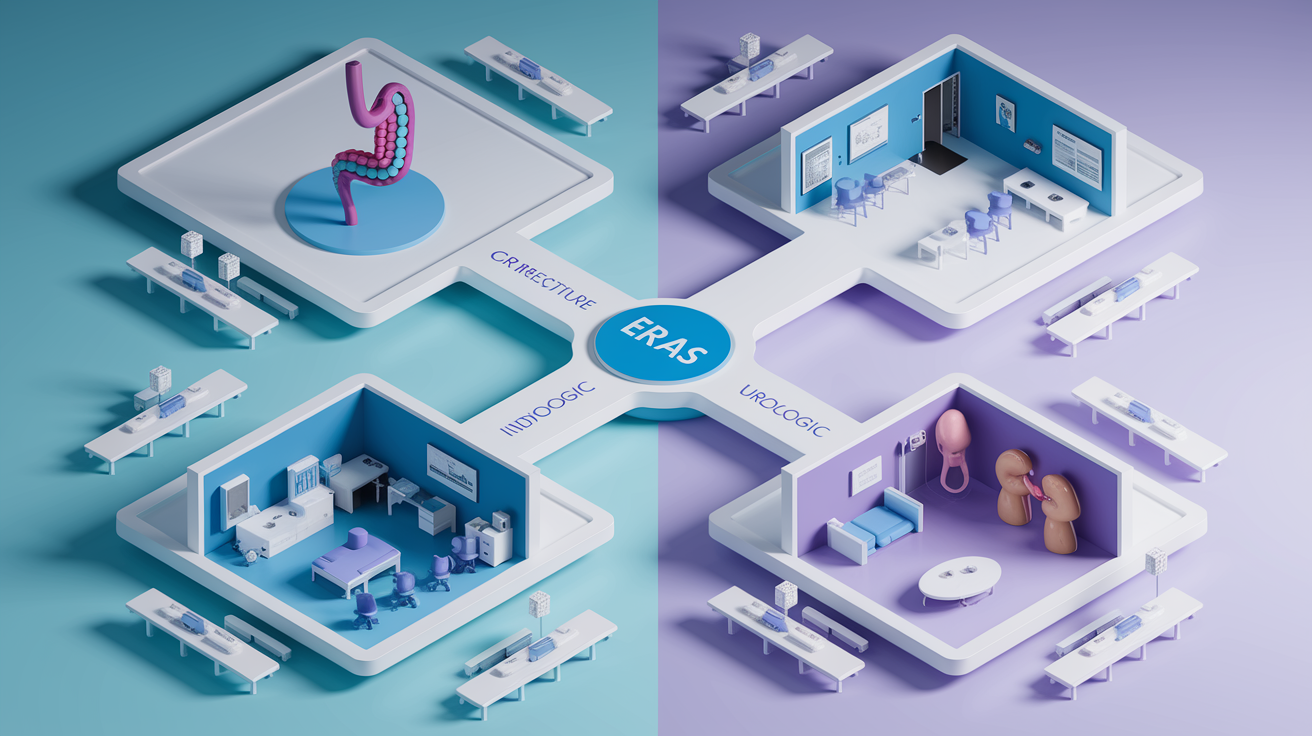
ERAS in Colorectal Surgery
Colorectal surgery was one of the first specialties to adopt ERAS and remains the area with the most published evidence. Protocols emphasize mechanical bowel preparation combined with oral antibiotics when indicated, short pre-surgery fasting, early feeding, and avoidance of routine nasogastric tubes and drains. Epidural analgesia is common for open procedures. Laparoscopic approaches are preferred when feasible. Studies in colorectal ERAS consistently show 2 to 3 day reductions in length of stay, lower rates of prolonged ileus, and fewer surgical site infections. The specialty’s strong data have made colorectal ERAS a model for other fields.
ERAS in Orthopedic Surgery
Orthopedic ERAS programs, especially for hip and knee replacements, focus on rapid mobilization, regional nerve blocks, and same-day or next-day discharge. Spinal anesthesia is preferred over general anesthesia because it allows faster awakening and earlier walking. Peripheral nerve blocks, like adductor canal blocks for knee surgery, provide excellent pain control without the leg weakness caused by older epidural techniques. You’re often walking within hours of surgery and discharged home once you can move safely, control pain with oral medications, and perform basic tasks. Orthopedic ERAS has made outpatient joint replacement a routine option at many centers.
ERAS in Gynecologic Surgery
Gynecologic ERAS pathways apply to hysterectomy, ovarian surgery, and pelvic reconstructive procedures. Key adaptations include minimizing mechanical bowel prep (not routinely needed for most gynecologic cases), using regional blocks or local anesthetic infiltration, and emphasizing early removal of urinary catheters to reduce infection risk and encourage mobility. Gynecologic procedures often allow same-day or 1-day discharge when ERAS protocols are followed. Patient education materials tailored to gynecologic surgery address concerns about pelvic floor function, activity restrictions, and return to sexual activity, making recovery expectations clearer.
ERAS in Urologic Surgery
Urologic ERAS programs cover procedures like cystectomy (bladder removal), nephrectomy (kidney removal), and prostatectomy. Cystectomy ERAS is particularly complex because it involves bowel manipulation and urinary diversion, but studies show that structured pathways reduce complications and length of stay even in these challenging cases. Early feeding, multimodal analgesia, and avoidance of prolonged nasogastric decompression are central elements. Minimally invasive and robotic techniques are widely used in urology, fitting naturally with ERAS goals. Urology ERAS also addresses specific concerns like ureteral stent management and pelvic lymph node dissection recovery.
Implementing ERAS in Clinical Practice

Successful ERAS implementation requires more than just writing new order sets. It demands a multidisciplinary team, cultural change across the surgical service, staff education, and continuous monitoring of outcomes and compliance. The process can feel overwhelming at first, but most programs start small, pilot a single procedure, and expand once the workflow is established and results are visible.
The first step is assembling a core ERAS team that includes surgeons, anesthesiologists, nurses, pharmacists, dietitians, physical therapists, and a dedicated ERAS coordinator. The coordinator, often a nurse or physician assistant, manages day-to-day protocol adherence, tracks data, educates patients, and troubleshoots problems. This person is essential because ERAS involves many moving parts across different departments, and someone needs to keep the entire pathway on track. Teams typically choose one high-volume procedure to start, like colorectal resection or total knee replacement, and enroll 50 to 200 consecutive patients to build experience and baseline data.
Standardized order sets and checklists make ERAS easier to follow consistently. These tools embed ERAS elements into the electronic health record so that fasting instructions, carbohydrate loading, antibiotic timing, multimodal analgesia, goal-directed fluids, early feeding orders, and mobilization goals are pre-filled and easy for clinicians to select. Checklists also serve as reminders, prompting nurses to remove catheters at 24 hours or anesthesiologists to confirm antibiotic timing before incision. When ERAS becomes the default pathway rather than an optional add-on, compliance improves and outcomes follow.
Staff education and buy-in are critical. Surgeons, anesthesiologists, and nurses trained in traditional practices may resist changing routines like prolonged fasting, routine nasogastric tubes, or opioid-first pain control. Effective programs address this resistance by presenting the evidence, sharing early outcome data from their own pilot cases, and involving frontline staff in protocol design. When nurses see patients walking and eating sooner without complications, and when surgeons see shorter stays without higher readmissions, resistance fades.
Key steps for ERAS implementation:
- Appoint a multidisciplinary team and ERAS coordinator
- Select a high-volume procedure and define the target patient population
- Review existing evidence and adapt a published guideline to local practice
- Create standardized order sets and patient education materials
- Train all staff involved in the pathway, including OR, recovery room, and floor nurses
- Collect baseline outcome metrics for 3 to 6 months before launch
- Launch the pathway and audit monthly for compliance and outcomes
- Adjust the protocol based on real-world results and feedback
- Expand to additional procedures once the first pathway is stable
Common barriers include workflow disruption, concerns about early discharge safety, and inconsistent adherence when multiple surgeons or anesthesiologists are involved. Programs overcome these challenges by standardizing as much as possible, using data to show that early discharge is safe when criteria are met, and fostering a culture of continuous improvement. Higher protocol compliance correlates directly with better outcomes, so programs aim for at least 70% adherence across core ERAS elements and use regular audits to identify gaps.
Final Words
Early feeding, getting patients moving, and tailored anesthesia are what make ERAS work in practice. You read how preop prep, intraop strategies, and postop steps fit together into a single plan.
We covered the evidence, specialty tweaks, and how teams actually roll this out. That roadmap shows why ERAS reduces complications and speeds recovery.
If a clinic adopts the steps and tracks results, enhanced recovery after surgery becomes a repeatable way to help patients leave sooner and feel better faster. Keep it practical and steady.
FAQ
Q: How to heal fast after surgery?
A: Healing fast after surgery involves following your surgeon’s instructions, eating protein-rich meals, staying hydrated, walking early, managing pain, keeping wounds clean, controlling blood sugar, quitting smoking, and attending follow-ups.
Q: What is a pyretic response to surgery?
A: A pyretic response to surgery is a post-op fever from inflammation and immune activation; it’s common early, but persistent or high fevers (over 38°C / 100.4°F) should prompt medical review for infection.
Q: Does enhanced recovery work for all surgeries?
A: Enhanced recovery works for many surgeries but not all; ERAS principles improve outcomes across specialties when adapted, though some emergent or highly complex cases may need modified or limited pathways.
Q: What medications are given for Enhanced Recovery After Surgery?
A: Medications in ERAS include multimodal pain drugs (acetaminophen, NSAIDs, regional/local anesthetics), anti-nausea agents, perioperative antibiotics, blood-clot prevention meds, and short-term glucose or anemia treatments as needed.

