
Have you ever wondered why a torn calf muscle seems to fix itself on its own time? One moment it might only feel a bit stretched on a quick walk, and the next, even a small move reminds you of the injury. Different muscle strains heal at different speeds, so your healing journey is truly unique.
In this post, we’ll chat about how long it might take for various calf strains to heal and share some simple steps to help you get back on your feet. Think of it like planning a fun, gentle workout routine for your recovery. Let’s break it down together so you can start feeling better soon.
Torn Calf Muscle Recovery Time: Swift Healing Insights
Calf strains come in three types, and each one has its own pace for healing. With a Grade 1 strain, less than 25% of the muscle fibers are affected. You might feel a bit of soreness or tightness, kind of like the gentle discomfort after a longer walk than usual. Grade 2 strains, where 25% to 90% of the fibers are injured, bring on sharper pain, some bruising, and stiffness that makes you need to rest right away. And then there's Grade 3, the most severe, when over 90% of the fibers are harmed or the muscle completely tears. This one makes moving really tough and often means you need to see a doctor. Fun fact: Even a minor calf strain can sneakily change your everyday routine until you’re fully healed.
| Grade | Fiber Damage % | Recovery Duration |
|---|---|---|
| Grade 1 | <25% | 1–3 weeks |
| Grade 2 | 25–90% | 4–8 weeks |
| Grade 3 | >90% or full rupture | 3–4 months |
Because these recovery times vary, you might find that your daily activities need a little tweak depending on your injury. If you have a Grade 1 strain, try switching to lighter movements while still keeping up with some low-key activities. For a Grade 2 strain, it’s a good idea to pause on high-impact exercises until the pain and swelling ease. And if you’re dealing with a Grade 3 strain, taking plenty of rest and following a careful rehabilitation plan is essential before getting back to your regular routine. This step-by-step approach helps avoid making the injury worse and lets you gradually get back to your normal life.
Factors Influencing Torn Calf Muscle Recovery Time

Healing from a torn calf muscle can feel different for everyone. The rate of recovery usually depends on how severe your injury is, whether you need surgery, and how closely you stick to a rehabilitation plan. Your overall health, age, and daily habits also play a big role. For instance, someone who’s in good shape and attends physical therapy sessions regularly might recover faster than someone who skips sessions or has other health concerns. Every body reacts in its own way, so having a tailored plan and following it closely can really help speed up healing.
Some key factors include:
- Tear severity
- Treatment approach
- Consistent rehab exercises
- Patient’s age and other health issues
- Nutrition and staying hydrated
- Daily activity levels
A rehab plan designed just for you is very important. Working side-by-side with a trusted professional can help you build up your strength and flexibility slowly. As you follow your plan, listen to your body, if something doesn’t feel quite right, adjust your routine. Taking these steps can set you up for a smoother and healthier recovery.
Non-Surgical vs Surgical Torn Calf Muscle Recovery Strategies
When you’re facing a torn calf, there are two main paths to healing that depend on how bad the tear is. For small or moderate injuries (Grades 1-2), you can usually take the non-surgical route. This method focuses on soothing pain and slowly getting back to movement. But if the tear is severe (Grade 3), surgery might be needed. After surgery, you follow a carefully controlled rehabilitation plan to regain strength and function.
Non-Surgical Recovery
Non-surgical healing begins with a simple routine: Rest, Ice, Compression, and Elevation. This helps reduce pain and swelling, much like letting a bruise settle so that you can gently move on. Soon after the worst of the pain subsides, using a brace or boot can lend extra support as you start to put some weight on your leg, bit by bit. You work through simple exercises at first, almost like slowly stretching your legs after sitting for too long, and then move on to more active steps as the healing process picks up. It’s a gradual process, similar to taking a slow, thoughtful walk before deciding to pick up the pace.
Surgical Recovery
For those who need surgery, the first step after the operation is a period of keeping your leg still to protect the repair. Once your body begins to heal, you’ll start with gentle, passive movements that don’t require too much muscle effort. As your recovery progresses and you feel stronger, your doctor will introduce exercises that actively engage the muscles, aiming to rebuild tone and strength. This staged process typically spans 3 to 4 months after surgery, moving from soft, careful movements to more structured strength exercises.
It’s always best to choose the recovery path with a doctor’s help, as they can accurately determine how severe your injury is and guide you on the route that will work best for your healing journey.
Rehabilitation Exercises to Optimize Torn Calf Muscle Recovery Time
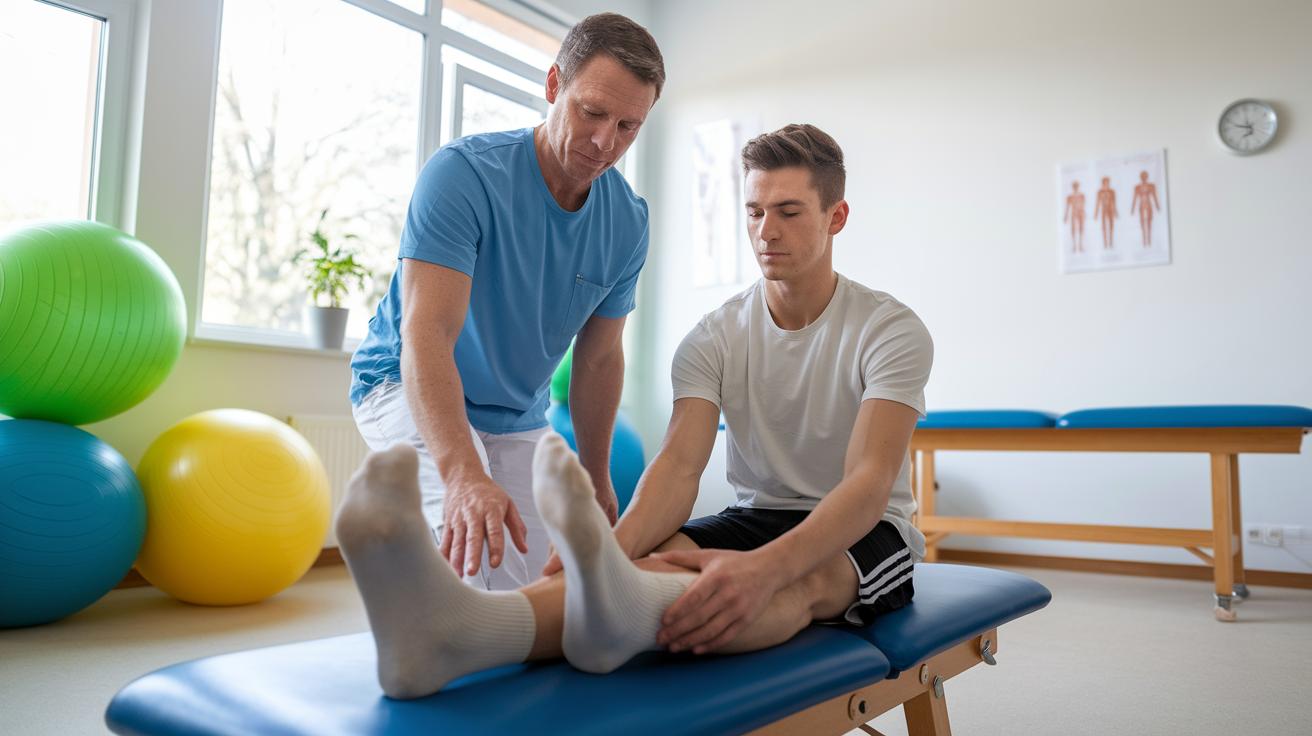
Physical therapy sessions led by caring professionals can be a big help when you're working on healing a torn calf. By following a routine that slowly builds up from light stretches to more focused exercises, you give your muscle the chance to recover safely. It’s a bit like easing into your regular walk after a rest, you listen to your body and take your time.
Here are some simple moves to help you regain strength and flexibility:
- Gentle calf stretches (seated towel stretch) – Begin with slow, careful stretches that help your calf move naturally.
- Isometric plantarflexion holds (10-15 seconds) – Hold a steady position to build stability in your calf (isometric means holding a muscle without changing its length).
- Resistance-band heel raises – Do 2 sets of 10 reps using a resistance band (a stretchy band used for exercising) to gradually strengthen your muscle.
- Seated heel raises – Complete 3 sets of 12 lifts to help improve your muscle endurance.
- Standing calf raises – Do 3 sets of 15 raises to promote balanced muscle growth.
- Dynamic ankle pumps and light hopping drills – Try quick ankle movements and small hops to boost your mobility.
Make sure you keep an eye on how your body feels during each exercise. A gentle stretch is perfectly normal, but if you feel any sharp or growing pain, it’s a signal to slow down. Only step up the intensity when you feel fully comfortable, knowing that each session brings you closer to stronger, smoother movement. Healing takes time, and a little patience goes a long way.
Self-Care Measures and Supportive Therapies for Faster Torn Calf Muscle Recovery
If you injure your calf muscle, starting with the basics can really help. Using rest, ice, compression, and elevation right away can ease pain and reduce swelling. It’s like giving your leg a gentle break while it begins to heal.
Right after your injury, try applying ice for about 15 minutes every 2 hours to calm inflammation. Wrap your leg with a soft compression bandage and keep it elevated; this simple routine works wonders for pain relief. Have you ever felt that soothing coolness that reassures you everything will be okay? That’s your body starting its recovery journey.
Sooner or later, as the swelling gets better, you can switch things up by using a heat pack for around 10 minutes before a gentle stretch. This warm therapy helps relax the muscle and prepares it for movement. It’s like easing into a warm bath after a brisk walk, comforting and just right.
Home treatments like these not only relieve discomfort but also build a strong foundation for healing. Stick with this routine, and you’re likely to notice improvements sooner than later.
- Cold Compression: Apply cool packs for 15 minutes every 2 hours to manage swelling effectively.
- Warm-Up Before Stretching: Once swelling decreases, use heat packs for 10 minutes to gently warm up your calf before stretching.
- Elevation and Compression: Keep your leg raised and use a compression wrap to support the healing muscle.
- Protein-Rich Diet: Enjoy a balanced meal with protein (essential for muscle repair) at about 1.2 to 1.7 grams per kilogram of body weight daily.
- Hydration: Drink at least 2.5 liters of water every day to help your body heal smoothly.
Milestone Markers and Safe Return to Activity in Torn Calf Muscle Recovery Time

Keeping track of your progress can really help you know when it’s appropriate to add more activity. Think of these clear signs as little checkpoints on your path to rebuilding strength and mobility. They remind you that your healing is on track as you slowly increase your exercise.
- Full, pain-free range of motion: You should be able to move your leg all the way without any discomfort.
- About 90% strength compared to your uninjured leg: This is usually checked with a dynamometer (a tool that measures muscle strength).
- No swelling after 24 hours of activity: This shows your body is settling well after exercise.
- Normal walking and jogging: When you can walk and jog naturally, your balance and coordination are coming back.
When it’s time to jog again, starting with a phased approach makes all the difference. For instance, if you’re dealing with a Grade 2 strain, beginning with gentle, short jogs about 8 to 10 weeks after your injury might be best. And if you’ve had a more severe Grade 3 tear that needed surgery, it’s wise to wait around 16 to 20 weeks before jogging. Begin with light exercises and only pick up the pace as you notice these key markers improving. Listen to your body, and make small adjustments along the way to safely stay on track with your recovery.
Monitoring and Professional Guidance in Torn Calf Muscle Recovery Time
When you're on the path to recovery, going to regular check-ups with a trusted professional can really make a difference. After your injury or surgery, meeting with your doctor at 2, 6, and 12 weeks helps ensure your healing is on track. These visits are a chance to see how things are progressing, just like checking your pulse during a relaxing morning walk.
At each appointment, your doctor will measure your calf and test its strength by asking you to push your foot downward against resistance (that means using a bit of extra effort to move your foot). This simple test is like a fitness check that shows how well your muscle is regaining its power and can alert you to any issues early on.
Your care team usually starts with a thorough exam. They look at your symptoms, observe how smoothly you can move, and check your muscle strength. Sometimes, they may use an ultrasound, a tool that uses sound waves to see how your muscle fibers are lining up and to spot any scar tissue. In some cases, an MRI is used too; this scan gives a very detailed look to be sure no small tears or extra swelling remain.
Working closely with specialists means your rehab plan is tailored just for you. This kind of step-by-step guidance helps make sure that each part of your recovery matches your body's progress. Before you know it, you'll be stepping back into your daily activities with more confidence and comfort.
Final Words
In the action, we broke down calf injuries into clear recovery stages and shared practical tips like careful exercise progressions and self-care measures. We talked through recovery windows, treatment options, and safe activity returns.
Every detail ties into managing torn calf muscle recovery time so you feel supported and informed. Keep moving forward with each step and celebrate the progress along the way.
FAQ
Q: How can I heal a calf strain or torn calf muscle quickly?
A: The fastest way to heal a torn calf muscle or strain includes following RICE (rest, ice, compression, elevation), doing controlled stretches, guided physical therapy, and eating a balanced diet to support tissue repair.
Q: My calf popped and now I can’t walk—what should I do?
A: The description of a calf pop and difficulty walking signals a serious injury. Immediate professional evaluation is vital to determine the right treatment and avoid further damage.
Q: What are the recovery times for Grade 2 and Grade 3 calf muscle tears?
A: The recovery time for a Grade 2 tear is typically 4–8 weeks, while a Grade 3 tear may require 3–4 months, depending on treatment methods and adherence to rehabilitation exercises.
Q: What are the symptoms of a calf muscle tear, and how can I tell if it’s torn or pulled?
A: Signs of a calf tear include sudden, severe pain, swelling, and bruising. A torn muscle usually causes greater pain and weakness compared to a less severe pull, which may involve milder discomfort.
Q: Can I walk with a torn calf muscle, and will it heal on its own?
A: Walking with a torn calf muscle can worsen the injury. While minor strains may improve with self-care, significant tears often require professional treatment and guided rehabilitation for safe healing.
Q: What do torn calf muscle pictures typically show?
A: Torn calf muscle pictures generally display bruising, swelling, and disrupted muscle fibers. These images help indicate the injury’s severity, aiding medical professionals in determining the right treatment approach.

