
Therapy alone often isn’t enough for real-world recovery.
A recovery coach steps into those in-between moments, when you leave a clinic, face cravings, or need help with housing, work, or paperwork.
They are trained peers who share lived experience, offer practical support, and help you build next-step plans.
This post breaks down what recovery coaches actually do, where they work, and how their mentoring, advocacy, and resource navigation can keep you steady during the messy parts of coming back.
Understanding the Role of a Recovery Coach

A recovery coach is a trained, non-clinical professional who supports people working through substance use disorder or behavioral health recovery. They lean on personal lived experience, evidence-based recovery principles, and structured training to do it. Unlike therapists or counselors, recovery coaches don’t diagnose conditions, write clinical treatment plans, or deliver therapy. They walk alongside clients as mentors, advocates, and accountability partners. They help build practical recovery skills, connect people with community resources, and work toward wellness goals that are individualized. Their support is peer-based, grounded in the understanding that comes only from having traveled a similar path. And they’re focused on helping clients identify and activate their own recovery capital, whether that’s stable housing, employment, healthy relationships, or new coping strategies.
Recovery coaches provide four core functions: advocacy, mentoring, recovery-capital development, and emotional support. They might help a client prepare for a doctor’s appointment, locate a sober living residence, practice relapse-prevention techniques, or just offer encouragement on a rough day. You’ll find them in outpatient clinics, emergency departments, drug courts, community coalitions, correctional settings, and even private practice. Anywhere someone needs sustained, non-judgmental support outside the therapy hour. Their role is to empower, not prescribe. To share what worked in their own recovery, not hand down a one-size-fits-all plan.
Because the recovery coach role is newer and still evolving in many places, it’s easy to confuse it with similar titles. Here’s how recovery coaches differ from therapists and sponsors:
Recovery coach vs therapist: Recovery coaches don’t provide psychotherapy, make diagnoses, or bill for clinical services. Therapists are licensed clinicians who assess mental health conditions and deliver evidence-based treatments like cognitive-behavioral therapy or medication management.
Recovery coach vs sponsor: A sponsor is a volunteer peer within a specific 12-step fellowship (like AA or NA) who guides someone through the steps of that program. A recovery coach is a paid or volunteer professional trained to support multiple pathways to recovery, including but not limited to 12-step programs.
Scope of practice: Recovery coaches focus on practical support, resource navigation, and goal-setting. They refer clients to licensed providers for therapy or medical needs.
Training and certification: Recovery coaches complete formal training programs, supervised hours, and often a certification exam. Sponsors learn through lived experience and tradition within their fellowship.
Flexibility of approach: Recovery coaches honor all pathways. Medication-assisted treatment, harm reduction, faith-based, SMART Recovery, and 12-step, without requiring adherence to a single model. Sponsors typically guide within their specific program’s framework.
Documentation and accountability: Recovery coaches maintain progress notes and service plans to meet oversight and billing standards. Sponsors offer informal, confidential support without formal documentation.
Qualifications and Skills Needed

Most recovery coach pathways require candidates to have lived experience with substance use disorder and sustained personal recovery, typically one to two years. This lived-experience requirement isn’t about gatekeeping. It’s the foundation of peer credibility. Clients trust recovery coaches precisely because those coaches understand cravings, stigma, and the daily work of staying well from the inside. Beyond personal history, programs look for a high school diploma or GED, though some employers make exceptions. The role is open to anyone who’s done the work of their own recovery and now wants to help others do theirs.
The skills that make a strong recovery coach go beyond sobriety time. Effective coaches need:
Active listening: hearing what clients say, and what they don’t, without jumping to solutions.
Motivational interviewing basics: asking open questions and reflecting statements to help clients discover their own readiness to change.
Boundary awareness: knowing when to share personal stories and when to hold back. Recognizing the line between support and clinical intervention.
Cultural humility: respecting diverse backgrounds, identities, and recovery pathways without imposing one’s own beliefs.
Resource navigation: familiarity with local treatment options, housing programs, employment services, and peer support networks.
Documentation skills: writing clear, audit-ready progress notes that capture peer activities (mentoring, linkage, advocacy) without straying into clinical language.
Self-care discipline: maintaining personal recovery routines, supervision check-ins, and emotional boundaries to avoid burnout.
Empathy without rescuing: offering support while letting clients own their decisions and outcomes.
Recovery coaching is helping work, and helping work is hard. Coaches who last are the ones who’ve built stable support systems for themselves, stay connected to supervision, and understand that their job isn’t to fix anyone. It’s to show up, listen, and walk alongside people while they fix themselves.
Certification and Training Requirements
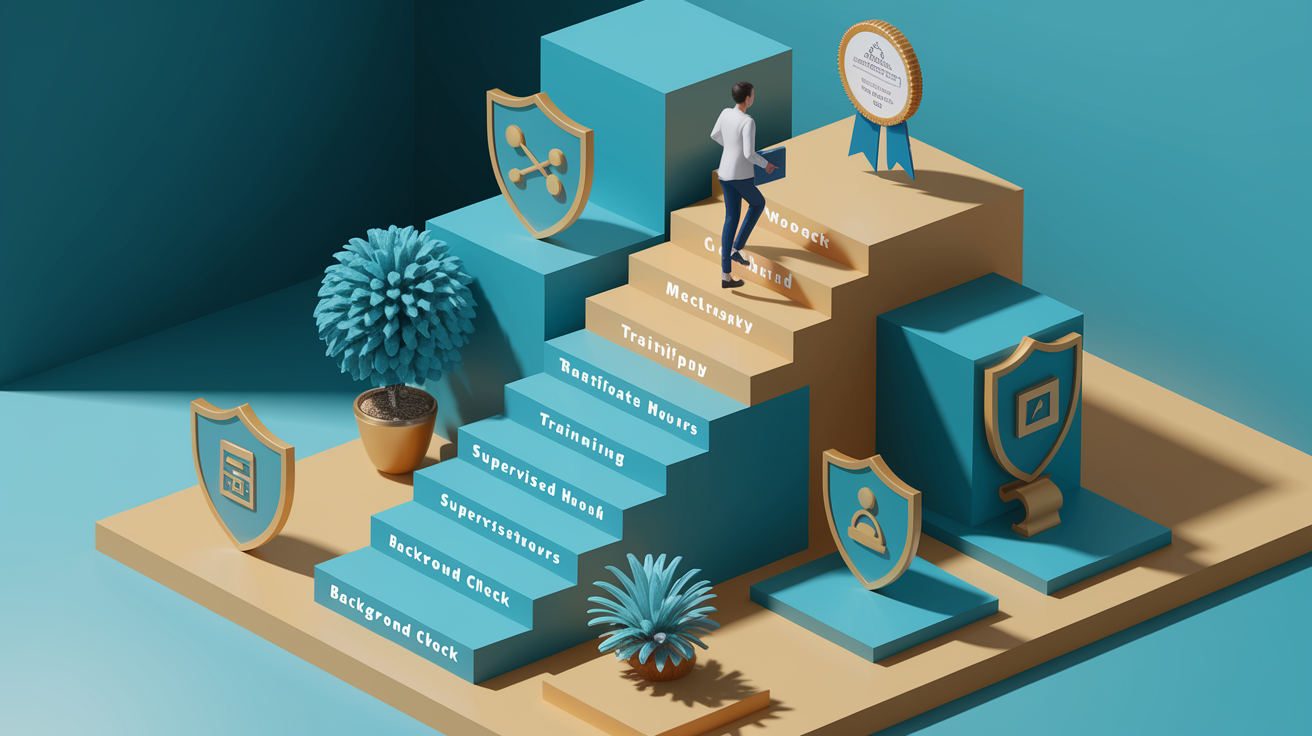
Certification pathways vary by state, but most follow a similar blueprint: specialized training, supervised work experience, a written exam, and a background check. National credentials like the NAADAC National Certified Peer Recovery Support Specialist (NCPRSS) set a baseline. Candidates need a high school diploma or equivalent, at least one year of recovery, 46 hours of peer recovery training from an approved provider, 500 hours of supervised peer support experience, and passage of a written exam. Application fees run around $150. The International Certification & Reciprocity Consortium (IC&RC) provides a reciprocity framework that allows certified coaches to transfer credentials across participating states, though IC&RC itself certifies state boards rather than issuing individual credentials directly.
State-level programs add their own requirements. Training hours range from roughly 40 to 100+. Supervised experience commonly falls between 250 and 500 hours. Renewal cycles run one to two years with 10 to 30 continuing-education hours required per cycle. Many states maintain lists of approved training providers. In Massachusetts, for example, the Recovery Coach Academy (RCA) is a five-day intensive that satisfies initial training requirements and serves as a gateway to the Certified Addiction Recovery Coach (CARC) credential. RCA eligibility requires lived experience, at least one year of sustained recovery, employment or volunteer placement as a coach, access to a qualified supervisor, and completion of an application. The full CARC pathway then adds 60 hours of specified education, a signed supervisory verification form attesting to 500 supervised hours, passage of the Recovery Coach exam administered by the Massachusetts Board of Substance Abuse Counselor Certification, and an application fee.
Below is a snapshot of four widely recognized credentialing pathways:
| Credentialing Body | Certification Name | Typical Training Hours |
|---|---|---|
| NAADAC | National Certified Peer Recovery Support Specialist (NCPRSS) | 46 hours + 500 supervised hours |
| Connecticut Community for Addiction Recovery (CCAR) | Recovery Coach Academy completion | 30 hours (5-day intensive) |
| Massachusetts (via BSAS/AdCare) | Certified Addiction Recovery Coach (CARC) | 60 hours + 500 supervised hours |
| IC&RC member boards (varies by state) | State-level Peer Recovery Specialist | 40–100 hours + 250–500 supervised hours |
Training costs vary. CCAR’s Recovery Coach Academy runs $400 to $600 depending on format and location. NAADAC offers self-paced online modules priced around $25 to $150 each. Some workforce development grants, scholarships, and employer tuition-reimbursement programs help offset costs. If you’re serious about entering the field, check your state’s behavioral health authority website for approved training calendars, certification requirements, and financial-aid resources.
Benefits of Working With a Recovery Coach

Recovery coaches fill a gap that clinical care alone can’t bridge. Therapy happens once or twice a week in an office. Recovery happens every day in real life, at home, at work, in moments of stress or celebration. A recovery coach steps into that real-life space, offering practical, on-the-ground support when it matters most. They help clients translate clinical recommendations into daily habits, troubleshoot barriers like transportation or childcare, and celebrate small wins that might otherwise go unnoticed. Because coaches share lived experience, they model hope in a way that feels tangible: “I made it through this, and you can too.”
Recovery coaches also act as connectors. They know the local landscape. Which treatment centers have beds available, which housing programs accept Medicaid, which employers are recovery-friendly. They attend appointments alongside clients, help complete paperwork, and teach self-advocacy skills so clients can eventually navigate systems on their own. This linkage role is especially critical during transitions: discharge from detox, release from incarceration, or the move from residential treatment back into the community. Those are high-risk moments, and having a coach’s phone number in your pocket can be the difference between a relapse and a call for help.
Key benefits include:
Accountability without judgment: regular check-ins that encourage honesty and progress without shame or consequences.
Practical resource navigation: help accessing housing, employment, healthcare, childcare, transportation, and financial supports.
Relapse-prevention planning: identifying triggers, rehearsing coping skills, and building a response plan before cravings hit.
Peer credibility: support from someone who truly understands the struggle, stigma, and daily effort recovery requires.
Flexible, client-driven goals: coaching adapts to what the client wants to work on. Housing stability one week, job-interview prep the next.
Sustained support beyond treatment episodes: many coaches stay connected for months or years, offering continuity through ups and downs.
Family and community linkage: coaches can coordinate with loved ones, facilitate communication, and connect clients to peer recovery support centers or mutual-aid groups.
Steps to Becoming a Recovery Coach
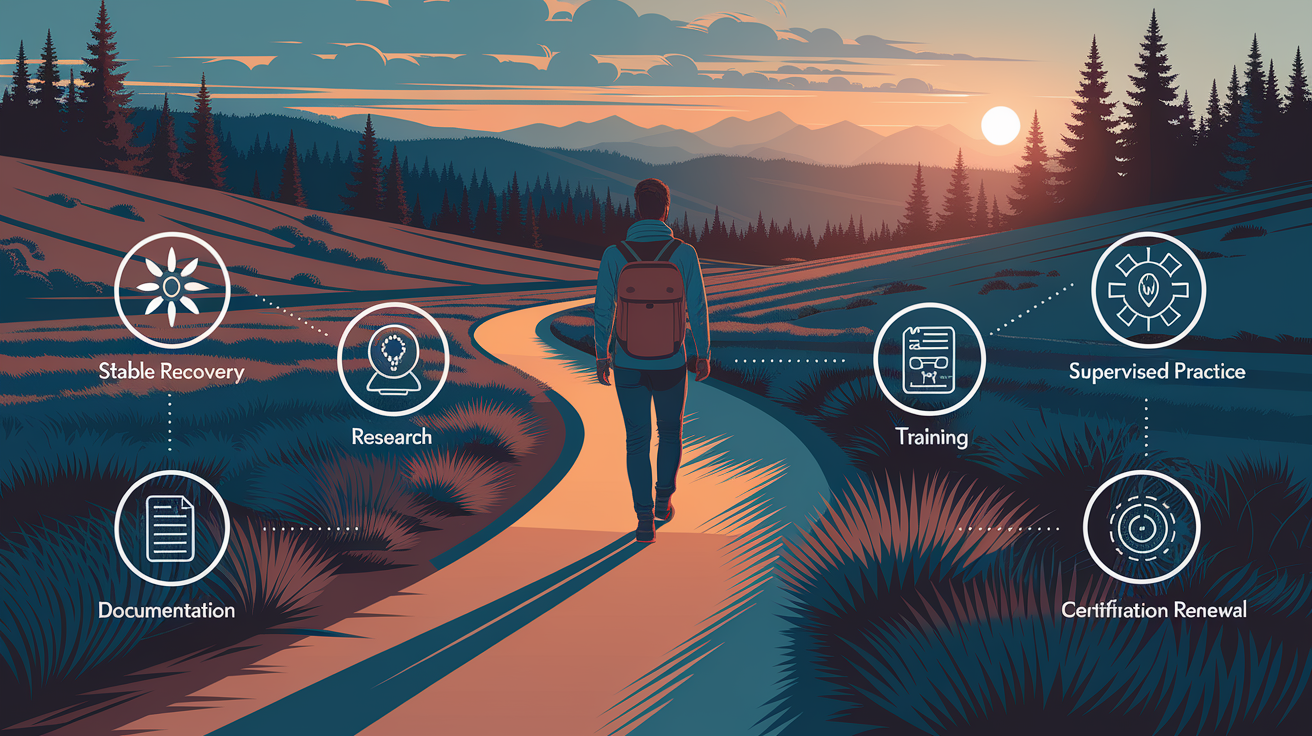
If you’re ready to turn your lived experience into a profession, the path is clear. But it takes commitment and patience.
Start here:
1. Achieve stable, sustained personal recovery. Most programs require at least one to two years. Use this time to build your own support network, attend supervision or mutual-aid meetings, and reflect on the skills and boundaries you’ll need to support others without compromising your own wellness.
2. Research your state’s certification requirements. Visit your state behavioral health authority or substance abuse services website. Look for approved training providers, required training hours, supervised-experience thresholds, exam details, and application fees. If your state participates in IC&RC reciprocity, note which credentials transfer.
3. Complete an approved recovery coach training program. Enroll in a program like CCAR’s Recovery Coach Academy, NAADAC modules, or your state’s designated curriculum. Budget $400 to $1,500 for training and materials. Some employers will reimburse tuition if you commit to working for them after certification.
4. Secure a supervised coaching position or volunteer placement. You’ll need 250 to 500 supervised hours depending on your credential. Look for entry-level peer support roles in outpatient clinics, community organizations, recovery residences, or hospital discharge programs. Make sure your supervisor meets your state’s requirements, often that means they hold a supervisor credential or advanced peer certification.
5. Document your supervised hours and complete required continuing education. Keep a log of your work, ask your supervisor to sign off at regular intervals, and track any additional CEU hours (ethics, motivational interviewing, multiple pathways, etc.). When you hit your hour threshold and training checklist, submit your application, pay the fee, and schedule your exam.
6. Pass the certification exam and maintain your credential. Study your training materials, take practice tests if available, and show up prepared. Once certified, plan for renewal every one to two years with 10 to 30 CE hours. Stay connected to learning communities, attend regional peer coach meetings, and keep your skills fresh.
Becoming a recovery coach isn’t a shortcut. It’s a profession that asks you to hold space for others while tending your own recovery, document your work like a professional, and continuously learn. But if you’ve been helped, and you want to help, this is one of the most direct ways to do it.
How to Find or Hire a Recovery Coach

If you’re looking for a recovery coach for yourself or a loved one, start with your current treatment provider. Many outpatient programs, residential facilities, hospitals, and community health centers employ recovery coaches or can refer you to peer support services in your area. Ask your therapist, case manager, or primary care doctor if they work with coaches or know of local programs. Some states maintain online directories of certified peer recovery specialists. Check your state’s behavioral health or substance abuse services website.
You can also contact national training and credentialing organizations directly. CCAR, NAADAC, and state-level peer support associations often list graduates, certified coaches, or affiliated programs. If you prefer private coaching, search for “certified recovery coach” plus your city or state. Many coaches now offer telehealth sessions, expanding access beyond geographic boundaries. Nonprofit recovery community centers, faith-based organizations, and mutual-aid groups sometimes host free or low-cost peer support services, especially for people transitioning out of treatment or the criminal justice system.
When you’re evaluating a potential coach, use this checklist:
Verify certification status: ask to see proof of current state or national peer recovery certification. Check the issuing body and expiration date.
Ask about their lived experience and recovery time: you want someone with at least one to two years of sustained recovery and stable personal supports.
Clarify scope of practice: make sure they understand they’re not providing therapy, medical advice, or clinical treatment, and that they’ll refer you to licensed providers when needed.
Discuss availability and format: will you meet weekly? Biweekly? In person, by phone, or video? What happens if you need support between sessions?
Confirm supervision and accountability: coaches should be working under qualified supervision, especially if they’re newer to the role. Ask who supervises them and how often they meet.
Understand costs and insurance: some coaches bill Medicaid or private insurance, others charge out-of-pocket or are provided free through programs. Get clarity upfront so there are no surprises.
Typical Costs and Service Options

Recovery coach pricing varies widely depending on geography, credentials, service format, and funding source. If you’re accessing peer support through a treatment program, community health center, or nonprofit, services may be free, funded by Medicaid, state grants, or charitable donations. Medicaid now covers peer support services in all 50 states and the District of Columbia, typically reimbursing providers $12 to $35 per 15-minute unit (with most states in the $15 to $25 range). That means an hour of peer support might cost the payer $48 to $100, but clients enrolled in Medicaid usually pay nothing out of pocket.
Private-pay or commercial-insurance rates are less predictable. Some certified recovery coaches in private practice charge $25 to $125 per hour, often on a sliding scale based on income. Others bundle services into monthly packages, say, $200 to $400 per month for weekly check-ins plus text support. Commercial insurance coverage is inconsistent. You’ll need to verify benefits before starting and be prepared for potential denials or closer audits. Telehealth options have made coaching more affordable by eliminating travel time and expanding the pool of available coaches.
| Service Type | Approximate Cost Range | Notes |
|---|---|---|
| Medicaid-funded peer support (billed per 15-min unit) | $0 out-of-pocket for client; $12–$35 reimbursement per unit to provider | Available in all 50 states + DC; no client cost if Medicaid-enrolled |
| Private-pay hourly coaching | $25–$125 per hour | Sliding scale common; telehealth may reduce costs |
| Monthly package (private practice) | $200–$400 per month | Typically includes weekly sessions + text/email support |
| Nonprofit or grant-funded programs | Free to client | Offered through recovery community centers, discharge programs, drug courts, and community coalitions |
Training and certification costs are separate. Expect to pay $400 to $1,500 for initial coursework, $50 to $300 for certification exams and application fees, and another $100 to $500 per renewal cycle for continuing education. Scholarships, employer tuition reimbursement, and workforce grants can offset much of that investment if you’re entering the profession.
Trusted Credentialing Bodies and Professional Resources
National and state-level organizations provide standardized training, ethical guidelines, exam administration, and continuing education to ensure recovery coaches meet professional benchmarks. These bodies also offer directories, learning communities, and advocacy for the peer workforce.
Key resources include:
NAADAC (the Association for Addiction Professionals): offers the National Certified Peer Recovery Support Specialist (NCPRSS) credential, provides online training modules, code of ethics, and CE opportunities, maintains a public registry of certified professionals.
Connecticut Community for Addiction Recovery (CCAR): delivers the widely recognized Recovery Coach Academy (30-hour, 5-day intensive), accepted by many states toward certification training requirements, offers supervisor and trainer pathways.
International Certification & Reciprocity Consortium (IC&RC): certifies state boards rather than individuals, provides a reciprocity framework so credentials earned in one IC&RC member state can transfer to another, publishes peer-specialist role delineation and exam blueprints.
State behavioral health authorities and certification boards: each state sets its own requirements. Visit your state’s substance abuse services or professional licensure website for approved training providers, certification applications, fee schedules, and renewal requirements.
Massachusetts Board of Substance Abuse Counselor Certification (MBSACC): administers the Recovery Coach exam and CARC application process in Massachusetts. Similar boards exist in other states.
SAMHSA (Substance Abuse and Mental Health Services Administration): publishes best-practice guides, workforce development resources, and federal guidance supporting peer services, hosts a treatment locator that can connect clients to peer-staffed programs.
If you’re exploring the profession, join a regional Recovery Coach Learning Community or attend a state peer conference. These gatherings offer networking, skill-building, and the chance to hear how coaches in different settings (corrections, hospitals, private practice, community outreach) navigate real-world challenges. Peer support is built on connection, and that includes connection among coaches themselves. Staying plugged into these networks keeps your practice grounded, your skills sharp, and your own recovery supported while you support others.
Final Words
Spot a recovery coach by the support they offer: non-clinical guidance, accountability, and connections to practical resources.
This article walked through what they do, the skills and certifications you’ll see, training routes, typical costs, and how to find or become one.
Use the step-by-step lists and vetting checklist to ask the right questions and track progress. Start by confirming training and supervised hours for any recovery coach you consider.
Small steps add up. With steady support, recovery feels more manageable and hopeful.
FAQ
Q: What does a recovery coach do?
A: A recovery coach provides non-clinical, peer-based support for people recovering from substance use or behavioral issues, offering accountability, resource navigation, goal-setting, and practical life skills outside formal therapy.
Q: What qualifications do you need to be a recovery coach?
A: To be a recovery coach you usually need lived-recovery experience or peer-support background, strong communication, basic training in motivational interviewing and ethics, plus clear professional boundaries and cultural sensitivity.
Q: How much does a recovery coach cost and how much do recovery coaches make in the US?
A: The cost to hire a recovery coach and US coach pay vary by location and experience: client fees often run $50–150 per hour, while US annual salaries commonly fall between $35,000 and $55,000.

