
Ever thought about making your gym routine even more powerful? The push pull legs workout breaks your exercise session into three simple parts so that every muscle gets its turn to work and then relax. It’s like a friendly team where each move makes the next one even better. Whether you’re just starting out or looking to challenge yourself more, this plan can help you grow stronger. Try switching up your split and watch your strength and energy rise.
Push Pull Leg Progression Framework
The Push Pull Legs workout routine breaks your training into three focus areas. Push days work your chest, shoulders, and triceps, pull days target your back and biceps, and leg days cover your quads, hamstrings, calves, and glutes. Imagine how smoothly a team passes a ball when every player works together. It’s like that, each exercise supports the others to make your workout feel natural and effective.
This method groups similar muscles so you can get more out of each session and give your body time to recover. If you're just getting started, try a 3-day split on Monday, Wednesday, and Friday. It sets a strong base while giving you plenty of rest. When you’re ready to level up, a 5-day plan (3 days on, 1 day rest, 2 days on, then a rest day) bumps up your workout volume without needing to train every day. And if you’re an advanced fitness buff, a 6-day split can help keep your progress steady, as long as you watch your workout load and avoid burning out.
| Split Type | Days/Week | Ideal Experience Level |
|---|---|---|
| 3-day split | 3 | Beginner |
| 5-day split | 5 | Intermediate |
| 6-day split | 6 | Advanced |
The right split for you depends on your schedule, the equipment you have, and where you are in your fitness journey. If you can visit the gym regularly, a higher frequency split might be ideal. But if you have limited time or fewer tools, starting with a 3-day split gives you a solid workout foundation with plenty of recovery time.
Push Pull Leg Workout Progressions: Elevate Your Gains

Rep ranges are a fun way to slowly challenge your muscles during a push workout. If you’re going for strength, aim for 4-6 reps on your main moves. For a mix of power and muscle size, try 8-10 reps, and if you’re focusing on muscle building, work up to 10-12 reps. Always leave 1-2 reps in reserve so you can keep your form solid. It’s like adding just the right amount of spice to your favorite meal, you push yourself without going too far.
Big, compound lifts are really the heart of these workouts. For instance, Push Workout One starts with a Barbell Bench Press done in 4 sets of 4-6 reps to build serious power. In a similar way, Push Workout Two uses an Overhead Barbell Press at the same rep range to work your shoulders hard. Imagine the controlled drive as if you were gently opening a door, each lift steadily builds your strength over time.
A few targeted exercises round out the routine perfectly. Moves like the Hi-to-Low Cable Crossover (3 sets of 10-12 reps) and the 1.5 Side Lateral Raise (3 sets of 12-15 reps) help refine your muscle details, while Lying Triceps Extensions push you right to the point of fatigue. It’s like sprinkling a pinch of seasoning on your dish, small tweaks in your weight load can lead to big gains down the line.
Pull Workout Advancement in Push Pull Leg Split
Begin your pull workout by focusing on heavy, compound lifts that build overall strength in a safe way. For instance, start with exercises such as the Conventional Deadlift using a heavy set of 5 reps. Follow that up with the Chest Supported Row in 3 sets of 8 to 10 reps. You can throw in some Dumbbell Pullover (2 to 3 sets of 10 to 12 reps) or try out the Dumbbell High Pull (3 sets of 10 to 12 reps) to mix things up. When you're ready to add more weight, make small jumps rather than big leaps. It’s like gradually loading your backpack on a long walk; every little bit makes the challenge just right.
Next, boost your routine with supersets and accessory lifts to increase back thickness and strengthen your biceps. One way to do this is by pairing a Bicep Chin Curl with an Overhead Triceps Extension. This combo not only helps ramp up your pulling power but also keeps your muscles engaged throughout the workout. And as you move from one exercise to the next, you’ll notice your pull mechanics getting better and your transitions becoming smooth and steady.
Finally, watch for little signs of progress, like adding an extra rep or increasing the resistance during your bodyweight pulls. For example, if you’re doing Weighted Pullups in 3 sets of 6 to 8 reps, those extra reps or a bit more weight can be clear markers of improvement. These small wins boost your confidence and lay a strong foundation for your long-term gains.
Leg Routine Development for Push Pull Leg Workouts
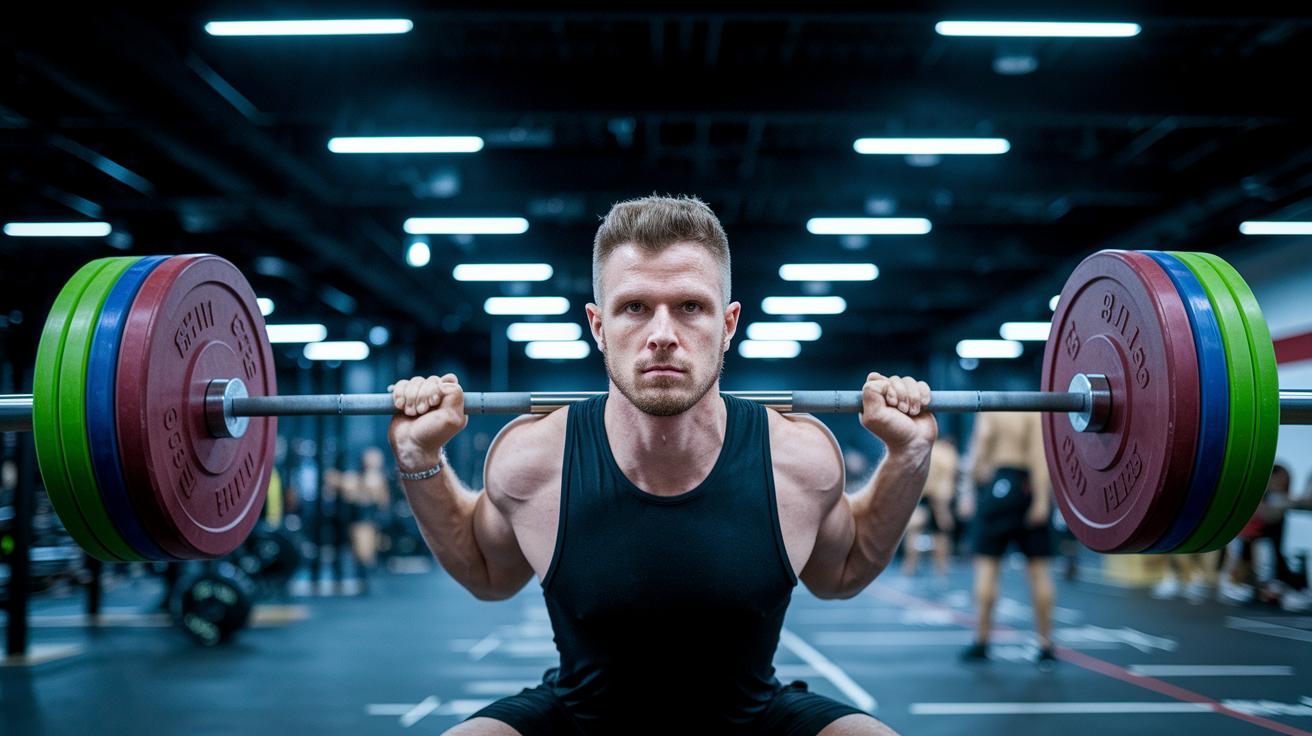
Start your leg day by focusing on big, powerful moves that build a solid base. Begin with Barbell Squats for 4 sets of 4 to 6 reps. This exercise (using a weighted bar to add resistance) creates a strong foundation. Then, move on to Barbell Hip Thrusts for 3 sets of 8 to 10 reps, which really target your glutes and hamstrings. Picture it like carefully adjusting your bike before a long, refreshing ride, you want everything balanced.
Next, work each leg on its own to even out strength and boost stability. Try Dumbbell or Barbell Reverse Lunges for 2 to 3 sets of 10 to 12 reps per leg. These moves help you fine-tune any little imbalances. For an extra challenge, throw in some Single-Leg Romanian Deadlifts (a balance-focused exercise for your smaller muscles) to really sharpen that leg performance, much like polishing a well-tuned machine.
Finally, give your calves some love. Whether you choose standing or seated calf raises, aim for 3 to 4 sets of 12 to 15 reps. These exercises build leg endurance and power, making that satisfying crunch underfoot during your workout even more rewarding. As you progress, add a few more reps or a bit more weight, and always keep an eye on your form to avoid little aches. Small, steady improvements here can turn a good workout into a truly powerful leg day.
Periodized Push Pull Leg Split Strategies
When planning your workout schedule, you can create a plan that fits both your fitness goals and your everyday life. One approach is a fixed three-day routine that offers steady recovery time and a predictable pattern, though it might sometimes leave you feeling a bit worn out between pull and leg days. Another option is a six-day schedule with flexible rest days, giving you room for extra cardio or fun exercises. However, if your work hours are set in stone, these changing rest days might be a little tricky. In the end, it really comes down to choosing the plan that matches your lifestyle and helps you see progress.
- Linear Periodization (gradually increasing the workload)
- Undulating Periodization (mixing up repetitions and loads each week)
- Block Periodization (focusing on specific training phases like strength or muscle growth)
- Wave Periodization (cycling through different intensity levels in short cycles)
- Conjugate Periodization (rotating days for maximum efforts, fast-paced training, and muscle building)
Monitoring Progress and Recovery in Push Pull Leg Progressions

Keeping track of your progress is really important for getting the most out of your workouts. One simple trick is to multiply your sets, reps, and load (that is, how heavy you’re lifting) to see your total training volume. This easy method helps you understand how hard you’re working and shows you when it’s time to push a bit more. Try to finish your sets with one or two reps left in the tank to keep your form steady and reduce the risk of injury; it’s like saving a little energy to keep everything humming along smoothly.
Rest breaks also make a big difference in how your muscles improve. Short rests of about 60 seconds can help your muscles grow bigger, while taking a longer break of around 120 seconds might give you a boost in strength. Listen to how your body feels during each session and adjust your breaks accordingly. Little changes in your rest intervals can make a big impact on balancing recovery with getting stronger week by week.
Remember, real recovery happens outside the gym too. Eating a mix of protein, carbs, and fats (all of which give your body the energy and building blocks it needs) and getting good sleep are key for repairing your muscles and helping them grow. Enjoy well balanced meals to fuel your recovery, and let quality rest do its work. When you pair smart nutrition with enough sleep, your body adapts better and you pave the way for long-term gains.
Final Words
In the action of refining push pull leg workout progressions, this article broke down workout splits from 3-day to 6-day plans, explained rep ranges, and highlighted key exercises for push, pull, and leg routines.
We talked about scaling your gym regimen safely while tracking progress through volume and rep-reserve tips. Every step is a boost toward a healthier, balanced lifestyle, keep pushing, feeling strong, and enjoying every bit of your workouts.
FAQ
Where can I get a Push Pull Legs workout progressions PDF?
The push pull legs workout progressions PDF lays out the split structure, rep ranges, and exercise order. You can often find these downloadable resources on trusted fitness blogs or gym resource pages.
What are the differences among 3-day, 5-day, and 6-day push pull legs splits?
The push pull legs split adjusts training frequency and recovery. A 3-day split suits beginners with ample rest, a 5-day split boosts training volume, and a 6-day split delivers high-frequency, advanced performance techniques.
In what order should I do push pull legs workouts?
The push pull legs order groups similar muscle actions, starting with push workouts, then pull days, and finishing with legs. This order supports balanced recovery and optimal performance in each session.
Does the 6-12-25 method work?
The 6-12-25 method works by using different rep ranges to target strength, muscle growth, and endurance. Many find it an effective way to challenge muscles when combined with proper weight progression.
Are push pull legs workouts effective?
The push pull legs routine effectively groups exercises into movement patterns, making workouts efficient and recovery clear-cut. This structure supports balanced strength, muscle development, and measurable progress over time.
What is the 4-2-1 workout schedule?
The 4-2-1 workout schedule organizes sets into four heavy, two moderate, and one burnout set. This mix of intensities challenges the muscles steadily, supporting both strength gains and muscular endurance.
Which exercises are common in a push pull legs routine?
Common exercises in a push pull legs routine include the overhead press, side lateral raise, bent-over row, overhead triceps extension, face pull, and deadlift. These moves target key muscle groups to build balanced strength and stability.

