Research
Push Pull Legs Accessory Exercises Boost Your Weak Points
By ninariverside
November 17, 2026
Field Notes
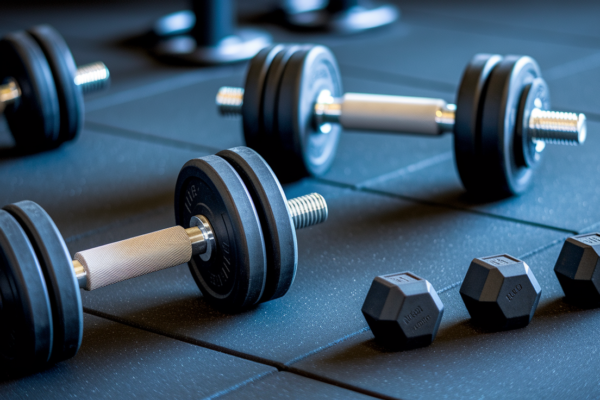
Think accessory exercises are optional? Think again.
On a push-pull-legs split, the right accessory moves fix weak ranges, undertrained muscles, and balance issues without wrecking recovery.
Instead of tossing in random curls or flyes, use a short checklist: note what your compound lift already trained, pick one true weak point, choose a complementary compound or an isolation, assign 2 to 4 sets in the matching rep range, and watch for session overlap.
Follow that and your accessory work actually boosts your weak points.
What Accessory Exercises Belong in a Push Pull Legs Routine?
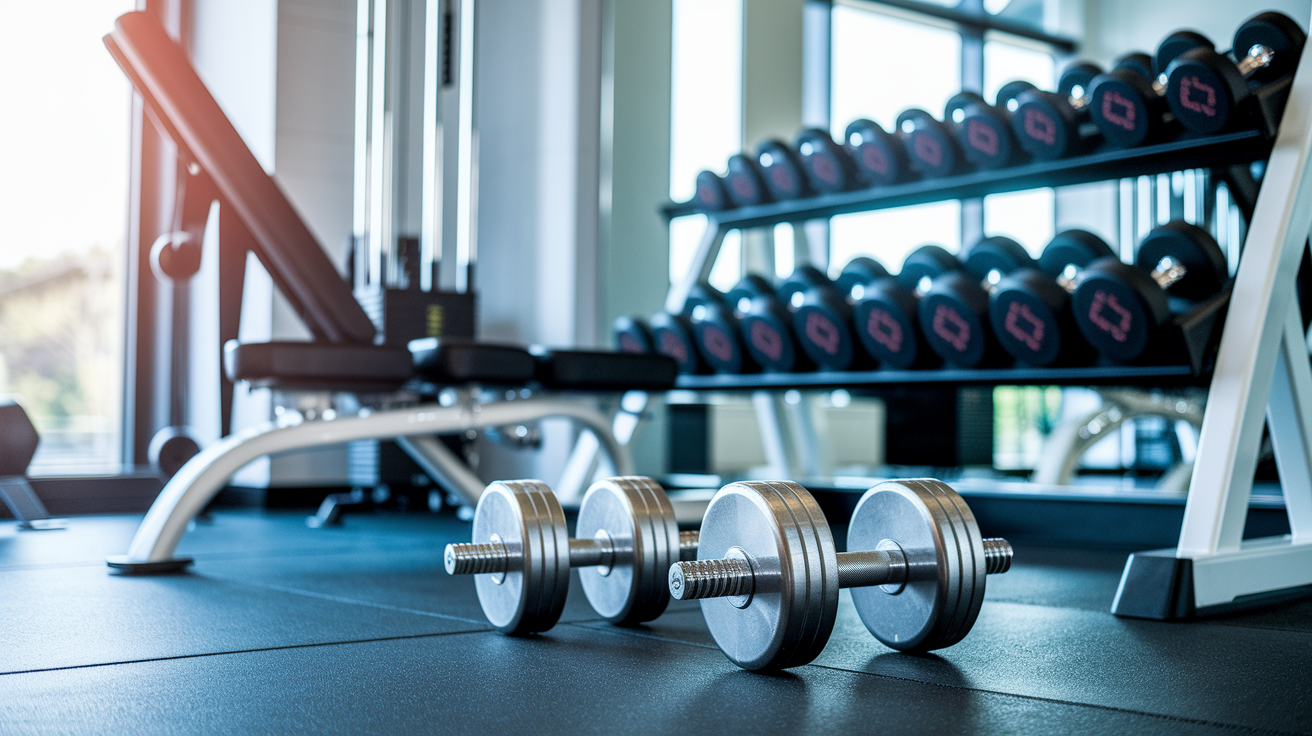
Accessory exercises are the supplementary movements you add after your main compound lifts, the bench press, the deadlift, the squat, to round out a session. They’re not filler. A good accessory fills a gap your main lift leaves open, whether that’s a weak range, an undertrained muscle, or a missing movement pattern. It’s not there to repeat what the big lift already did unless you’ve got a clear reason for the repeat.
Picking the right one comes down to a handful of factors working together: your training goal, your actual weak point, the movement pattern you’re missing, what equipment you’ve got, how much volume you’ve already built up that week, and how much recovery capacity you’ve got left. As a starting point, not a rule carved in stone, aim for 2 to 4 accessories per session, 2 to 4 sets per accessory, somewhere around 12 to 20 total working sets per session, and roughly 10 to 20 effective weekly sets per major muscle. Think of these as a launchpad, not a mandate. Your body, your schedule, and your recovery will shift these numbers around.
-
Write down the main compound lift and every muscle it substantially trains. If you’re benching, that’s chest, front delts, and triceps. Strength assistance work usually lives in the 4 to 10 rep range, hypertrophy accessories do better at 8 to 20 reps, and anything stability or corrective in nature should prioritize clean execution over heavy loading. No ego lifting on a rotator cuff exercise.
-
Identify one undertrained muscle, weak range, asymmetry, missing movement plane, or stability demand. Weak bench lockout? Add triceps work. Flat upper chest? Incline pressing. Cranky lower back from deadlifts? Chest-supported rows instead of unsupported ones. No knee-flexion work anywhere in your week? Time for leg curls.
-
Select one complementary compound or unilateral accessory. Flat bench pairs naturally with incline dumbbell press. Overhead pressing pairs with lateral raises. Unsupported rows pair with a vertical pull like a lat pulldown. Bilateral squats pair with split squats to catch any side-to-side gaps.
-
Add one isolation movement only where direct volume is genuinely needed. If you don’t have cables, a resistance band often does the job. No leg press? Goblet squats or step-ups cover similar ground. No leg curl machine? A band leg curl works. No hip thrust bench? A loaded glute bridge gets you there.
-
Assign 2 to 4 sets within the rep range that matches your goal. Before stacking on isolation work, count what your compound lifts already contributed. If your pressing already gave you 6 meaningful sets of chest and triceps stimulus, you don’t automatically need another 6 direct sets. You might just need 2 or 3 to round things out.
-
Check adjacent sessions for duplicated stress and confirm the exercise can be done with stable technique and tolerable joint loading. Try to leave about 48 to 72 hours before hitting the same muscle hard again. And if soreness, joint irritation, or declining performance start showing up, that’s your cue to cut back on redundant work, not push through it.
By the time you pick an accessory, you should be able to say in one sentence exactly what programming gap it’s filling.
Pros and Cons of Accessory Work in a Push Pull Legs Split
(((alt-img2)))
Adding accessories on purpose can sharpen weak links, build symmetry, and let you train more without piling on another heavy compound lift’s worth of systemic fatigue. But it’s a balancing act. More exercises also means more time, more joint wear, and a real risk of quietly overloading a muscle past what it can recover from.
| Consideration | Potential Benefit | Possible Cost |
|---|---|---|
| Weak-point targeting | Strengthens lockout, lagging muscles, and sticking points | Can duplicate pressing or pulling stress if chosen carelessly |
| Hypertrophy volume | Adds direct sets toward the 10 to 20 weekly set target | Easy to overshoot weekly volume without noticing |
| Technique and stability | Builds control in positions compounds don’t fully train | Low-load work can feel like wasted time if overdone |
| Symmetry and unilateral work | Exposes and corrects side-to-side imbalances | Slower, often requires more total sets to match bilateral volume |
| Session duration | More targeted stimulus per workout | Five training days already demand more time and recovery planning than three |
| Recovery and joint stress | Can be programmed to actually protect joints, like chest-supported rows | Repeated knee-extension or hip-hinge stress across days can overload joints |
If an accessory is dragging down your compound performance, causing joint irritation that won’t quit, or leaving you sore for more than 72 hours, that’s your signal to scale it back or drop it entirely. More isn’t automatically better here.
Push Day Accessory Exercise Selection for Chest, Shoulders, and Triceps
(((alt-img3)))
Push accessories need to cover chest, front or side delts, and triceps, without just stacking more heavy pressing on top of your bench and overhead work. Incline pressing fills a gap flat bench leaves open, lateral raises hit the medial delt in a way most presses barely touch, and overhead triceps extensions train the triceps in a stretched position that pushdowns don’t reach.
Incline dumbbell press targets upper ch
Final Words
Pick 2–4 focused accessories after your main compounds. Keep most accessories to 2–4 sets, aim for about 12–20 total working sets per session, and use 10–20 meaningful weekly sets per major muscle as a starting benchmark.
Use the six-step checklist here to spot weak links, pair complementary lifts, count compound contributions, and protect recovery. Apply the push pull legs accessory exercise selection guide when you program so accessories fix gaps, not add needless fatigue.
- List the main lift and trained muscles.
- Find one gap or weak range.
- Pick a complementary compound or unilateral move.
- Add isolation only if direct volume is needed.
- Assign 2–4 sets and count compound volume.
- Check for duplicated stress and allow 48–72 hours recovery.
FAQ
Q: What are accessory exercises and how should they be used in a PPL routine?
A: Accessory exercises are supplementary movements performed after the primary compound lifts and used to fill programming gaps, target weak links, add missing movement patterns, or increase direct muscle stimulus.
Q: How many accessories and sets should I use per session and per muscle each week?
A: Use 2–4 accessories per session, 2–4 sets each, about 12–20 total working sets per session, and aim for ~10–20 effective weekly sets per major muscle as a starting benchmark.
Q: How do I choose accessory exercises to fix a weak point or missing movement?
A: Choose accessories by identifying one undertrained muscle, weak range, asymmetry, or missing plane, then pick a complementary compound or isolation that directly addresses that gap without needless duplication.
Q: How should I pair accessories with my compound lifts in a workout?
A: Pair accessories by placing compound assistance first, then unilateral or moderate-load work, and finish with low-fatigue isolation; match the accessory movement pattern to the compound lift’s missing stimulus.
Q: What rep ranges and set schemes work best for strength versus hypertrophy accessories?
A: Strength assistance usually uses 4–10 reps and 3–5 sets; hypertrophy isolation uses 8–20 reps and 2–4 sets; stability or corrective work prioritises controlled execution over heavy loading.
Q: How do I avoid duplicating stress and protect recovery when adding accessories?
A: Avoid duplicating stress by checking adjacent sessions, preserving ~48–72 hours between demanding exposures, and reducing redundant work if soreness, joint irritation, or performance decline appears.
Q: When should I cut or reduce accessory volume?
A: Reduce accessory volume when compound performance drops, joint irritation persists, or soreness lasts longer than 72 hours; a practical cut is ~20–30% next-week reduction.
Q: What push-day accessory choices and cautions should I consider?
A: Push-day accessories like incline press, lateral raises, overhead extensions, flyes, dips, close-grip bench, and pushdowns add chest, deltoid, and triceps work—avoid extra heavy presses after high pressing volume and watch shoulder or elbow irritation.
Q: What pull-day accessory choices and cautions should I consider?
A: Pull-day accessories like pull-ups, neutral pulldowns, chest-supported rows, single-arm rows, straight-arm pulldowns, face pulls, and curls cover width, thickness, rear delts, and biceps—limit elbow-irritating curls and spare the lower back after heavy hinges.
Q: What leg-day accessory choices and cautions should I consider?
A: Leg accessories like front squats, split squats, lunges, leg press, leg curl, Romanian deadlifts, hip thrusts, calf raises, and carries balance knee- and hip-dominant work—avoid adding heavy hinges after big deadlifts and watch for excess knee-extension load.
Q: How should I progress and track accessory work in a PPL program?
A: Progress accessories with double progression: add reps until top of range, then increase load ~2.5–5%; track load, reps, RPE, technique, and impact on compound lifts; deload 5–7 days if fatigue stays high.
Q: How do I choose accessories based on my goal and training schedule (3‑day vs 6‑day)?
A: Choose compound assistance for strength and isolation for hypertrophy; three-day PPL usually trains muscles once weekly, six-day repeats twice weekly—pick accessory volume that delivers the needed stimulus with manageable recovery.