
Have you ever thought that a simple change to your plate might bring a burst of energy to your day? Picture your meal as a little canvas, filled with bright fruits, crisp vegetables, lean proteins (like a fresh piece of chicken or tofu) and whole grains that keep you feeling full and happy. This kind of balanced eating gently steadies your energy and keeps hunger from nagging at you.
When you see your plate as a friendly guide, every bite becomes a chance to enjoy both flavor and nourishment. In this post, we're sharing some easy tips to help you create meals that boost not just your body, but your spirit, too.
Getting Started with Balanced Meals
The Balanced Plate Method is a friendly guide to building meals that fuel your day. Think of it as setting up your plate as a colorful workspace where half is filled with fruits and vegetables like crisp leafy greens and bright bell peppers. These choices are loaded with vitamins, minerals, and fiber (good-for-you nutrients) that help keep your blood sugar steady and stop hunger in its tracks.
Next, use one-quarter of your plate for lean proteins such as chicken breast, tofu (a soy-based protein that’s great for muscle building), or beans. These foods not only help build your muscles but also keep you feeling full. The other quarter of your plate should be reserved for fiber-packed carbohydrates like quinoa, brown rice, or whole-grain bread. These give you a steady burst of energy throughout the day.
Finish off your plate with a little bit of healthy fats like a few slices of creamy avocado or a light drizzle of olive oil. This final touch helps your body absorb all the yummy nutrients, adding a hint of richness to every bite. Picture a meal with hard-boiled eggs, whole-grain toast, sautéed veggies, and a splash of avocado, your plate becomes a vibrant canvas where every bite refreshes your well-being.
Balanced meals like these make healthy eating simple and fun without the need for strict calorie counting, encouraging you to enjoy whole foods, fresh herbs, and spices for that extra pop of flavor.
Essential Components of Balanced Meals
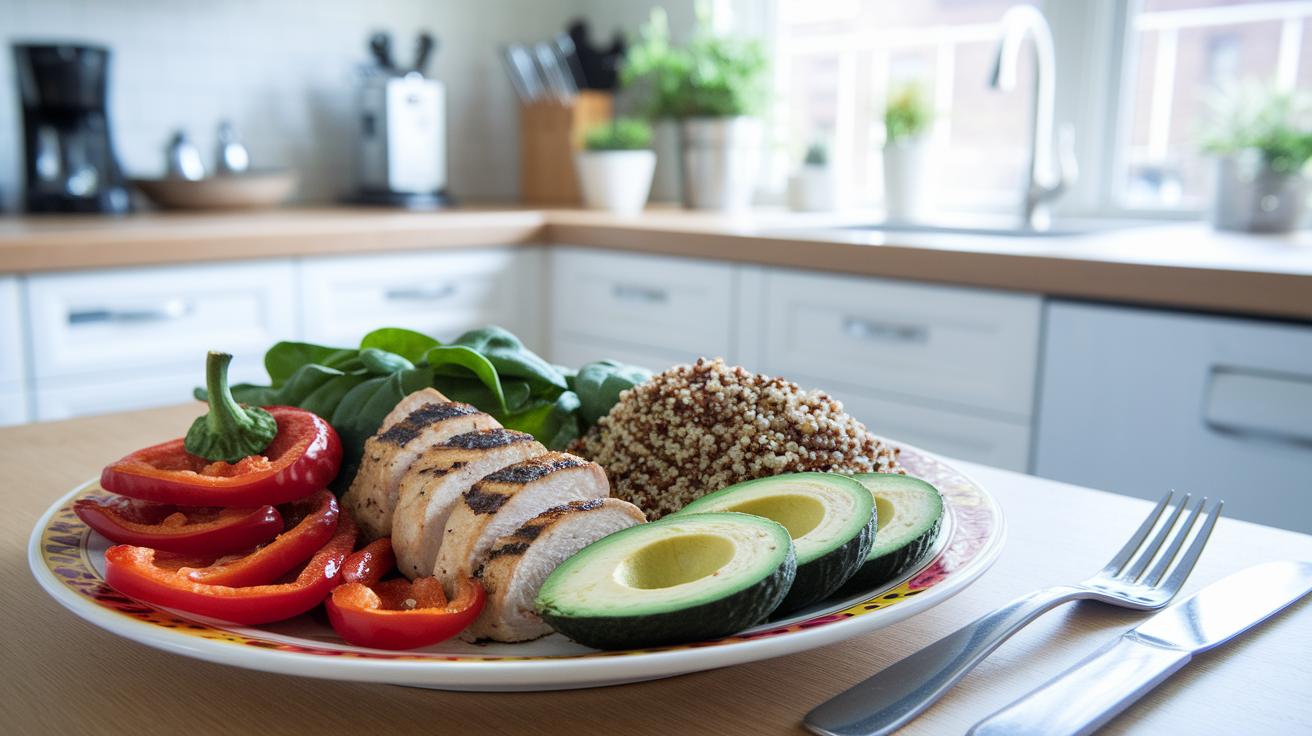
Lean proteins are amazing for building muscle and even help your body burn extra calories as it digests food. When you eat protein, your body works a bit harder to break it down (that’s called the thermic effect of food). For example, a piece of chicken breast can burn up to 30% of its calories just during digestion! One little tip: marinate your chicken with herbs, garlic, and lemon juice before grilling, it really brightens the flavor.
Vegetables can be fun to mix and match, too. Picture roasting red bell peppers and spinach with a splash of olive oil and a tiny pinch of salt. This simple combo can turn into a delicious roasted salad with a light lemon vinaigrette that feels both fresh and uplifting.
When you add whole grains to your meal, try an extra step. Rinse your quinoa first, then give it a quick toast in a dry pan to bring out a warm, nutty flavor before boiling. It’s a small twist, but it makes your dish even more delightful.
Healthy fats, like avocado or a drizzle of olive oil, not only add great taste but also help your body absorb nutrients more efficiently. For instance, top your salad with fresh avocado slices and a squeeze of lime to keep it creamy and vibrant.
- Lean proteins like chicken breast, when marinated and grilled, can boost your energy burn after eating.
- Roasted vegetables such as red bell peppers and spinach offer unique flavors and plenty of essential vitamins.
- Toasting whole grains like quinoa before boiling enhances their natural nutty taste.
- Fresh avocado added after cooking keeps healthy fats creamy and helps your body absorb more nutrients.
| Ingredient | Preparation Tip |
|---|---|
| Chicken Breast | Marinate with herbs, garlic, and lemon, then grill |
| Red Bell Peppers & Spinach | Roast with olive oil and a pinch of salt |
| Quinoa | Rinse, then toast lightly in a dry pan before boiling |
| Avocado | Add fresh slices post-cooking with a squeeze of lime |
Planning Balanced Daily Menus
Meal planning is about more than just counting calories or macros. It’s about tuning into your hunger and truly enjoying every bite. Picture your plate like a colorful pie chart: half bursting with fresh fruits and vegetables, a quarter filled with lean protein (like chicken or tofu), and the other quarter made up of fiber-rich carbohydrates (foods that help keep you full and active). A little drizzle of healthy fats, like olive oil, can add a tasty finishing touch.
Each week, try to set aside some time to plan your meals. I’ve found that switching up dinner recipes keeps things fun and stops your meals from feeling boring. Using easy methods like slow cookers or sheet-pan dinners can really save you time, and they add variety to your daily routine. These small steps might seem simple, but they add up to a balanced and nourishing lifestyle.
Meal planning strategies:
| Strategy | Tip |
|---|---|
| Weekly Planning | Set aside a specific day to map out your menu |
| Batch Cooking | Try using slow cookers or sheet-pan recipes |
| Recipe Rotation | Switch up dinner recipes weekly to keep it exciting |
| Portion Control | Use the Balanced Plate Method to adjust portion sizes based on hunger |
Another smart tip is to keep portion control in mind. When you fill half your plate with vegetables, you’re not only adding color and crunch but also listening to your body. Take a moment before each bite, ask yourself, “Am I truly hungry?” This little pause helps keep your energy steady and prevents overeating.
Finally, consider rotating your weekly menu. Change up the meals to match your tastes and activity levels. And if you ever feel stuck or unsure about your dietary needs, chatting with a registered dietitian can be a great way to get personalized advice. Enjoy the journey to balanced, healthy eating!
Balanced meals spark a vibrant lifestyle

Imagine waking up and savoring a warm bowl of oatmeal mixed with smooth yogurt, crunchy almonds, and fresh, sweet berries. Every bite brings together whole grains for lasting energy, protein to support your muscles, and a hint of natural sweetness to kick off your morning. Ever wonder how a breakfast like this can gently jump-start your metabolism?
Now, as the day unfolds, picture a cheerful lunch with creamy avocado toast crowned by perfectly cooked eggs, served alongside a few juicy orange slices. This meal offers lean protein, fiber-rich carbohydrates, and healthy fats to keep you feeling lively and satisfied through the afternoon.
Around midday, consider a bowl of tofu (a protein-rich soy product, which means it gives you protein without meat) paired with nutty brown rice. Top it with steamed vegetables and a drizzle of soy sauce for an extra hint of flavor. It’s a light and nourishing choice when you need a gentle boost.
When it’s time to wind down, treat yourself to a comforting dinner like pesto chicken pasta with a generous helping of broccoli. Tender pieces of chicken, hearty whole-grain pasta, and vibrant vegetables come together to recharge your body after a busy day. And finally, ease into your evening with a cozy bowl of lentil and sweet potato curry, blending protein and fiber with naturally sweet flavors to invite calm and contentment.
| Meal | Dish |
|---|---|
| Breakfast | Oatmeal with yogurt, almonds, and berries |
| Lunch | Avocado toast with eggs and orange |
| Midday | Tofu and brown rice bowl |
| Dinner | Pesto chicken pasta with broccoli |
| Evening | Lentil and sweet potato curry |
Tips for Efficient Balanced Meal Prep
Looking for ways to whip up meals quickly without feeling overwhelmed? You can try a one-pot or sheet-pan dinner. Imagine tossing your favorite protein, colorful vegetables, and hearty whole grains onto a single pan, then letting your oven take care of the rest. Not only does this cut down on cleanup, but it also leaves you with a nicely balanced meal.
Another smart idea is batch cooking. Prepare a larger amount of staples like brown rice, quinoa, or grilled chicken so you have them ready whenever the week gets busy. Pre-chop your vegetables and mix up a salad in advance, and you'll have the building blocks of a healthy dish at your fingertips when time is short.
Also, keep it affordable by choosing ingredients that are both budget-friendly and full of flavor. For instance, swapping out heavy sauces for mashed avocado can be a game changer. A sprinkle of fresh herbs, a dash of your favorite spice, or a squeeze of citrus can really brighten a dish. This approach not only saves money but makes every bite both tasty and nourishing.
Final Words
In the action, you learned about making nourishing choices by using the Balanced Plate Method. We explored simple steps to mix lean proteins, colorful veggies, whole grains, and healthy fats. Meal planning tips and quick prep ideas helped show how to create varied and tasty dishes. Each suggestion is meant to keep nutrient-packed meals practical and enjoyable. Here's to a future filled with delicious, balanced meals and a refreshed outlook on healthy eating.
FAQ
What are balanced meal recipes for different meals?
Balanced meal recipes bring together fruits, veggies, lean proteins, whole grains, and healthy fats. They follow the Balanced Plate Method, making meals suitable for breakfast, lunch, and dinner with a mix of fresh, whole ingredients.
What does a balanced diet food list or chart include?
A balanced diet food list or chart typically includes lean proteins, a variety of non-starchy vegetables, fiber-rich carbohydrates, and healthy fats, offering a visual guide to building nutritious meals throughout the day.
How would you define a balanced diet with an example?
A balanced diet includes roughly 50% fruits and vegetables, 25% lean protein, and 25% fiber-rich carbohydrates. For example, consider eggs, whole-grain toast, sautéed vegetables, and avocado on your plate.
What are examples of balanced meals?
Examples of balanced meals are oatmeal with yogurt and berries for breakfast, avocado toast with eggs for lunch, and pesto chicken pasta with broccoli for dinner, integrating all key food groups in one plate.
What should a balanced meal consist of?
A balanced meal consists of half the plate with fruits and veggies, one quarter with lean protein, one quarter with fiber-rich carbohydrates, and a serving of healthy fats to complete the nutritional picture.
What should you eat for dinner on a balanced diet?
For dinner on a balanced diet, opt for meals like pesto chicken pasta with broccoli. This covers lean protein, whole grains, colorful veggies, and a touch of healthy fat for flavor and satiety.
What is a 7-day healthy eating plan?
A 7-day healthy eating plan rotates balanced meals each day, ensuring variety and consistent intake of lean proteins, non-starchy vegetables, whole grains, and healthy fats to support overall wellness.

