
Have you ever thought about splitting up your workouts to target different muscle groups on different days? With a push pull leg routine, you can focus on your chest, shoulders, and triceps one day; your back and biceps on another; and save a day for your legs. This easy plan makes it simple to track your progress while giving your muscles a much-needed break so they can rebuild and get stronger (recovery means that your muscles repair themselves). Whether you're just starting out or you’re looking for a tougher challenge, this routine fits right in. Stick around to discover practical tips that can really boost your workout results.
Understanding Push Pull Leg Workout Routines: Split Options & Benefits
Push pull leg training splits your workouts into three focused days. You work on push movements (chest, shoulders, and triceps), pull movements (back and biceps), and leg exercises (quads, glutes, hamstrings, and calves) separately. This simple split helps you keep track of how hard you're working each muscle group while making sure you recover well.
Imagine a day where you only concentrate on pushing exercises, like bench pressing or overhead pressing. This clear-cut plan lets you decide how much weight to use and how long you need to rest. Depending on your goal, you can switch between doing 6–8 reps for strength, 8–10 for building muscle, or 12–15 for endurance. Big, compound moves like squats or bench presses get a longer rest (about 2–3 minutes), and smaller, targeted exercises like dumbbell lateral raises need only about 60 seconds.
There are lots of ways to set up your routine. A 3-day split works well if you're just starting; it balances workout volume with proper recovery. If you’re ready for a challenge, a 4-day heavy/light plan (alternating tougher sessions with lighter ones) offers more variety. For those eager to build muscle even faster, a 5-6 day routine increases overall training time while keeping an eye on fatigue. Handy PDF guides and video demos can help you master each option wherever you are.
| Split Type | Days/Week | Focus | Example Frequency |
|---|---|---|---|
| 3-Day PPL | 3 | Balanced volume; recovery; general | Mon/Wed/Fri |
| 5-Day Heavy/Light | 5 | Strength and muscle growth mix; flexible loads | M/Tu/Th/Fri/Sat |
| 6-Day Advanced | 6 | High volume; faster results; careful fatigue check | Daily |
| 4-Day Heavy/Light | 4 | Alternating tough/light days; minimal overlap | M/Tu/Th/Sat |
Push Pull Leg Workout Routines: Boost Your Performance
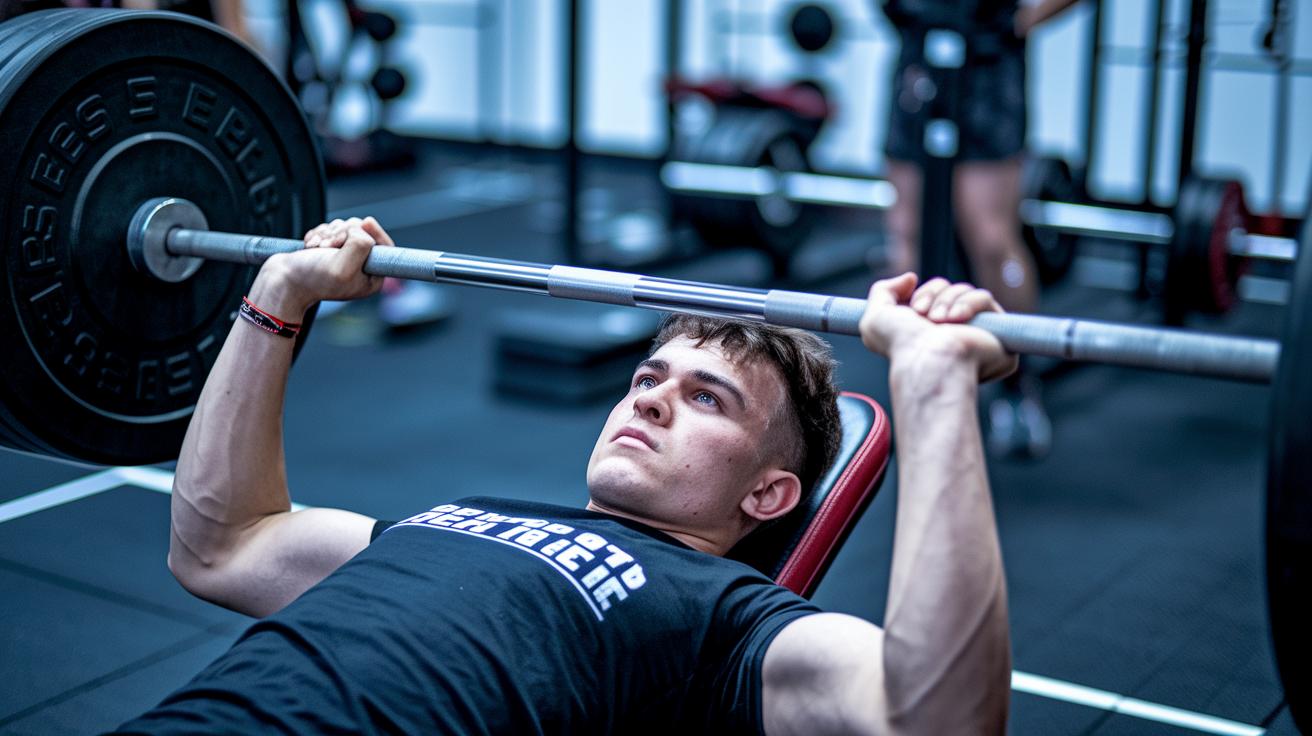
Incline Barbell Bench Press
Start by setting your bench at a 30 to 45 degree angle and use a slightly narrower grip to really work the upper part of your chest. Lower the bar slowly, like you're easing into a calm rhythm, then push upward with bold energy. Try doing 3 to 4 sets of 6 to 10 reps and give yourself 2 to 3 minutes to catch your breath between sets. Picture it as a steady dance, lower, pause, and then push up with strength and control.
Standing Dumbbell Shoulder Press
Stand tall and keep your elbows level with your shoulders as you press the dumbbells upward to work both the front and side shoulder muscles. Make sure to brace your core and maintain a straight spine for good balance. Choose a weight that challenges you but still lets you keep proper form. It’s a bit like pushing gently against an invisible barrier, steady, controlled, and empowering.
Paused Flat Dumbbell Press
Lie down on a flat bench with dumbbells held close to your chest. Slowly lower the weights and then hold for a one-second pause at the bottom of your movement. This pause cuts out any extra momentum and forces your muscles to really work, especially in your mid-chest. Just remind yourself: "Pause here, feel the muscle working before pushing up with full power."
Dumbbell Lateral Raise
Stand with a small bend in your elbows and lift the dumbbells out to the sides, making sure to focus on your side shoulder muscles (deltoids). Aim for 12 to 15 reps each set and take about 60 seconds to rest when needed. Imagine your arms unfolding like gentle wings in a light breeze, each lift is smooth and controlled, letting you really feel the work.
Seated Decline Cable Fly with Supination
Sit comfortably on a decline bench and grab the cable handles with a neutral grip (where your palms face each other). As you bring your arms together, give them a slight twist (this is called supination) to target the lower and outer chest muscles even more. Keep everything flowing in a slow, full range of motion, as if you’re carefully drawing a smooth arc in the air.
Incline Dumbbell Overhead Extension
Lie back on an incline bench and prepare for an exercise that sharpens the long head of your triceps (the muscle on the back of your upper arm). Extend your arms straight up above you, keeping your shoulder in line with your body. Aim for 8 to 10 reps per set and picture yourself reaching gently toward the sky, letting every push emphasize that satisfying tricep squeeze.
Pull Day Exercises in Push Pull Leg Workout Routines
Pull-Ups
Pull-ups are a fantastic way to boost your back strength. Use a grip that's just a bit wider than your shoulders, and focus on pulling your shoulders down and back to really work your lats (the large muscles on your back). It’s kind of like climbing a ladder, each pull brings you one step closer to more strength. Start with 3–4 sets of 6–10 reps and give yourself a 60-second break between sets.
Barbell Row
When you do a barbell row, lean forward at about a 45-degree angle. Keep your tummy tight and pull your elbows back like you’re pulling a bowstring. This simple motion works your middle and lower traps, adding strength and thickness to your back muscles. Think of it like the controlled swing of a pendulum, steady and powerful. Aim for 3–4 sets of 6–10 reps with smooth, controlled movements.
Reverse Grip Lat Pulldown
This move uses an underhand grip which gives your lats an extra stretch. Make sure your wrists feel comfortable and let your elbows lead the movement toward your hips. It’s similar to gently tugging on a firm rope, feeling each bit of your back engage. Just like with your other pulls, stick to 3–4 sets of 6–10 reps.
Chest-Supported Rear Delt Row
For the chest-supported rear delt row, lie on a bench so you can focus solely on your form. This exercise zeroes in on your rear shoulder muscles, helping carve out a strong upper back. Keep your pulls steady and enjoy that satisfying squeeze at the top. Each rep feels like sculpting your back bit by bit.
Close-Grip Barbell Curl
Keep those elbows close as you slowly lift the barbell. This close-grip movement targets the long head of your biceps (the part that gives your arms that stylish curve), making each curl count. Imagine each rep as a little celebration of muscle work. Do 3–4 sets and keep your moves smooth and controlled.
Face Pulls
Face pulls work on your rear shoulders, middle and lower traps, and even hit your rotator cuff (small stabilization muscles in your shoulder). Whether you do them kneeling or lying down, use a rope set at just the right height. Each pull should feel deliberate, like you're purposefully reeling something in. Stick to 3–4 sets of 6–10 reps and take about 60 seconds of rest between sets.
Leg Day Exercises in Push Pull Leg Workout Routines

Let's start with barbell squats. Firmly brace your core and keep your back straight as you slowly lower into a squat, making sure your knees stay in line with your toes. Aim for 4 sets of 6 to 8 reps with a 2 to 3 minute break after each set. Think of it as taking a slow, deliberate descent, feeling the strong burn in your thighs, and then pushing back up steadily.
Now, move on to barbell hip thrusts. Rest your upper back on the bench and focus on squeezing your glutes as you lift. Do 3 sets of 8 to 12 reps, taking about 60 to 90 seconds to catch your breath between sets. Imagine lifting your hips with a burst of energy, letting your glutes drive the motion.
Next up, try split squats. Do 2 sets on one leg and then 2 sets on the other. This move really works on your balance. As you gain confidence, you can switch to the Bulgarian split squat, 3 sets of 8 to 10 reps on each side. Picture yourself standing tall on one leg, each controlled step building up your strength and balance.
After that, focus on the glute ham raise. Really pay attention to the lowering part of the movement, doing 3 sets of 6 to 12 reps with a 90-second rest in between. Imagine slowly lowering your body, feeling every muscle work, like a careful descent down a gentle slope.
Finish your leg workout with calf raises, whether you do them seated or standing. Aim for 3 sets of 12 to 15 reps with a short 60-second break. Picture the satisfying squeeze in your calves as you lift up onto your toes, moving with a smooth, rhythmic flow.
Each exercise keeps a steady, controlled pace with a full range of motion, challenging you to grow stronger step by step.
Programming & Progression for Push Pull Leg Workout Routines
Begin by creating a clear plan that helps you build strength over time. It starts with a simple idea: gradually increase your weights. For example, use a linear progression method by figuring out your working sets based on your one-rep max (the maximum weight you can lift one time) for exercises like the squat, bench press, and deadlift. If your one-rep max on the bench press is 100 pounds, start around 80 pounds and add about 2.5 to 5 percent more each week. Picture it like slowly adding tiny weights to tip a scale, it’s all about small steps making a big difference.
Next, decide how long your training program should be based on your own experience. A middle-level push pull leg routine might last 7 weeks, while a more advanced plan could run for 6 weeks. Remember to include a lighter week every 4 to 8 weeks. This “deload” period (a planned break where you reduce the weight) gives your muscles the chance to rest and rebuild. Keeping a log using digital tools or even a simple PDF template helps you track the weight used, the number of sets and repetitions, and even your perceived effort (how hard the exercise felt).
Also, think about how often you want to work out. Whether it’s a 3-, 4-, or 6-day split, let your body’s recovery guide your schedule. Compound exercises like squats or deadlifts usually need 2 to 3 minutes of rest after each set, while moves that isolate specific muscles often just need about 60 seconds.
In truth, see your training schedule as a living plan. It changes each week with those small steady gains and planned recovery days, all working together to boost your overall performance.
Variations & Customization for Push Pull Leg Workout Routines
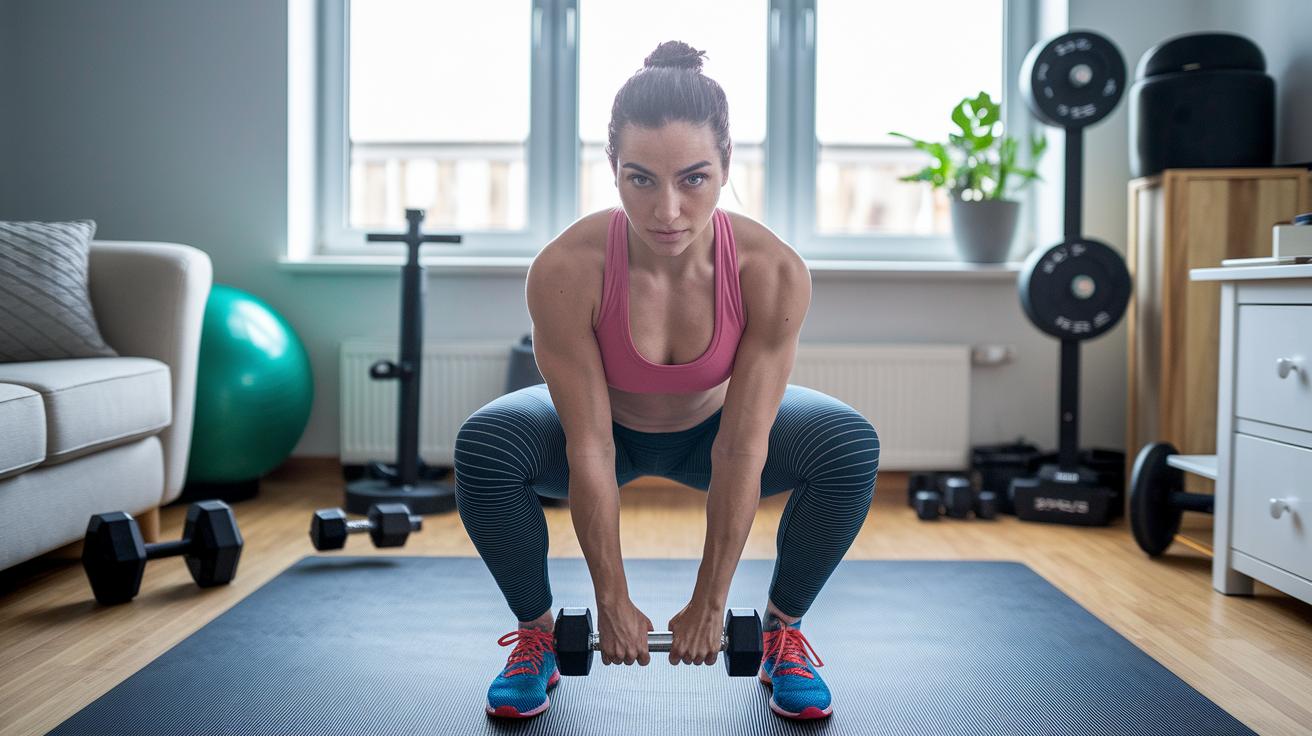
When you can’t always make it to the gym, no worries, you can switch up your routine right at home. Try replacing barbell squats with goblet squats. Picture holding a weight close to your chest as you lower into a deep, controlled squat, really feeling your legs and core work. You can also trade barbell hip thrusts for glute bridges, where you push off your heels and squeeze your glutes at the top, giving you a burn that’s both powerful and steady.
For pulling exercises, skip the machines and use a resistance band for pull-aparts. Imagine stretching the band with each pull to wake up your back muscles in a fresh, invigorating way.
If you’re short on equipment, go for a bodyweight version of your push, pull, and leg routines. Use push-ups on push day, try inverted rows to mimic pulling, and work on pistol squat steps to build leg strength with little support.
Time-saving circuits can mix compound moves into supersets, with rest breaks of about 30 to 45 seconds.
- Beginners might start with 2 to 3 sets to build both form and endurance.
- More experienced folks can add drop sets or change the pace to make it more challenging.
Mobile flowcharts and video demos help guide you every step of the way, so you can adjust your workout to fit your pace and space perfectly.
Final Words
In the action, we broke down push, pull, and leg days, covering exercise tips, rep ranges, and rest guidelines. Each section provided clear cues on form and intensity to help keep workouts productive and balanced.
These push pull leg workout routines offer practical steps to build strength, improve endurance, and boost overall well-being. Embrace the plan with enthusiasm and stay focused, you’re well-equipped to feel stronger and more confident.
FAQ
What is a Push Pull Legs workout routine PDF?
The push pull legs workout routine PDF offers a clear guide that splits exercises into push, pull, and leg days, including instructions and scheduling tips to help structure your training effectively.
What are the differences between 3-day, 5-day, and 6-day Push Pull Legs splits?
The 3-day split suits beginners by providing balanced recovery, while 5-day and 6-day splits increase training volume for advanced lifters. Each schedule adjusts intensity and rest to meet different fitness needs.
Are Push Pull Legs workout routines effective for beginners?
Push pull legs routines work well for beginners by dividing workouts into focused muscle groups, reducing overlap, and making it simple to track progress and recovery at a manageable pace.
Is push pull legs actually effective?
The push pull legs method is effective as it targets specific muscle groups with focused sessions, helping reduce fatigue and promote balanced strength gains through structured training.
What is the best schedule for Push Pull Legs routines?
The best schedule depends on your recovery and goals; common options include 3-day for steady progress and 6-day splits for advanced training, allowing flexibility based on individual needs.
Does the 6 12 25 method work in PPL programs?
The 6 12 25 method introduces varied set and rep schemes during workouts, helping stimulate different muscle fibers. It can boost endurance and strength when integrated thoughtfully into your routine.
Is a 6-day PPL split too much workout?
A 6-day push pull legs split can be sustainable with proper recovery, sleep, and nutrition. It suits advanced trainers who monitor fatigue carefully and adjust intensity when necessary.
How do exercises like the Overhead Press, Side Lateral Raise, Bent‑Over Row, Overhead Triceps Extension, Bench Press, and Squat benefit PPL routines?
These exercises target major muscle groups—overhead press and side lateral raise work the shoulders, bent‑over row hits the back, triceps extension isolates the arms, bench press builds chest, and squats develop leg strength.

