
Ever thought that a quick 10-minute workout on a cross trainer could turn your day around? These workouts get your heart beating faster (which means you’re giving your heart a nice little boost) and light a fire in your energy levels. In this guide, I'll share some easy routines that fit even the busiest schedule. Whether you have just a few minutes or up to half an hour, these simple moves spark real change. Get ready to feel every pedal push and finish your session feeling strong and energized.
HIIT Cross Trainer Workout Routines for Every Schedule
If you’re short on time but still want a great metabolic boost, try this 10-minute routine. Start off with a 2-minute warm-up by pedaling steadily at a low resistance between 3 and 5. Then, dive into three rounds of action. Each round means you sprint for 30 seconds at a high resistance (8 to 10) to really get your heart pumping hard in Zone 4 (that’s when you’re working up a serious sweat), followed by 1 minute of gentle pedaling at a lower resistance of 3 to 5. Wrap up with a 1-minute cooldown at a relaxed pace.
- Example: Begin with 2 minutes of easy pedaling at low resistance, then switch to a 30-second burst at high resistance, feel your muscles come alive with every strong stroke!
For a 20-minute burst of energy, start similarly with a 2-minute warm-up at resistance 3 to 5. Then, go with Option A where you do three 30-second all-out sprints at resistance 8 to 10, with 1 minute of light pedaling in between each sprint. After finishing these intervals, challenge yourself with a 1000-meter sprint at a steady but demanding pace, making the most of your cross trainer’s benefits. Finally, take 2 minutes to cool down at an easy pace so your heart rate can settle.
- Example: Imagine shifting gears on your cross trainer, feeling every muscle work hard, as your arms and chest get involved in powering each sprint!
For those ready for a robust 30-minute workout, begin with a 2-minute warm-up at resistance 3 to 5. Next, try Option B by performing five rounds of 1-minute max-effort sprints at resistance 8 to 10. Between each sprint, enjoy 2 minutes of recovery at a slightly lower resistance of 4 to 6. Focus on strong and smooth pedal strokes, and let the arm handles help you drive through each burst. End your session with a 3-minute cooldown at a light pace. This gradual cool down not only brings your heart rate down safely but may also boost your metabolism for up to 48 hours (that’s the EPOC effect where your body continues to burn calories even after you finish your workout).
- Example: Push past your comfort zone with five intense sprints, each followed by a calming recovery period to let your body rebuild and find its strength!
Benefits of HIIT Cross Trainer Workouts

When you jump into a HIIT workout on a cross trainer, you spark your metabolism and kickstart your fat-burning process while also building muscle. You work your arms, chest, back, and more by using the moving handles, and you do so without putting too much pressure on your joints. It’s like getting a full-body workout that feels friendly on your knees and hips compared to pounding the pavement with running.
During those high-intensity bursts, your heart races and your blood flows faster, which helps strengthen your heart muscles. Research shows that this type of exercise can improve your blood sugar levels, trim your waistline, lower blood pressure, and even reduce your resting heart rate. For example, a 150-pound person might burn around 350 calories in a 30-minute workout, and thanks to the EPOC effect (that’s extra calorie burn after you exercise), the benefits can last for up to 48 hours.
Every burst on the cross trainer doesn’t just torch fat; it helps firm up muscles from your upper body to your lower body. You feel that dynamic rush of energy and lasting cardio benefits that make each session feel like a step toward a healthier, more energetic you. Isn't it great to experience such rewarding, transformational results?
Mastering Intensity and Technique for Cross Trainer HIIT
When you're pushing through those high-intensity bursts, pay close attention to your movement. Keep your back straight and let your shoulders relax naturally. Engage your core (your stomach and lower back muscles) by thinking of it as the powerhouse behind every stroke. It really does help when you tighten it just as you pedal!
Try using the arm handles with a gentle touch instead of a vice-like grip. Let your arms lead the way with a light pull that feels as soft as a summer breeze. For a fun drill, practice using your arms slowly for one minute, taking your time to feel each controlled movement guiding you steadily.
Keep an eye on your form, too. It’s easy to lean too far forward or slouch when you’re sprinting, which can sap your power and cause discomfort. Picture yourself riding a steady wave, balanced, in control, and fully present. This image can remind you to keep that proper stance.
Every now and then, take a moment to check in with yourself during those high-intensity intervals. Ask, "Am I holding the handles too tightly or losing my alignment?" A quick self-reminder can make your workout safer and help you get the most out of every burst of energy.
Beginner-Friendly HIIT Cross Trainer Protocols
Let’s get started with a simple, friendly approach for your first HIIT sessions. Begin by doing a few dynamic stretches like leg swings and arm circles. These moves gently wake up your muscles, preparing them for action, kind of like a warm-up chat before a fun exercise session.
Next, try 2 or 3 rounds of a pattern that feels just right: work hard for 30 seconds by sprinting at a resistance level between 4 and 6 (think moderate challenge), then take 90 seconds to recover at the same resistance. Imagine using all your energy for those 30 seconds and then giving yourself a little break to catch your breath, just like pausing during a lively dance.
Aiming for two sessions each week is a good idea, and be sure to leave at least 48 hours between workouts. That downtime is like giving your muscles a rest day to rebuild and get stronger, all while being kind to your joints thanks to the gentle nature of the elliptical.
Once you’re feeling more comfortable, try adding an extra 15 seconds to each sprint or even introduce another circuit each week. This gradual increase is a great way to naturally boost your endurance without overdoing it. It really mirrors the basic exercise science ideas that help make your workouts more effective. And remember, staying consistent is the secret ingredient to seeing stronger results and feeling more confident with every session.
Tracking Progress and Calorie Estimation in Cross Trainer HIIT
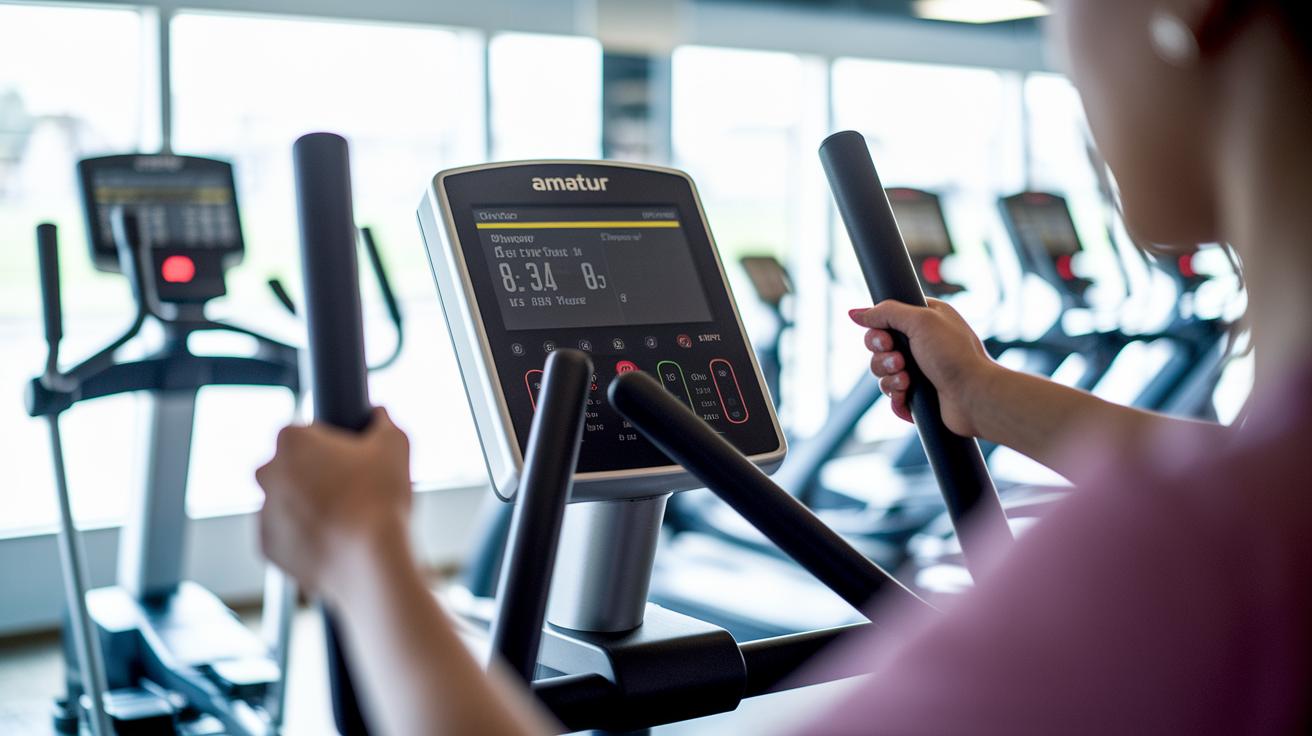
Your elliptical’s console is a handy buddy on your workout journey. It shows you live data like the distance you’ve covered, the power output (watts), your RPM (rotations per minute, which tells you how fast you're pedaling), and your heart rate. For instance, keeping an eye on your peak RPM gives you a clear picture of how hard you’re pushing during those intense bursts.
Using the built-in counters or a wearable monitor is a smart way to track your progress. Write down details like the length of each high-intensity interval, the resistance level you set, and your heart rate during sprints. This info does more than look cool, it helps you notice little improvements over time. Maybe you cover more distance in each interval, recover faster afterwards, or even see your heart rate stay steadier when you really give your best.
| Metric | What to Track |
|---|---|
| Distance | Meters per interval |
| Heart Rate | Peak and recovery rates |
| RPM | Sprint intensity |
Imagine this: If you're around 150 pounds, you might burn roughly 350 calories in a 30-minute session of moderate HIIT. And here’s something cool, thanks to the EPOC effect (this means your body continues burning extra calories even after the workout), you keep reaping the benefits long after you’re done. So, keep tracking those numbers and let your progress inspire your next session!
Recovery and Progression Strategies Post Cross Trainer HIIT
After a tough cross trainer HIIT session, take a few minutes to cool down. Ride gently for 3 to 5 minutes at a low resistance, easing your heart rate , like a race car slowing down on a calm stretch track.
Then, consider some active recovery. On days off, light cycling, a simple yoga flow, or easy stretching can help your muscles recover (muscle recovery refers to how your muscles repair themselves; check out more at https://fitandglossy.com?p=474) and ease any tightness while boosting flexibility. A brief 10-minute yoga session after HIIT might just be the perfect way to let your muscles unwind.
Remember to give yourself enough rest. Allow 24 to 48 hours between HIIT sessions so your muscles get time to repair and grow stronger. Skipping rest can lead to overused muscles and slow your progress.
Also, gradually push your limits with progressive overload. Each week, try upping your resistance by 1 to 2 levels or adding an extra 15 to 30 seconds to your high-intensity intervals. A small change each time can really add up, imagine adding a few extra seconds to every sprint and watching your endurance improve.
Here's a quick guide:
- Cooldown: 3–5 minutes of gentle pedaling.
- Active recovery: light cycling, yoga, or stretching.
- Rest: 24–48 hours between sessions.
- Progressive overload: increase resistance or interval duration weekly.
Stick with these steps, and you'll build a strong foundation for lasting fitness gains while keeping your body safe and sound.
Final Words
In the action of powering through HIIT routines, this guide offered clear steps from warming up on the cross trainer to dialing in your resistance and tracking your progress. We broke down effective sprint formats, proper techniques, and recovery strategies to help keep your energy high and your workouts safe. The simple yet dynamic tips make it easier to build strength and stay active at every level. Step up your training and enjoy the benefits of hiit cross trainer workouts to feel fitter, more balanced, and truly empowered.
FAQ
What are some good HIIT cross trainer workouts for beginners?
HIIT cross trainer workouts for beginners include short, intense intervals like 30-second maximum-effort sprints with 90-second recovery periods on low resistance. This routine builds confidence and safely boosts fitness.
How do HIIT cross trainer workouts help with weight loss?
HIIT cross trainer workouts help with weight loss by rapidly raising your heart rate, burning calories during and after exercise (the afterburn effect) and engaging multiple muscle groups, all while being gentle on your joints.
What are the benefits of a 30-minute HIIT elliptical workout for beginners and weight loss?
A 30-minute HIIT elliptical workout mixes a warm-up, short sprints, and recovery periods so beginners can strengthen muscles, improve heart health, and burn fat efficiently while enjoying a low-impact routine.
Can you do HIIT on a cross-trainer?
Yes, you can do HIIT on a cross-trainer by adjusting the resistance from low during the warm-up to high during sprints. This method safely intensifies workouts and maximizes calorie burn.
Is a 20-minute HIIT workout on the elliptical enough for a day’s exercise?
A 20-minute HIIT elliptical session provides a powerful energy boost and calorie burn. While it’s effective as a quick workout, pairing it with other activities may further enhance overall fitness.
Is a HIIT workout on the elliptical considered cross training?
A HIIT workout on the elliptical is considered cross training since it targets both your upper and lower body muscles, offering a balanced, low-impact option that supports overall strength and cardiovascular health.

