
Ever wonder if you really need a gym to build strength? You might be surprised, a simple dumbbell workout at home can do the trick.
Picture feeling the burn in your muscles as you move through exercises right in your living room. This routine blends tried and true moves like squats and lunges with clear cues to help every rep count.
Whether you're just starting out or you've been exercising for ages, this plan is here to help you build more power and boost your confidence. Ready to spark that inner strength and change the way you work out at home?
Full-Body Home Dumbbell Workout Circuit
This 35-minute circuit is perfect for everyone, no matter where you are on your fitness journey. A friendly, certified trainer guides you through each move, making sure every exercise is clear and easy to follow.
The workout features eight compound exercises that blend strength with coordination. Picture starting with a squat paired with a clean and press. You lower into a squat and then push up powerfully, feeling more confident with every rep.
Each exercise is designed to work multiple muscle groups at once. You begin with a reverse lunge that helps improve leg stability, then move on to a chest press paired with a glute bridge that fires up your core and lower body. Next, try a wide-stance burpee combined with a bicep curl to mix in both cardio and strength.
After that, a staggered bent-over row targets your back and biceps while a deadlift teamed with a lateral lunge makes your core and legs work together. Then, you continue with an overhead triceps extension and a calf raise that keep your routine fresh and engaging.
Finish off with a single-arm snatch followed by a squat thruster that lights up your whole body. It’s a fun and energizing way to wrap up your workout.
For this circuit, grab a pair of medium-to-heavy dumbbells, usually around 15 to 20 pounds. However, you can choose weights between 5 and 25 pounds based on your strength and comfort level. The workout follows a time-drop style where your work time shortens with each set. This helps manage fatigue so you can maintain good form throughout.
There are modifications at each step for beginners, intermediate, and advanced athletes. And if you're just starting out, check our workout routines for beginners at home. They’re filled with helpful tips for lighter weights and proper form before you pick up the pace.
Weekly Resistance Schedule for Your Dumbbell Plan
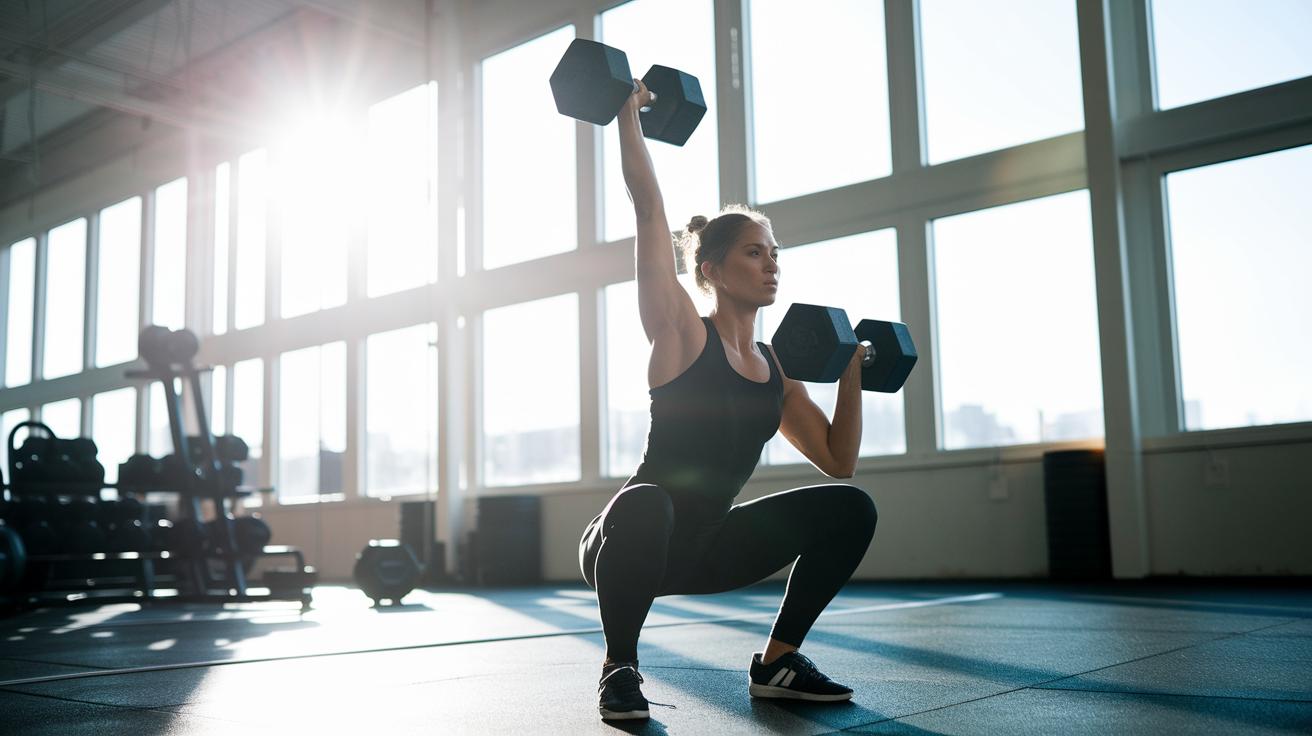
Sticking to a regular plan can really help you build strength bit by bit. One tried-and-true method is a 3-day full-body routine. Picture breaking your day into three quick 10-minute sessions that add up to around 35 minutes, it’s a perfect fit for busy days without overloading your schedule.
If you want to mix things up, consider a 4-day plan where you focus on the upper body one day and the lower body the next. And on those days when you need a little extra break, a 5-day plan might work best. This plan splits your workouts into push, pull, and leg days, with an active recovery day thrown in. Another cool option is a compact sculpt routine that spreads your workout over five sessions, balancing hard work with rest.
Remember, rest days and active recovery are just as important as your workouts. Taking time to stretch or even do some foam rolling helps your muscles heal and stay flexible. Every 2 to 4 weeks, try adding a bit more weight or extra reps so you can keep seeing progress. When you start noticing steady gains, it might even be time to plan a deload week, a lighter week that gives your body a chance to recharge.
- Plan your sessions ahead of time
- Track your progress and adjust the load
- Focus on good form and proper recovery
This approach helps ensure you’re steadily building strength every week.
Muscle-Building Free-Weight Exercises in Your Workout Plan
Try doing three rounds of 8 to 12 reps for each compound lift. We’ve mixed simple movement tips with clever safety ideas and some fun alternatives.
Squat + Dumbbell Clean & Overhead Press
Stand with your feet about shoulder-width apart while holding a dumbbell in each hand. Drop into a squat, then as you come up, pull the weights to your shoulders and press them overhead.
Tip: Focus on pushing off your heels and letting your knees move in line with your feet, like checking your blueprint before starting a big project.
Alternative: Slow down as you lower the weights to add extra challenge.
Chest Press + Glute Bridge Hold
Lie on your back with your knees bent and feet firmly on the ground. Lift the dumbbells up over your chest while you also raise your hips into a glute bridge.
Tip: Tighten your core to keep your back safe.
Variation: Hold the top position of the bridge for an extra good squeeze.
Staggered Stance Bent-Over Row
Place one foot a bit forward and hinge at your hips, keeping your back flat. Then, row the dumbbells by lifting your elbows steadily upward.
Safety: Keep your movements slow and controlled to avoid any jerks.
Note: This staggered stance really helps with balance and can even improve your posture.
Deadlift + Dumbbell Clean & Lateral Lunge
Begin with a deadlift by holding the weights close to your legs. At the top, quickly perform a clean and then step into a side lunge.
Tip: Maintain a smooth pace for both the clean and the lunge to keep your form solid.
Alternative: If you’re struggling with balance, you can shorten the lunge range a bit.
Once you’ve finished all your sets with careful form, add an extra 5 pounds to your dumbbells to keep challenging your muscles.
Enhanced Full-Body Dumbbell Circuit for Fat Burning
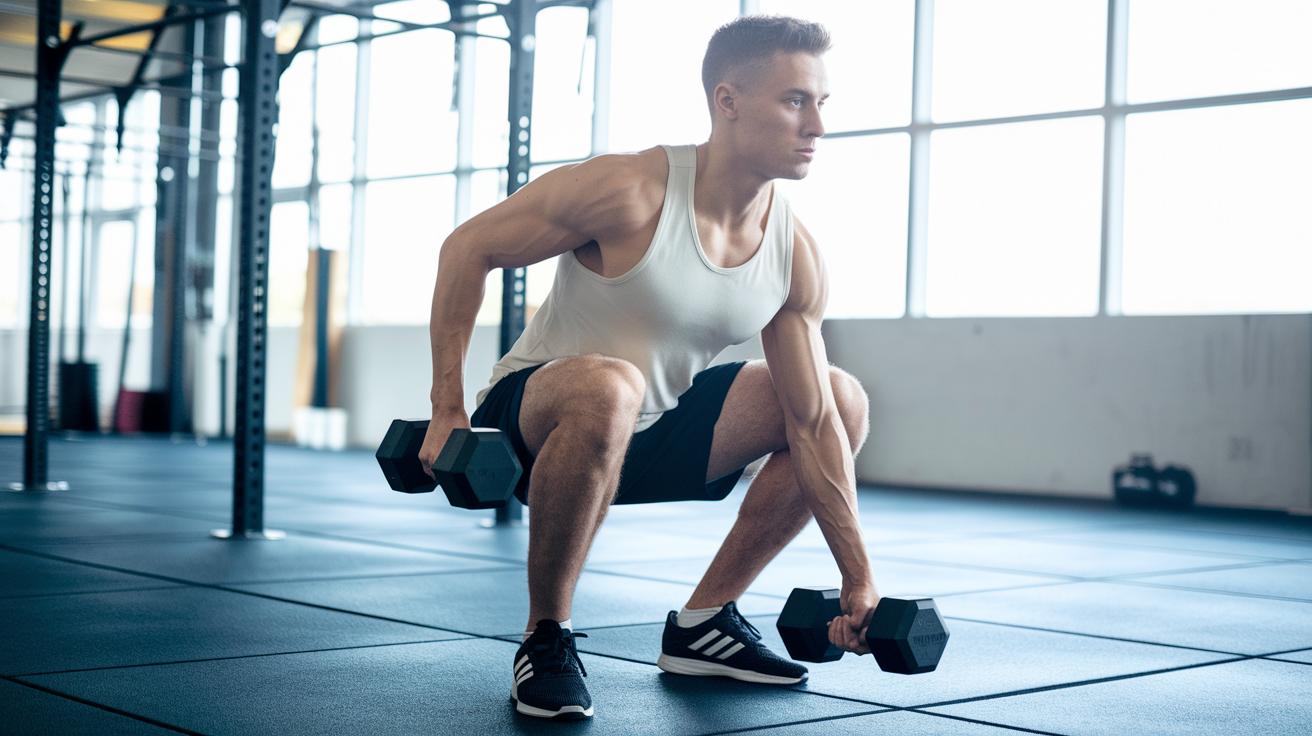
Boost your dumbbell routine by adding simple combos that really fire up fat burning. Mix in high-energy supersets with clear rep counts and short breaks to keep your body working hard.
Start with 15 reps of a wide squat burpee paired with a bicep curl. Imagine dropping into a deep squat and then bursting upward into an overhead press with a bicep curl, all in one smooth move. Next, switch to pairing a dumbbell snatch with a single-arm squat thruster. Do 12 reps on each side to balance out your strength.
Keep your rest really brief, just 15 to 30 seconds between moves. For a burst of extra intensity, try the time-drop method: work hard for 40 seconds, rest for 20 seconds, and repeat for 3 to 4 rounds. This plan fits neatly into a 35-minute workout that targets many muscle groups while keeping your heart rate up.
| Superset | Exercise Pairing | Reps |
|---|---|---|
| Superset 1 | Wide Squat Burpee + Bicep Curl | 15 |
| Superset 2 | Alternating Dumbbell Snatch + Single-Arm Squat Thruster | 12 per side |
Remember:
- Include these rep counts and short rests into your main routine.
- Keep the pace fast with minimal breaks, whether it’s a quick 15–30 sec pause or a 40 sec work/20 sec rest cycle.
- Aim for a 35-minute session that wakes up multiple muscle groups and boosts your fat burn.
Beginner Strength Session: Starting Your Dumbbell Plan
If you're just starting out with dumbbell workouts, this plan is perfect for you. It’s all about easing into strength training with light weights and controlled moves. Pick dumbbells between 5 and 10 pounds so you can focus on your form rather than heavy lifting. Instead of rushing through your reps, take your time with slow, steady movements and really feel each muscle work.
Set up your workout by aiming for three sets of 10 to 15 reps per exercise. Begin with basics like bicep curls, front and lateral raises, and an overhead press to build your upper body strength. For a solid lower body workout and to boost overall balance, try goblet squats, split squats, and Romanian deadlifts. Wrap up your session with moves like the reverse fly, triceps kickback, and hip thrust to target smaller muscles and improve stability.
Each session lasts about 10 to 30 minutes, or you can break it up into several quick 10-minute bouts that fit your day. Keep an eye on your breath and always stick with steady, careful form. As you get more comfortable and strong, gradually increase your weights or add more repetitions. For extra tips on picking your starter weights and nailing your form, check out this helpful guide: https://greenjuicelife.com?p=869
Warm-Up and Cool-Down Guide for Your Dumbbell Plan

Start by giving your muscles a gentle wake-up with 5 to 10 minutes of moving around. Try jumping jacks so your heart starts beating a bit faster, then swing your arms in circles to loosen up those shoulders. Add in leg swings to ease any tightness in your hips and do some hip hinges to prepare your lower back. Ever feel that spark when you start with jumping jacks? It’s like your body is readying itself for every rep.
Next, work in some mobility drills like thoracic rotations (a gentle twist of the upper back) and ankle flexions. These moves help ease any stiffness, making sure every joint is all set for your dumbbell workout. Think of them as a quick tune-up that gets your entire body synced up and ready.
After your session, take 5 to 10 minutes to cool down with simple stretches. Slowly stretch your hamstrings, open up your chest with a chest opener, and gently stretch your quads and calves. Imagine leaning into a calf stretch and feeling that tension melt away. Pair these stretches with deep, steady breaths, and if you have one, roll out any tight spots with a foam roller. It’s all about helping your muscles relax and recover for your next workout.
Tracking Progress & Adjusting Your Dumbbell Plan
Keeping a workout log is like having your personal journal that shows just how far you’ve come. Write down the date, the exercise you did, how many sets and reps you completed, and the weight you lifted. This little record lets you see your progress over time and reminds you of all your hard work. For example, you might note, "06/14: 3 sets of Squat + Dumbbell Press at 15 lbs," so you have a clear snapshot of your workout.
When you do more reps than planned while keeping proper form, for instance, finishing 12 smooth, controlled reps, you know it’s time to amp up the weight. Think of it like a morning jog where you push a little harder with every step. If you complete every set without your form slipping, adding a bit more weight is a good move.
Also, take a moment to jot down how tough each session felt. Was it a breeze, or did your muscles really burn? Noting your effort and recovery helps you notice patterns. If you find that you’re taking longer to bounce back every few weeks, consider scheduling an easier week every 4 to 6 weeks for a proper break.
• Write down the date, exercise name, sets, reps, and weight.
• When you beat your rep targets while keeping solid form, add more weight.
• Record how you felt during the workout.
• Plan a lighter week every 4 to 6 weeks to help your muscles recover.
Final Words
In the action, you saw a complete breakdown of a full-body circuit with strength moves, fat-burning exercises, and beginner-friendly sessions. We shared details about making quick adjustments, timing workouts, and stressing proper warm-up and cool-down techniques. Your workout log tips and suggestions for changing up the routine keep your progress clear and exciting.
This dumbbell workout plan at home is designed to build consistent, balanced strength, leaving you positive and ready to hit your next session. Enjoy the workout and cherish every boost of energy.
FAQ
What types of dumbbell workout plans are available for home routines?
The dumbbell workout plans come in various formats, including PDF guides outlining full-body circuits, 30-day schedules, beginner-friendly routines, and even weight-loss plans, all with clear visuals and structured instructions.
Can you build muscle with just dumbbells at home?
Using only dumbbells at home builds muscle by targeting multiple muscle groups through compound exercises and progressive overload, which boost strength and overall fitness effectively.
What is the 3-3-3 rule gym?
The 3-3-3 rule typically describes a method where you complete three sets of exercises with three reps each, emphasizing proper form and power, though specifics can vary by coaching style.
What does the 6-12-25 rule mean?
The 6-12-25 rule generally outlines a rep scheme addressing strength, muscle-building, and endurance by altering repetition counts, with details adjusted to match individual fitness goals.
Is working out at home with dumbbells effective?
Working out at home with dumbbells is effective because it allows you to perform targeted, compound exercises that enhance strength, burn calories, and fit easily into your busy schedule.
What are some key dumbbell exercises in home workouts?
Key exercises include side lateral raises, bent-over rows, overhead presses, triceps extensions, dumbbell pullovers, and bench presses, which together support balanced strength training and muscle coordination.

