
Ever thought about starting a workout right in your living room? You can jumpstart your day with a quick 20-minute routine featuring five simple moves that need no fancy equipment. Each squat or push-up is like a little boost for your energy and strength.
In just a few minutes, you’ll feel a shift, more active and ready to take on whatever comes next. This guide is perfect for anyone new to home workouts who wants to feel energized and build a stronger, healthier body.
Home Workout Routines for Beginners to Kickstart Your Fitness Today
This 20-minute workout is a great way for anyone new to exercising at home to start feeling energized and building strength without any fancy equipment. We designed it to be simple, combining five easy moves that you can do with just your body weight.
Begin with some bodyweight squats. Do 3 sets of 15 squats. Make sure your knees point in the same direction as your toes and keep your back straight. Take a 30-second break after each set. Picture each squat as a small step toward a stronger, healthier you.
Next, move on to push-ups. Try for 3 sets of 10 push-ups. If doing a full push-up feels too hard, you can switch to doing them on your knees. Rest for about 30 seconds between sets and enjoy how each push-up brings you closer to your goal.
Now, lie down on your back for glute bridges. Perform 3 sets of 15 reps. With your knees bent, lift your hips up while squeezing your glutes, and hold for one second at the top before slowly lowering back down. Take a 30-second rest between sets to catch your breath.
After that, hold a plank position for 30 seconds at a time, and do this 3 times. Keep your body straight, avoid letting those hips droop, and take slow, steady breaths. Think of your body as a strong board that stays steady and supported.
Finish up with lunges. Do 10 lunges on each leg for 3 sets, keeping your movements controlled and steady. Remember to pause for about 30 seconds between sets.
Try to repeat this routine three times a week. Stick with it, and you might soon feel more energetic and stronger, exactly the boost every beginner needs to kickstart a fitness journey.
At-Home Workout Setup: Equipment, Space & Warm-Up for Beginners
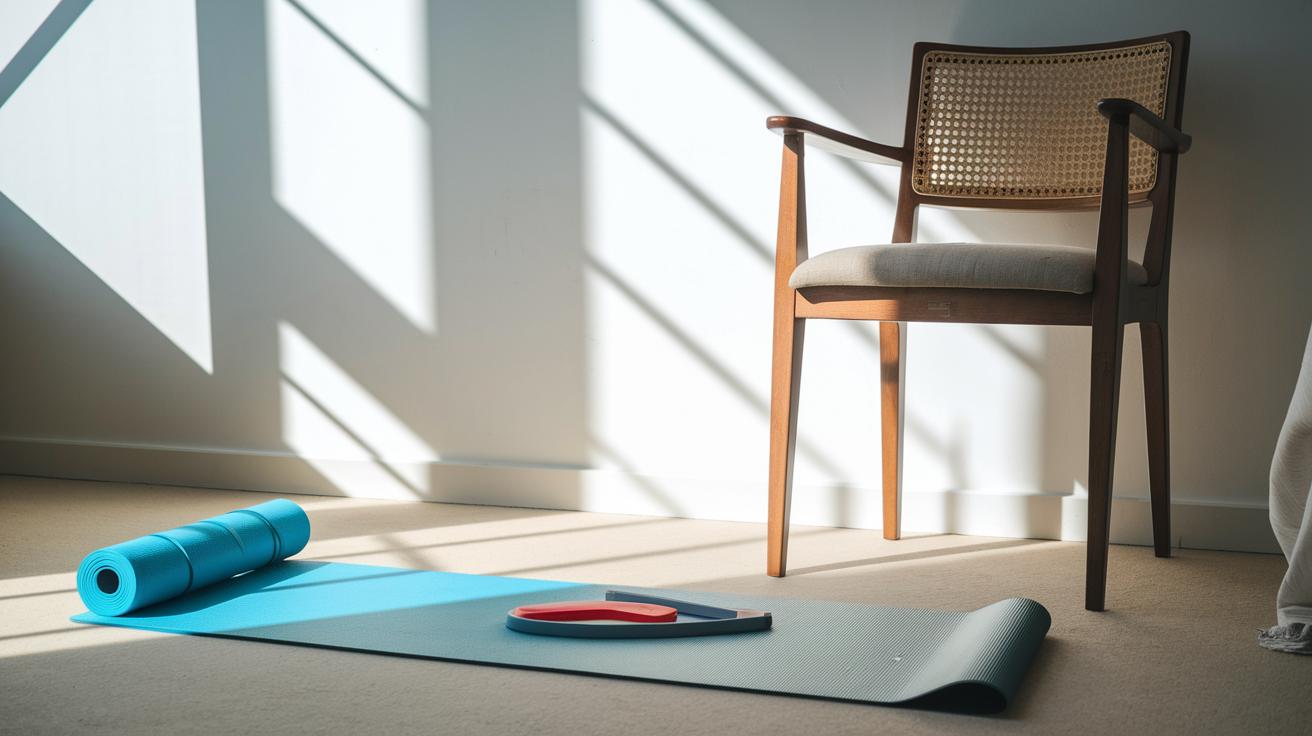
Begin by creating a simple workout space right at home. All you need is a yoga mat for a cushioned, non-slip surface, a resistance band to add a bit of extra challenge during your stretches, and a sturdy chair for balance. Choose an area that's open with minimal clutter, imagine carving out a little peaceful studio in a sunlit corner of your living room, free of furniture and ideal for movement.
Start your workout with a quick 5-minute warm-up to wake up your muscles and get the blood flowing. Here’s an easy guide:
- Arm Circles: Spend about one minute gently rotating your arms in smooth, controlled circles. Picture a soft breeze swaying the leaves as you move.
- Leg Swings: Use one minute on each leg, swinging it lightly forward and back to loosen up your hips.
- Gentle Dynamic Stretches: For the last three minutes, alternate between toe touches and side bends to ease your body into action.
This simple setup makes your home workout both engaging and practical, so you can feel great without needing a gym.
Core Beginner Exercises: Proper Form, Variations & Progression
Bodyweight Squat
Keep your chest up and push your hips back, like you’re easing into an invisible chair. Make sure your knees track over your toes and your core stays tight all along. Here are a few ways to work on your squat:
- Standard squats
- Wall-assisted squats (try using a sturdy chair for extra support)
- Sumo squats with a wide stance
Once you nail these, try pausing for a moment at the bottom or slowly adding more repetitions to boost your strength.
Push-Up
Picture a straight line running from your head to your heels. Keep your hands just below your shoulders and lower yourself slowly, with your elbows staying close to your body. You can start with:
- Knee push-ups (a gentler way to begin)
- Incline push-ups, using a bench or countertop
- Negative push-ups, where you lower yourself for 3–5 seconds
As you grow stronger, work your way up to standard push-ups or add more reps to really challenge your muscles.
Plank
Think of your body as a solid, steady board. With your elbows directly under your shoulders, engage your core and breathe deeply. Try these variations:
- Standard elbow plank
- High plank with arms extended
- Side plank to target your obliques
For a tougher challenge, hold the plank a bit longer or lift one leg at a time.
Glute Bridge
Lay flat on your back and press your heels into the floor as you lift your hips. Aim to form a straight line from your shoulders to your knees, keeping your back flat. You can mix it up with:
- Standard glute bridges
- Single-leg glute bridges
- Elevated glute bridges with your feet on a low step
To progress, increase your repetitions or hold the top position a bit longer to boost stability and strength.
Reverse Lunge
Stand tall and take a controlled step back, keeping your torso upright. Make sure your front knee stays right above your toes during each movement. Consider these options:
- Alternating reverse lunges
- Reverse lunges with light hand weights for extra resistance
- Slow-motion reverse lunges to focus on control
When you’re ready, add more repetitions or try a small jump between lunges to ramp up the challenge.
Indoor Cardio Routine for Newcomers Doing Home Workouts
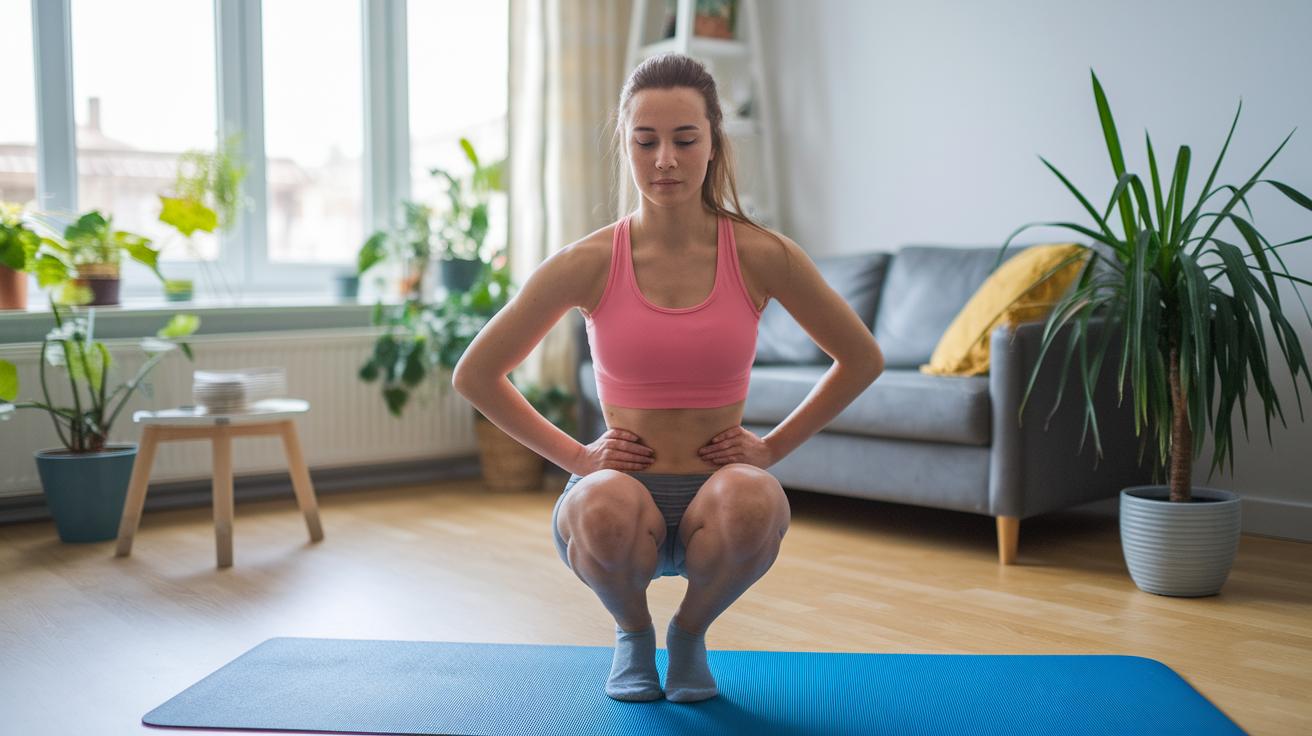
Give this simple 10-minute indoor cardio routine a try if you’re easing into home workouts. Each exercise lasts one minute, and then you repeat the whole circuit once. Start with marching in place for a minute, then do knee lifts for another minute, followed by a minute of side steps, then move into modified jumping jacks for one minute, and finish with a minute of butt kicks. Keep your pace steady, challenging, but not overwhelming.
Focus on each step and let your breathing guide you. Picture your breath flowing smoothly as you lift your knees in a deep inhale and let go with a slow exhale when you lower them. This way, you’ll keep your rhythm and avoid getting worn out too soon.
On the second round, if you feel up to it, try to boost your energy a bit more. Keep your posture upright and your core tight as you move from one exercise to the next. And don’t forget to occasionally check in with your breathing to stay in tune with your body.
Modifications, Safety Guidelines & Stretching in Home Workout Routines for Beginners
When you’re starting out, a little tweak to your exercises can make a big difference. If doing push-ups on the floor feels too tough, try doing them against a wall instead. This simple change helps build your strength gradually, and you stay comfy and safe. Always listen to your body, if you feel dizzy or notice a sharp pain, stop immediately.
Keeping your spine straight is super important. When you’re doing squats, lunges, or any workout on the floor, try to keep your back straight, let your shoulders relax, and engage your core muscles. Think of it like stacking blocks: every piece needs to be in place to keep your tower strong.
Here’s a quick 5-minute cool-down routine to help ease your muscles and calm your heart after working out:
- Hamstring Stretch: Sit down and slowly reach for your toes, feeling a gentle pull along the back of your legs.
- Quad Stretch: Stand up tall and carefully pull one foot toward your glutes, keeping your knees in line.
- Chest Opener: Stand with your hands together behind you and lift them just a bit to open up your chest and shoulders.
Remember, it’s all about ease and care, slow and steady wins the race, just like easing into this cool-down to bring back that refreshing feel in your mind and muscles.
Staying safe and making thoughtful adjustments is what helps you have a great workout every time.
Tips for Consistency, Progression & Tracking in Beginner Home Workout Routines
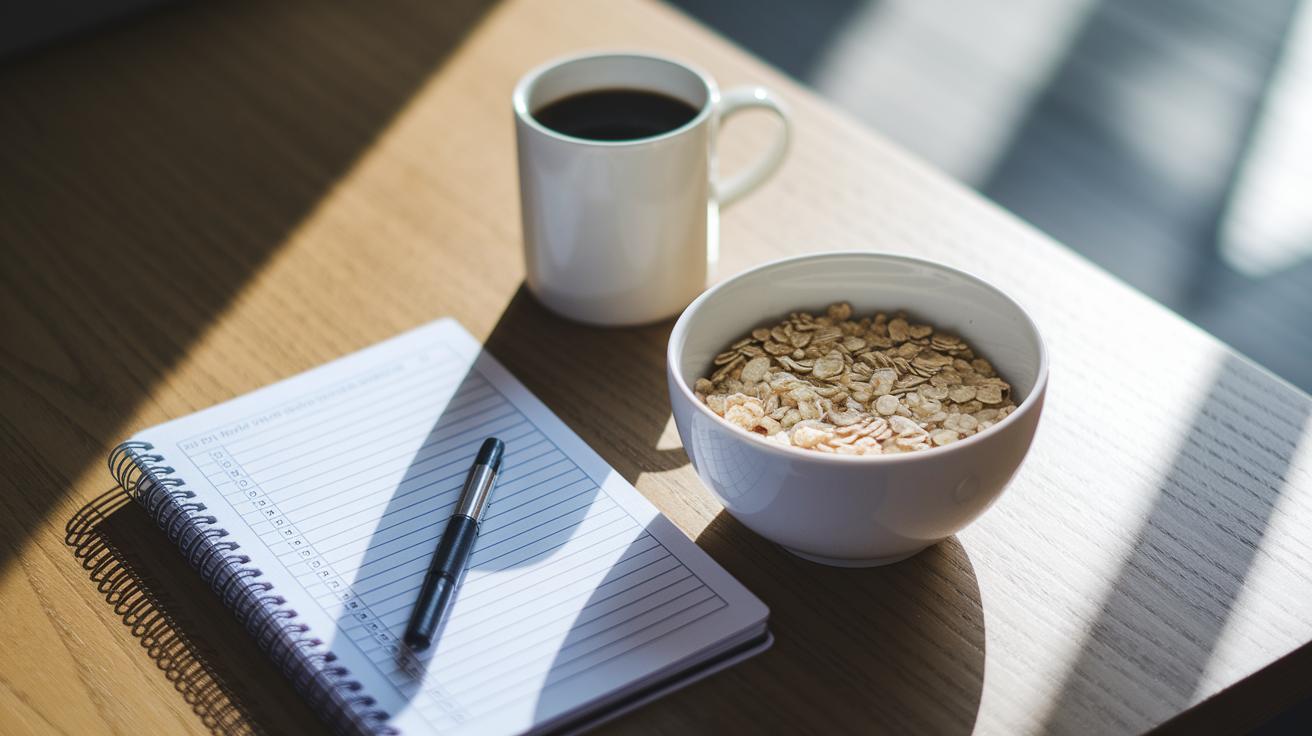
A steady workout routine can really boost your energy and help you reach your goals. Try setting aside a special time each day, almost like a personal meeting with yourself. You might even link your workout to another routine, like going straight from making breakfast to exercising. Imagine finishing your oatmeal and then spending 20 minutes stretching and moving. It’s simple and truly effective.
Keeping a workout log, whether in a notebook or on your phone, lets you see your progress over time. That way, you can easily notice small wins, like adding a couple more reps every couple of weeks. Check out this example:
| Week | Sets/Reps |
|---|---|
| Week 1 | 3 sets of basic moves |
| Week 2 | 3 sets with 2 extra reps per exercise |
Small improvements add up and can really boost your motivation. Here are a few friendly pointers:
- Block off workout times in your daily schedule.
- Write down each session in your workout journal.
- Increase your reps or rounds every 2 weeks.
- Celebrate every little win, it all counts!
Final Words
In the action, we've outlined a complete sample routine featuring bodyweight exercises, indoor cardio, and easy tips on form, modifications, and safety.
We talked about setting up a clear workout space, warming up properly, and gradually progressing over time.
These workout routines for beginners at home provide a simple yet effective way to build consistency and embrace a healthy lifestyle.
Keep moving forward with small, steady steps, and enjoy every moment as you grow stronger and more confident.
FAQ
What do workout routines for beginners at home without equipment involve?
Workout routines for beginners at home without equipment include bodyweight exercises like squats, push-ups, lunges, and planks that build strength and flexibility using just your own body.
What workouts help with weight loss for beginners at home?
Workouts for weight loss combine a mix of full-body moves and light cardio, like a 20-minute session with squats, lunges, and planks, to boost activity, burn calories, and tone muscles.
What is a good workout schedule for beginners at home?
A good schedule for beginners involves a 20-minute workout three times a week with rest days in between to help your body recover and gradually build strength.
How do beginners start exercising at home?
Beginners start by setting up a clear space, doing a quick warm-up like arm circles, and following a simple 20-minute full-body routine with moves such as squats, push-ups, and planks.
What is the 6-12-25 rule in workouts?
The 6-12-25 rule in workouts is a structure that suggests starting with 6 reps for strength, moving to 12 reps for endurance, and finishing with 25 seconds of a hold or burst to challenge your muscles.
What is the 3-3-3 rule in gym workouts?
The 3-3-3 rule in gym workouts means choosing three exercises, performing three sets of each, and aiming for either three reps or a three-minute session for each set to keep things simple yet effective.
What are seven exercises to do every day?
Seven daily exercises can include squats, push-ups, lunges, planks, glute bridges, jumping jacks, and arm circles; they promote overall strength and help keep you active each day.
What workout plan is best for females at home?
A simple plan for females at home involves a mix of squats, push-ups, lunges, and planks with a brief warm-up and cool-down, creating an easy and effective routine for building strength.

