
Ever wonder how some people crush every workout? Many folks still do endless crunches without truly working their whole core. In this post, I'll show you a smarter way to build strength by mixing in moves that use your body weight along with a bit of extra resistance.
Try switching between Bicycle Crunches, imagine pedaling in the air, and Cable Crunches, which add a little tug to challenge your muscles. This combo hits your six-pack, side muscles, and deep core, helping you find better balance.
Get ready to fire up your center and boost your strength overall. Your lower back and core will really feel the difference.
ab workout routine: Power Your Core Now
Mixing bodyweight exercises with weighted moves is a smart way to build up a strong core. For instance, moves like Bicycle Crunches and Bird Dogs use your own body to challenge your balance, while exercises like Russian Twists and Cable Crunches add extra resistance to push your muscles harder. Doing about 10-15 repetitions per set not only targets your six-pack muscles but also works your obliques for rotation and your deep core for overall stability.
For the best results, aim for at least three sessions a week. If you’re feeling adventurous, you might switch things up with a Tabata-style workout, try 20 seconds hard then 10 seconds rest, or 40 seconds on with 20 seconds off, repeated for 3-4 rounds. Remember, visible abs come from keeping your body-fat low, so pairing your routine with good nutrition is key. Stay consistent, focus on proper form, and slowly ramp up the challenge to let your core shine and protect your back every time you work out.
Abdominal Muscle Anatomy for Targeted Central Conditioning

The rectus abdominis, or the six-pack, is your go-to muscle for bending your spine forward and getting that flat midsection you’re after. It kicks into gear during exercises like crunches and sit-ups, really showing off when you work on your core.
Then there are the external and internal obliques. They’re the ones that help you twist and bend to the side. When you do a side crunch, these muscles engage to stabilize your movement, adding both function and a bit of flair to your midsection.
Deep down, the transverse abdominis works like a natural belt, snugly wrapping around your body to support your back. It partners up with your lower-back muscles and the erector spinae to keep you balanced, improve your posture, and ease back discomfort.
All these muscles join forces to create a strong, stable core that not only sculpts your abs but also protects and strengthens your back for day-to-day activities and tougher training sessions.
Essential Exercises to Include in Your Ab Workout Routine
Mixing bodyweight moves with weighted exercises gives your core a full challenge from different angles. When you use bodyweight drills, you’re relying on your own strength to build a natural base. Adding a few weights pushes your muscles even harder. This combo not only shapes your abs but also boosts your balance and coordination. For example, try pairing Bicycle Crunches with Cable Crunches to mix a lively twist with a slow, controlled pull, this keeps your workout well-rounded.
- Bicycle Crunches: Lie on your back with your knees bent at 90 degrees. This exercise works your front abs and side muscles. Aim for 10 to 15 reps on each side.
- Bird Dogs: Start on all fours and extend your opposite arm and leg. This move helps strengthen your lower back and core. Try for 10 to 12 reps per side.
- Leg Raises: Lie down and slowly lift your legs. You’ll target your lower abs and the muscles that help lift your hips. Do 12 reps, and repeat three times.
- Side Planks: Lie on your side with your feet either stacked or staggered. This position focuses on your side muscles and overall core stability. Hold for 30 to 45 seconds on each side.
- Russian Twists: Sit with your knees bent and hold a medicine ball or kettlebell. Twist your torso to work your obliques. Try 15 twists on each side for three sets.
- Cable Woodchoppers: With a cable handle set at shoulder height, twist in a controlled motion to challenge your side muscles. Go for 10 to 12 reps on each side.
- Cable Crunches: Using a rope attachment at the top of the cable machine, crunch down slowly to engage your abs. Do 12 to 15 reps.
- Med-Ball V-Ups: Hold a moderate-weight medicine ball while lifting your upper and lower body at the same time. Complete 10 to 12 reps.
If you’re curious about more tips and tricks, explore extra resources to keep your core workouts fresh and effective.
Structuring Sets, Reps, and Progressions in an Ab Workout Routine
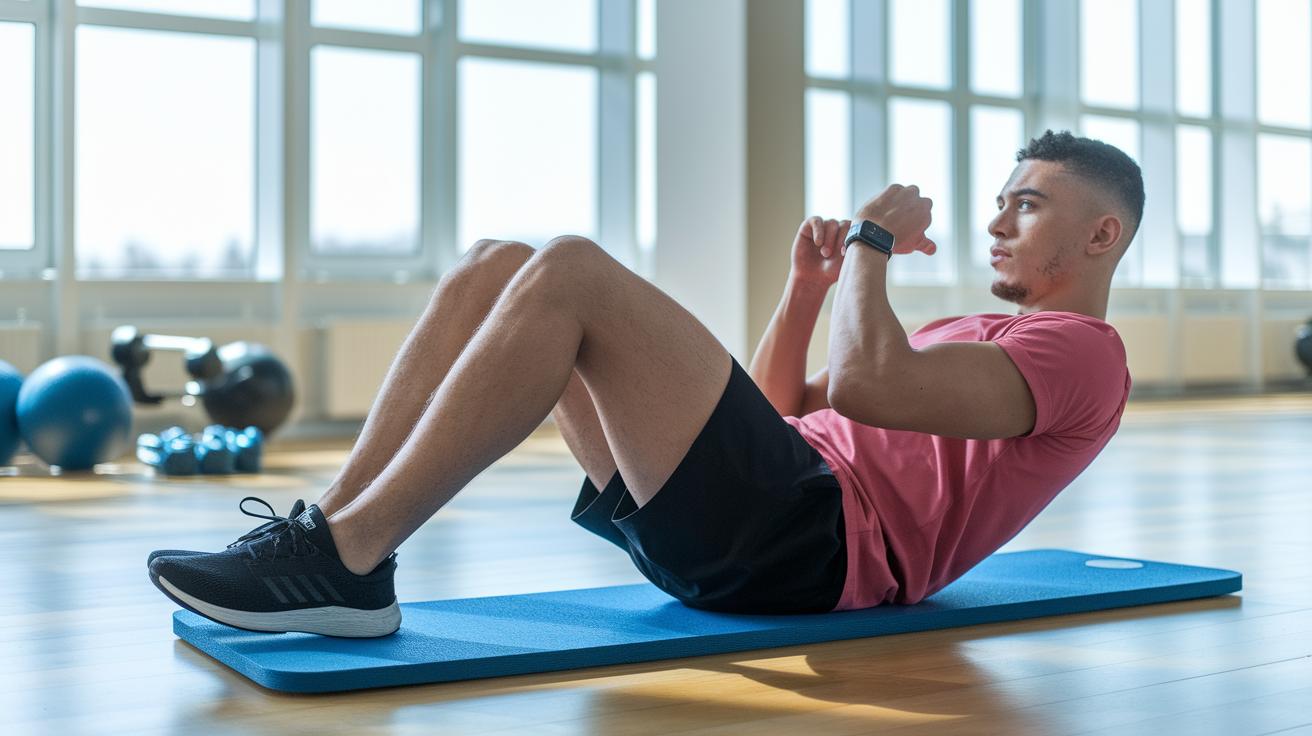
When you're just starting out, try doing 3 sets of 10 to 12 reps on each ab exercise. This lets you focus on smooth, controlled movements and proper form so your muscles can get used to the exercises. If you've been working out for a while, you can step it up to 3 sets of 12 to 15 reps to boost your endurance and strength. And don’t forget to rest for about 2 minutes between sets so that your core has time to recover and you can nail every move.
If you're ready to kick the intensity up a notch, why not try some Tabata-style training? It means working out hard for 20 seconds and then resting for 10 seconds, or you might do 40 seconds of work followed by 20 seconds of rest for 3 to 4 rounds. These quick bursts get your core firing on all cylinders and help build endurance fast. As you get stronger, you can add extra weight or toss in more sets. Just make sure you give your abs a full day’s break, at least 24 hours, between workouts so they have plenty of time to recover and grow. Keep tweaking your routine gradually to support your progress and enjoy every step of your fitness journey.
Sample 3-Day Ab Workout Routine Plan for Core Strength
This plan gives you three days of ab workouts that really target your core using both your body weight and added resistance. Every session includes 3 to 5 moves, do 3 to 4 sets of 10 to 15 reps, or try Tabata rounds for a quick burst of intensity if you’re up for it.
We mix things up by alternating between moves like Bicycle Crunches that work your body weight and exercises like Cable Crunches or Med-Ball V-Ups that use extra weight. This keeps your muscles guessing and helps them grow stronger over time. It’s a great way to torch your midsection while keeping your workout routine fresh and efficient.
Remember to take a day off or do some light active recovery after these workouts. A brisk walk or a few dynamic stretches are perfect on recovery days, they let your muscles rebuild without overdoing it. This balanced approach not only helps boost strength across your entire core but also lowers the risk of overtraining.
| Day | Exercises | Sets×Reps |
|---|---|---|
| Day 1 | Bicycle Crunch, Leg Raises, Side Plank (each side) | 3×12 |
| Day 2 | Russian Twists, Cable Crunch, Med-Ball V-Ups | 3×15 |
| Day 3 | Tabata (V-Ups, Toe-Touchers, Seated Knee Tucks, Reverse Crunch) | 20 s on/10 s off × 3 rounds |
Repeat these sessions each week, but make sure to give your body a full day of rest or light activity. That way, your core can rebuild, stay strong, and maintain top form.
Warm-Up, Cool-Down, and Safety Tips for Your Ab Workout Routine
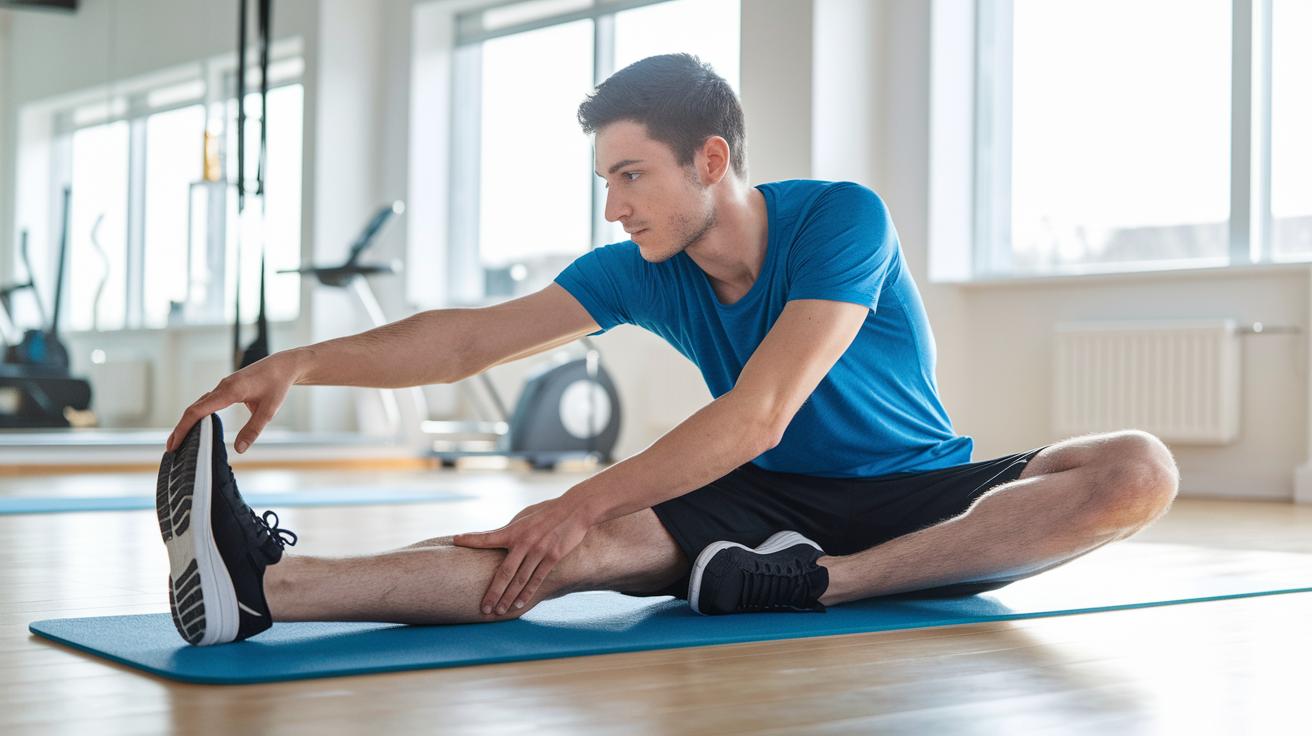
Before you start your ab workout, take about 5 minutes to get moving with a light jog or a brisk walk. This gentle burst of cardio wakes up your body and gets your blood flowing. Then, try some dynamic moves like shifting from a plank into a downward dog or adding some torso twists. Keep your back straight and focus on your posture, it helps wake up your muscles while reducing the risk of injury.
After your workout, ease into recovery with calming static stretches. Try poses like the cobra, child’s pose, or a gentle twist on your back to relax and boost your flexibility. As you stretch, slowly engage your deeper core muscles. And remember: move smoothly and avoid any jerky motions to protect your lower back, letting your body recover and get ready for your next session.
Final Words
In the action of building your core strength, we explored mixing bodyweight and weighted moves for a well-rounded ab workout routine. The plan covered key exercises, recommended sets, and safe progressions while emphasizing proper warm-up, cool-down, and nutrition to reveal defined abs. We broke down everything, from targeting the rectus abdominis and obliques to using Tabata-style rounds, with a focus on consistency. Embrace these simple strategies and keep moving forward with confidence for a strong, stable core.
FAQ
What is the most effective ab workout routine?
The most effective ab workout routine combines both bodyweight and weighted moves, targeting all core muscles with controlled reps and variety. Consistent practice and proper nutrition help reveal defined abs.
How can I set up an ab workout routine for different settings and fitness levels?
Whether you’re working out at home, in a gym, or following online guidance like on Reddit, adapting exercises based on your level ensures you hit key core areas using routines designed for beginners to quick ab circuits.
Does doing 100 crunches daily give you visible abs?
Performing 100 crunches daily alone doesn’t guarantee visible abs. A balanced program including varied core exercises, proper form, and nutrition is essential to lower body fat and develop definition.
Are three ab exercises enough to build a strong core?
Using three well-chosen exercises can build core strength if they target different muscles. However, including a mix of moves and gradually increasing difficulty improves overall core stability and definition.
Does a 10-minute ab workout really work for core strength?
A focused 10-minute ab workout can effectively strengthen your core when performed intensely with proper form, especially when it’s part of a balanced routine that includes variety and regular recovery.
How do exercises like Russian twists, crunches, and leg raises contribute to abdominal strength?
Russian twists, crunches, and leg raises each work different areas of your abs—from obliques to lower and upper abs—helping build balanced strength and enhancing overall core stability.
How should beginner and advanced trainees structure their ab workout routines?
Beginners might start with 3 sets of 10–12 reps using bodyweight moves, while advanced trainees can increase sets, add weight, or try Tabata rounds. Gradual progression and proper recovery keep workouts safe and effective.

